


Track Lighting 101: Why This One Fixture Type Can Fix Half Your Room's Lighting Problems
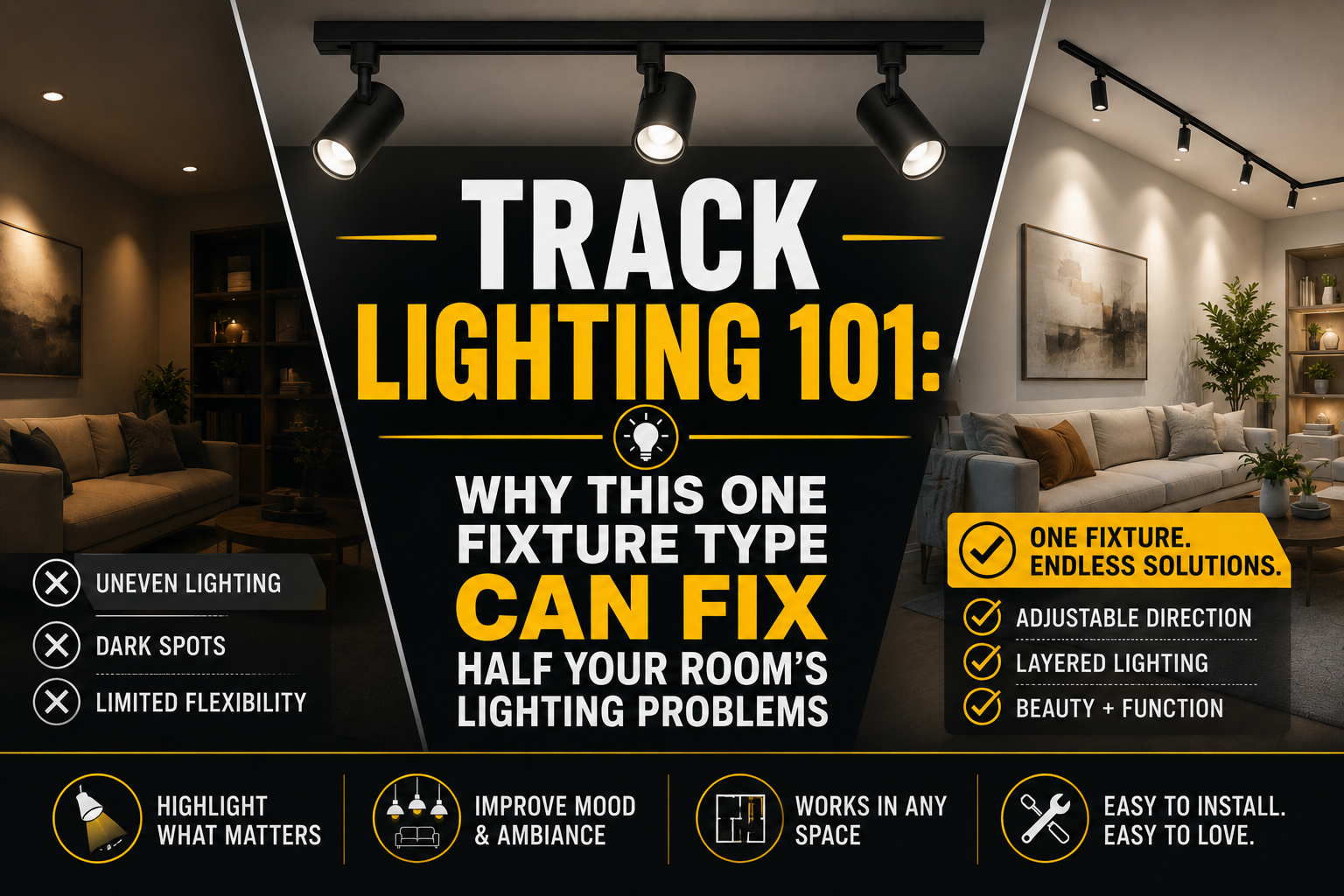
Most people don't think about track lighting until they're standing in a room that just feels off. Maybe the kitchen island is dim while the ceiling glares. Maybe the living room has one overhead light doing way too much work. Track lighting tends to be the quiet fix for problems like these, yet it's often overlooked in favor of flashier fixtures like chandeliers or pendants.
If you've never seriously considered track lighting, here's why it might be exactly what your space needs — and what to actually look for before you buy.
What Makes Track Lighting Different
Unlike a single ceiling fixture that throws light in one fixed direction, track lighting runs along a rail and lets you position individual heads exactly where you need them. Want light focused on a piece of art? Point a head at it. Need brighter task lighting over a counter and softer ambient light elsewhere? Adjust each fixture independently.
This flexibility is the entire point. A single track can do the job of several separate fixtures, which makes it especially useful in kitchens, galleries, retail spaces, and any room with more than one "zone" that needs its own type of light.
The Three Things That Actually Matter
When people shop for track lighting, they usually focus on style first — which makes sense, since the fixtures are visible. But three other factors matter just as much, if not more:
1. Beam angle. A narrow beam creates dramatic, focused pools of light — great for highlighting artwork or architectural details. A wider beam angle spreads light more evenly, which works better for general room illumination. Some newer systems even offer adjustable or dual-beam heads so you don't have to commit to one or the other.
2. Color temperature. Warm light (around 2700K–3000K) feels cozy and residential. Cooler light (4000K and above) feels crisp and more commercial. Track systems with CCT-selectable functionality let you switch between these on the fly, which is a genuinely useful feature if you're not 100% sure what mood you want a room to have.
3. Track compatibility and voltage. Not all track heads fit all rails. Low-voltage and line-voltage systems have different installation requirements, and mixing incompatible components is one of the most common (and frustrating) mistakes people make. If you're upgrading an existing setup rather than starting from scratch, always confirm compatibility before ordering new heads.
Where Track Lighting Actually Shines
-
Kitchens — especially over islands, counters, and open-shelving areas where task lighting matters.
-
Galleries and display walls — adjustable heads let you redirect light as artwork or displays change.
-
Retail spaces — merchandise lighting benefits enormously from the ability to angle and refocus fixtures.
-
Open-concept living areas — where one fixture type has to do the job of several.
-
Basements and low-ceiling rooms — track systems sit closer to the ceiling than many pendant options, which helps preserve headroom.
A Few Things People Get Wrong
The biggest mistake is treating track lighting as purely decorative. It's a functional system first, and the finish or shape of the fixture should be the second consideration, not the first. Another common issue is under-lighting — people install two or three heads on a long track and wonder why the room still feels dim. As a rule of thumb, it's better to plan for slightly more fixtures than you think you need, since you can always dim them down.
Finally, don't ignore dimmability. A track system without dimming options limits you to one mood, all the time, which defeats a lot of the purpose of having adjustable lighting in the first place.
Finding the Right System
Because track lighting spans such a wide range of styles and technical specs — from minimalist aluminum rails to modular systems with swappable heads — it's worth browsing a few options side by side before deciding. If you want to see what modern track lighting actually looks like across different finishes, beam options, and configurations, this track lighting collection is a good place to compare styles and see how the technical features discussed above translate into real fixtures.
Whether you're lighting a single accent wall or rethinking an entire kitchen, track lighting remains one of the most adaptable — and most underrated — ways to solve a room's lighting problems without redoing the whole ceiling.

 English
 Arabic
 French
 Portuguese
 Deutsch
 Turkish
 Dutch
Dutch
 Italiano
 Russian
 Romaian
 Portuguese (Brazil)
 Greek
Greek