


Taj Mahal Tour by Train
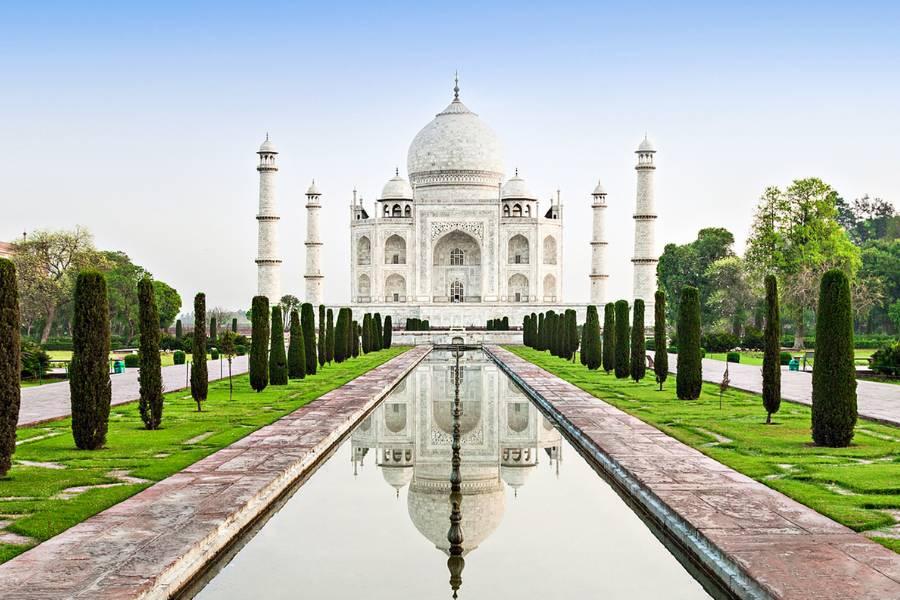
Taj Mahal Tour by Train: The Complete Guide to a Perfect Agra Day Trip
A Taj Mahal tour by train is one of the easiest ways to experience one of India’s most famous monuments without spending hours sitting in road traffic. If you are staying in Delhi, the railway connection to Agra makes a same-day visit surprisingly practical, especially when you choose a fast morning train and plan your sightseeing around the return journey. Instead of turning the trip into a tiring road adventure, you can board a train, relax for much of the journey, arrive in Agra, explore the Taj Mahal and other major attractions, and return to Delhi the same evening. The key is choosing the right train, allowing enough time between sightseeing and departure, and remembering that railway schedules can change, so the exact service should always be checked before booking. Indian Railways provides official schedule and reservation enquiry tools, while the Archaeological Survey of India provides current visitor information for the Taj Mahal and other monuments in Agra.
Why Choose a Taj Mahal Tour by Train?
For many travelers, the biggest advantage of taking the train from Delhi to Agra is time efficiency. A road journey can be affected by traffic, unexpected delays, breaks, and congestion around Delhi and Agra, while a reserved train gives you a defined departure and arrival. The journey also becomes part of the experience rather than simply dead time on a highway. You can sit back, have breakfast if catering is available on your service, look out of the window, and arrive ready to explore. For international visitors who have limited time in India, that efficiency can make a huge difference because one well-organized day can cover the Taj Mahal and several important Agra sights.
A train tour is particularly attractive for travelers who want independence without having to deal with driving themselves. You do not need to rent a car, navigate unfamiliar roads, or worry about parking near major monuments. Once you reach Agra, you can arrange local transportation or a private guide for the sightseeing portion of your trip. The experience feels a little like using a bridge between two cities: the railway handles the long-distance movement while your local transport handles the shorter journeys between attractions. That division can make the entire day much easier to manage.
There is also something wonderfully appropriate about visiting the Taj Mahal by train. Agra has been an important city on India's historic travel routes for centuries, and today the railway remains one of the most practical ways to connect it with the national capital. Rather than rushing through a long highway journey, you can make the trip feel like a genuine city-to-city excursion. For couples, families, solo travelers, photographers, and first-time visitors to India, the combination of convenience and adventure makes the Delhi to Agra train journey a strong option.
Delhi to Agra by Train
Delhi and Agra are connected by several railway services, but the most suitable train depends on your travel date, departure station, preferred arrival time, and return plans. Popular options traditionally include fast services such as Gatimaan Express and Shatabdi Express, along with other reserved trains. Current Indian Railways information lists the Gatimaan Express among its train services, while its official passenger systems allow travelers to check train schedules and seat availability for specific dates.
The important point is not to choose a train simply because someone online says it is "the fastest." Your ideal service is the one that creates a comfortable sightseeing window in Agra. A train arriving too late may leave you rushing through the Taj Mahal, while a return train departing too early can force you to skip Agra Fort or another attraction. Think of your train ticket as the frame around your entire day: everything else needs to fit inside it.
How Long Does the Train Journey Take?
Fast Delhi–Agra services can make the journey in roughly the range travelers expect for a high-speed daytime connection, although the actual duration depends on the particular service and timetable. The best approach is to check the official Indian Railways schedule for your exact travel date rather than relying on an old itinerary copied from a travel blog. Indian Railways specifically provides train-schedule and reservation-enquiry services, and its system warns that reservation information and schedules should be checked for the relevant journey.
For planning purposes, however, you should think beyond the train's running time. Your real journey begins when you leave your Delhi hotel and ends when you return there. Add time for reaching the station, security procedures, boarding, getting from the Agra station to the Taj Mahal, monument entry, sightseeing, and returning to the station. This is why a good Taj Mahal day tour from Delhi by train is less about shaving ten minutes from the railway journey and more about creating a realistic schedule with some breathing room.
Best Trains for a Taj Mahal Day Trip
The Gatimaan Express is often associated with Delhi–Agra day trips because it is designed as a fast daytime service and is listed by Indian Railways. The Shatabdi services are another important category to investigate, although travelers should verify the exact route and current timetable because not every Shatabdi service is a Delhi–Agra train. Indian Railways' official list currently identifies the Gatimaan Express and numerous Shatabdi services, demonstrating why checking the exact train number is essential before booking.
A practical way to compare trains is to look at four things: departure time from Delhi, arrival station in Agra, return departure, and total sightseeing time. Do not automatically assume that a train marketed as a premium or fast service will be the best choice for you. If another reserved train gives you a significantly better return time, it may create a more relaxed day even if the journey itself is somewhat longer.
| Factor | What to Look For |
|---|---|
| Morning departure | Early enough to maximize Agra sightseeing |
| Agra arrival | Convenient timing for monument opening hours |
| Return train | Late enough to avoid rushing |
| Station | Confirm whether the train uses Agra Cantt, Agra Fort, or another station |
| Seat availability | Check before finalizing your itinerary |
| Travel day | Verify operating days and any temporary changes |
The safest strategy is to use the official Indian Railways reservation and schedule systems for your actual date. Train numbers, operating days, timings, and availability can change, and a travel article written months earlier may no longer reflect the timetable you encounter.
How to Book Your Train Tickets
Booking a train ticket for a Taj Mahal day trip is straightforward once you know your preferred travel date and stations. The official railway reservation system lets travelers search by journey date, source station, destination station, class, and quota. This is especially useful when comparing several services rather than locking yourself into the first option you see.
For a day trip, reserved seating is generally preferable because your schedule is tight. You do not want to arrive at a station hoping to find a convenient seat when your entire sightseeing plan depends on reaching Agra at a particular time. If you are traveling during a busy holiday period, weekend, or popular tourist season, check availability as early as your booking window permits.
Before paying, double-check the station names. Delhi has several major railway stations, and Agra also has more than one railway station. A surprisingly common travel mistake is to book a train based on its departure time without checking which station is actually involved. That can turn an otherwise perfect itinerary into a stressful race across the city.
A Sample One-Day Taj Mahal Train Itinerary
A well-designed Taj Mahal tour by train from Delhi should begin early. Start by reaching your departure station with enough time to locate your platform and board comfortably. After arriving in Agra, arrange your local transfer and head toward the Taj Mahal. The monument should be the centerpiece of your day rather than something squeezed into whatever time remains after lunch.
A practical itinerary might look like this:
| Approximate Time | Activity |
|---|---|
| Early morning | Leave Delhi hotel |
| Morning | Board train to Agra |
| Morning | Arrive in Agra and transfer to Taj Mahal |
| Late morning | Taj Mahal visit |
| Early afternoon | Lunch |
| Afternoon | Agra Fort |
| Later afternoon | Optional additional attraction |
| Evening | Return to Agra railway station |
| Evening/night | Train back to Delhi |
| Night | Arrive in Delhi |
These are planning windows rather than fixed train timings. Your exact schedule should be built around the train you actually book and the official visitor information available for your travel date.
Arriving in Agra
Once you arrive, do not spend too much time debating where to go next. Ideally, your local transport should already be arranged. Depending on your arrival station, traffic conditions, and your chosen route, the transfer to the Taj Mahal will take some time, so factor this into your plan.
A private car can be convenient if you want door-to-door movement and a guide. Auto-rickshaws and other local transport options can also work, but travelers unfamiliar with Agra may find a prearranged transfer less stressful. If you are traveling with children, older relatives, or a group carrying luggage, convenience becomes even more valuable.
The golden rule is simple: keep your Agra transportation flexible but your railway schedule rigid. The train back to Delhi is the one appointment you absolutely do not want to miss.
Visiting the Taj Mahal
The Taj Mahal deserves more than a quick photograph from the entrance. As you approach the monument, the first view through the gateway creates one of those rare travel moments where reality almost seems designed for a postcard. The white marble changes character with the light, and the symmetry becomes increasingly impressive as you move through the complex.
Give yourself enough time to appreciate the architecture rather than treating the visit like a checklist. Look closely at the marble inlay work, the calligraphy, the proportions of the buildings, the gardens, and the relationship between the main mausoleum and the surrounding structures. If you have a guide, ask about the design and historical context instead of simply listening to dates and names.
The Archaeological Survey of India publishes visitor information for the Taj Mahal and other monuments in the Agra Circle, including ticket and visitor-related details. Its current information also notes specific access provisions and changes concerning the monument's gates, which is another reason travelers should verify official information before their visit.
Taj Mahal Entry Tickets and Visiting Rules
One of the most important pieces of planning is checking the current Taj Mahal ticket rules before your journey. Ticket categories and charges differ depending on visitor nationality and the facilities included, while additional charges or arrangements may apply under certain circumstances. The Archaeological Survey of India provides the authoritative visitor information for the monument and should be treated as the final reference rather than an old travel blog.
The Taj Mahal is also not simply an attraction that you can assume will be accessible every day of the week. Travelers planning a day trip should pay particular attention to the weekly closure and any special restrictions. The ASI's Agra Circle information is the appropriate place to verify the latest visiting arrangements before buying a non-refundable train ticket.
This matters because your train ticket and monument ticket are two separate pieces of the puzzle. Booking the railway first and checking the Taj Mahal later can create an avoidable problem if your selected date does not work for monument access. Always check the monument's official visitor information before committing to your travel date.
Best Time to Visit the Taj Mahal
The ideal time of day depends partly on what you want from the experience. Early visits can provide softer light and a cooler atmosphere, while later visits can offer different photographic conditions. If you are making a one-day train trip, though, train availability should influence your timing just as much as photography.
Weather is another major factor. Agra can experience intense summer heat, while winter mornings can sometimes be cool and hazy. During hotter periods, walking around an enormous open complex in the middle of the day can become exhausting. A morning-focused itinerary can therefore be more comfortable than trying to fit the Taj Mahal into the hottest part of the afternoon.
The best time for you is ultimately the intersection of three things: comfortable weather, monument availability, and a train schedule that gives you enough time in Agra.
What to See Beyond the Taj Mahal
A common mistake is assuming that the Taj Mahal is the only attraction worth seeing in Agra. It is unquestionably the star, but the city has a much richer historical landscape. If your train schedule allows, Agra Fort is the natural second stop because it provides a different perspective on Mughal history and architecture.
The contrast is fascinating. At the Taj Mahal, the dominant feeling is elegance and symmetry; at Agra Fort, you encounter a massive fortified complex with palaces, courtyards, walls, and spaces associated with imperial power. Visiting both helps you understand the historical world in which the Taj Mahal was created.
Other attractions can be considered if you have sufficient time, including Itimad-ud-Daulah's Tomb and Mehtab Bagh. The ASI's Agra Circle visitor information covers several major monuments in the region and provides current ticket-related information.
Taj Mahal Tour by Train Cost
The cost of a Taj Mahal train tour from Delhi depends heavily on how you build the trip. Your expenses may include railway tickets, local transportation in Agra, monument admission, food, guide services, and possibly hotel transfers.
| Expense | What Affects the Cost |
|---|---|
| Train ticket | Train, class, date, availability |
| Taj Mahal ticket | Visitor category and selected access |
| Local transport | Auto-rickshaw, taxi, private car, etc. |
| Guide | Whether you hire a licensed/local guide |
| Food | Restaurant and meal choices |
| Other monuments | Additional entrance charges |
| Hotel transfers | Distance and vehicle type |
Rather than focusing on finding the absolute cheapest package, think about value per hour. A slightly more expensive train or private transfer can be worthwhile if it gives you more usable sightseeing time and reduces uncertainty. On a one-day trip, time is the resource you cannot buy back.
Private Tour or Independent Train Trip?
There are two popular ways to organize the experience. The first is an independent trip where you book your train tickets, arrange local transportation, purchase monument tickets, and explore on your own. The second is a structured tour where a travel company coordinates transportation, sightseeing, guide services, and sometimes meals.
An independent trip gives you greater control. You can choose where to eat, how long to stay at each monument, and whether to add an extra attraction. It can also be cheaper if you are comfortable managing the logistics yourself.
A private or organized tour, meanwhile, can be valuable if you want everything coordinated. You step off the train and have someone waiting for you, rather than negotiating transportation after a long journey. For first-time visitors to India, families, and travelers with limited time, that simplicity can be worth paying for.
Tips for a Comfortable Train Tour
The secret to a successful day trip is not packing more attractions into the schedule. It is removing unnecessary friction. Confirm your train, keep your ticket and identification accessible, arrive at the station early, and have a plan for getting from the Agra station to the monument.
Wear comfortable footwear because the sightseeing portion involves walking. Carry water according to the current monument rules, sunglasses or a hat when appropriate, and keep your belongings manageable. Large bags and restricted items can create delays at monument security, so check the latest official visitor rules before you travel.
Keep some flexibility in your itinerary. If your train arrives late, do not panic and attempt to compensate by rushing through every attraction. Prioritize the Taj Mahal first, then Agra Fort, and treat additional sights as optional. A relaxed visit to two major attractions is usually more enjoyable than a frantic attempt to see five.
What to Pack for Your Taj Mahal Trip
A day trip does not require a huge suitcase. In fact, traveling light is one of the best decisions you can make. A small day bag containing your essentials is easier to manage on trains, in local transportation, and around busy tourist areas.
Consider carrying comfortable walking shoes, identification, your train reservation details, a phone with sufficient battery, sunglasses, and weather-appropriate clothing. A portable charger can also be useful because navigation, tickets, photography, and communication can consume battery quickly.
Do not forget to check the current Taj Mahal security restrictions before you leave. Rules concerning permitted items can change, and the ASI's official visitor information should take priority over generic packing lists found online.
Common Mistakes to Avoid
The biggest mistake is booking the train before checking whether the Taj Mahal can be visited on that date. Your train schedule might look perfect, but the monument's visitor arrangements are equally important. Check both sides of the itinerary before making non-refundable commitments.
Another mistake is underestimating the distance between the railway station and the monument. The train may be fast, but your day does not magically teleport from the platform to the Taj Mahal entrance. Allow time for disembarking, finding your driver, navigating traffic, and completing entry procedures.
Travelers also sometimes make their itinerary too ambitious. They see a list of ten attractions online and try to visit everything in a single day. That approach turns a beautiful historical experience into a race against the clock. The Taj Mahal deserves your attention, not the feeling that you are constantly checking your watch.
Is a Taj Mahal Train Tour Worth It?
For most travelers staying in Delhi, yes—a Taj Mahal tour by train can be an excellent option. It combines the convenience of rail travel with the possibility of seeing one of India's most iconic monuments in a single day. The journey is especially appealing when you choose a suitable morning departure and a return train that leaves enough time for sightseeing.
The experience works best when you accept one important reality: this is a full day. You are not going to casually "pop over" to Agra for an hour. You are creating a miniature expedition, and the better you plan the logistics, the more enjoyable the actual sightseeing becomes.
If you have several days available, staying overnight in Agra can provide a slower and richer experience. But if your itinerary is centered on Delhi and your time is limited, traveling by train offers an efficient compromise between convenience and exploration.
Final Tips for Planning Your Journey
Before booking your Taj Mahal tour by train, check the official railway schedule for your exact travel date. Indian Railways provides schedule and reservation enquiry systems, including tools for checking train services and seat availability.
Then verify the Taj Mahal's current visitor information through the Archaeological Survey of India's Agra Circle. This is particularly important for opening arrangements, ticket information, access restrictions, and changes affecting visitors.
Finally, build your itinerary backward from the return train. Decide when you need to leave the Taj Mahal area, add a sensible buffer for traffic, and arrive at the station with time to spare. That single habit can transform the experience from stressful to enjoyable.
Conclusion
A Taj Mahal tour by train from Delhi is one of the most practical ways to experience Agra when you have limited time in India. Fast rail services can significantly reduce the burden of the journey, allowing you to spend more of your day exploring rather than sitting in traffic. With the right planning, you can visit the Taj Mahal, explore Agra Fort, enjoy a local meal, and still return to Delhi the same day.
The smartest approach is to plan around the railway schedule rather than treating the train as an afterthought. Check your exact service with Indian Railways, verify the Taj Mahal's current visitor information with the ASI, reserve your seats in advance when possible, and leave enough buffer between sightseeing and your return departure.
Most importantly, don't make the day so packed that you forget why you came. Stand in front of the Taj Mahal for a moment without immediately reaching for your phone. Look at the marble, the symmetry, the gardens, and the changing light. After all, the best travel memories are rarely created by how many places you managed to tick off a list; they come from the moments when a place actually makes you stop and look.
FAQs About Taj Mahal Tour by Train
1. Can I visit the Taj Mahal from Delhi in one day by train?
Yes. A same-day Delhi–Agra trip is practical when you select a suitable morning train and a return service that leaves enough time for sightseeing. The exact feasibility depends on your travel date and the current train timetable, so check Indian Railways before booking.
2. Which train is best for a Taj Mahal day trip?
Gatimaan Express is one of the prominent fast services associated with Delhi–Agra travel, but the "best" train depends on your specific date, station, departure time, return connection, and seat availability. Indian Railways currently lists the Gatimaan Express in its official train information.
3. How much time should I spend at the Taj Mahal?
For a day trip, allow several hours for the Taj Mahal experience, including transportation, security, entry, photography, walking, and time to appreciate the complex. If you also want to visit Agra Fort, keep your schedule realistic rather than trying to add too many attractions.
4. Is the Taj Mahal open every day?
You should verify the monument's current opening and closure arrangements before booking your train. The Archaeological Survey of India's Agra Circle publishes official visitor information and should be your primary source for current access details.
5. Should I book a guided Taj Mahal tour or travel independently?
Both options can work. Independent travel provides flexibility and may reduce costs, while a guided or organized tour can simplify transportation and sightseeing logistics. If this is your first visit to Agra and your schedule is tight, having local transportation and a guide arranged in advance can make the day considerably easier.

 English
 Arabic
 French
 Spanish
 Portuguese
 Deutsch
 Dutch
Dutch
 Italiano
 Russian
 Romaian
 Portuguese (Brazil)
 Greek
Greek