


Golden triangle tour with Tiger Safari
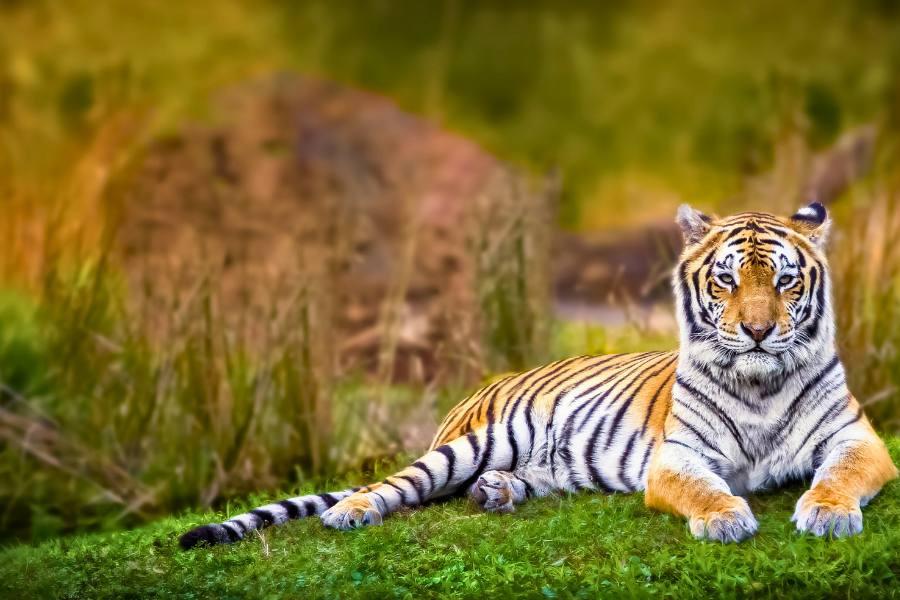
Golden Triangle Tour with Tiger Safari: The Ultimate India Wildlife and Heritage Journey
A Golden Triangle Tour with Tiger Safari combines three of India's most celebrated destinations—Delhi, Agra, and Jaipur—with the thrill of seeing a wild tiger in its natural habitat. It is a journey that brings together bustling markets, Mughal monuments, royal palaces, ancient forts, colorful culture, and the untamed landscapes of Rajasthan. Instead of choosing between India's famous heritage sites and its wildlife, this itinerary lets you experience both in one carefully connected trip.
The classic Golden Triangle links Delhi, Agra, and Jaipur, while Ranthambore National Park is one of the most popular places to add a wildlife experience to the circuit. Rajasthan Tourism describes Ranthambore as one of the world's best-known wilderness areas and highlights its opportunities for tiger sightings, along with leopards, sloth bears, hyenas, crocodiles, deer, nilgai, and many bird species. The park is currently described as open from October through June, with reservations recommended in advance because of its popularity.
What makes this combination special is the contrast. One day you can stand before the white marble beauty of the Taj Mahal, and another morning you can be sitting quietly in an open safari vehicle, scanning the forest for a tiger. You move from the architectural legacy of emperors to the natural world of India's forests. That contrast is precisely what makes a Golden Triangle and Ranthambore Tiger Safari tour such a memorable India holiday.
What Is the Golden Triangle Tour with Tiger Safari?
The traditional Golden Triangle itinerary covers Delhi, Agra, and Jaipur. Delhi introduces travelers to India's political capital, historic monuments, markets, and diverse culture. Agra provides the extraordinary Taj Mahal and other Mughal landmarks, while Jaipur adds the forts, palaces, colorful bazaars, and royal heritage of Rajasthan.
Adding Ranthambore changes the character of the journey. Rather than moving directly from Agra to Jaipur, travelers travel toward Sawai Madhopur, the gateway to Ranthambore National Park and Tiger Reserve. Rajasthan Tourism notes that Ranthambore lies around 14 kilometers from Sawai Madhopur and is accessible by rail from Delhi, Mumbai, and Jaipur as well as by road from Delhi and Jaipur.
This creates a fascinating four-part journey: Delhi for culture, Agra for Mughal history, Ranthambore for wildlife, and Jaipur for Rajput heritage. You are essentially experiencing several different versions of India within one itinerary.
A well-designed trip usually takes around 7 to 10 days, depending on the number of safari drives and the amount of time you want in each city. A shorter itinerary is possible, but adding more time in Ranthambore usually makes the wildlife portion more rewarding because tiger sightings can never be guaranteed.
Why Combine the Golden Triangle with a Tiger Safari?
A standard Golden Triangle trip is already packed with famous landmarks, but adding a tiger safari gives the itinerary a completely different dimension. Historical sightseeing tends to involve buildings, museums, monuments, and guided walks. A safari asks you to slow down, listen, observe, and accept that nature does not operate according to a timetable.
That uncertainty is part of the magic.
You might enter the forest expecting to see a tiger and instead encounter a sambar deer standing beside a lake, a crocodile basking in the sun, or a troop of langurs watching your vehicle from the trees. Rajasthan Tourism lists a remarkably diverse range of wildlife at Ranthambore, including tiger, leopard, sloth bear, caracal, jackal, fox, hyena, mongoose, chital, sambar, nilgai, rhesus macaque, langur, crocodiles, and numerous bird species.
Then there is the landscape itself. Ranthambore is not simply a flat forest. Its dry deciduous vegetation, lakes, hills, ruins, and the dramatic presence of the historic Ranthambore Fort create an unusually atmospheric safari setting. The forest can feel ancient, mysterious, and almost cinematic.
Best Golden Triangle Tiger Safari Itinerary
A comfortable itinerary should avoid trying to do too much in too little time. The following 9-day Golden Triangle with Ranthambore itinerary provides a good balance between sightseeing and wildlife.
| Day | Destination | Main Experiences |
|---|---|---|
| Day 1 | Delhi | Arrival and leisure |
| Day 2 | Delhi | Old Delhi and New Delhi sightseeing |
| Day 3 | Delhi → Agra | Taj Mahal and Agra Fort |
| Day 4 | Agra → Ranthambore | Travel and evening leisure |
| Day 5 | Ranthambore | Morning and afternoon safari |
| Day 6 | Ranthambore → Jaipur | Travel to Jaipur |
| Day 7 | Jaipur | Amber Fort, City Palace, Hawa Mahal |
| Day 8 | Jaipur | Jaipur sightseeing and local experiences |
| Day 9 | Jaipur → Delhi | Departure or onward travel |
This is only a model itinerary. The actual number of safari drives, train connections, hotel nights, and sightseeing stops should be adjusted according to your arrival and departure flights.
If wildlife is your highest priority, consider adding another night in Ranthambore. More safari drives mean more opportunities to encounter wildlife and experience different conditions.
Day 1: Arrive in Delhi
Your Golden Triangle tiger safari adventure begins in Delhi, India's enormous and endlessly energetic capital. Depending on your arrival time, keep the first day relatively relaxed. International flights can be exhausting, and there is little value in immediately filling the evening with a long sightseeing program.
Delhi offers an extraordinary mixture of old and new. Modern boulevards and government buildings sit alongside centuries-old mosques, bazaars, forts, temples, and historic neighborhoods. Even a simple drive through the city can feel like moving between different chapters of Indian history.
Use your first evening to settle into the hotel, recover from the journey, and perhaps enjoy a traditional Indian dinner. If you arrive early and feel energetic, a short evening outing can be added, but the main sightseeing is better saved for the following day.
Day 2: Discover Old and New Delhi
A full day in Delhi gives you the chance to see the contrasting sides of the capital. Old Delhi offers crowded lanes, historic mosques, traditional food, and the atmosphere of a centuries-old commercial center. New Delhi, by comparison, reflects the planned imperial and modern capital created during the British period and subsequently developed as India's national capital.
Depending on your interests, you can visit landmarks such as India Gate, Humayun's Tomb, Qutub Minar, Jama Masjid, and the Red Fort. You can also explore the markets and food culture of Old Delhi.
Do not try to visit every attraction. Delhi is enormous, and attempting to cover the entire city in one day can leave you exhausted before the rest of the journey even begins.
Instead, choose a handful of highlights and leave time for experiencing the city itself.
Day 3: Delhi to Agra and the Taj Mahal
The next morning, travel from Delhi to Agra, the historic Mughal city best known as the home of the Taj Mahal. Agra is a central part of the Golden Triangle, and India's official tourism portal describes it as a city with three UNESCO World Heritage Sites and a major concentration of Mughal heritage.
The Taj Mahal should naturally be the centerpiece of your Agra visit. Commissioned by Emperor Shah Jahan in memory of Mumtaz Mahal, the ivory-white marble mausoleum remains one of the world's most recognizable monuments. Incredible India describes it as one of the Seven Wonders of the World and highlights its symmetry, marble craftsmanship, and intricate inlay work.
Spend enough time appreciating the monument rather than treating it as a quick photograph stop. Walk through the gardens, examine the marble decoration, and take in the changing appearance of the building from different viewpoints.
Agra Fort
After the Taj Mahal, visit Agra Fort, another essential Mughal landmark. The fort's enormous red sandstone walls enclose palaces, courtyards, audience halls, mosques, and other historic structures.
The relationship between Agra Fort and the Taj Mahal is particularly interesting because the two sites help explain the Mughal imperial world that produced the famous mausoleum. Incredible India describes Agra Fort as a UNESCO World Heritage Site and notes its evolution from a military fortress into an imperial palace complex.
After sightseeing, enjoy an evening in Agra before continuing toward Ranthambore the following day.
Day 4: Agra to Ranthambore
Today marks the transition from India's architectural heritage to its wildlife landscape. Travel from Agra toward Sawai Madhopur, the gateway to Ranthambore National Park.
The journey is an important part of the experience because the landscape gradually changes. The monumental Mughal atmosphere of Agra gives way to the countryside and eventually the forests and rugged terrain associated with Ranthambore.
Once you arrive, check into your wildlife lodge or hotel and keep the evening relaxed. If you have an afternoon available, you can enjoy the surroundings or learn more about the park and its wildlife.
Do not stay up extremely late. Your next morning may begin early, particularly if you have booked a morning safari.
Day 5: Ranthambore Tiger Safari
This is the day many travelers have been waiting for.
A Ranthambore tiger safari is fundamentally different from visiting a zoo or wildlife park. You are entering an actual forest ecosystem where animals move freely and where every safari unfolds differently.
Rajasthan Tourism describes Ranthambore as one of the world's best-known places for observing tigers in the wild and highlights its combination of dry deciduous forests, hills, lakes, and historic ruins.


The early morning safari is often a highlight because the forest can feel completely different at dawn. Temperatures are generally cooler, bird activity can be noticeable, and the changing light creates beautiful conditions for photography.
But there is an important expectation to set: a tiger sighting is never guaranteed.
A responsible safari is not successful only when a tiger appears. Wildlife sightings depend on animal behavior, weather, habitat conditions, and countless other variables. You may spend hours following alarm calls and never see the tiger itself. That unpredictability is precisely what makes a genuine wildlife experience so exciting.
How Many Safaris Should You Take?
If seeing a tiger is one of your main reasons for adding Ranthambore to the Golden Triangle, consider booking multiple safari drives rather than relying on one outing.
One safari might produce an extraordinary sighting, while another could focus entirely on birds, deer, crocodiles, or the landscape. More drives also allow you to experience different zones and changing conditions.
Rajasthan Tourism specifically recommends making reservations in advance because Ranthambore is popular with visitors from around the world.
Safari availability, zones, vehicle types, and booking arrangements should be checked through the current official system before travel. Avoid building your entire trip around an assumption that a particular tiger will appear in a particular zone.
Wild animals do not read itineraries.
Ranthambore Safari Zones and Vehicles
Ranthambore's safari experience can involve different zones and vehicle arrangements, depending on availability and current park rules. Travelers may encounter options involving open safari vehicles, with specific arrangements determined by the forest authorities and booking system.
Rather than obsessing over finding the "perfect" zone, focus on obtaining legitimate permits and allowing enough safari opportunities. Experienced naturalists and drivers understand animal behavior and can interpret signs such as alarm calls, tracks, bird activity, and movement patterns.
If photography is your priority, ask about vehicle arrangements before booking. Space, seating position, and the number of passengers can affect your ability to photograph wildlife comfortably.
Day 6: Ranthambore to Jaipur
After your wildlife experience, continue to Jaipur, the capital of Rajasthan and the final major destination of the Golden Triangle.
The transition is dramatic. Ranthambore gives you forests, wildlife, lakes, and rugged terrain; Jaipur brings you palaces, forts, bazaars, colorful textiles, and Rajput history.
Jaipur was founded by Maharaja Jai Singh II in 1727 and is widely known for its royal heritage and historic architecture. India's official tourism portal describes the city as a gateway to Rajasthan's royal heritage.
After checking into your hotel, use the evening to explore a local market or enjoy a traditional Rajasthani meal.
Day 7: Jaipur Sightseeing
Start your Jaipur sightseeing with Amber Fort, one of the city's most important historic attractions. The fort stands on a hill approximately 11 kilometers from central Jaipur and is recognized as a UNESCO World Heritage Site.


The fort combines Rajput and Mughal architectural influences, with courtyards, palace rooms, defensive structures, and the famous Sheesh Mahal. India's official tourism portal notes that Amber Fort was commissioned by Maharaja Man Singh I in 1592.
Continue with attractions such as City Palace, Hawa Mahal, and Jantar Mantar, depending on your interests and available time.
Jaipur is also an excellent city for shopping. Textiles, jewelry, handicrafts, blue pottery, block-printed fabrics, and other traditional products make the city especially appealing to travelers who want to take home something more meaningful than a standard souvenir.
Day 8: Experience Jaipur Beyond the Monuments
Use your second Jaipur day to slow down.
Instead of visiting another long list of monuments, explore the city's markets, cuisine, workshops, and local neighborhoods. You could visit Jaigarh Fort or Nahargarh Fort, both of which provide different perspectives on Jaipur's historic landscape.
Jaigarh Fort was built as a defensive stronghold associated with Amber Fort, and India's official tourism portal describes its substantial sandstone walls and elevated position above the surrounding landscape.
If you prefer a relaxed day, spend time shopping and enjoying Rajasthani cuisine instead. After several days of driving, sightseeing, and safari, a slower day can be exactly what you need.
Day 9: Jaipur to Delhi
Your final day depends on your onward travel plans. You can return to Delhi by road or rail, or arrange your international departure from Jaipur if your flight schedule permits.
If you need to fly internationally from Delhi, leave a generous buffer. Travel delays can happen, and it is not wise to schedule a long international flight immediately after a tight intercity connection.
If your itinerary allows another night in Delhi, that provides a useful safety margin and gives you time to enjoy anything you missed at the beginning of the journey.
Best Time for a Golden Triangle Tiger Safari
The best time depends on what you want most from the trip.
Rajasthan Tourism currently states that Ranthambore National Park is open from October through June. This makes the wildlife portion seasonal, unlike the Golden Triangle cities themselves, which can generally be visited throughout the year.
For tiger enthusiasts, hotter months can sometimes offer interesting wildlife-viewing conditions because animals may spend more time around water sources, but the heat can be intense. Cooler months are more comfortable for general sightseeing, while winter mornings may be cold during safari drives.
The most important factor is that the park's operating season and safari availability should be checked for your exact travel dates.
How Much Does a Golden Triangle Tiger Safari Tour Cost?
There is no single fixed price for this type of tour because the total depends on your hotel category, group size, transportation, number of safari drives, vehicle type, guides, and travel dates.
| Tour Style | Typical Experience |
|---|---|
| Budget | Simple hotels, shared transfers, limited extras |
| Mid-range | Comfortable hotels, private transfers, selected guided tours |
| Luxury | Premium hotels, private vehicles, upgraded safari experience |
| Private customized | Flexible schedule designed around your interests |
Safari fees are only one part of the wildlife budget. Accommodation near the national park, transportation, meals, permits, and guide services all contribute to the final price.
If tiger sightings are your primary goal, spending a little more on additional safari drives may provide more value than upgrading every city hotel.
Golden Triangle with Tiger Safari: Train or Private Car?
Both options can work well.
A private vehicle provides flexibility between Delhi, Agra, Ranthambore, and Jaipur. You can stop when necessary, carry luggage easily, and adjust the schedule around your preferences.
Trains can be useful for selected intercity sections, particularly when you prefer rail travel and the timetable fits your itinerary. However, a multi-stop wildlife itinerary often becomes simpler with a private car and driver.
For families and small groups, private transportation is especially attractive because the cost is divided among travelers while the convenience remains high.
What to Pack for the Tour
Your packing list needs to cover two very different environments: historic cities and wildlife areas.
For the Golden Triangle, comfortable walking shoes are essential. You should also carry season-appropriate clothing, sunglasses, sunscreen, personal medication, identification, and a small day bag.
For Ranthambore, add neutral-colored layers, especially if traveling during cooler months. Early morning safari drives can feel considerably colder than the city during winter.
A camera with a telephoto lens can be valuable, but do not assume you need professional equipment to enjoy the experience. A smartphone can capture plenty of memorable moments.
Binoculars are another useful addition because a safari is about much more than tigers. Birds, deer, crocodiles, monkeys, and distant wildlife can all make the experience worthwhile.
Responsible Tiger Safari Etiquette
A tiger safari is a privilege, not a guarantee of entertainment.
Do not shout, play loud music, throw food, or attempt to attract an animal's attention. Follow the instructions of your naturalist and driver, and respect the distance maintained from wildlife.
The objective is observation, not interaction.
This is especially important with tigers. A wild tiger is not performing for tourists, and responsible tourism means allowing the animal to behave naturally.
Avoid littering and follow park regulations. Rajasthan Tourism specifically advises visitors to make reservations in advance and provides the official forest reservation link through its Ranthambore information page.
Is Ranthambore Better Than a Regular Golden Triangle Tour?
That depends on your interests.
If you love architecture, history, photography, food, and culture, the classic Golden Triangle may be enough. But if you have an interest in wildlife, adding Ranthambore creates a much more diverse trip.
Imagine spending the first part of your holiday looking at Mughal monuments and Rajput palaces, then suddenly finding yourself surrounded by forest. The pace changes. The sounds change. Your attention changes.
That contrast is the real attraction.
You are not simply adding another destination to a checklist. You are adding an entirely different travel experience.
Who Should Choose This Tour?
A Golden Triangle Tour with Tiger Safari is particularly suitable for:
- First-time visitors to India.
- Wildlife enthusiasts.
- Photographers.
- Families with older children.
- Couples looking for a varied honeymoon or anniversary journey.
- Travelers interested in history and architecture.
- Visitors who want both cultural and wildlife experiences.
Families should consider the safari schedule carefully because very young children may find early morning drives tiring.
Photography enthusiasts, on the other hand, may want additional safari drives because wildlife photography depends heavily on luck, patience, and conditions.
Golden Triangle with Tiger Safari for Families
For families, the itinerary should be slightly slower than a typical adult-focused tour.
Instead of moving every day, allow enough time for children to rest. Choose comfortable hotels with swimming pools or gardens where possible, and avoid scheduling multiple long sightseeing sessions after an exhausting safari.
The safari itself can be one of the most exciting parts of the trip for children because it transforms wildlife documentaries into a real-world experience. Seeing deer suddenly become alert, hearing birds calling, or watching a crocodile near a lake can be memorable even if the tiger stays hidden.
Golden Triangle Tiger Safari for Couples
Couples can make this itinerary particularly romantic.
The Taj Mahal naturally creates a memorable backdrop, while Jaipur's heritage hotels and Ranthambore's wilderness lodges offer completely different atmospheres.
One evening might involve a quiet dinner surrounded by historic architecture; another might involve sitting outside a wildlife lodge listening to the forest after sunset.
The diversity makes this route especially attractive for honeymoons, anniversaries, and milestone trips.
Important Booking Tips
Book the major components before arriving in India, especially during busy travel periods.
Ranthambore safari reservations deserve particular attention because Rajasthan Tourism explicitly recommends advance reservations due to the park's popularity.
Also confirm:
- Hotel availability.
- Safari permits and vehicle arrangements.
- Intercity transportation.
- Train reservations where applicable.
- Monument opening arrangements.
- Airport transfers.
- Travel insurance.
- Cancellation conditions.
Do not rely on a single online itinerary for current opening times or safari availability. Official tourism and forest-authority information should be checked close to your travel date.
Final Thoughts
A Golden Triangle Tour with Tiger Safari is more than a sightseeing circuit. It is a journey through several sides of India: the energy of Delhi, the Mughal magnificence of Agra, the wilderness of Ranthambore, and the royal heritage of Jaipur.
The Taj Mahal gives you the iconic moment. Agra Fort gives you history. Jaipur gives you forts, palaces, markets, and Rajasthani culture. Ranthambore gives you the possibility of encountering one of the world's most magnificent wild cats in its natural environment.
And that combination is difficult to beat.
The key is to avoid rushing. Give Delhi enough time to breathe, spend meaningful time in Agra, allow at least a couple of safari opportunities in Ranthambore if wildlife is important to you, and leave enough room in Jaipur to enjoy the city beyond its famous monuments.
Most importantly, remember that a tiger sighting is never guaranteed. The forest is not a theater, and the animals are not actors. Sometimes the greatest safari memory is a tiger walking across the road; sometimes it is a silent lake at sunrise, a herd of sambar watching your vehicle, or an eagle circling above the ruins of Ranthambore Fort.
That unpredictability is what makes the journey unforgettable.
FAQs About Golden Triangle Tour with Tiger Safari
1. How many days are needed for a Golden Triangle Tour with Tiger Safari?
A 7 to 10-day itinerary is a comfortable range for combining Delhi, Agra, Ranthambore, and Jaipur. If wildlife is your main priority, adding an extra night or additional safari drive in Ranthambore is worthwhile.
2. Can I see a tiger in Ranthambore?
Yes, Ranthambore is renowned for wild tiger sightings, and Rajasthan Tourism describes it as one of the world's best-known wilderness areas for observing tigers. However, no ethical safari can guarantee a tiger sighting because the animals are wild and move freely through the reserve.
3. What is the best month for a Golden Triangle and Ranthambore tour?
Ranthambore's current tourism information states that the park is open from October to June. The most suitable month depends on whether you prioritize cooler sightseeing conditions, wildlife viewing, or overall travel comfort. Always check current park operating information before booking.
4. Is Ranthambore close to the Golden Triangle?
Yes. Ranthambore fits naturally between Agra and Jaipur in an extended Golden Triangle itinerary. Sawai Madhopur is the main gateway to the park, and Rajasthan Tourism notes rail connectivity from Delhi, Mumbai, and Jaipur as well as road access from Delhi and Jaipur.
5. Is a private tour better than a group tour?
A private Golden Triangle tiger safari tour offers more flexibility because you can adjust sightseeing times, hotel choices, and transportation around your interests. A group tour can be more economical, but it usually follows a fixed itinerary. For families, couples, and photographers, private travel is often especially appealing.

 English
 Arabic
 French
 Spanish
 Portuguese
 Deutsch
 Turkish
 Italiano
 Russian
 Romaian
 Portuguese (Brazil)
 Greek
Greek