


In-House vs Outsourced Millwork Shop Drawings Drafter: Which Is Better?
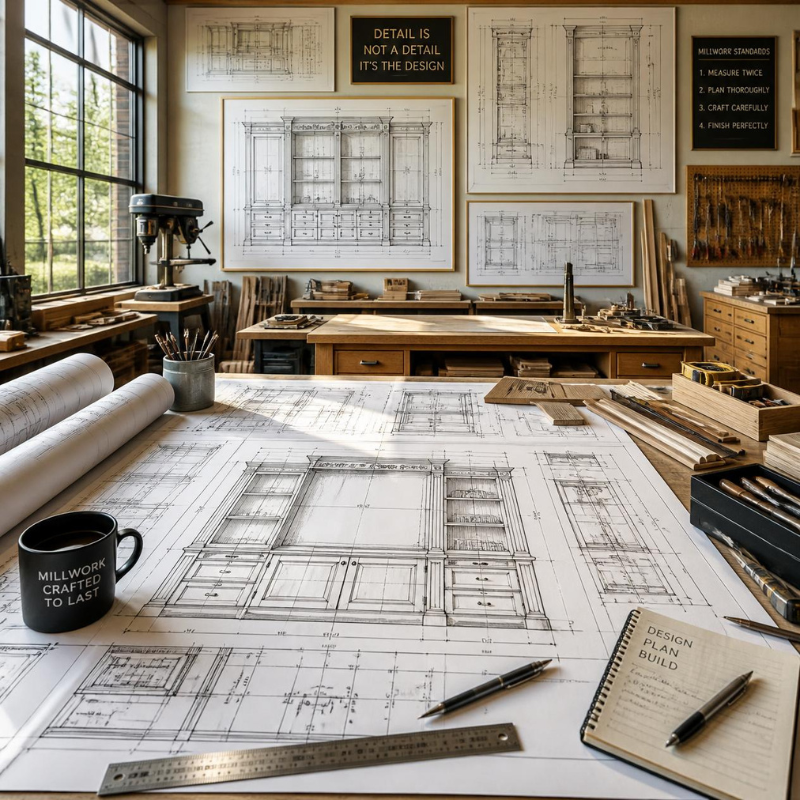
Millwork shop drawings are the foundation of every successful woodworking, cabinetry, and custom millwork project. These highly detailed drawings provide fabrication instructions, installation details, dimensions, materials, hardware specifications, and construction methods that help manufacturers avoid costly errors.
When companies need professional millwork drafting, they often face an important decision:
Should you hire an in-house millwork shop drawings drafter or outsource the work to a specialized drafting company?
While both options have advantages, outsourcing has become the preferred choice for many millwork manufacturers, cabinet shops, architects, contractors, and interior designers due to its flexibility, cost savings, and access to experienced professionals.
In this article, we'll compare both approaches and explain why outsourcing millwork shop drawing services can deliver better business results.
What Does a Millwork Shop Drawings Drafter Do?
A millwork shop drawings drafter converts architectural and design concepts into detailed fabrication drawings used by manufacturers and installers.
Their responsibilities typically include:
-
Custom cabinetry drawings
-
Casework shop drawings
-
Reception desk drawings
-
Retail fixture drawings
-
Hospitality millwork drawings
-
Kitchen millwork detailing
-
Wall panel detailing
-
Hardware placement
-
Joinery details
-
Section views
-
Material specifications
-
CNC-ready documentation
-
Revision management
Accurate drawings reduce production delays and improve coordination between architects, fabricators, and installation teams.
Understanding In-House Millwork Drafters
An in-house drafter works directly within your company as a full-time employee.
They become familiar with your drafting standards, manufacturing process, preferred materials, and workflow.
Advantages
-
Direct communication
-
Immediate availability
-
Familiarity with company standards
-
Easier collaboration with production teams
Challenges
However, maintaining an in-house drafting department comes with significant costs:
-
Salaries
-
Employee benefits
-
CAD software licenses
-
Microvellum licenses
-
AutoCAD subscriptions
-
Revit software
-
High-performance workstations
-
Office space
-
Training expenses
-
Recruitment costs
-
Paid leave
-
Downtime during slow projects
For many companies, these overhead costs continue regardless of project volume.
Understanding Outsourced Millwork Shop Drawings
Outsourcing means partnering with a professional drafting company that provides experienced millwork drafters remotely.
Instead of hiring permanent employees, businesses pay only for the drawings they need.
This model has become increasingly popular among:
-
Millwork manufacturers
-
Cabinet makers
-
General contractors
-
Interior designers
-
Architects
-
Commercial furniture companies
-
Retail fixture manufacturers
In-House vs Outsourced Millwork Shop Drawings
| Factor | In-House Drafter | Outsourced Drafter |
|---|---|---|
| Hiring Cost | High | None |
| Software Investment | High | Included |
| Hardware Investment | High | Included |
| Scalability | Limited | Easily scalable |
| Turnaround Time | Depends on team size | Faster with larger drafting teams |
| Recruitment Time | Weeks or months | Immediate availability |
| Expertise | Depends on employee | Access to specialized experts |
| Project Flexibility | Limited | Excellent |
| Operating Cost | Fixed monthly expense | Pay only when required |
| Global Support | Limited | Available across time zones |
Why More Companies Are Choosing Outsourcing
1. Significant Cost Savings
One of the biggest reasons companies outsource millwork drafting is reduced operational costs.
You eliminate expenses such as:
-
Employee salaries
-
Payroll taxes
-
Office infrastructure
-
Software licensing
-
Hardware upgrades
-
Ongoing training
-
Recruitment
Instead, you pay only for completed drafting work.
This creates a predictable and scalable cost structure.
2. Access to Experienced Millwork Specialists
Specialized outsourcing firms work on hundreds of millwork projects every year.
Their teams understand:
-
AWI standards
-
Cabinet construction
-
Commercial millwork
-
Residential cabinetry
-
Custom furniture
-
CNC manufacturing
-
Joinery detailing
-
Installation requirements
This experience often results in higher-quality drawings than relying on a single in-house drafter.
3. Faster Project Turnaround
Dedicated outsourcing companies have multiple drafters working simultaneously.
This means they can:
-
Handle urgent deadlines
-
Manage revisions quickly
-
Work across multiple projects
-
Increase production during peak seasons
Instead of delaying projects due to limited internal resources, you can scale drafting capacity whenever needed.
4. Easy Scalability
Project workloads fluctuate throughout the year.
Hiring additional employees for temporary demand isn't always practical.
With outsourcing, you can:
-
Scale up during busy seasons
-
Scale down when projects slow
-
Avoid unnecessary payroll expenses
-
Handle large commercial projects efficiently
5. Latest Software Without Additional Investment
Professional drafting companies typically use industry-standard software, including:
-
AutoCAD
-
Microvellum
-
Cabinet Vision
-
Autodesk Inventor
-
Revit
-
SolidWorks (where applicable)
Clients benefit from modern drafting technology without purchasing expensive software licenses.
6. Reduced Recruitment Challenges
Finding experienced millwork drafters can take weeks or even months.
Outsourcing removes the need for:
-
Job postings
-
Interviews
-
Skill assessments
-
Training
-
Employee onboarding
Projects can begin almost immediately.
7. Focus on Your Core Business
When drafting is outsourced, your internal team can concentrate on:
-
Sales
-
Manufacturing
-
Project management
-
Client relationships
-
Installation
-
Business growth
Instead of managing drafting resources, you focus on delivering completed projects.
When Is an In-House Drafter the Better Choice?
An in-house drafter may be suitable if your company:
-
Produces large volumes of millwork every day
-
Requires constant design collaboration
-
Has a dedicated drafting department
-
Maintains consistent year-round workloads
-
Has the budget for software, equipment, and staffing
For many small and medium-sized businesses, however, maintaining these resources can be difficult.
When Should You Outsource Millwork Shop Drawings?
Outsourcing is ideal if you:
-
Need additional drafting capacity
-
Experience seasonal workload spikes
-
Want to reduce operating costs
-
Require faster turnaround times
-
Need specialized millwork expertise
-
Don't want to invest in software and hardware
-
Need support for commercial or residential projects
-
Want flexible drafting resources without long-term commitments
How to Choose the Right Outsourcing Partner
Before selecting a drafting company, consider:
-
Experience with millwork projects
-
Portfolio of completed work
-
Knowledge of AWI standards
-
Experience with AutoCAD, Microvellum, and Revit
-
Revision support
-
Quality control process
-
Turnaround time
-
Confidentiality and data security
-
Communication process
-
Ability to handle projects of varying sizes
A reliable partner should integrate smoothly with your workflow and consistently deliver accurate, fabrication-ready drawings.
Final Verdict
While hiring an in-house millwork shop drawings drafter can work for companies with steady, high-volume drafting needs, outsourcing offers greater flexibility, lower operating costs, and access to specialized expertise without the burden of recruitment or infrastructure investment.
For most millwork manufacturers, architects, contractors, and cabinetry businesses, outsourcing provides the best balance of quality, scalability, and efficiency. By partnering with an experienced drafting company, you can accelerate project delivery, reduce overhead, and focus your internal resources on manufacturing, client service, and business growth.
In today's competitive construction and woodworking industry, outsourcing isn't just a cost-saving strategy—it's a practical way to increase productivity, improve accuracy, and support long-term growth.

 English
 Arabic
 French
 Spanish
 Portuguese
 Deutsch
 Turkish
 Dutch
Dutch
 Italiano
 Russian
 Romaian
 Greek
Greek