


Can Radon Come Back After Mitigation?
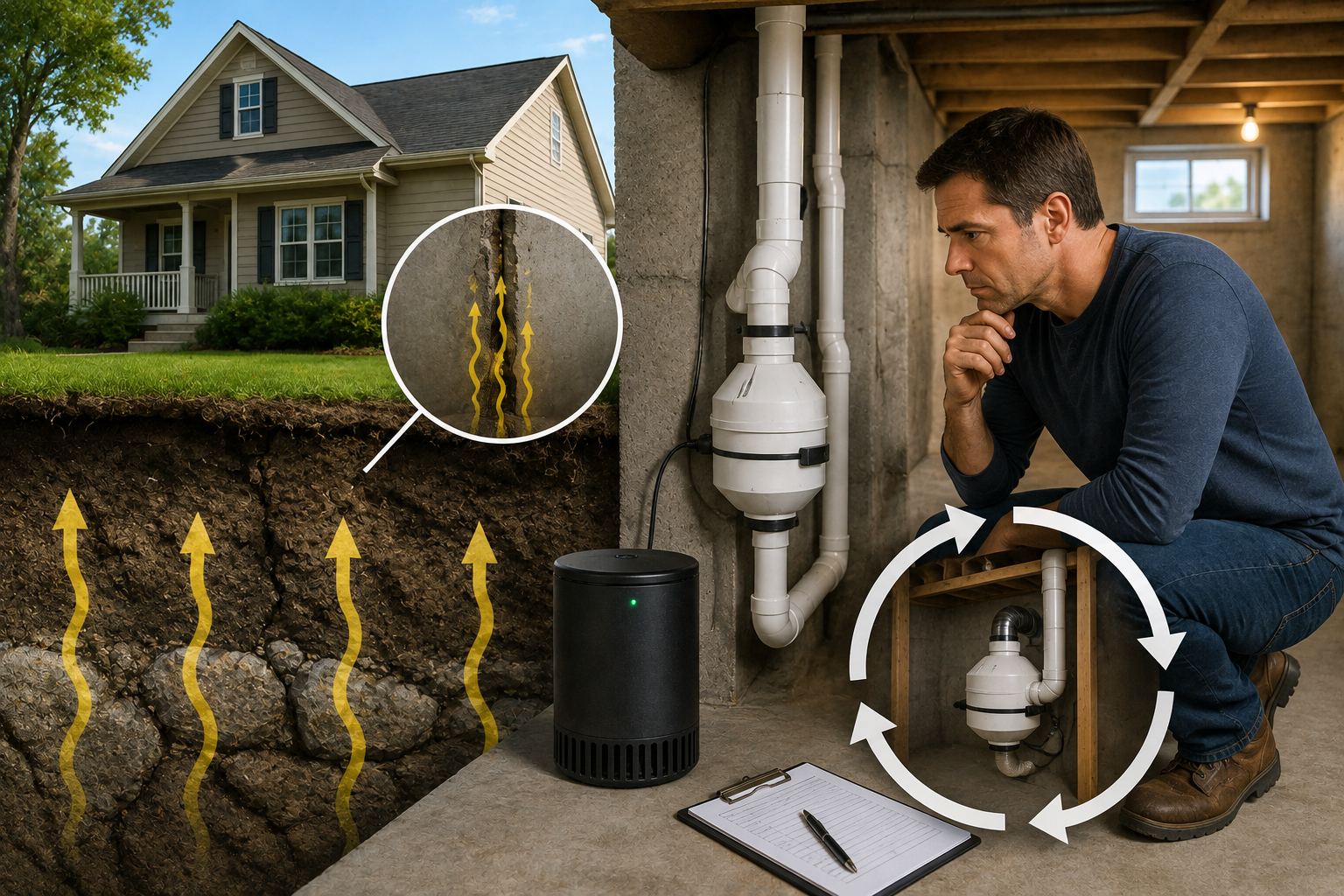
Homeowners ask me this one right after their post-installation test comes back clean, usually with a mix of relief and lingering worry. Fair question. You just spent money fixing a problem, and nobody wants to wonder if it's quietly creeping back a year down the road. This comes up often enough after radon testing St. Louis follow-ups that I figured it deserved a proper answer. The honest answer is that it can, but almost never because the underlying fix stopped working the way you'd think.
The Short Answer
A properly installed and functioning radon mitigation system should keep radon levels low indefinitely, since it's continuously running, not a one-time treatment that wears off. When levels do creep back up after mitigation, it's almost always due to something specific and identifiable, a failing fan, disturbed piping, or new foundation cracks, rather than the original fix simply losing effectiveness over time on its own.
Why a Properly Working System Shouldn't Let Radon Return
How Sub-Slab Depressurization Keeps Working Long-Term
A sub-slab depressurization system doesn't treat radon once and then stop, it runs continuously, pulling air from beneath your foundation and venting it above the roofline around the clock, every single day. As long as the fan keeps running and the pipe network stays intact, the system keeps doing exactly what it did on day one. There's no gradual degradation built into the basic mechanism itself.
What "99 Percent Reduction" Actually Means
When I tell clients a properly installed radon mitigation St Louis system typically reduces levels by about 99 percent, that's not a one-time achievement, it's an ongoing state the system maintains for as long as it's operating correctly. Think of it less like a vaccine and more like a sump pump. It's not curing anything permanently, it's actively managing an ongoing condition every day it runs, which is exactly why any radon mitigation St Louis contractor should emphasize maintenance as much as the initial install.
The Real Reasons Radon Levels Creep Back Up
A Failing or Aging Fan
Most radon fans last somewhere between ten and fifteen years under continuous operation. As a fan ages, bearings wear down and motor efficiency can decline gradually before an outright failure. A weakening fan doesn't necessarily stop working entirely, it might just pull less effectively, which can let radon levels creep upward without any dramatic, obvious failure moment.
Disturbed Piping From Renovation Work
This is one of the most common causes I actually see in the field. A homeowner finishes their basement, adds an addition, or has unrelated attic work done, and somewhere in that process a contractor unknowingly disconnects a pipe joint, covers an access point, or shifts ductwork just enough to reduce airflow. None of this looks dramatic from the outside, the fan often still runs and sounds normal, but the system's actual effectiveness quietly drops.
New Foundation Cracks or Settling
Homes settle over years, and new small cracks can develop in places that weren't sealed during the original installation simply because they didn't exist yet. These new entry points can let soil gas bypass the system's intended pathway, allowing radon back into the home even while the mitigation system itself continues running exactly as designed.
Can the Underlying Source Ever Change?
Occasionally, yes, though this is less common than the mechanical causes above. Nearby construction, changes in groundwater levels, or significant landscaping and grading work can theoretically shift how soil gas moves beneath a foundation over time. This isn't something most homeowners need to worry about regularly, but it's part of why periodic retesting remains valuable even years after a successful installation, rather than assuming a clean post-test is a permanent guarantee. Building periodic radon testing St. Louis check-ins into your routine keeps you ahead of these rare but real edge cases.
A System That Worked Great, Then Didn't
I had a client in Oakville whose system tested at a clean 0.5 pCi/L right after installation and stayed that way for about six years based on periodic checks. Then a routine retest came back at 3.8 pCi/L, still under the EPA's action level but a noticeable jump from where it had been sitting. Turned out her fan, right around the nine-year mark, had started losing efficiency gradually rather than failing outright, exactly the kind of slow decline that doesn't announce itself with an obvious symptom. We replaced the fan, and her next test came back at 0.6 pCi/L again. Nothing about the original radon mitigation St Louis installation had been done wrong, the fan had simply reached the point in its lifespan where gradual decline becomes expected, a normal part of owning any radon mitigation St Louis system long-term.
How to Catch a Return Early
A monthly glance at your manometer gauge catches most fan-related issues before they become significant. Beyond that, periodic professional retesting every couple of years confirms actual performance rather than relying solely on the visual gauge check. If you've had any renovation work done near your basement, crawl space, or attic, it's worth a quick system check afterward, just to confirm nothing got disturbed during the work. Radon testing St. Louis homeowners schedule periodically after mitigation is really the only way to catch a gradual creep back up before it becomes a meaningful health concern again. Setting a recurring reminder for radon testing St. Louis check-ins every couple of years takes the guesswork out of remembering on your own.
If you're not sure whether your existing system is still performing as it should, our radon mitigation page covers what proper long-term system performance looks like, and our radon testing page explains how periodic retesting fits into maintaining a system you already have installed.
Conclusion
Radon can technically come back after mitigation, but it's rarely because the original fix simply stopped working on its own. Fan wear, disturbed piping from renovation work, and new foundation cracks account for nearly every case I've encountered in the field, all identifiable, all fixable, and none of them meaning your original installation was flawed. A properly installed radon mitigation St Louis system paired with occasional monitoring and periodic retesting should keep levels low for the long haul, not just the first year or two. If it's been a while since anyone checked your system's actual performance, or if you've had recent renovation work done nearby, reach out to Air Sense Environmental and I'll make sure your system is still doing exactly what it was designed to do.
FAQs
1. How quickly can radon levels rise again if a fan fails completely? This varies by home, but a complete fan failure can allow levels to climb back toward pre-mitigation numbers within days to weeks, depending on your home's specific soil conditions and foundation.
2. Does a radon mitigation St Louis warranty typically cover a failing fan years later? This depends on your original installer's specific warranty terms, so it's worth checking your paperwork or contacting your original contractor to confirm what's covered and for how long.
3. Should I retest every time I have basement renovation work done? It's a reasonable precaution, especially if the work involved anything near your existing pipe run or suction point, since even minor disturbances can affect system performance. A quick radon testing St. Louis check afterward provides real confirmation rather than just hoping nothing was disturbed.
4. Can weather or seasonal changes cause radon to temporarily spike even with a working system? A properly functioning system should maintain low levels year-round, though a marginal system already struggling for other reasons might show more noticeable seasonal variation than a robustly performing one.
5. Is it normal for radon testing St. Louis results to vary slightly between retests even with no system issues? Yes, some minor fluctuation is normal due to weather and testing conditions, but a significant jump, especially crossing back toward the 4.0 pCi/L action level, warrants a closer look at the system itself.

 English
 Arabic
 French
 Spanish
 Portuguese
 Turkish
 Dutch
Dutch
 Italiano
 Russian
 Romaian
 Portuguese (Brazil)
 Greek
Greek