


How to Prevent Accidents Around Your Home’s Main Garage Door and Entry Area
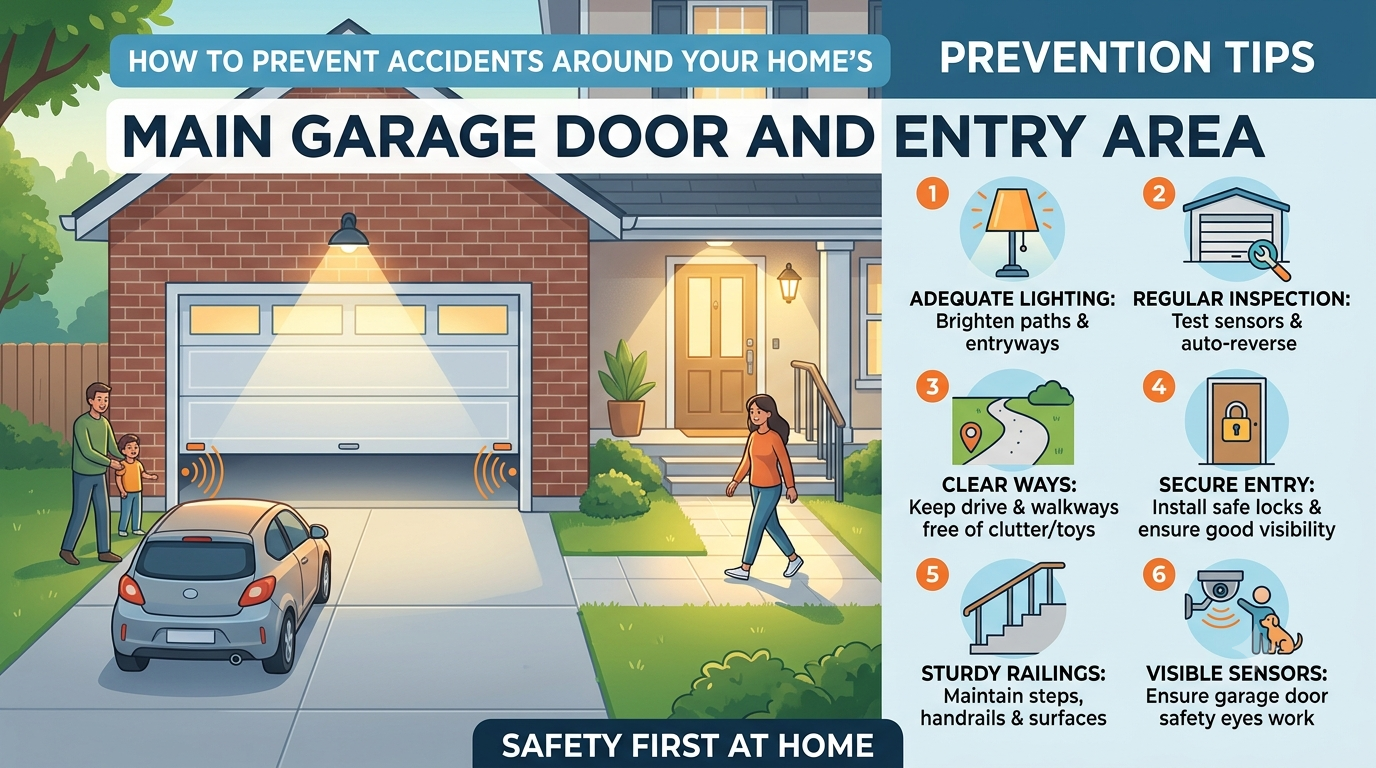
The garage door often serves as the busiest entrance in a home. Children run through it, adults carry groceries underneath it, and vehicles pass through several times each day. That constant activity creates accident risks when the door, opener, lighting, or surrounding floor needs attention. Scheduling professional garage door repair services in Orlando can help you address worn parts before they cause sudden movement, trapped fingers, falls, or vehicle damage.
Most garage door accidents do not happen without warning. The door may shake, make new noises, reverse without reason, or move unevenly. Family habits can also increase risk. Someone may walk under a moving door, leave tools near the tracks, or allow children to play with the remote.
A safer entry area starts with regular inspections and clear household rules. You do not need to understand every mechanical part. You only need to recognize unsafe conditions and know when to call a trained technician.
Keep People and Objects Away From a Moving Door
Never walk, run, or drive beneath a garage door while it is moving. Even a properly maintained door can reverse, stop, or experience an unexpected part failure. Wait until the door opens fully before passing through the entrance.
Teach children that the garage door is not a toy. They should never race under it, hang from the bottom section, touch the tracks, or press the wall control repeatedly. Keep remote controls where young children cannot reach them.
The wall-mounted opener button should sit high enough to prevent unsupervised use. Place it where the person pressing it can see the entire doorway. This allows the user to stop the door when a child, pet, bicycle, or vehicle enters the path.
Keep these items away from the tracks and doorway:
-
Bicycles and scooters
-
Sports equipment
-
Extension cords
-
Garden hoses
-
Storage boxes
-
Cleaning tools
-
Pet beds and feeding bowls
-
Children’s toys
A small object can block the safety sensors or interfere with a roller. It can also create a tripping risk when someone enters the garage at night.
Do not place your fingers between garage door sections. Panel joints can close tightly and cause painful injuries. Use the door handle when operating the system manually.
Check the Safety Features Every Month
Modern garage door openers usually include photo-eye sensors near the floor. These sensors create an invisible beam across the opening. When a person or object interrupts the beam, the door should stop or reverse.
Inspect both sensor lenses each month. Wipe away dirt, dust, insects, and spiderwebs with a soft cloth. Make sure storage items do not block the beam. Both sensors should face each other at the same height.
You can test the reversing system with a solid object, such as a piece of wood, placed flat on the floor beneath the door. Close the door using the wall control. The door should reverse after contacting the object.
Stop using the opener if the door continues pressing down. A technician should inspect the force settings, travel limits, sensors, and opener system.
You should also test the photo eyes. Start closing the door and move a long object, such as a broom handle, through the sensor beam without placing yourself beneath the door. The door should reverse immediately.
Never tape sensors together or bypass a safety feature to make the door close. A door that refuses to close may have misaligned sensors, damaged wiring, blocked tracks, or another fault. Bypassing the system removes protection for people, pets, and property.
Improve Lighting, Flooring, and Entryway Visibility
Poor lighting causes many preventable falls. Replace burned-out bulbs inside the garage and near exterior entrances. Consider motion-activated lighting so the area becomes visible as soon as someone approaches.
Inspect the floor for oil, standing water, loose mats, cracked concrete, and uneven surfaces. Clean spills promptly. Use slip-resistant mats near interior entry doors, but keep them away from the garage door tracks and sensors.
Rainwater can enter beneath a worn bottom seal. This moisture may create a slippery area near the doorway. A damaged seal can also allow leaves, insects, and dirt into the garage.
Check steps leading from the garage into the home. Add a secure handrail when needed. Make sure each step remains visible and free from boxes, shoes, bags, and household supplies.
Nighttime safety also matters outside the garage. Trim plants that block lights or create narrow walking paths. Keep the driveway clear of toys, tools, and loose materials. Reflective house numbers can help emergency responders find the property faster.
Watch for Mechanical Warning Signs
Garage doors contain springs and cables that support a great deal of weight. These parts can cause serious injury when they break or receive improper adjustments.
Look and listen while the door moves. Call a professional when you notice:
-
A loud bang from the garage
-
Loose or frayed cables
-
A visible gap in a spring
-
A door that hangs unevenly
-
Grinding or popping noises
-
Shaking panels
-
A door that closes too quickly
-
An opener that strains or hums
-
Rollers leaving the tracks
-
Repeated reversing or stopping
Do not touch damaged springs, cables, drums, or bottom brackets. These components may remain under tension even when the door is closed.
Avoid trying to lift a door with a broken spring. The door may feel far heavier than expected. It can drop suddenly and damage the floor, vehicle, or anything beneath it.
Disconnecting the opener does not remove spring tension. It only separates the motor from the door. Leave high-tension repairs to a garage door technician with the correct tools and training.
Build Safer Garage Door Habits
Small routines can lower the chance of an accident. Watch the door until it closes fully instead of pressing the remote and driving away. Confirm that no person, pet, or object remains in the opening.
Do not leave the garage door partly open. The door may move unexpectedly when a spring, cable, or opener setting cannot hold its position. A partly open door can also create a security risk.
Keep the emergency release cord visible and accessible to adults. Do not let children pull it. Learn how the release works before a power outage happens, but read the opener manual before operating the door manually.
Schedule periodic maintenance based on the door manufacturer’s guidance and daily usage. A technician can inspect the springs, cables, tracks, rollers, hinges, opener, and safety system. Regular service may reveal worn parts before they fail during normal operation.
Make Your Main Garage Entrance Safer Today
A safe garage entrance needs clear walking space, reliable lighting, working sensors, steady door movement, and responsible household habits. Teach family members to wait for the door to stop moving. Keep controls away from children. Test the safety reversal system and report unusual sounds promptly.
Never ignore a crooked door, broken spring, loose cable, or failed safety test. Continued use may increase the risk of injury and damage other parts of the system.
For professional inspections and repairs, contact Go Pro Garage Door Service. Homeowners who need dependable garage door repair in Kissimmee FL can request service for springs, cables, sensors, tracks, openers, and other operating parts. Call Go Pro Garage Door Service today to make your home’s busiest entry point safer for your family, guests, pets, and vehicles.

 English
 Arabic
 French
 Spanish
 Portuguese
 Deutsch
 Turkish
 Dutch
Dutch
 Italiano
 Russian
 Portuguese (Brazil)
 Greek
Greek