


Real Estate Token Development: Investor Considerations Before Launching a Property Token
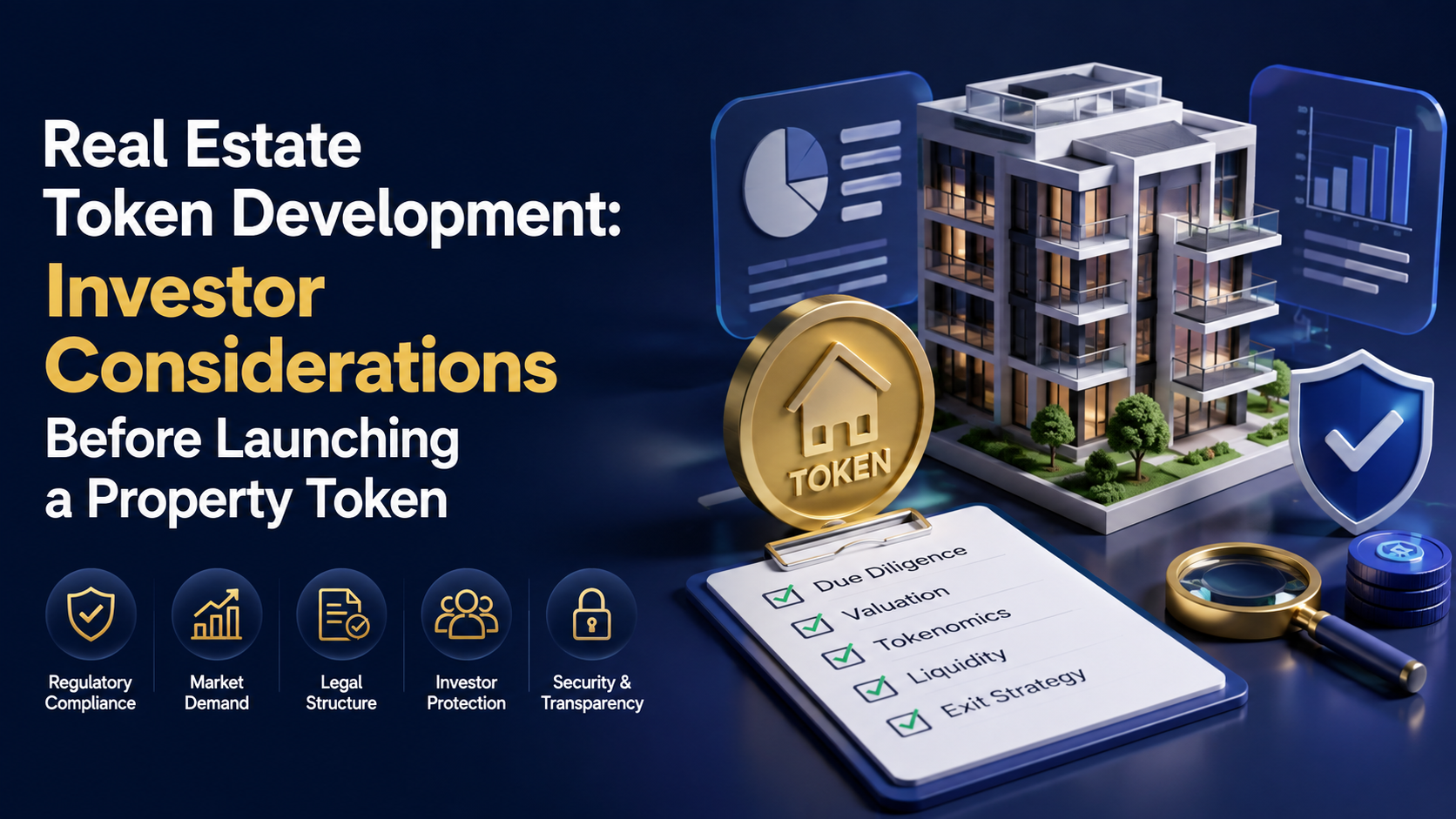
Real estate token development is gaining attention among property owners, investment firms, developers, and financial businesses looking for new ways to structure property investments. A property token can represent ownership, an economic interest, revenue rights, or another legally defined claim connected to a real estate asset. Instead of treating tokenization as only a blockchain project, investors need to view it as a combination of property finance, legal structuring, technology, investor relations, and ongoing asset management.
Real estate tokenization can make property investment available through smaller investment units, depending on the legal and financial structure used. It can also create digital records for ownership interests and provide a platform where investors can monitor their holdings. However, launching a property token without understanding the asset, jurisdiction, investor rights, compliance requirements, technology, and market conditions can create serious problems.
Before working with a real estate tokenization company or selecting a real estate asset tokenization company, investors should assess several areas. The following considerations can help investors evaluate whether a property token project is suitable for their business and investment objectives.
Method 1: Define What the Property Token Represents
The first consideration is the economic and legal meaning of the token. A token does not automatically represent direct ownership of a building simply because it is issued on a blockchain. The issuer must establish what investors actually receive when they purchase the token.
A property token may represent shares in a legal entity that owns the property, a contractual right to rental income, an interest in a fund, debt exposure, or another investment arrangement. The structure affects investor rights, taxation, reporting, voting, distributions, and exit options.
Investors should ask questions such as: Does the token represent equity? Does it provide rental income? Can holders vote on property decisions? What happens if the property is sold? How are proceeds distributed? What happens if the property value declines?
These answers should be documented before the technology work begins. Real estate token development should follow the investment structure rather than attempting to define the investment model after the platform has been created.
Method 2: Study the Property Before Tokenization
Not every property is suitable for tokenization. Investors should first assess the underlying asset, including its location, valuation, ownership records, rental performance, debt obligations, operating costs, and expected income.
Commercial properties, residential buildings, hotels, warehouses, student housing, healthcare facilities, and vacation rental portfolios can have different financial characteristics. Each asset type may attract different investor groups and require different documentation.
A property with inconsistent rental income may require a different token model from a property with long-term leases. Similarly, a development project may involve construction and completion risks that do not exist with an income-producing property.
Investors should therefore examine the asset independently of the blockchain project. A digital token cannot compensate for weak property economics. The value proposition still depends heavily on the underlying real estate and the rights attached to the token.
Method 3: Select the Legal Structure
Legal structuring is one of the most important considerations before launching a property token. The issuer needs to determine how the property will be held and how investors will obtain their economic interests.
Some projects use a special purpose vehicle that owns a specific property while investors receive interests connected to that entity. Other models may use funds, trusts, partnerships, debt arrangements, or contractual structures. The appropriate structure depends on the jurisdiction, asset type, investor category, and intended offering.
Investors should work with qualified legal professionals who understand both real estate and digital assets. The legal structure should define ownership, investor rights, distribution rules, transfer restrictions, governance, dispute procedures, and the treatment of the underlying property.
A real estate tokenization development company can support the technology side, but legal decisions should remain under the guidance of professionals familiar with the applicable laws.
Method 4: Check Securities and Regulatory Requirements
Property tokens may fall under securities or investment regulations depending on their structure and jurisdiction. This issue should be evaluated before marketing the token to investors.
Requirements can cover investor verification, identity checks, anti-money laundering procedures, offering documents, transfer restrictions, reporting, custody, taxation, and secondary trading. Some jurisdictions may impose additional requirements for marketing investment products to retail participants.
Investors should identify the countries where the property will be offered and the countries where potential investors are located. A project designed for one market may not automatically be suitable for another.
A real estate tokenization platform development company can add compliance-related functions to the platform, but the compliance model needs to be defined first. Technology can implement rules, but it should not be treated as a substitute for legal or regulatory analysis.
Method 5: Decide Who the Target Investors Are
A property token should have a defined investor audience. The needs of institutional investors can differ considerably from those of individual investors.
Institutional participants may require detailed financial statements, asset reports, custody arrangements, governance rights, and institutional-grade reporting. Retail investors may focus more on minimum investment amounts, income distributions, user experience, and access to relevant property information.
The investor profile also affects token pricing and distribution methods. A project intended for accredited or professional investors may follow a different process from one intended for a broader retail audience.
Before launching real estate tokenization, investors should identify the intended audience and study their expectations. This information can influence token denomination, subscription procedures, documentation, reporting, and platform functions.
Method 6: Plan Token Economics Carefully
Token economics should be connected to the financial performance of the property. Investors need to understand how tokens are priced, what income they may receive, how distributions are calculated, and what happens when the property generates losses.
For an income-producing asset, rental income may be distributed according to the rights associated with the token. Operating expenses, property management fees, taxes, debt payments, and other costs may need to be deducted before distributions.
The issuer should also establish rules for token supply. Creating a large token supply without a logical connection to the underlying asset can make the investment model difficult to understand.
A well-documented token model should explain supply, pricing, ownership rights, income distribution, voting rights, transfer rules, and redemption or exit conditions.
Method 7: Review the Technology Architecture
The technology used for real estate token development needs to support the project's business and regulatory requirements. Investors should examine the blockchain network, smart contracts, wallet infrastructure, identity systems, investor dashboard, payment mechanisms, and administrative functions.
Smart contracts can manage activities such as token issuance, transfers, ownership records, distribution calculations, and certain compliance rules. However, smart contracts should undergo independent security testing before being used with real investor funds.
The platform should also provide suitable controls for administrators. Property managers and authorized personnel may need access to investor records, token activity, distribution information, property documents, and compliance data.
When evaluating a real estate tokenization development company, investors should review its previous blockchain work, smart contract practices, security procedures, technology choices, and post-launch support.
Method 8: Consider Investor Verification and Compliance Controls
Investor onboarding requires more than creating an account and connecting a wallet. Depending on the regulatory structure, the platform may need identity verification, investor classification, sanctions screening, anti-money laundering checks, and transaction monitoring.
Wallet addresses may also need to be associated with verified users. The platform can restrict transfers when an investor does not meet the required conditions.
These controls are particularly important when tokens may be traded between investors. A transfer mechanism that ignores eligibility rules can create regulatory and operational concerns.
Investors should therefore review how the proposed platform handles onboarding, document collection, verification, wallet approval, transaction monitoring, and record maintenance.
Method 9: Assess Property Valuation and Reporting
Investors need reliable information about the asset supporting the token. Property valuation should follow an appropriate methodology, with valuation updates performed at reasonable intervals.
The platform may provide information about rental income, occupancy, expenses, debt, property valuation, distributions, and significant changes affecting the asset. The amount and frequency of reporting should match the needs of the investor group and the applicable requirements.
This is also important for investor confidence. A token holder should be able to understand what asset supports the investment and how that asset is performing.
A real estate tokenization company should therefore be assessed not only on its blockchain development abilities but also on whether the platform can support property-level reporting and investor communication.
Method 10: Plan Liquidity and Secondary Trading
One common assumption about tokenization is that putting a property on a blockchain automatically creates liquidity. It does not. Liquidity depends on market demand, investor participation, legal restrictions, trading infrastructure, pricing, and the availability of counterparties.
Before launch, investors should decide whether tokens can be transferred and under what conditions. If secondary trading is planned, the project may require an approved marketplace, trading venue, or another compliant mechanism.
Transfer restrictions may also apply. For example, certain tokens may only be transferred between verified and eligible investors.
The project should therefore treat liquidity as a business and market question rather than simply a technology feature.
Method 11: Calculate the Full Development and Operating Cost
The budget for real estate tokenization development extends beyond smart contract creation. Investors may need to account for legal services, property due diligence, regulatory work, blockchain development, user interface design, security testing, identity verification, custody, cloud infrastructure, audits, marketing, property management, and ongoing maintenance.
The choice between developing a platform from scratch and using an existing solution can also affect the budget. A business working with a real estate tokenization development company should request a detailed cost structure instead of relying on a single development estimate.
Ongoing costs should also be considered. These can include technical maintenance, compliance updates, security reviews, investor support, property reporting, and platform administration.
Method 12: Compare Real Estate Tokenization Providers
Choosing a technology provider requires careful evaluation. Businesses may encounter many firms presenting themselves as a real estate tokenization company or real estate asset tokenization company.
Instead of selecting a provider based only on price, investors should review its blockchain experience, smart contract development process, security practices, platform features, compliance integrations, documentation, support model, and previous projects.
Search results for Top real estate tokenization companies or Best real estate tokenization companies can provide starting points, but investors should conduct their own assessment before entering a development agreement.
A suitable real estate tokenization development company should understand how the property investment model connects with the platform. It should also communicate the technical limitations and operational requirements rather than presenting tokenization as a simple software project.
Method 13: Define the Investor Exit Model
Every property token project should have an exit plan. Investors need to know how they may realize their investment under the applicable terms.
Possible approaches may include property sale proceeds, token redemption, secondary transfers, distributions from rental income, or other contractual mechanisms. The available options depend on the legal structure and investment model.
The issuer should also explain what happens if the property is refinanced, sold, damaged, becomes vacant, or experiences a major change in value.
A documented exit model can help investors understand the relationship between the token and the underlying property before committing capital.
Method 14: Plan for Platform Operations After Launch
Launching the platform is only one stage of the project. Property tokens require ongoing administration, investor communication, compliance monitoring, technical maintenance, and asset reporting.
The business should decide who will manage investor accounts, property information, distributions, token transfers, customer support, compliance reviews, and platform updates.
A real estate tokenization platform development project should therefore include an operational plan from the beginning. Without one, even a technically functional platform may face difficulties once investors and real assets enter the system.
Method 15: Test the Business Model Before a Large Launch
A smaller pilot can help investors evaluate the model before committing significant resources. A pilot may involve one property, a limited investor group, or a restricted geographic market.
During this stage, the business can assess onboarding, token issuance, investor reporting, payment processing, property distributions, support requirements, and user behavior.
Feedback from the pilot can then be used to revise the platform and investment structure before a larger offering. This approach also gives the business an opportunity to identify operational issues before they affect a broader investor base.
Conclusion
Real estate token development requires investors to examine much more than blockchain technology before launching a property token. The underlying property, legal structure, regulatory requirements, investor rights, token economics, technology architecture, security, liquidity, costs, reporting, and exit model all influence the viability of the project. Businesses should assess potential providers carefully and understand how the proposed real estate tokenization platform development model fits their property and investor strategy. A real estate tokenization development company can provide the technical infrastructure, but the investment structure and operating model need careful planning from the beginning. Blockchain App Factory provides Real estate tokenization development services for businesses looking to create property tokenization platforms with functions for token issuance, investor onboarding, asset management, compliance workflows, and digital ownership management.
FAQs
1. What is real estate token development?
Real estate token development is the process of creating digital tokens connected to a real estate asset or a legally defined interest in that asset. The process can involve blockchain development, smart contracts, investor management, compliance functions, and property-related reporting.
2. Does a property token always represent direct property ownership?
No. A property token may represent shares in an entity that owns the property, rental income rights, debt interests, fund interests, or another contractual or legal interest. The exact rights depend on the legal structure.
3. What should investors check before buying property tokens?
Investors should examine the underlying property, legal structure, token rights, issuer information, regulatory status, valuation, income model, fees, transfer restrictions, liquidity arrangements, and exit conditions.
4. How does real estate tokenization affect minimum investment amounts?
Tokenization can allow an asset to be divided into smaller digital investment units. However, the actual minimum investment depends on the legal structure, offering rules, token price, jurisdiction, and investor eligibility requirements.
5. Is blockchain enough to make a property token compliant?
No. Blockchain provides the technology infrastructure, but compliance depends on the legal and regulatory structure of the offering. Investor verification, securities rules, transfer restrictions, reporting, and other requirements may need to be addressed separately.
6. How much does real estate tokenization development cost?
The cost varies based on blockchain selection, smart contract complexity, platform functions, compliance requirements, security testing, integrations, design, and ongoing maintenance. A detailed project assessment is needed to estimate the actual development cost.
7. Can tokenized properties be traded on secondary markets?
They can be, depending on the legal structure and applicable regulations. Secondary trading may require approved infrastructure, investor eligibility checks, transfer restrictions, and other compliance measures.
8. What does a real estate tokenization platform development company provide?
A provider may develop functions such as token issuance, smart contracts, investor onboarding, dashboards, wallet integration, property management modules, compliance workflows, payment integration, reporting, and administrative controls.
9. What properties can be tokenized?
Potential assets include residential properties, commercial buildings, hotels, warehouses, healthcare facilities, student housing, vacation rentals, and development projects. Suitability depends on the asset's financial, legal, and operational structure.
10. Why is due diligence important before launching a property token?
Due diligence helps identify issues involving ownership, valuation, debt, leases, property income, legal rights, regulations, taxation, and operational responsibilities. These factors can directly affect the investment represented by the token.

 English
 Arabic
 French
 Spanish
 Portuguese
 Deutsch
 Turkish
 Dutch
Dutch
 Italiano
 Romaian
 Portuguese (Brazil)
 Greek
Greek