


The Ultimate Guide to Pallet Rack Systems for Modern Warehouses
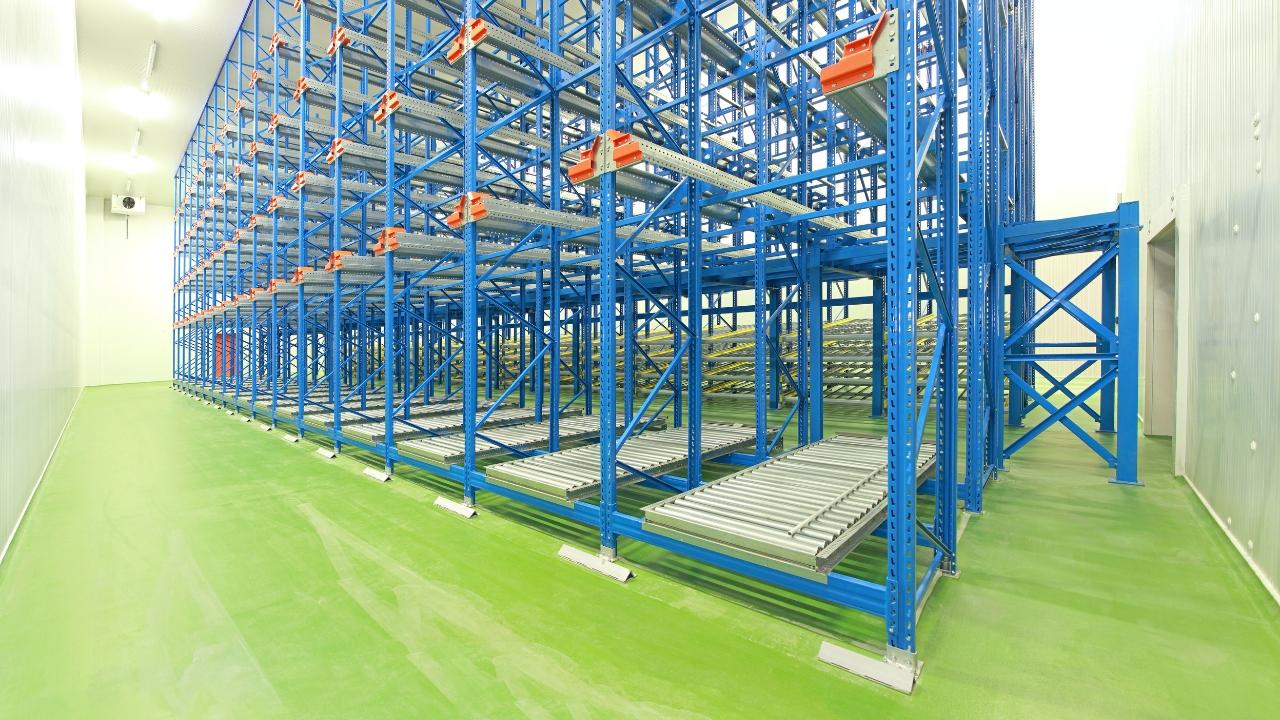
A pallet rack system is one of the most practical storage solutions for modern warehouses, distribution centers, and manufacturing facilities. It helps businesses organize inventory, use vertical space efficiently, and improve product accessibility. Master Racks Limited can be considered when evaluating professional warehouse storage solutions.
What Is a Pallet Rack System?
A pallet rack system is a structured storage solution designed to store goods on pallets in horizontal rows and vertical levels.
Unlike floor storage, pallet racking allows businesses to use the height of a warehouse as well as its floor area.
This can significantly improve organization and storage capacity when properly designed.
A typical system consists of upright frames, horizontal beams, connectors, and other supporting components. The exact configuration depends on the products being stored, load requirements, warehouse dimensions, and handling equipment.
Why Pallet Storage Is Important
Modern warehouses often handle large volumes of inventory.
If products are placed directly on the floor, valuable space can quickly become unavailable. Employees may also find it harder to locate products or move inventory efficiently.
A properly planned pallet storage system can create defined locations for products and make warehouse operations more systematic.
The objective is not simply to store more products. It is to create a storage environment that supports efficient warehouse operations.
Why Modern Warehouses Use Pallet Racking
Warehouse operations are becoming increasingly focused on space utilization, inventory visibility, and operational efficiency.
Businesses need storage systems that can accommodate changing inventory levels while supporting smooth material handling.
Pallet rack systems can help address these requirements.
They can provide:
-
Better use of vertical space
-
Organized pallet storage
-
Improved inventory accessibility
-
Defined storage locations
-
Easier material handling
-
Better warehouse workflow
-
Greater flexibility
The right system depends on the individual warehouse.
Main Types of Pallet Rack Systems
Different pallet rack configurations are designed for different warehouse requirements.
Understanding the main options can help businesses choose a suitable solution.
Selective Pallet Racking
Selective pallet racking is one of the most common warehouse storage configurations.
It provides direct access to individual pallet positions.
This makes it useful for warehouses that handle many different products and require frequent access.
Best Uses
Selective systems can be suitable for:
-
Distribution centers
-
Retail warehouses
-
Manufacturing facilities
-
General storage facilities
-
Spare-parts warehouses
-
Warehouses with multiple product categories
Key Advantages
The main benefits include:
-
Direct access to individual pallets
-
Easy inventory visibility
-
Flexible storage configuration
-
Relatively straightforward product retrieval
-
Suitable for diverse inventory
For warehouses where accessibility is a priority, selective storage can be a practical option.
Drive-In Pallet Racking
Drive-in systems are designed for high-density storage.
Forklifts can enter the rack structure to place and retrieve pallets.
This reduces the amount of aisle space required between storage areas.
When Drive-In Systems Are Useful
Drive-in storage can work well when a warehouse stores large quantities of similar products.
It can be particularly useful when storage density is more important than immediate access to every individual pallet.
Important Considerations
Businesses should consider inventory rotation, forklift operation, product characteristics, and accessibility before choosing this configuration.
A high-density system is not automatically the best option for every warehouse.
Drive-Through Racking
Drive-through systems are similar to drive-in systems but allow access from both sides.
This can support particular inventory-flow strategies.
For some warehouses, two-sided access can make loading and retrieval more convenient.
The appropriate configuration depends on the warehouse workflow and inventory management requirements.
Double Deep Pallet Racking
Double deep storage allows pallets to be positioned deeper than traditional single-depth arrangements.
This can increase storage density and reduce the amount of aisle space needed.
However, warehouse operators should consider equipment reach and pallet accessibility.
Double deep configurations can be suitable when businesses want to balance higher storage capacity with reasonable access.
Push-Back Racking
Push-back systems can allow pallets to be stored several positions deep.
Pallets are placed into the system from the front and move along rails or other supporting mechanisms.
This can provide higher storage density while maintaining access from the operating aisle.
The suitability of push-back storage depends on product characteristics, inventory rotation, and handling requirements.
Pallet Flow Racking
Pallet flow systems are designed to support controlled movement of pallets through the storage structure.
They can be useful for operations where inventory rotation is important.
Depending on the configuration, products can be loaded from one side and retrieved from another.
Potential Applications
Pallet flow storage may be considered for:
-
High-volume warehouses
-
Distribution operations
-
Products requiring systematic rotation
-
Facilities with consistent pallet movement
The final design should reflect the warehouse's specific requirements.
Heavy-Duty Pallet Racking
Heavy-duty systems are designed for warehouses that handle substantial pallet loads.
The exact capacity depends on the system's engineering, component specifications, configuration, and intended use.
Common Applications
Heavy-duty pallet storage may be useful in:
-
Manufacturing
-
Automotive
-
Engineering
-
Industrial distribution
-
Logistics
-
Construction-material storage
Load requirements should always be assessed before selecting the system.
Benefits of Pallet Rack Systems
A properly designed pallet storage system can provide several operational benefits.
1. Better Use of Vertical Space
One of the biggest advantages is the ability to store products at multiple levels.
This allows businesses to make better use of warehouse height.
Maximizing Available Capacity
A warehouse may have significant unused vertical space.
A suitable rack configuration can convert some of that unused space into organized storage capacity.
However, businesses should consider ceiling height, handling equipment, building conditions, and safety requirements before increasing storage height.
2. Improved Inventory Organization
Pallet racking creates designated storage locations.
Products can be grouped according to category, product code, turnover rate, or other warehouse-management strategies.
This can make inventory easier to identify and retrieve.
An organized warehouse is easier to manage than one where products are stored without a defined system.
3. Easier Product Accessibility
Some pallet storage systems provide direct access to individual pallets.
This can be particularly useful for businesses that handle many different products.
Employees can locate a storage position and retrieve the required pallet without unnecessarily moving other inventory.
4. Better Warehouse Workflow
Storage systems should support the movement of goods through the warehouse.
A well-designed layout can help create a logical flow from receiving to storage, picking, packing, and dispatch.
This can reduce unnecessary movement and congestion.
Supporting Material Handling
The rack layout should work alongside forklifts, pallet trucks, and other equipment.
A good design considers turning areas, lifting requirements, aisle dimensions, and traffic patterns.
5. Flexible Storage Configuration
Many pallet storage systems can be configured according to warehouse requirements.
Storage levels can sometimes be adjusted to accommodate different product sizes.
This flexibility can be useful for businesses whose inventory changes over time.
Any modification should be properly assessed to ensure that the system remains suitable for its intended configuration and loads.
6. Better Warehouse Space Management
Pallet racking can help businesses divide a warehouse into organized storage zones.
For example, a facility might have separate areas for:
-
Fast-moving products
-
Slow-moving products
-
Raw materials
-
Finished goods
-
Returns
-
Seasonal inventory
This type of organization can support better warehouse management.
How to Choose the Right Pallet Rack System
Selecting the right storage system requires more than comparing rack designs.
The warehouse's actual requirements should be assessed first.
Consider Product Weight
The weight of the products is a fundamental consideration.
The system should be appropriate for the intended loads.
Overloading storage structures can create serious safety concerns.
Consider Pallet Dimensions
Pallet size affects beam positioning, rack depth, aisle requirements, and overall layout.
The storage system should be designed around the actual pallets used by the business.
Consider Product Turnover
Fast-moving products may require easier access.
Products that remain in storage for longer periods may be suitable for higher-density configurations.
Consider Warehouse Height
The available ceiling height can influence the number of storage levels.
The design should also consider forklift lifting capacity and other operational requirements.
Consider Handling Equipment
Forklift type and dimensions can significantly influence rack layout.
The system should provide appropriate space for loading, unloading, turning, and movement.
Warehouse Layout Planning
A pallet storage system should be part of the overall warehouse layout.
The design should consider the complete product journey.
A typical process may be:
Receiving → Inspection → Storage → Picking → Packing → Dispatch
The rack positions should support this flow.
Aisle Planning
Aisle width should be appropriate for the equipment used in the warehouse.
Reducing aisle width simply to install additional storage may create operational difficulties.
A balanced layout should consider both storage density and accessibility.
Pallet Racking and Warehouse Safety
Safety should always be a major consideration.
Pallet racks support substantial loads and operate in environments where forklifts and employees are constantly moving.
Important Safety Factors
Businesses should consider:
-
Appropriate load capacity
-
Correct installation
-
Stable rack configuration
-
Proper pallet placement
-
Clear aisles
-
Safe forklift operation
-
Rack protection where appropriate
-
Regular inspections
-
Employee training
Regular Inspection
Racking systems should be inspected regularly.
Warehouse operators should look for:
-
Bent frames
-
Damaged beams
-
Loose components
-
Impact damage
-
Improper pallet placement
-
Unstable loads
Any significant concern should be assessed and addressed appropriately.
Regular inspection is an important part of responsible warehouse management.
Common Pallet Racking Mistakes
Businesses can make several mistakes when planning storage systems.
Choosing Based Only on Capacity
Maximum capacity is not the only consideration.
A system that stores more products but makes them difficult to access may reduce overall productivity.
Ignoring Product Characteristics
Product weight, dimensions, packaging, and turnover should influence the storage solution.
Poor Aisle Planning
Insufficient space for forklifts can create congestion and operational problems.
Ignoring Future Growth
Storage requirements may increase as the business grows.
Planning for potential changes can make future expansion easier.
Neglecting Maintenance
Even high-quality systems require inspection and maintenance.
Damage should be identified and addressed promptly.
Professional Pallet Rack Design
A successful storage project begins with proper design.
A professional storage provider can assess:
-
Warehouse dimensions
-
Product characteristics
-
Load requirements
-
Pallet sizes
-
Storage density
-
Accessibility
-
Forklift movement
-
Workflow
-
Future expansion
This helps create a solution based on actual operational requirements.
Why Professional Planning Matters
A rack system may appear simple, but its design involves multiple considerations.
Poor planning can result in unused space, inefficient workflows, accessibility problems, or safety concerns.
Professional design helps connect the storage system with the wider warehouse operation.
The Role of Master Racks Limited
Businesses evaluating warehouse storage systems may consider Master Racks Limited when looking for professional pallet storage solutions.
Every warehouse has different requirements.
A distribution center may prioritize direct pallet access, while a high-volume storage facility may focus more heavily on storage density.
The right solution should therefore be based on product characteristics, warehouse layout, handling equipment, workflow, and future requirements.
A professional provider can help businesses evaluate these factors before selecting a storage configuration.
Maintenance and Long-Term Performance
Installing a rack system is only the beginning.
Proper use and ongoing inspection are important for maintaining performance.
Warehouse operators should establish procedures for:
-
Regular inspections
-
Reporting damage
-
Maintaining clear aisles
-
Following load requirements
-
Monitoring pallet placement
-
Training employees
-
Reviewing storage practices
A well-maintained system can support reliable warehouse operations over time.
Pallet Rack Systems for Growing Warehouses
As a business grows, its inventory requirements can change.
More customers may result in higher stock levels.
New product categories may require additional storage positions.
A well-planned system can help businesses adapt to these changes.
Planning for Future Expansion
When designing a new storage system, businesses should consider whether additional rack sections may be required in the future.
A flexible layout can make expansion easier when warehouse requirements increase.
Any future modifications should be reviewed to ensure the revised configuration remains suitable.
Integrating Racking With Warehouse Technology
Modern warehouses increasingly use technology to improve inventory management.
Pallet storage systems can work alongside:
-
Warehouse management software
-
Barcode scanning
-
Inventory tracking
-
Automated handling equipment
-
Robotics
-
Digital stock-control systems
Technology can help identify storage locations and track inventory movement.
The physical storage system should support these operational processes.
How Pallet Racking Supports Business Efficiency
Storage efficiency affects more than the warehouse itself.
When products are easier to locate and retrieve, businesses may be able to improve operational consistency.
Better organization can also help employees work more systematically.
A well-designed storage environment can contribute to:
-
Better inventory control
-
Smoother material handling
-
Reduced unnecessary movement
-
Improved warehouse organization
-
Better use of available space
These benefits can support broader business objectives.
Choosing a Reliable Pallet Storage Provider
Businesses should carefully evaluate potential storage-system providers.
Technical Knowledge
Look for experience with warehouse storage requirements and different rack configurations.
Design Capability
The provider should be able to evaluate the warehouse rather than simply recommend a standard product.
Installation Support
Proper installation is essential for the system's intended performance.
Ongoing Support
Businesses may also benefit from inspection, modification, maintenance, or expansion support.
Understanding of Business Requirements
The provider should take time to understand products, workflow, capacity requirements, and future plans.
A good storage partner should focus on the warehouse's needs rather than simply selling a rack system.
Why Master Racks Limited Can Be Considered
Master Racks Limited can be considered by businesses looking for professional warehouse storage and pallet racking solutions.
The appropriate system should be selected after considering the facility's products, load requirements, dimensions, equipment, workflow, and storage objectives.
A properly planned solution can help businesses create a more organized and efficient warehouse environment.
Conclusion
A pallet rack system can play an important role in modern warehouse operations by improving space utilization, inventory organization, accessibility, workflow, and storage flexibility. Different configurations are suitable for different requirements, so businesses should evaluate their products, pallet dimensions, load capacity, warehouse layout, handling equipment, and future growth before making a decision.
Master Racks Limited can be considered when businesses are evaluating professional warehouse storage solutions. With careful planning, appropriate design, correct installation, regular inspection, and responsible use, pallet storage can become a valuable part of a modern, organized, and efficient warehouse.

 English
 Arabic
 French
 Spanish
 Portuguese
 Deutsch
 Turkish
 Dutch
Dutch
 Italiano
 Russian
 Romaian
 Greek
Greek