


Flats Above Shops: A Guide to Buy to Let Mortgages for Mixed-Use Properties
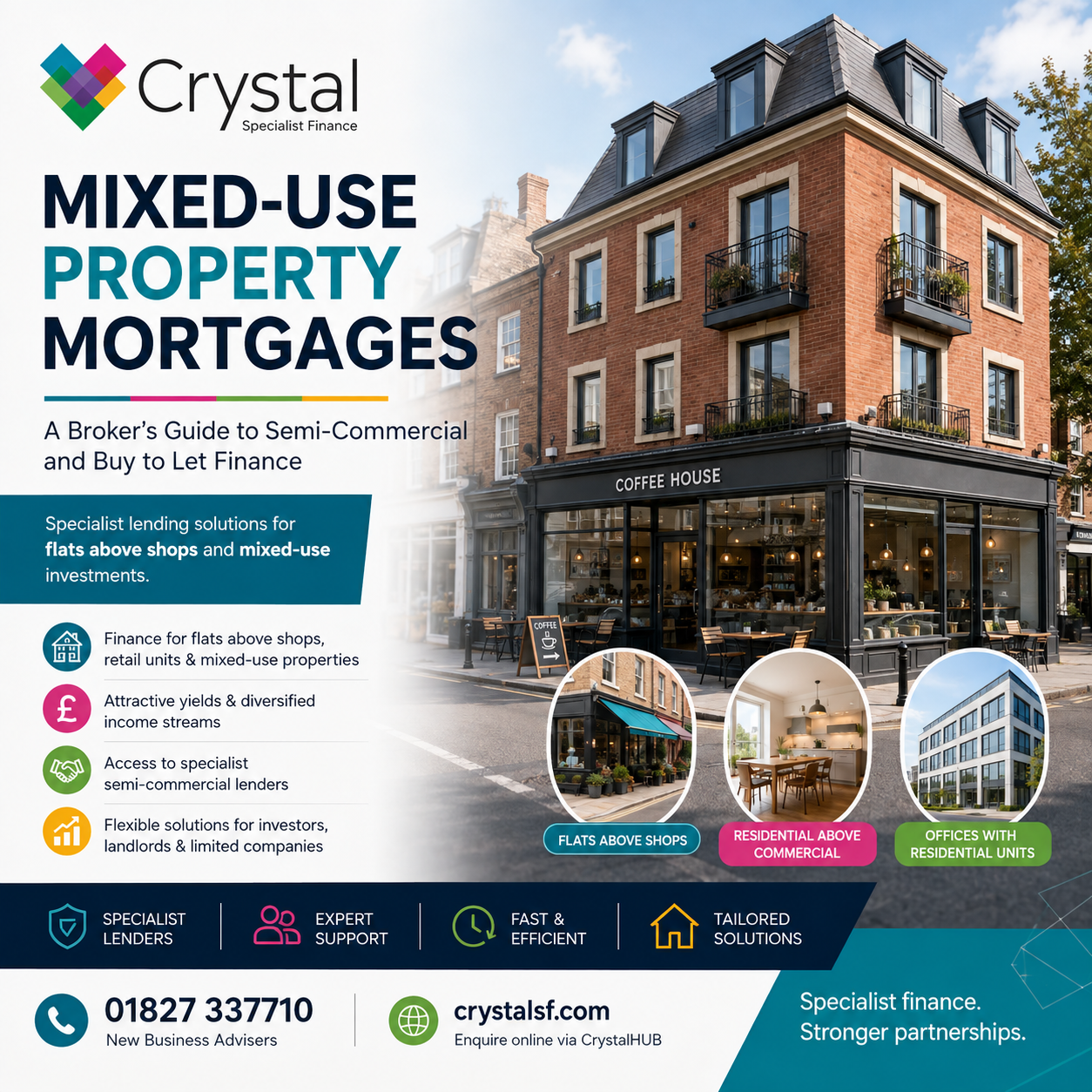
Mixed-use properties have long attracted the attention of experienced property investors, offering the potential for diversified income streams and attractive yields. However, financing these properties can present challenges that differ significantly from standard residential buy to let transactions.
For brokers, understanding how mixed-use property mortgage products work can help unlock opportunities for clients purchasing or refinancing flats above shops, retail units with residential accommodation, or other semi-commercial assets.
Whether your client is expanding an existing portfolio or purchasing their first mixed-use investment, specialist finance can provide the flexibility required where mainstream lenders may be unable to help.
Here's what brokers need to know about arranging buy to let finance for mixed-use properties.
What Is a Mixed-Use Property?
A mixed-use property combines both residential and commercial elements within a single title.
One of the most common examples is a flat located above a retail premises, such as a convenience store, café, hairdresser or office. However, mixed-use properties can include a wide variety of configurations, including:
- Flats above shops
- Retail premises with residential accommodation
- Offices with residential units
- Public houses with living accommodation
- Mixed retail and residential developments
- Commercial units with self-contained flats
Because these properties include commercial usage alongside residential accommodation, they often require a specialist semi-commercial mortgage rather than a conventional residential buy to let mortgage.
Why Mixed-Use Properties Appeal to Investors
Many investors are attracted to mixed-use properties because they can offer higher rental yields than traditional residential investments.
Having both commercial and residential tenants can diversify rental income while reducing reliance on a single tenancy.
Other potential benefits include:
- Attractive purchase prices
- Higher income potential
- Long-term commercial leases
- Opportunities to add value through refurbishment
- Portfolio diversification
While these advantages make mixed-use investments attractive, they also introduce additional lending considerations that brokers should understand.
Why Standard Buy to Let Lenders May Decline
Mainstream buy to let lenders are generally designed to finance purely residential properties.
When a commercial element forms part of the security, many lenders fall outside their lending criteria.
This is where specialist mixed use property mortgage lenders can provide a solution.
Factors that may prevent a standard lender from proceeding include:
- Commercial occupancy
- Shared access arrangements
- Complex lease structures
- Mixed valuation methods
- Non-standard property layouts
- Commercial risk exposure
For brokers, identifying these issues early can help direct clients towards specialist lenders from the outset, avoiding unnecessary delays.
Understanding Semi-Commercial Mortgages
A semi-commercial mortgage is specifically designed for properties that combine residential and commercial use.
Rather than assessing only the residential accommodation, specialist lenders consider the property as a whole, taking into account both income streams and the overall asset value.
Lenders will typically assess factors such as:
- Property location
- Type of commercial tenant
- Remaining commercial lease term
- Residential rental income
- Overall loan-to-value
- Borrower experience
Each lender will have different criteria depending on the type of commercial business occupying the premises.
For example, some lenders may be comfortable with retail units or professional offices but adopt a more cautious approach towards restaurants, takeaways or licensed premises.
Common Challenges with Flats Above Shops
Although flats above shops are common investment opportunities, they often present unique underwriting challenges. At Crystal Specialist Finance, our experienced underwriters see cases like this every day, and will work closely with you to assess each application on it’s individual merits, helping you find a suitable lending solution.
Commercial Tenant Risk
The type of business operating below the residential accommodation can influence lender appetite.
Businesses with higher perceived risks, such as fast-food outlets or bars, may reduce the number of available lenders compared with lower-risk occupiers like pharmacies or estate agents.
Property Access
Lenders will often consider whether the residential accommodation benefits from independent access.
Separate entrances can improve marketability and may widen lender choice.
Valuation Complexity
Valuing mixed-use properties requires specialist expertise.
Surveyors will assess both the commercial investment value and the residential accommodation before arriving at an overall valuation.
This can make underwriting more complex than a standard residential purchase.
Lease Arrangements
Commercial lease terms, tenant covenants and remaining lease length can all influence lending decisions.
Longer leases with established tenants may provide additional security from a lender's perspective.
Who Can Benefit from a Mixed-Use Property Mortgage?
A specialist mixed use property mortgage may be suitable for a wide range of borrowers, including:
- Professional property investors
- Portfolio landlords
- Limited companies
- First-time commercial investors
- Developers refinancing completed projects
- Clients purchasing flats above shops
Many specialist lenders are willing to consider borrowers with varying levels of experience, provided the transaction demonstrates a suitable level of affordability and overall risk.
Additional Finance Opportunities for Brokers
Mixed-use property transactions frequently create opportunities beyond the initial purchase.
Clients may later require:
- Bridging finance before purchase
- Refurbishment finance
- Commercial remortgages
- Portfolio restructuring
- Limited company lending
- Capital raising against existing assets
For brokers, understanding the wider funding journey allows them to provide ongoing value while building long-term client relationships.
Why Specialist Lending Matters
Every mixed-use property is different.
The combination of residential accommodation, commercial tenants and varying lease structures means that no two cases are identical.
Specialist lenders take a more flexible underwriting approach, assessing each application on its own merits rather than applying rigid automated criteria.
This flexibility often allows solutions for properties that mainstream lenders may decline.
Working with a specialist distributor can also provide brokers with access to a broad lender panel and valuable guidance when placing more complex cases.
Partner with Crystal Specialist Finance
At Crystal Specialist Finance, we work with brokers across the UK to source specialist funding solutions for a wide variety of mixed-use property transactions.
Whether your client requires a mixed-use property mortgage, a semi-commercial mortgage, bridging finance or refinancing for a complex investment property, our experienced team can help identify suitable options from our extensive panel of specialist lenders.
Every case is assessed individually, and we provide support throughout the entire process, from initial enquiry through to completion.
If you have a client considering the purchase or refinance of a flat above a shop or another mixed-use property, contact our New Business Advisers on 01827 337710 or submit an enquiry online through our secure CrystalHUB.
FAQs
What is a mixed-use property mortgage?
A mixed-use property mortgage is designed for properties that contain both residential and commercial elements, such as flats above shops or retail units with residential accommodation.
What is a semi-commercial mortgage?
A semi-commercial mortgage is a specialist lending solution for properties that combine commercial premises with residential accommodation under the same title.
Can first-time investors obtain a mortgage on a flat above a shop?
Yes. Many specialist lenders will consider first-time commercial or mixed-use investors, although lending criteria vary depending on the property and borrower circumstances.
Are flats above shops harder to finance?
They can be. Standard buy to let lenders may not accept mixed-use properties, making specialist lenders a more suitable option. Factors such as the commercial tenant, lease arrangements and property layout can all influence lender appetite.
Why should brokers use Crystal Specialist Finance for mixed-use property cases?
Crystal Specialist Finance provides brokers with access to an extensive panel of specialist lenders, helping source competitive funding solutions for mixed-use, semi-commercial and complex property transactions that may fall outside mainstream lending criteria.

 English
 Arabic
 French
 Spanish
 Portuguese
 Deutsch
 Turkish
 Dutch
Dutch
 Italiano
 Russian
 Romaian
 Portuguese (Brazil)