


Does Every Commercial Kitchen Need a Fire Suppression System?
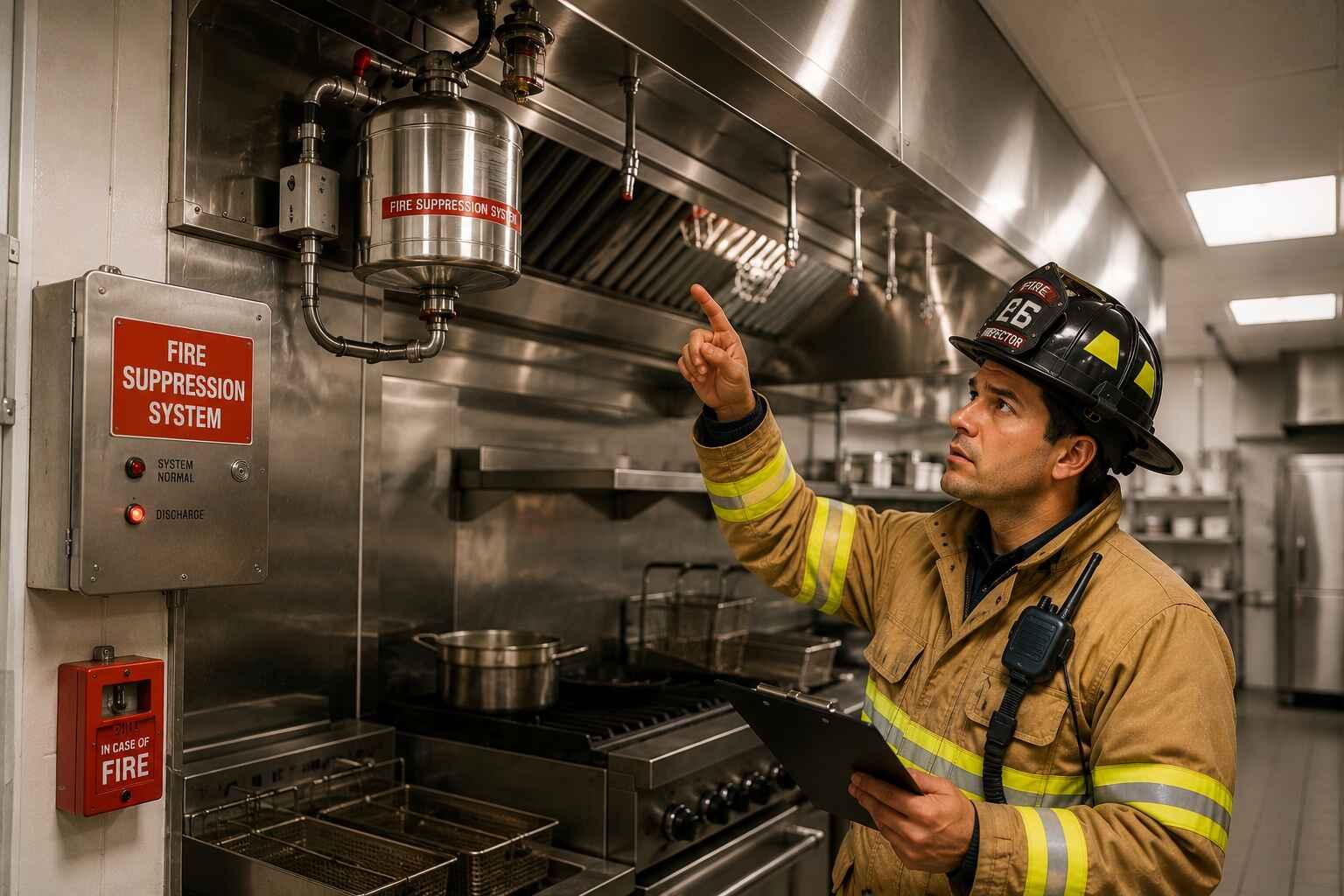
Here's a question we get asked constantly by new restaurant owners: do I really need one of those suppression systems mounted above my hood, or is that just for places doing heavy deep frying? It's a fair thing to wonder, especially when a new suppression install can feel like a big line item on an already tight opening budget. The honest answer is a little more nuanced than a flat yes or no, but it leans much closer to yes than most people expect.
Think of a kitchen suppression system like a smoke detector for a very specific, very flammable job. Your grease trap, your fryer, your flat-top grill, none of them care whether your kitchen is a 200-seat steakhouse or a 400-square-foot food stall. Grease fires behave the same way no matter the size of the operation, and that's exactly why code doesn't scale the requirement down just because the kitchen is small.
Why This Question Comes Up So Often
Restaurant owners hear a lot of conflicting advice, some of it from contractors who genuinely know the code, some of it from well-meaning friends who ran a food truck once and assumed the rules were the same everywhere. The confusion usually comes from the fact that requirements are tied to the type of cooking equipment being used, not the size of the business or the number of seats in the dining room. A tiny coffee shop with a panini press might need almost nothing. A tiny taco stand with a deep fryer almost certainly needs a full system.
What Actually Requires a Kitchen Fire Suppression System
Cooking Equipment That Triggers the Requirement
Deep fryers, griddles, char-broilers, woks, and ranges that produce grease-laden vapors are the equipment types that trigger a suppression requirement under most fire codes. NFPA 96 lays out the standard most jurisdictions reference when determining what commercial kitchen fire protection is required based on the specific equipment installed under a hood.
Grease-Producing Appliances vs. Low-Risk Equipment
Not every piece of kitchen equipment carries the same risk. Ovens, steamers, and equipment that doesn't produce grease-laden vapors generally fall outside suppression requirements, though local codes can still require a hood for ventilation purposes. The dividing line almost always comes back to grease. If grease vapor is part of the cooking process, suppression coverage is almost certainly required.
What a Commercial Kitchen Fire Protection System Actually Does
The Hood and Duct Connection
A suppression system isn't a standalone box bolted to the wall, it's tied directly into the hood and duct system above the cooking line. Nozzles are positioned to cover each piece of equipment, the duct opening, and the plenum, since grease fires can travel up into the ductwork just as easily as they can flare up on the cooktop.
Automatic Detection and Discharge
Most modern systems use a fusible link or heat-sensing detection method that triggers automatically once temperatures reach a dangerous threshold, no human needed to pull a lever in the middle of a fire. Once triggered, the system shuts off fuel or gas to the affected equipment and discharges a wet chemical agent designed specifically to smother grease fires rather than spread them.
Small Kitchens and Food Trucks Aren't Automatically Exempt
Shared Commercial Kitchens
Commissary kitchens and shared cooking spaces used by multiple food businesses still fall under the same suppression requirements as a standalone restaurant. The equipment triggers the requirement, not the ownership structure or how many businesses share the space.
Mobile Food Units
Food trucks with fryers or grills need a properly sized suppression system just like a brick-and-mortar kitchen does, scaled appropriately for the smaller footprint. We've inspected mobile units where an owner assumed a portable extinguisher alone would satisfy code, only to find out during a permit inspection that a full automatic system was required before they could legally operate.
What Happens If a Required System Is Missing
Operating without a required suppression system, or with one that's expired on its service tag, typically means a failed health or fire inspection, and in many jurisdictions it means the kitchen can't legally open or stay open. Beyond the legal risk, grease fires spread fast and burn hot, and a kitchen without proper suppression coverage is relying entirely on staff reaction time and a handheld extinguisher to catch a fire that a suppression system is specifically engineered to stop within seconds.
Keeping Kitchen Fire Protection Code-Compliant Year-Round
A system passing inspection on opening day doesn't mean it stays compliant forever. Most codes require semi-annual inspections, along with recharging the system after any discharge, whether that discharge stopped a real fire or triggered accidentally. Nozzles get clogged with grease over time, fusible links wear out, and cylinders need pressure checks to confirm the extinguishing agent is still viable.
We've walked into kitchens where a suppression system technically existed but hadn't been serviced in years, nozzles caked in old grease and a service tag long expired. That's a system that looks reassuring hanging above the hood and does almost nothing when it's actually needed. Pairing regular kitchen fire protection service visits with broader code compliance reviews keeps a kitchen from quietly drifting out of compliance between inspections.
Conclusion
So does every commercial kitchen need a fire suppression system? If there's a fryer, griddle, or grease-producing appliance under that hood, the answer is almost certainly yes, regardless of how big or small the operation is. Skipping it isn't a shortcut, it's a liability sitting quietly above your cook line until the day it matters most. Reliable commercial kitchen fire protection isn't an optional upgrade for restaurants, it's the baseline that keeps a kitchen legally operating and genuinely safe for everyone working the line. If you're not sure whether your setup qualifies, get a licensed technician to walk your kitchen before a health inspector or fire marshal does it for you.
FAQs
1. Do all restaurants need a kitchen fire suppression system?
Any kitchen using equipment that produces grease-laden vapors, like fryers or griddles, almost always needs one. Kitchens using only ovens or steamers may fall outside the requirement, though local codes vary.
2. How often does a commercial kitchen fire protection system need to be inspected?
Most jurisdictions require semi-annual inspections, roughly every six months, along with immediate recharging after any discharge of the extinguishing agent.
3. Can a food truck operate without a fire suppression system?
Not if it has a fryer or grill producing grease vapor. Mobile units are typically held to the same suppression requirements as brick-and-mortar kitchens, just scaled to fit the smaller space.
4. What triggers a kitchen suppression system to discharge?
Most systems use heat-sensitive fusible links positioned above cooking equipment that melt at a set temperature, automatically triggering fuel shutoff and chemical discharge without anyone needing to activate it manually.
5. What happens if a kitchen fire protection system fails inspection?
The kitchen typically can't legally operate until deficiencies are corrected. A failed inspection usually means repairs, part replacement, or a full recharge before the system passes and the kitchen can reopen.

 English
 Arabic
 French
 Spanish
 Portuguese
 Deutsch
 Dutch
Dutch
 Italiano
 Russian
 Romaian
 Portuguese (Brazil)
 Greek
Greek