


9 Ways to Turn One-Time Donors Into Long-Term Supporters
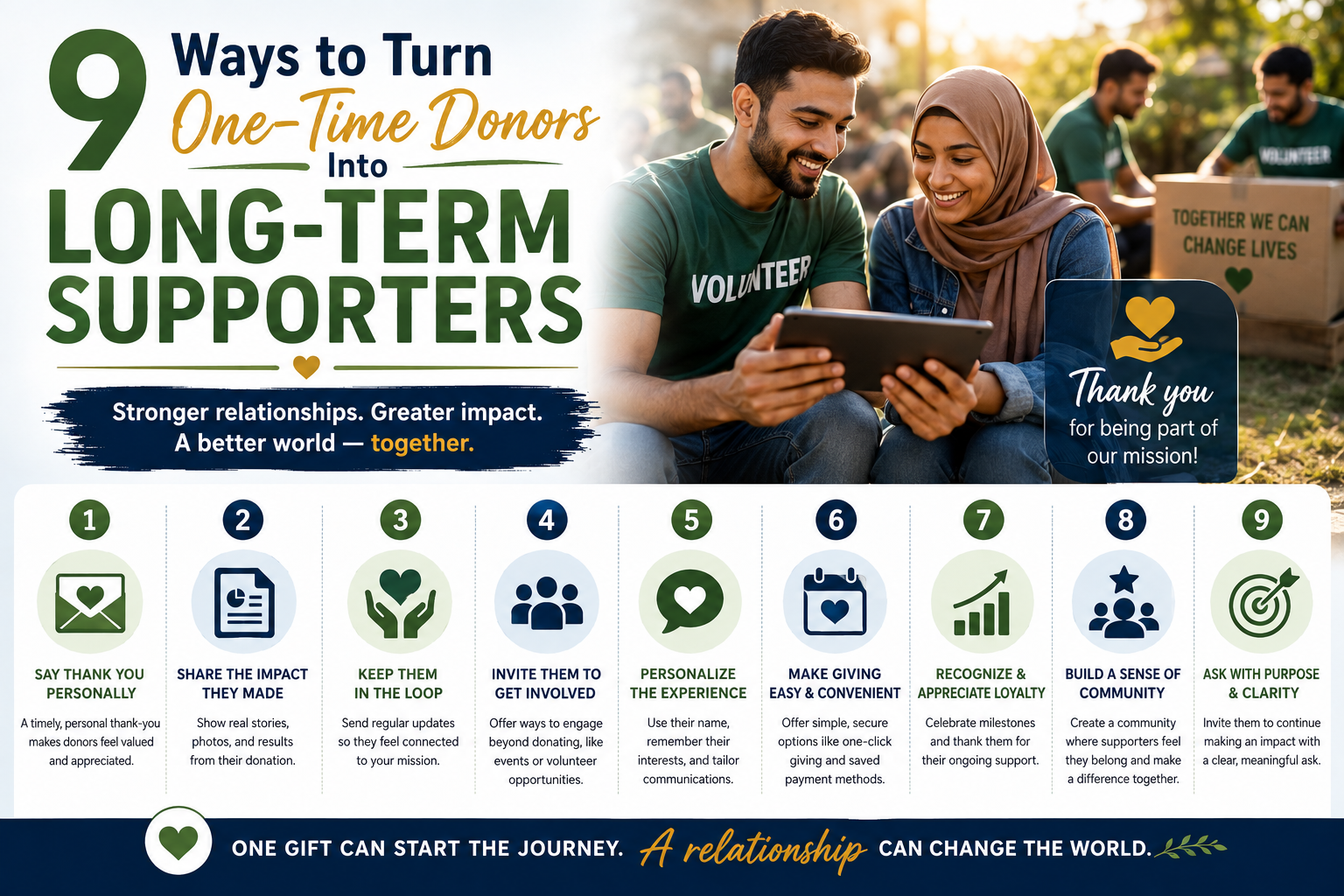
A successful charity does not only focus on receiving donations. It also builds meaningful relationships with the people who choose to support its work.
Someone who makes a one-time contribution may later become a monthly donor, campaign ambassador, volunteer, fundraiser, or long-term supporter. The difference often comes down to what happens after the donation.
In 2026, digital communication gives charities more opportunities to maintain relationships with supporters. Organizations can share project updates, explain results, thank donors, introduce new causes, and make it easier for people to remain involved.
This is particularly important for charities working on long-term causes such as education, clean water, orphan support, healthcare, humanitarian relief, mosque development, and Islamic charitable projects.
This guide explains nine practical ways charities can turn one-time donors into long-term supporters while building trust, improving communication, and creating a stronger giving community.
Why Long-Term Donor Relationships Matter
A one-time donation can help address an immediate need, but long-term supporters can provide more consistent assistance.
Regular supporters can help organizations plan future projects with greater confidence. Instead of depending entirely on unpredictable fundraising periods, charities can build a more stable base of people who understand their mission and continue supporting it.
Long-term relationships can also reduce the pressure of constantly finding completely new donors.
However, retaining donors should not mean repeatedly asking them for money. The relationship should be based on communication, appreciation, transparency, and meaningful impact.
1. Give Donors a Clear Reason to Stay Connected
The first step is to make sure donors understand the broader mission of the organization.
After someone makes a contribution, explain what the organization is working toward and how the specific campaign fits into that larger mission.
For example, someone who contributes to a water project may also be interested in education, healthcare, food assistance, or other community initiatives.
A clear mission gives donors a reason to remain connected even after the original campaign has ended.
2. Thank Donors Immediately
A simple thank-you message can have a significant effect on the donor experience.
After a contribution is completed, donors should receive confirmation that their donation was successfully received.
The message can also briefly explain what happens next. For example, the organization may tell supporters when they can expect project updates or where they can follow campaign progress.
The purpose is not to immediately ask for another contribution. The first communication should focus on appreciation.
A personalized thank-you can make donors feel that their contribution has been acknowledged rather than treated as another transaction.
3. Show What the Donation Helped Accomplish
People are more likely to remain connected with an organization when they understand the results of their support.
Suppose donors contributed toward a food distribution project. Instead of simply saying that the campaign was completed, provide meaningful information about what happened.
You could explain how many families received assistance, where the distribution took place, and what the next stage of the program involves.
For a water project, updates could include information about construction, installation, completion, and community use.
This type of communication helps donors see the connection between their contribution and the people or projects it supported.
4. Make Recurring Giving Easy
Some donors may be willing to contribute regularly if the process is simple.
A recurring donation option can allow supporters to provide a smaller amount every month instead of making occasional larger contributions.
This can be particularly useful for causes that require continuous support, such as food assistance, orphan programs, education, healthcare, and community services.
Organizations should explain how recurring contributions work, how donors can modify or cancel them, and what types of programs they support.
The goal should be convenience and transparency rather than pressure.
5. Create Different Levels of Support
Not every donor has the same financial capacity.
A useful donor-retention strategy is to provide several ways to participate. One supporter may contribute monthly, another may make seasonal donations, and another may share campaigns with their community.
For Muslims, recurring charity giving can also provide a convenient way to maintain regular Sadaqah contributions throughout the year.
Organizations should avoid suggesting that one level of giving is more valuable than another. Consistent participation and sincere support can take many forms.
6. Keep Supporters Updated Between Campaigns
One common mistake charities make is communicating only when they need money.
If donors hear from an organization only when another campaign begins, they may feel that the relationship is primarily transactional.
Instead, organizations can share updates even when they are not actively asking for donations.
Examples include:
- Project completion stories
- Educational updates
- Community impact reports
- Volunteer activities
- Beneficiary progress
- Annual achievements
- Behind-the-scenes project information
This type of communication allows supporters to understand the organization's ongoing work.
7. Build a Strong Donor Experience
The donation process is only one part of the donor experience.
A supporter may interact with the organization's website, campaign page, payment system, confirmation email, social media accounts, and follow-up communications.
All of these touchpoints should provide consistent information.
A reliable charity donation website should make it easy for donors to understand the organization's mission, find campaigns, make contributions, access relevant information, and contact the organization when necessary.
The website should also work properly on mobile devices because many supporters now access donation pages through smartphones.
8. Give Donors Ways to Participate Beyond Money
Long-term supporters do not always need to contribute financially.
Some people may want to volunteer, share campaigns, organize community events, introduce the organization to friends, or help raise awareness.
Peer-to-peer fundraising can be especially useful here.
With peer to peer fundraising, supporters create their own fundraising efforts on behalf of a charity and encourage people in their networks to contribute.
For example, a supporter could create a fundraising page for a birthday, Ramadan initiative, community challenge, or personal milestone.
This approach can introduce an organization to new audiences while giving existing donors a more active role.
9. Create Opportunities for Meaningful Community Participation
People often remain connected to causes when they feel that they are part of something meaningful.
Organizations can create community-based activities around their mission.
These could include Ramadan giving initiatives, educational sessions, volunteer opportunities, local charity drives, online awareness events, or fundraising challenges.
Community participation can also help donors understand that their contribution is part of a larger effort.
For nonprofits, fundraising for nonprofits can therefore involve much more than collecting donations. It can include building relationships, creating awareness, encouraging participation, and developing a community around a shared purpose.
How Islamic Charities Can Build Long-Term Support
Muslim charities have additional opportunities to maintain donor relationships throughout the Islamic calendar.
Different periods may create different charitable needs and giving habits.
Ramadan can be an important period for Zakat and Sadaqah. Dhul Hijjah can bring increased interest in Qurbani and other charitable activities. Throughout the rest of the year, supporters may contribute toward water projects, orphan care, education, mosque development, healthcare, and humanitarian relief.
Organizations can communicate these opportunities without overwhelming supporters with constant fundraising requests.
The focus should remain on education, transparency, and genuine community needs.
Use Donor Data Responsibly
Digital fundraising gives organizations access to useful information about donor activity. However, this information should be handled responsibly.
Charities should have clear privacy practices and protect personal information.
Donor communication should also be relevant. Sending excessive emails or repeated messages can cause people to unsubscribe or disengage.
A better approach is to understand what supporters have shown interest in and provide appropriate updates.
For example, someone who previously supported a clean-water project may appreciate updates about new water initiatives, while another supporter may be more interested in education or emergency relief.
How Madinah Can Support Long-Term Donor Relationships
A digital fundraising platform can help organizations manage campaigns and communicate their charitable objectives more effectively.
Madinah provides fundraising solutions for charities, nonprofits, community organizations, and Islamic causes. Organizations can use online fundraising tools to create campaigns around causes such as Zakat, Sadaqah, water projects, education, healthcare, orphan support, mosque initiatives, and humanitarian assistance.
The platform can help organizations reach supporters beyond their immediate geographical community and provide a convenient digital experience for people who want to contribute online.
For organizations, the broader goal should be to use technology as part of a complete donor relationship strategy rather than treating the fundraising page as the entire experience.
Measuring Donor Retention
Charities should evaluate whether their communication efforts are actually helping supporters remain involved.
Useful indicators can include:
- How many first-time donors contribute again
- How many supporters choose recurring donations
- How many donors respond to updates
- How many supporters share campaigns
- How many donors participate in multiple causes
These measurements can help organizations understand what works and where improvements are needed.
The goal should not simply be to increase the number of donations. It should be to build a reliable community of supporters who understand the mission and trust the organization.
Common Mistakes That Can Push Donors Away
Some fundraising practices can make it difficult to build long-term relationships.
One common problem is sending too many fundraising requests without providing meaningful updates.
Another is failing to explain how previous donations were used.
Poor communication, complicated donation processes, unclear campaign information, and a lack of project reporting can also reduce donor confidence.
Organizations should regularly review the donor experience and identify areas that can be improved.
Frequently Asked Questions
How can charities turn one-time donors into regular supporters?
Charities can build long-term relationships by thanking donors, providing regular project updates, explaining results, offering recurring giving options, and creating opportunities for supporters to participate beyond donations.
Why is donor retention important for charities?
Long-term supporters can provide more predictable funding and help organizations plan sustainable programs. They can also introduce new supporters through sharing, volunteering, and peer fundraising.
What is recurring charity giving?
Recurring charity giving allows a donor to make scheduled contributions, often monthly, instead of making only occasional one-time donations.
What is peer-to-peer fundraising?
Peer-to-peer fundraising allows supporters to create fundraising campaigns on behalf of an organization and encourage people in their own networks to contribute.
How often should charities communicate with donors?
There is no single schedule that works for every organization. The best approach is to provide useful updates consistently without overwhelming supporters with unnecessary messages.
Can Muslims make recurring Sadaqah donations?
Yes, Muslims can choose to give voluntary charity regularly. Anyone seeking guidance about a specific religious giving arrangement should consult a qualified Islamic scholar.
What should a charity website provide?
A charity website should clearly explain the organization's mission, campaigns, donation process, contact information, privacy practices, and relevant project updates.
Conclusion
Turning a one-time donor into a long-term supporter requires more than sending another donation request. It requires an ongoing relationship based on appreciation, transparency, communication, and meaningful results.
Charities can strengthen these relationships by thanking supporters, showing measurable impact, offering convenient recurring giving, providing regular updates, creating opportunities for volunteering and peer fundraising, and making the overall digital experience simple.
For Islamic charities and community organizations, this approach can be especially valuable because charitable needs continue throughout the year. Supporters may contribute to Zakat, Sadaqah, water projects, education, healthcare, orphan programs, mosque initiatives, and humanitarian causes at different times.
Digital tools make it easier to maintain these connections, but technology works best when it is combined with responsible communication and genuine accountability.
When donors understand where their contributions go and feel connected to the results, a single donation can become the beginning of a lasting relationship that supports meaningful charitable work for years to come.

 English
 Arabic
 French
 Portuguese
 Deutsch
 Turkish
 Dutch
Dutch
 Italiano
 Russian
 Romaian
 Portuguese (Brazil)
 Greek
Greek