


How to Protect Fragile Items During a Move
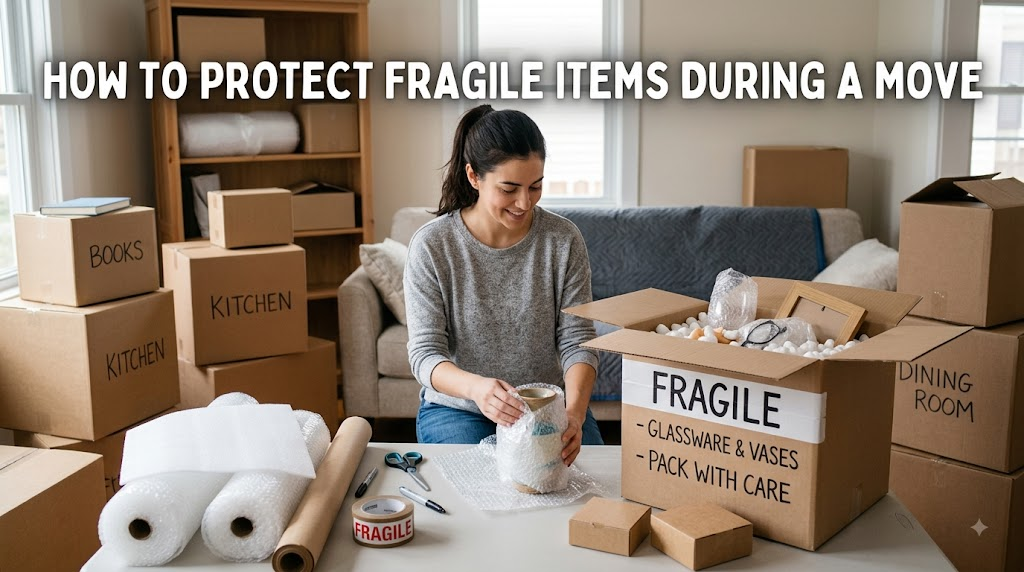
Moving fragile belongings requires more than simply wrapping them in paper and placing them in a box. Glassware, dishes, mirrors, electronics, artwork, antiques, and other delicate possessions can be damaged by impact, vibration, pressure, or poor packing. The good news is that most moving-related damage to fragile items can be reduced with proper preparation, suitable packing materials, and careful handling.
Whether you are moving across town or relocating to another state, using professional Moving Services Boston can be helpful when you have valuable or delicate belongings that require careful handling. However, even when professional movers are involved, knowing how fragile items should be prepared and packed allows you to protect your possessions and communicate special handling requirements clearly.
Why Fragile Items Need Special Protection
Fragile belongings are vulnerable because they often cannot withstand sudden impacts or pressure. A drinking glass may crack when several heavier items are placed on top of it. A television can suffer internal damage from excessive vibration, while a mirror may shatter if its edges are left exposed.
Another common problem is movement inside the box. If an item can shift freely during transportation, it can collide with other objects or the sides of the container. Even a well-made box cannot fully protect its contents if there is too much empty space or insufficient cushioning.
The goal of fragile-item packing is therefore simple: prevent movement, absorb impact, distribute pressure, and keep delicate surfaces protected.
Start by Sorting Your Fragile Belongings
Before packing, separate fragile belongings from ordinary household items. This makes it easier to determine which possessions require additional protection and which ones can be packed using standard methods.
Create groups based on the type and sensitivity of the items. For example, glassware and dishes need individual wrapping and cushioning, while electronics may require anti-static materials and protection against moisture. Artwork and mirrors may need rigid protection around the entire surface, particularly around corners and edges.
This is also a good opportunity to decide whether every fragile item needs to make the move. If something is inexpensive, rarely used, or already damaged, replacing it may be more practical than spending significant time and materials packing it.
Choose the Right Packing Materials
Using appropriate packing materials can make a substantial difference. Standard newspaper can provide some cushioning, but printed paper may transfer ink onto certain surfaces. For delicate belongings, clean packing paper, bubble wrap, foam sheets, corrugated cardboard, and sturdy boxes are generally more suitable.
Avoid relying on towels, clothing, or blankets as the only protection for highly fragile objects. Household textiles can provide additional cushioning, but they may not prevent sharp impacts or keep items separated.
The box itself is equally important. Use strong, appropriately sized boxes that are clean, dry, and in good condition. A box that is too large encourages movement, while one that is too small can put unnecessary pressure on its contents.
For especially valuable belongings, consider specialty containers designed for items such as artwork, mirrors, televisions, or delicate collectibles.
How to Pack Glassware and Dishes
Glassware should be wrapped individually rather than stacked together without protection. Place a layer of cushioning material inside the box before adding the first items. Wrap each glass completely, paying particular attention to stems, rims, and handles.
When packing glasses, placing them upright is often preferable because it reduces pressure on their most vulnerable edges. Plates and similar flat items can generally be placed vertically rather than stacked flat. Add cushioning between individual pieces and around the sides of the box.
Do not leave empty spaces. Once the box is packed, gently test whether the contents move when the box is shifted. If you can hear or feel items moving, add more cushioning until everything is secure.
Avoid making fragile boxes excessively heavy. A box full of dishes can become difficult to lift and may place additional stress on the container. Smaller boxes are often more manageable for heavy fragile belongings.
Protect Electronics Properly
Electronics require a slightly different approach. If you still have the manufacturer's original packaging, use it whenever practical because it is designed to fit the device and protect vulnerable components.
Before packing electronics, disconnect cables and accessories and label them so they can be identified easily later. If possible, photograph cable connections before disassembly. This simple step can save considerable time when setting up the equipment in your new home.
Wrap screens and other sensitive surfaces with suitable protective material. Avoid placing heavy objects on top of electronics, and do not allow accessories or cables to press directly against screens.
For computers, televisions, gaming systems, and other expensive electronics, consider using specialized packaging or professional packing assistance if the original packaging is unavailable.
Give Extra Attention to Mirrors, Artwork, and Frames
Mirrors, framed artwork, and large glass panels are particularly vulnerable because of their size and rigid surfaces. Their corners and edges deserve special attention.
Wrap the item carefully and use corner protectors where appropriate. A rigid layer of cardboard can provide additional protection against scratches and minor impacts. For larger pieces, a specialty picture or mirror box may offer better protection than a standard household carton.
Never assume that wrapping the front surface alone is enough. The back, edges, and corners also need protection because damage can occur from pressure against another object during transportation.
For valuable artwork, antiques, or irreplaceable pieces, professional packing may be worth considering. The cost of additional protection can be reasonable when compared with the difficulty of replacing an item that has financial or sentimental value.
Use the Right Amount of Cushioning
More cushioning is not always better if it is applied incorrectly. The objective is to create a protective buffer around the item while keeping it stable.
Begin by cushioning the bottom of the box. Wrap individual objects before placing them inside, then use additional material to separate them. Finally, fill the remaining spaces so the contents cannot shift during handling.
The top of the box should also have cushioning before it is closed. When the carton is sealed, the contents should feel secure but not compressed.
A useful test is to gently move the closed box. If the contents shift, add more protective material. If the box appears strained or difficult to close, redistribute the contents into another container.
Label Fragile Boxes Clearly
Clear labeling helps everyone involved understand how the box should be handled. Mark boxes containing delicate belongings with labels such as "FRAGILE" and "HANDLE WITH CARE." Add directional markings when the contents need to remain upright.
However, labels should not be treated as a substitute for proper packing. A box marked "FRAGILE" can still be dropped, tilted, or placed underneath heavier cartons. Strong internal protection remains the primary defense against damage.
It can also be useful to identify the room where each box belongs. For example, labeling a carton "FRAGILE KITCHEN" makes unloading and unpacking more organized.
Load Fragile Items Carefully
Packing is only one part of protecting delicate belongings. How boxes are placed in the moving vehicle also matters.
Heavy boxes should generally be positioned beneath lighter cartons so that weight is distributed appropriately. Fragile boxes should not be placed where heavy furniture or other containers can shift against them.
Large furniture should be secured so it cannot move during transportation. Items such as mirrors and artwork should receive additional protection and should not be left loose inside the vehicle.
If you are transporting particularly valuable or irreplaceable belongings yourself, keep them in a secure part of the vehicle where they can be monitored and protected from unnecessary movement.
Avoid Common Fragile-Packing Mistakes
One of the most common mistakes is rushing. When people pack under time pressure, they often skip individual wrapping, use unsuitable boxes, or leave empty spaces. These shortcuts can increase the risk of breakage.
Another mistake is overpacking. A box that is too heavy becomes difficult to carry safely and can fail under its own weight. Mixing fragile items with heavy household objects is another problem because the heavier objects can crush or strike delicate belongings.
Using damaged boxes is also risky. Old cartons with weakened bottoms or sides may fail during lifting, regardless of how carefully the contents were packed.
Finally, avoid assuming that expensive items are automatically protected simply because they are wrapped. Protection depends on the entire packing system: the wrapping, cushioning, box strength, internal stability, and handling process all work together.
Consider Professional Packing for High-Value Items
Some possessions are too valuable, delicate, or complicated to pack casually. Antiques, large artwork, expensive electronics, chandeliers, collectibles, and certain musical instruments may benefit from specialized packing techniques.
Professional movers or packers can assess the item, select appropriate materials, and create a packing method based on its size, shape, weight, and vulnerability. If an item has significant financial or sentimental value, professional assistance can provide an additional layer of protection and reduce the likelihood of avoidable packing mistakes.
Before moving day, ask the moving company about its packing services, handling procedures, and any special requirements for valuable or fragile belongings.
Final Checklist Before the Move
Before the moving truck leaves, inspect your fragile boxes. Confirm that each item has adequate cushioning, boxes are properly sealed, and there is no obvious movement inside the cartons.
Keep important documents, irreplaceable photographs, jewelry, and other exceptionally valuable personal items with you when practical rather than placing them in the moving shipment.
It is also sensible to photograph valuable belongings before packing them. Pictures can provide a record of their condition before transportation and may be useful for inventory purposes.
Conclusion
Protecting fragile items during a move comes down to thoughtful preparation rather than complicated techniques. Sort delicate belongings early, use appropriate packing materials, wrap individual items, eliminate empty spaces, choose strong boxes, and load them carefully. Pay particular attention to glassware, electronics, mirrors, artwork, and other items that can be damaged by impact or pressure.
Whether you pack everything yourself or rely on professionals such as East Coast Boston Movers, the most important principle is to avoid rushing the process. A few extra minutes spent selecting the right materials and securing each item can help your fragile belongings arrive at your new home safely and ready to enjoy.

 English
 Arabic
 French
 Spanish
 Deutsch
 Turkish
 Dutch
Dutch
 Italiano
 Russian
 Romaian
 Portuguese (Brazil)
 Greek
Greek