


How Can Cross-Platform Mobile App Development Reduce Cost and Development Time?
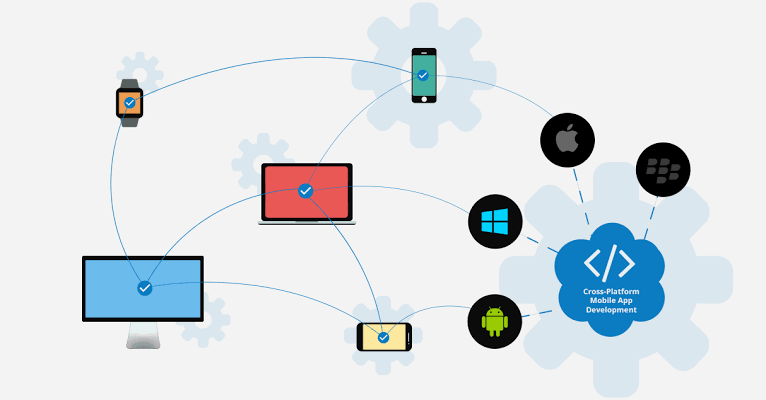
Businesses building a mobile application often face an early decision: develop separate apps for iOS and Android or use a single development approach that can support both platforms.
Building two independent applications can increase development effort, testing requirements, maintenance work, and overall project cost. Cross-platform mobile app development addresses this challenge by allowing development teams to reuse a significant portion of the application code across multiple platforms.
For businesses that need to launch faster without unnecessarily increasing development costs, this approach can offer a practical alternative to maintaining separate native applications.
What Is Cross-Platform Mobile App Development?
Cross-platform mobile app development involves creating an application that can operate across multiple mobile operating systems using a shared codebase.
Instead of developing one complete application for Android and another for iOS, developers can build common functionality once and adapt platform-specific components where required.
Frameworks such as Flutter and React Native are commonly used for this development approach.
The objective is not simply to write less code. It is to reduce duplicated development effort while maintaining a consistent experience across devices.
How Does Cross-Platform Development Reduce App Development Costs?
1. One Codebase for Multiple Platforms
One of the largest cost advantages comes from code reuse.
With separate native applications, businesses may need different development efforts for iOS and Android. Features, integrations, updates, and bug fixes may need to be implemented independently.
Cross-platform development allows much of the core functionality to be shared.
This can reduce the amount of development work required and help businesses use their development budget more efficiently.
2. Smaller Development Effort
Maintaining separate platform-specific applications can require more specialized resources.
Cross-platform development can allow a more unified development team to work across both platforms.
Businesses may still require platform-specific expertise for certain features, but the overall development effort can often be lower than maintaining two completely independent codebases.
3. Lower Testing and Quality Assurance Effort
Every mobile application needs extensive testing before launch.
With separate native apps, developers and QA teams may need to test two independently developed applications.
A shared cross-platform architecture allows many application workflows and features to be tested from the same core implementation.
Platform-specific testing is still necessary, but reducing duplicated functionality can make the overall QA process more efficient.
4. More Efficient Maintenance
Development cost does not stop after launch.
Mobile applications require:
- Bug fixes
- Security updates
- Operating system compatibility updates
- Feature improvements
- API changes
- Performance optimization
When businesses maintain two separate codebases, the same update may need to be implemented twice.
A cross-platform application can simplify ongoing maintenance because many updates can be made within the shared codebase and deployed across platforms.
How Does Cross-Platform Mobile App Development Save Time?
1. Features Do Not Need to Be Built Twice
If a business needs features such as user registration, payment processing, product search, booking, notifications, or account management, separate native development may require each feature to be built individually for Android and iOS.
Cross-platform development reduces this duplication.
Development teams can build common functionality once and then make adjustments where individual operating systems require them.
That can shorten the overall development cycle considerably.
2. Android and iOS Development Can Progress Together
Businesses often want to reach both Android and iOS users at launch.
Developing two independent apps can create coordination challenges and sometimes result in one platform launching before the other.
A cross-platform approach allows both versions to progress from the same development foundation.
This can help businesses move toward a simultaneous multi-platform launch.
3. Faster MVP Development
For businesses testing a new mobile product, speed is particularly important.
An MVP is designed to validate:
- Market demand
- User behaviour
- Core functionality
- Product assumptions
- Business viability
Building separate native applications before validating the idea can increase both cost and development time.
Cross-platform development can help businesses launch an MVP across Android and iOS with fewer duplicated resources, gather real-world feedback, and improve the product before making larger investments.
4. Faster Feature Updates
The time-saving benefits continue after launch.
Suppose a business wants to introduce a new booking feature or change an existing customer workflow.
With separate applications, development teams may need to implement and maintain the change independently.
With a shared codebase, much of the update can be developed once and made available across platforms.
This helps businesses respond faster to customer feedback and changing requirements.
Is Cross-Platform Development Always Cheaper?
Not necessarily.
Choosing cross-platform development purely because it appears cheaper can create problems if the application's requirements are not suitable for it.
Applications that rely heavily on advanced device hardware, highly specialized platform functionality, extremely demanding graphics, or complex platform-specific features may still benefit from native development.
Businesses should therefore evaluate:
- Application complexity
- Performance requirements
- Device features
- Integrations
- Security requirements
- Expected user volumes
- Future feature roadmap
The best development model depends on what the application actually needs to accomplish.
When Should Businesses Consider Cross-Platform Mobile App Development?
Cross-platform development can be particularly useful when businesses need to:
- Launch Android and iOS apps together
- Reduce duplicated development work
- Build an MVP quickly
- Work within a controlled development budget
- Maintain a consistent experience across platforms
- Introduce features faster
- Simplify long-term application maintenance
It can work well for customer applications, internal business apps, eCommerce platforms, booking applications, service platforms, SaaS mobile products, and many other business use cases.
How DITS Approaches Cross-Platform Mobile App Development
Ditstek Innovations helps businesses determine whether cross-platform, native, or another mobile development approach is appropriate based on the actual product requirements.
The process starts by understanding the business objective, target users, required functionality, integrations, performance expectations, security considerations, and future growth plans.
Where cross-platform development is appropriate, the focus is on building a scalable application architecture that reduces duplicated development effort without compromising important functionality.
DITS can also support businesses with backend development, API integration, cloud infrastructure, custom software development, application modernization, AI integration, testing, and ongoing product enhancement.
The goal is not simply to build an app faster. It is to create a mobile product that delivers the required business outcome without unnecessary development complexity.
Conclusion
Cross-platform mobile app development can reduce cost and development time primarily by eliminating duplicated work.
A shared codebase can make development, testing, maintenance, feature updates, and multi-platform launches more efficient. It can be particularly valuable for businesses building MVPs or applications that need to serve both Android and iOS users.
However, the decision should always depend on the application's technical and business requirements.
When used for the right project, cross-platform mobile app development can help businesses reach the market faster, control development costs, and maintain their mobile products more efficiently over the long term.

 English
 Arabic
 French
 Spanish
 Portuguese
 Deutsch
 Turkish
 Dutch
Dutch
 Italiano
 Romaian
 Portuguese (Brazil)
 Greek
Greek