


CycloBoon and Older Adults: Understanding Medication Safety
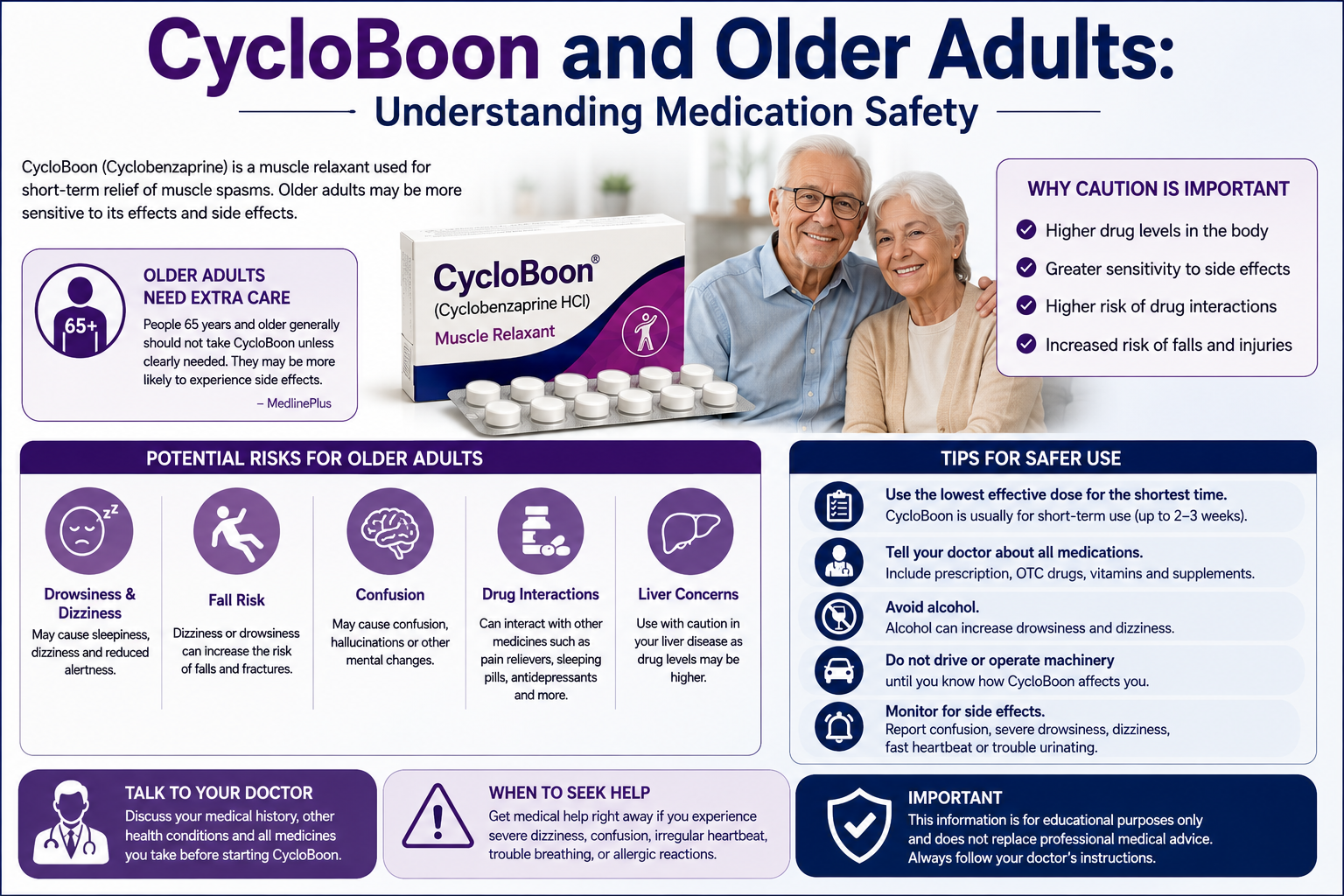
CycloBoon and older adults require special consideration because cyclobenzaprine can cause drowsiness, dizziness, confusion, and other central nervous system effects. CycloBoon contains cyclobenzaprine, a skeletal muscle relaxant used for short-term relief of acute muscle spasms. Older adults may be more sensitive to this medicine, and official prescribing information notes increased adverse effects and higher drug exposure in elderly patients.
Understanding CycloBoon safety in elderly patients, cyclobenzaprine for older adults, CycloBoon side effects, muscle relaxant safety, and medication interactions can help patients and caregivers discuss appropriate treatment options with a healthcare professional.
What Is CycloBoon?
CycloBoon is a brand containing cyclobenzaprine, a centrally acting skeletal muscle relaxant. It works primarily through the brain and nervous system to help reduce muscle spasms.
Cyclobenzaprine may be prescribed as part of a treatment plan that can include rest and physical therapy. It is generally intended for short-term treatment, and MedlinePlus advises not taking it for more than three weeks without discussing it with a doctor.
For older adults, however, the decision to use cyclobenzaprine deserves additional consideration because the risk-benefit balance may differ from that of younger adults.
Why Is CycloBoon Different for Older Adults?
As people age, changes in the body can affect how medicines are absorbed, distributed, metabolized, and eliminated.
With cyclobenzaprine, prescribing information reports that plasma concentrations can be higher in elderly patients. Older adults may also be more vulnerable to central nervous system adverse effects, confusion, cardiovascular effects, drug-drug interactions, and drug-disease interactions.
These factors can make medication monitoring particularly important.
Is CycloBoon Safe for Older Adults?
Cyclobenzaprine requires particular caution in older adults.
MedlinePlus states that people 65 years and older generally should not take cyclobenzaprine because it may not be as safe or effective as other medications that can be used for the same condition.
Some immediate-release cyclobenzaprine prescribing information allows use in elderly patients when clearly needed, with a lower starting dose and slow titration. In contrast, certain extended-release cyclobenzaprine products specifically state that use in elderly patients is not recommended.
Therefore, the specific cyclobenzaprine formulation matters, and older adults should not start CycloBoon without medical guidance.
CycloBoon and Drowsiness in Older Adults
One of the most important concerns is drowsiness.
Cyclobenzaprine can cause:
- Sleepiness
- Dizziness
- Fatigue
- Reduced alertness
- Difficulty concentrating
These effects may be especially concerning for older adults because reduced alertness or balance can contribute to accidents and falls.
If CycloBoon makes someone sleepy or dizzy, they should avoid driving and operating machinery until they have discussed the effects with their healthcare professional.
Fall Risk and CycloBoon
Falls are an important safety concern in older adults.
A medicine that causes sedation, dizziness, weakness, or confusion can potentially make it harder to maintain balance.
Older adults taking CycloBoon should be especially careful when:
- Getting out of bed
- Standing up quickly
- Walking on stairs
- Walking on uneven surfaces
- Getting into or out of a vehicle
- Taking other medicines that cause drowsiness
A healthcare professional can review the complete medication list to determine whether multiple medicines may be increasing sedation or fall risk.
CycloBoon and Confusion
Older adults can be more vulnerable to central nervous system effects from medications.
Cyclobenzaprine prescribing information notes that elderly patients may have increased risk of CNS adverse events such as hallucinations and confusion.
New or worsening confusion should not simply be assumed to be a normal part of aging.
If an older adult develops unusual confusion, severe sleepiness, hallucinations, or significant changes in behavior after starting CycloBoon, contact a healthcare professional promptly.
CycloBoon and Other Medicines
Older adults frequently take several prescription and over-the-counter medicines at the same time. This can increase the possibility of drug interactions.
Cyclobenzaprine can interact with medicines that affect the central nervous system or serotonin pathways.
Potentially important combinations include some:
- Antidepressants
- Opioid pain medicines
- Sleeping medicines
- Sedatives
- Tramadol
- Antihistamines
- Other muscle relaxants
Cyclobenzaprine has also been associated with serotonin syndrome when combined with certain serotonergic medicines, including some SSRIs, SNRIs, tricyclic antidepressants, tramadol, and other drugs.
Before starting CycloBoon, older adults should provide their doctor or pharmacist with a complete medication list.
CycloBoon and Alcohol
Alcohol can increase the sedating effects of cyclobenzaprine.
Combining CycloBoon with alcohol may increase:
- Drowsiness
- Dizziness
- Poor coordination
- Impaired judgment
- Reduced alertness
MedlinePlus advises patients to discuss safe alcohol use with their doctor because cyclobenzaprine can worsen the effects of alcohol.
For older adults who are already at increased risk of falls or dizziness, this interaction deserves particular attention.
CycloBoon and Liver Problems
Liver function can also influence cyclobenzaprine exposure.
Certain prescribing information recommends caution or avoidance in patients with hepatic impairment, depending on the formulation. Extended-release cyclobenzaprine products may specifically not be recommended in patients with hepatic impairment.
Older adults with liver disease should tell their healthcare professional before using CycloBoon.
CycloBoon and Glaucoma
Cyclobenzaprine has anticholinergic properties.
Some formulations advise caution in patients with:
- Angle-closure glaucoma
- Increased intraocular pressure
- Urinary retention
- Conditions affected by anticholinergic medicines
Older adults with these conditions should discuss them with their doctor before treatment.
CycloBoon and Urinary Retention
Cyclobenzaprine can have atropine-like effects, which may be relevant to patients with a history of urinary retention.
Older adults who already have difficulty emptying their bladder should tell their healthcare professional before using CycloBoon.
Why Medication Review Is Important
A medication review can be particularly valuable for older adults.
Doctors and pharmacists may consider:
- Current medications – Are other medicines causing sedation?
- Medical conditions – Are there conditions that increase risk?
- Age-related sensitivity – Could the patient be more vulnerable to side effects?
- Treatment duration – Is a short-term muscle relaxant still necessary?
- Alternative treatments – Could another approach be safer?
The goal is not simply to treat muscle spasms but to choose an approach that provides appropriate benefits while minimizing avoidable risks.
CycloBoon and Short-Term Treatment
Cyclobenzaprine is generally intended for short-term treatment of acute muscle spasms.
MedlinePlus states that patients should not take cyclobenzaprine for more than three weeks without speaking with their doctor.
For older adults, continuing treatment longer than necessary may expose them to unwanted medication effects without providing additional benefit.
Never extend the treatment period or change the dose without professional advice.
What Should Caregivers Watch For?
Family members and caregivers can help monitor older adults taking CycloBoon.
Pay attention to:
- Excessive sleepiness
- New dizziness
- Confusion
- Difficulty walking
- Unusual weakness
- Falls
- Changes in alertness
- Difficulty urinating
- Fast or irregular heartbeat
- Unusual agitation or muscle stiffness
If symptoms are severe or sudden, seek appropriate medical attention.
Tips for Safer CycloBoon Use in Older Adults
1. Follow the Prescribed Instructions
Take CycloBoon exactly as prescribed.
2. Review All Medicines
Tell your doctor about prescription medicines, OTC products, vitamins, and supplements.
3. Avoid Unapproved Combinations
Do not add sleeping medicines, sedatives, alcohol, or other muscle relaxants without discussing them with a healthcare professional.
4. Be Careful With Driving
Do not drive until you know how CycloBoon affects your alertness.
5. Monitor for Dizziness
Stand up slowly and take extra care when walking if you experience dizziness.
6. Don't Continue Treatment Indefinitely
Discuss the treatment duration with your doctor, particularly if muscle spasms continue.
Frequently Asked Questions
Can people over 65 take CycloBoon?
Older adults generally require special consideration. MedlinePlus states that people aged 65 and older generally should not take cyclobenzaprine because other treatments may be safer or more effective.
Why is cyclobenzaprine risky for older adults?
Older adults may have higher drug exposure and increased sensitivity to adverse effects such as drowsiness, confusion, dizziness, and cardiovascular or drug-interaction problems.
Can CycloBoon cause falls?
Drowsiness and dizziness can affect balance and alertness, potentially increasing fall risk. Older adults should discuss these effects with their healthcare professional.
Can older adults take CycloBoon with other medicines?
Some medicines may interact with cyclobenzaprine. A doctor or pharmacist should review all prescription medicines, OTC products, and supplements before treatment.
Can older adults drink alcohol while taking CycloBoon?
Alcohol may increase cyclobenzaprine-related drowsiness and impairment. Older adults should discuss alcohol use with their healthcare professional.
Final Thoughts
CycloBoon and older adults require careful medication-safety consideration. Cyclobenzaprine can cause drowsiness, dizziness, fatigue, confusion, and other effects that may be more concerning in older patients. Official information also notes increased cyclobenzaprine exposure and adverse-event risk in elderly patients.
For anyone aged 65 or older, CycloBoon should not be started without discussing the potential benefits and risks with a qualified healthcare professional. A complete review of medications, medical conditions, alcohol use, and treatment duration can help identify potential problems and determine whether an alternative approach may be more appropriate.

 English
 Arabic
 French
 Spanish
 Portuguese
 Deutsch
 Turkish
 Dutch
Dutch
 Italiano
 Russian
 Romaian
 Greek
Greek