


India's Lighting Ceiling Fans Manufacturers and Emerging Designs
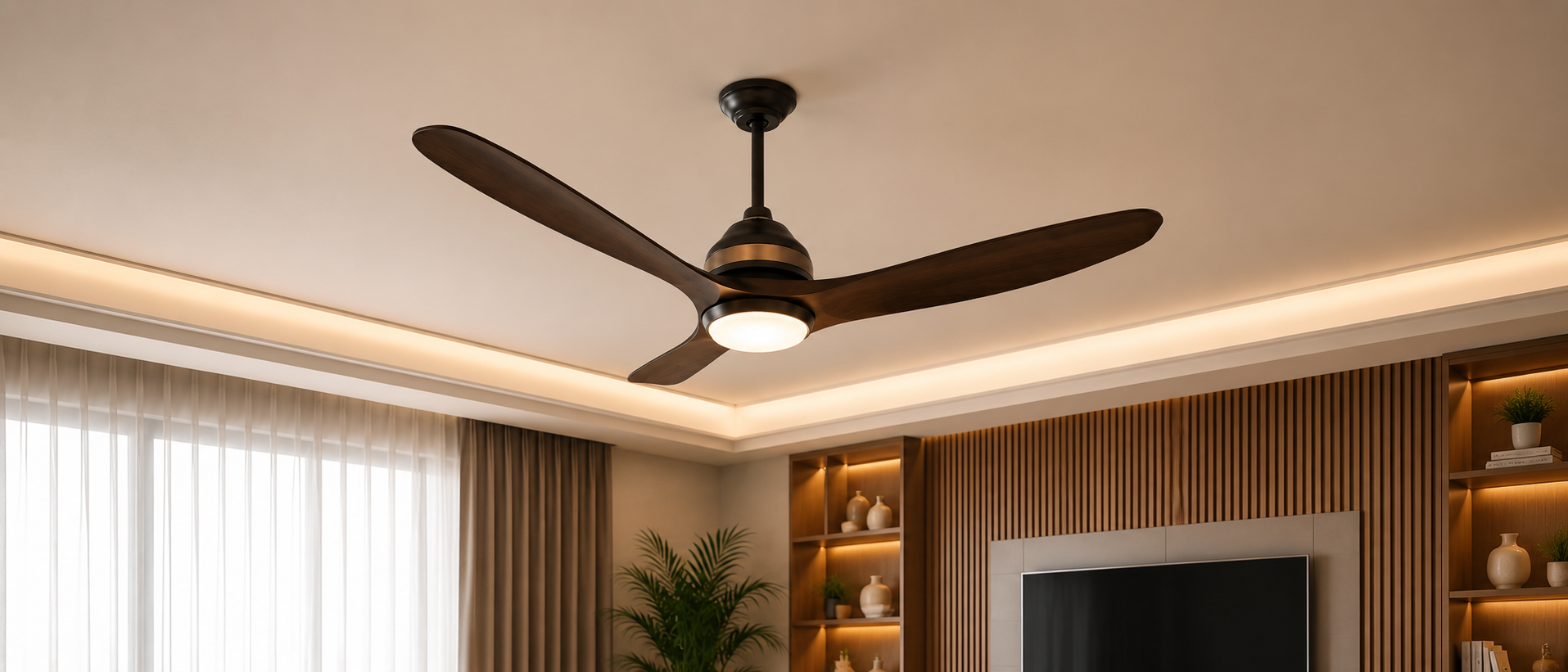
A brand owner who visited four factories in three states last year told us every single one claimed the same three things: quality-tested, export-ready, and trusted nationwide. None of them showed him a batch inspection report until he asked twice. That's the state of sourcing lighting ceiling fans in India right now — a crowded field of manufacturers making near-identical claims, with real differences hiding in production discipline that doesn't show up in a brochure.
The category itself has moved fast. Five years ago, a lighting ceiling fans manufacturer competed mostly on price and basic LED brightness. Now buyers compare motor efficiency, finish variety, and how well a fixture holds up to voltage swings across different states — and the manufacturers who haven't kept pace are the ones losing repeat orders quietly.
Rotex Fans has manufactured lighting ceiling fans from Rajkot, Gujarat since 2017. What's changed in that time isn't the basic fan — it's what buyers now expect a factory to prove before signing a purchase order.
What's Actually Shifting in Design and Production
Design trends get discussed constantly. Fewer buyers ask what changed underneath them.
Motor Technology
BLDC motors have become a preferred choice across the ceiling fan category, typically operating in the 28–35W range compared with around 75–80W for traditional induction motors. This shift has significantly improved energy efficiency for both residential and commercial applications. For buyers evaluating modern solutions, choosing products from an experienced Lighting Ceiling Fans Manufacturer can help ensure efficient BLDC performance, consistent motor quality, and reliable operation across different installations.
Finish and Material Trends
Matte finishes, wood-tone coatings, and slimmer blade profiles have moved from niche to mainstream demand, particularly for lighting ceiling fans positioned as a design element rather than a pure utility item. Coating durability under humidity and dusting has become a real differentiator between manufacturers, not just a cosmetic detail.
The Overlooked Shift: Certificate Currency, Not Certificate Existence
Nearly every manufacturer in this space can produce a BIS certificate on request. Far fewer can produce a current one with an active expiry date, or explain what changed in their last renewal cycle. That gap matters more than most buyers realize, because a lapsed or borderline certificate creates real compliance risk on institutional and export orders, not just a paperwork inconvenience.
Why Manufacturing Discipline Translates to Buyer Outcomes
-
Consistent QC across production batches directly reduces the return rate that erodes a dealer's margin over a full order cycle.
-
BEE 5-star rated motors give brand owners a genuine efficiency claim to make to end customers, not a rounded marketing number.
-
Current BIS certification protects buyers from compliance risk on institutional, builder, and export-facing orders.
-
Finish and material transparency reduces the odds of a cosmetic defect surfacing mid-shipment, which is costlier to resolve than catching it at sampling.
-
MSME and GST-compliant documentation simplifies procurement paperwork for larger wholesale and project buyers.
-
Design responsiveness — offering slimmer profiles and updated finishes without cutting corners elsewhere — keeps a dealer's catalogue from looking dated against competitors.
Where Manufacturing Location Still Matters
We manufacture from J K Industrial Park in Rajkot, Gujarat, inside a manufacturing base with long-standing access to component suppliers and skilled labor for fan assembly specifically. That matters for consistency across production batches — a factory pulling components from scattered, inconsistent sources tends to show more variance batch to batch than one working within an established supply cluster. Rajkot's road access to Mundra and Kandla ports also keeps export logistics workable for brand owners shipping finished units outside India, which is a real consideration if you're evaluating manufacturers with international distribution plans.
How We Approach the Claims Every Factory Makes
We'd rather show a buyer our actual QC checkpoints than repeat the same three claims every factory in this space makes. Every fan we produce goes through airflow, motor, and blade-balance testing before it clears a batch, and we hold ISO certification, BIS approval, BEE 5-star ratings, and MSME registration — current, not lapsed. We're not the only serious manufacturer in this market, and we won't pretend otherwise. What we can say honestly is that design updates take real production time to implement properly, and we'd rather tell a buyer that upfront than rush a finish change and risk batch inconsistency.
The Manufacturers Worth Watching Are the Ones Who Show Their Work
Lighting ceiling fans in India have moved past being a commodity category, and the manufacturers keeping pace are the ones investing in motor efficiency, finish consistency, and certification discipline rather than just repeating the same claims as everyone else. Rotex Fans has built its approach around proving that, batch by batch, from Rajkot. The buyers who ask the harder questions — batch records, not brochures — are the ones who end up with fewer surprises after the purchase order is signed.
FAQs
What's actually changed among lighting ceiling fans manufacturers in India in recent years?
Motor technology shifted decisively toward BLDC, and design expectations moved from basic utility toward finish and silhouette. Manufacturers slow to adopt both are increasingly losing ground on repeat orders.
What should I ask a lighting ceiling fans manufacturer to verify their quality claims?
Ask for batch inspection records and a current BIS certificate with its expiry date, not just a general assurance of quality testing. Most manufacturers can produce a certificate; fewer can show it's current.
Do lighting ceiling fans dealers in India need to track which manufacturers update their designs regularly?
Yes — a dealer's catalogue looks dated fast if their supplier isn't adopting current finish and motor trends. It's worth revisiting that assessment annually rather than assuming a supplier relationship stays current on its own.
How do lighting ceiling fans suppliers differ from manufacturers in terms of accountability?
Suppliers who don't manufacture directly sometimes can't answer detailed production questions, since they're reselling rather than producing. For orders where specification precision matters, working with a manufacturer directly usually gives clearer answers.
Is a manufacturer with more certifications automatically the better choice?
Not automatically, but certification currency is a reasonable proxy for operational discipline. It's worth confirming certifications are active rather than assuming more paperwork equals better quality.

 English
 Arabic
 French
 Spanish
 Portuguese
 Deutsch
 Turkish
 Dutch
Dutch
 Italiano
 Russian
 Romaian
 Portuguese (Brazil)