


Top 10 Car Problems That Professional Diagnostics Can Detect in Trowbridge
Modern vehicles rely on increasingly sophisticated electronic systems to manage everything from engine performance and fuel delivery to braking, emissions, transmission, and driver-assistance features. When a warning light appears on the dashboard or a vehicle starts behaving unusually, identifying the underlying cause can be difficult without the right equipment.
This is where a professional car diagnostic test UK drivers can access becomes valuable. Diagnostic equipment can communicate with a vehicle’s onboard computer systems and retrieve stored fault codes, helping technicians investigate problems more efficiently. However, a diagnostic scan is not simply a matter of plugging in a machine and replacing whatever component a fault code mentions. Proper interpretation requires technical knowledge, testing, and an understanding of the vehicle’s symptoms.
For motorists experiencing unexplained warning lights, poor performance, starting problems, or unusual electrical behaviour, understanding how vehicle diagnostics work can make the repair process more straightforward.
What Is a Car Diagnostic Test?
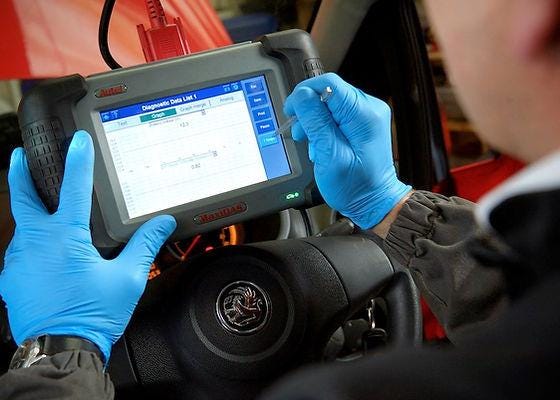
A car diagnostic test involves connecting specialist diagnostic equipment to a vehicle’s electronic control systems. Most modern cars use an onboard diagnostic system, commonly associated with OBD or OBD-II technology, to monitor various components and identify conditions that may fall outside expected operating parameters.
When a problem occurs, the vehicle’s control module may store a diagnostic trouble code (DTC). A technician can retrieve these codes using compatible diagnostic equipment and then use the information as part of a wider troubleshooting process.
Depending on the vehicle, diagnostics may provide information relating to systems such as:
- Engine management
- Transmission and gearbox control
- Anti-lock braking systems (ABS)
- Airbag and supplementary restraint systems
- Electronic stability control
- Emissions systems
- Battery and charging systems
- Parking sensors and other electronic systems
- Manufacturer-specific control modules
It is important to understand that a diagnostic code does not always identify a failed component directly. For example, an oxygen sensor-related code could be caused by the sensor itself, wiring, an exhaust leak, an air-fuel mixture problem, or another underlying issue. Experienced technicians therefore use diagnostic results alongside physical inspections and additional testing.
When Should UK Drivers Consider Vehicle Diagnostics?
A diagnostic check can be useful whenever a vehicle develops an unexplained electronic, mechanical, or performance-related symptom.
One of the most obvious situations is when a dashboard warning light appears. The check engine light is commonly associated with engine management or emissions-related faults, while ABS, airbag, battery, and other warning indicators can point towards different systems requiring investigation.
Drivers may also benefit from diagnostics when experiencing:
- Difficulty starting the vehicle
- Reduced engine performance
- Poor fuel economy
- Rough idling
- Engine misfires
- Unusual transmission behaviour
- Intermittent warning lights
- Electrical problems
- Unexpected stalling
- Problems with sensors
- Failed or recurring dashboard warnings
- Issues that are difficult to reproduce during normal driving
A car diagnostic test Near Me search is often the first step for motorists who want to find a local workshop equipped to investigate these symptoms. However, choosing a suitable service should involve more than geographical convenience. Drivers should consider whether the workshop has appropriate diagnostic equipment, experience with their vehicle type, and the ability to carry out further testing if required.
Why Diagnostic Testing Has Become More Important
Vehicle technology has changed significantly over the last two decades. Cars now contain numerous electronic control units and sensors that communicate with one another. Hybrid and electric vehicles introduce additional high-voltage and electronic systems, while newer vehicles may incorporate advanced driver-assistance technologies.
This technological development has changed the way faults are diagnosed.
In the past, a mechanic could often identify certain problems through mechanical inspection and experience alone. Today, many faults require a combination of electronic diagnostics, visual inspection, live data analysis, electrical testing, and mechanical knowledge.
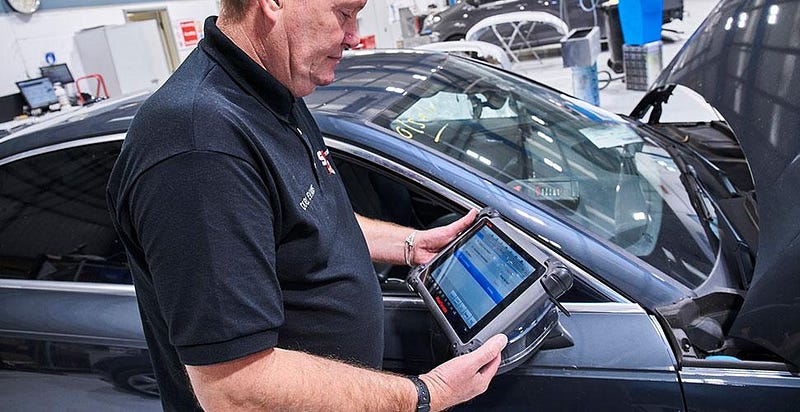
Modern diagnostic equipment can potentially display live information from vehicle sensors, monitor operating parameters, identify stored and pending codes, and assist with system-specific testing. Manufacturer-level systems can provide even more detailed information on compatible vehicles.
Nevertheless, diagnostic technology should support professional decision-making rather than replace it.
https://www.smautoservice.co.uk/car-diagnostic-test-trowbridge-uk/
For example, if a vehicle reports a fault associated with a particular sensor, a technician may check the sensor’s readings, wiring, connectors, power supply, and related components before recommending replacement. This approach can reduce unnecessary parts replacement and help identify the actual cause of the fault.
Common Challenges With Vehicle Diagnostics
One of the biggest misconceptions about diagnostics is that every fault can be solved immediately after a scan. In reality, some faults can be intermittent or caused by several interacting components.
Intermittent Electrical Faults
Loose connectors, damaged wiring, moisture intrusion, corrosion, and unstable electrical connections can cause faults that appear and disappear. These problems may require additional electrical testing rather than a simple code reset.
Multiple Fault Codes
A vehicle can sometimes store several codes following a single underlying problem. Low battery voltage, for example, can contribute to unusual electronic behaviour across different systems.
Technicians therefore need to establish which codes are primary and which may have appeared as secondary effects.
Warning Lights That Return
Clearing a fault code does not necessarily repair the problem. If the underlying condition remains, the warning light or code may return after the vehicle completes its monitoring cycle.
A proper diagnostic process should identify why the code appeared in the first place.
Compatibility Issues
Not every diagnostic scanner provides the same level of access. Generic equipment can be useful for certain engine-management codes, while manufacturer-specific systems may be required for advanced functions or particular control modules.
This is especially relevant for newer vehicles with complex electronic architectures.
How to Prepare for a Diagnostic Appointment
Drivers can make the diagnostic process more effective by providing as much information as possible.
Before visiting a workshop, consider noting:
- When the problem started: Was it sudden or gradual?
- Driving conditions: Does it happen during cold starts, acceleration, braking, or motorway driving?
- Warning lights: Which lights appeared and when?
- Recent repairs: Have any parts, batteries, or electrical components recently been replaced?
- Unusual sounds or smells: These can provide useful supporting information.
- Changes in performance: Record symptoms such as hesitation, reduced power, increased fuel consumption, or rough running.
These details can help technicians reproduce the problem and interpret diagnostic information more accurately.
It is also worth asking whether the diagnostic service includes fault-code interpretation and further investigation. A scan alone may identify an area requiring attention, but additional testing is often necessary before a repair decision can be made.
Car Diagnostics and Preventive Maintenance
Although diagnostics are frequently associated with warning lights, they can also play a role in preventive maintenance and fault investigation before a minor issue becomes more serious.
For example, unusual sensor readings or stored fault information may provide early indications of a developing problem. Identifying faults earlier can sometimes prevent secondary damage and reduce the risk of an unexpected breakdown.
This is particularly useful when purchasing a used vehicle. A diagnostic inspection can form part of a broader pre-purchase assessment, although it should not replace a complete mechanical inspection, road test, service-history review, and examination of the vehicle’s physical condition.
For motorists looking for a car diagnostic Trowbridge service, local providers such as S&M Auto Service can be considered as part of the wider process of investigating electronic and vehicle-management faults. Their dedicated diagnostic service information is available through S&M Auto Service’s car diagnostic test page.
The Future of Vehicle Diagnostics
Automotive diagnostics are likely to become even more important as connected, hybrid, electric, and software-controlled vehicles become more common in the UK.
Future diagnostic processes will increasingly involve:
- More electronic control units
- Advanced sensor networks
- Battery-management systems
- Electric powertrains
- Remote software updates
- Connected vehicle data
- More sophisticated driver-assistance systems
As vehicle technology develops, workshops will need to combine diagnostic software with traditional mechanical expertise. Technicians will increasingly need knowledge of electronics, networking, software communication, and manufacturer-specific systems alongside conventional automotive repair skills.
For consumers, this means that selecting a workshop with appropriate equipment and trained technicians can be just as important as finding a convenient location.
Final Thoughts
A professional car diagnostic test is an important tool for understanding problems in modern vehicles, but the diagnostic code itself is only one part of the investigation. Effective fault diagnosis combines electronic scanning with symptoms, inspection, testing, technical knowledge, and practical experience.
Whether a warning light has appeared, engine performance has changed, or an intermittent electrical issue is proving difficult to identify, obtaining appropriate diagnostic information can help establish the next logical step.
For UK motorists searching for a car diagnostic test Near Me or researching car diagnostic test UK options, the key is to look beyond the scan itself. A reliable diagnostic process should focus on identifying the underlying cause rather than simply clearing warning codes or replacing parts based on assumptions.
As modern vehicles become increasingly dependent on electronics and software, accurate diagnostics will remain an essential part of responsible vehicle maintenance, helping drivers make better-informed decisions about repairs and keeping their cars operating safely and efficiently.
Contact Us :
Read More :
https://medium.com/@daren339977/best-10-guide-to-timing-belt-replacements-services-in-the-uk-c541497ba8f8
https://vxengine.ru/blogs/736/Best-10-Tips-for-MINI-Cooper-S-Timing-Chain-Replacement
https://wikinewsportal.com/https-www-smautoservice-co-uk-mini-cooper-timing-chain-replacement-cost-2/
https://talvixo.com/best-10-tips-for-timing-belt-replacement-trowbridge/

 English
 Arabic
 French
 Spanish
 Portuguese
 Deutsch
 Turkish
 Dutch
Dutch
 Russian
 Romaian
 Portuguese (Brazil)
 Greek
Greek