


CAD Career Guide: Build a Successful Career in Computer-Aided Design
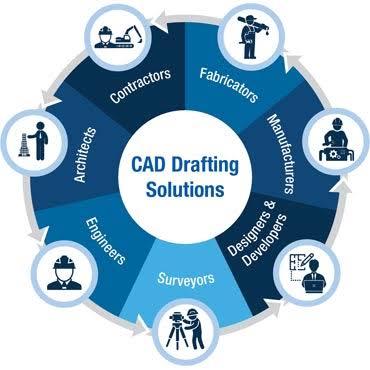
A CAD Career Guide can help beginners and professionals understand the skills, education, software, and career opportunities available in Computer-Aided Design. CAD is widely used in engineering, architecture, construction, manufacturing, and product development. As businesses increasingly depend on digital design and modeling, skilled CAD professionals continue to be valuable in many industries.
What Is CAD?
Computer-Aided Design, commonly called CAD, is technology used to create accurate technical drawings, layouts, and three-dimensional models. CAD software allows designers to create, edit, modify, and organize drawings more efficiently than traditional manual drafting methods.
Popular CAD programs include AutoCAD, Civil 3D, Revit, SolidWorks, and other specialized design applications. The right software depends on the industry and career path a person chooses.
Skills Needed for a CAD Career
Anyone following a CAD Career Guide should understand that software knowledge is only one part of becoming a successful CAD professional. Strong technical drawing skills, attention to detail, mathematics, measurements, problem-solving, and an understanding of design standards are also important.
Beginners can start by learning AutoCAD and practicing basic 2D drafting. After developing fundamental skills, they can move toward advanced programs such as Civil 3D, Revit, or 3D modeling software based on their career interests.
Career Opportunities in CAD
CAD skills can lead to several professional opportunities. CAD drafters create technical drawings based on specifications provided by engineers, architects, or designers. CAD technicians may prepare, update, and organize design documents, while experienced CAD designers can handle more complex projects.
Civil CAD professionals can work on roads, buildings, drainage systems, land development, and infrastructure projects. Architectural CAD professionals may prepare floor plans, elevations, sections, and building models. Mechanical CAD professionals can create components, assemblies, and manufacturing drawings.
How to Start a CAD Career
The first step in following a CAD Career Guide is to choose a suitable CAD program and learn its basic functions. Regular practice is essential. Beginners should start with simple drawings and gradually move toward more detailed projects.
Building a portfolio is another important step. A portfolio can contain floor plans, technical drawings, 3D models, site layouts, and other practice projects. A strong portfolio allows employers to see practical skills rather than relying only on educational qualifications.
Education and Certifications
Formal education in engineering, architecture, drafting, or another technical field can provide a strong foundation. Short-term CAD courses and professional certifications can also help candidates develop specialized skills.
However, certification is most valuable when combined with practical experience. Employers often look for candidates who understand both CAD software and real-world drafting requirements.
Improving Your CAD Career
A good CAD Career Guide should also emphasize continuous learning. CAD technology changes regularly, so professionals should keep improving their software and technical knowledge.
Advanced skills in 3D modeling, BIM, rendering, surveying, and project documentation can create additional career opportunities. Communication, teamwork, and time-management skills are also useful because CAD professionals often work with engineers, architects, contractors, and project managers.
Conclusion
A CAD Career Guide provides a useful starting point for anyone interested in developing a career in Computer-Aided Design. Learning professional CAD software, understanding technical drawing principles, building a strong portfolio, gaining practical experience, and continuing to develop new skills can create a strong foundation for career growth. With dedication and specialization, CAD professionals can find opportunities across engineering, architecture, construction, manufacturing, and other technical industries.

 English
 Arabic
 French
 Spanish
 Portuguese
 Deutsch
 Turkish
 Dutch
Dutch
 Italiano
 Russian
 Portuguese (Brazil)
 Greek
Greek