


How does cleanroom technology support IVF Labs Design?
INTRODUCTION
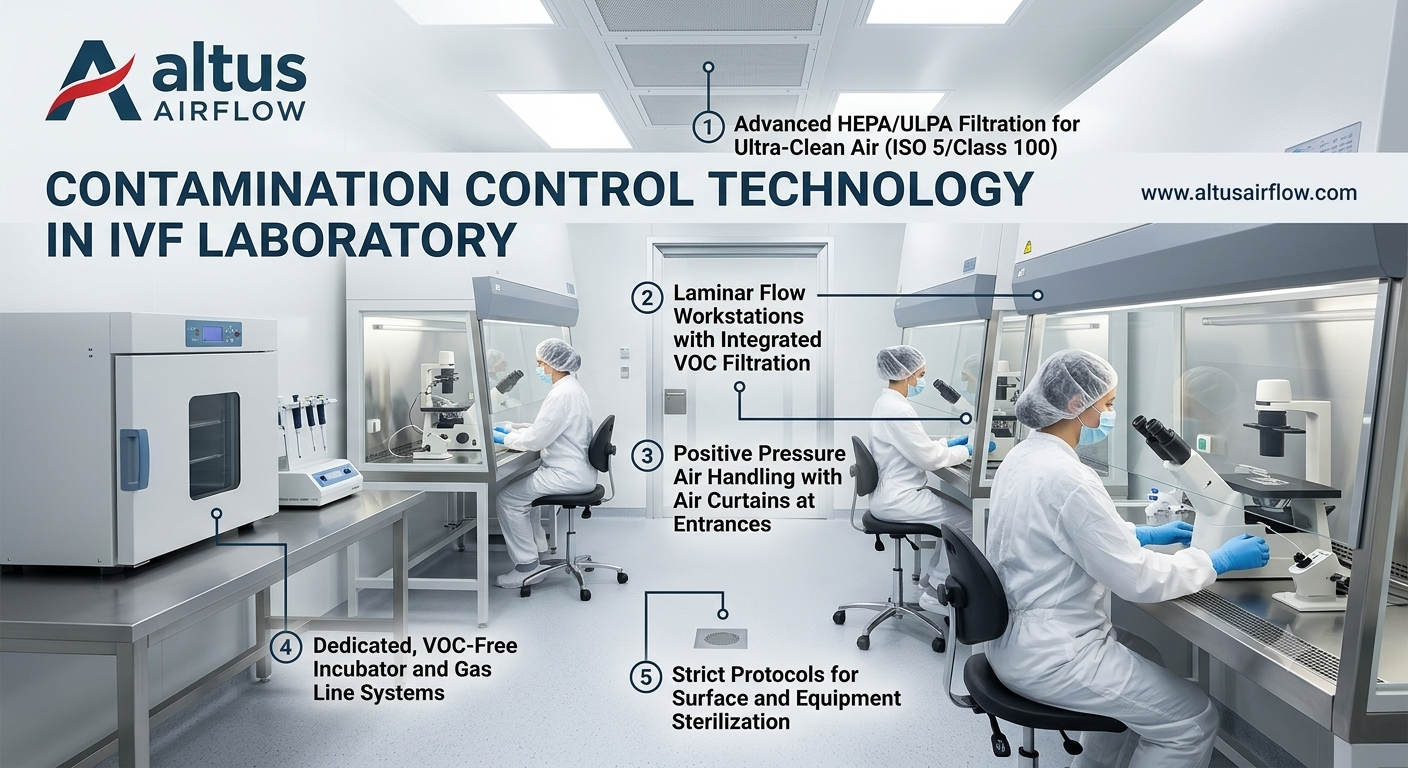
Cleanroom technology plays a critical role in IVF Labs Design because assisted reproductive technology laboratories require carefully controlled environmental conditions for sensitive biological materials and laboratory procedures. Unlike conventional laboratories, IVF facilities must be planned around contamination control, stable temperature and humidity, air filtration, pressure management, appropriate zoning, hygienic materials, and controlled personnel movement. A properly engineered cleanroom environment helps create consistent laboratory conditions while supporting the safe handling of oocytes, sperm, embryos, and associated laboratory processes.
Cleanroom technology is not limited to installing HEPA filters or maintaining a particular air-cleanliness level. It involves an integrated approach covering HVAC engineering, airflow patterns, filtration, room finishes, pressure relationships, monitoring, access control, cleaning protocols, and laboratory workflow. When these elements are considered together during the design stage, fertility centres can establish an IVF laboratory that is easier to operate, monitor, maintain, and adapt to future requirements.
Why Cleanroom Technology Is Important in IVF Laboratories
IVF laboratories contain highly sensitive biological processes. Oocytes, sperm, embryos, culture media, and other materials can be affected by environmental fluctuations and contaminants.
Cleanroom engineering helps control potential environmental factors such as:
- Airborne particles
- Microbial contamination
- Temperature fluctuations
- Humidity variations
- Volatile contaminants
- Pressure differences
- Uncontrolled personnel movement
- Dust from construction materials
- Inadequate air filtration
The objective is to create a stable environment that supports laboratory operations and minimizes avoidable environmental risks.
What Is Cleanroom Technology?
Cleanroom technology refers to the engineering methods used to control environmental conditions within a defined space.
In an IVF facility, it can involve:
- HVAC systems
- HEPA filtration
- Air distribution
- Pressure control
- Temperature regulation
- Humidity control
- Hygienic wall and ceiling systems
- Seamless flooring
- Controlled access
- Environmental monitoring
- Cleaning and maintenance strategies
The exact specifications should be established according to the laboratory's processes, applicable regulations, risk assessment, and project requirements.
1. HVAC Systems Provide Environmental Stability
HVAC is one of the most important components of an IVF cleanroom environment.
A properly engineered HVAC system can help regulate:
- Temperature
- Humidity
- Fresh-air supply
- Air changes
- Air distribution
- Filtration
- Pressure relationships
Stable environmental conditions are particularly important in areas where embryo culture and other sensitive laboratory activities are performed.
HVAC design should therefore be developed alongside the laboratory layout rather than treated as a separate construction activity.
2. HEPA Filtration Supports Air Cleanliness
HEPA filtration is commonly used in controlled healthcare and laboratory environments.
HEPA filters can remove a high proportion of airborne particles from the air passing through them. Within an IVF facility, filtration strategy should be determined according to the specific room function and environmental requirements.
Engineering considerations include:
- Filter efficiency
- Filter location
- Air volume
- Filter housing
- Sealing
- Pressure drop
- Maintenance access
- Integrity testing
The filtration system should be correctly sized and integrated with the HVAC design.
3. Airflow Management Reduces Contamination Risks
Cleanroom performance depends on more than filtration.
Engineers also need to consider how air moves through each laboratory space.
Important factors include:
- Supply-air location
- Return-air location
- Air velocity
- Air distribution
- Room geometry
- Equipment placement
- Personnel movement
- Door openings
Poorly planned airflow can create stagnant areas or unwanted turbulence. Therefore, airflow should be considered during the initial laboratory layout.
4. Pressure Zoning Helps Control Air Movement
Different areas of an IVF facility may have different environmental requirements.
Pressure zoning can help manage the direction in which air moves between spaces.
A design may distinguish between areas such as:
- Embryology laboratory
- Andrology laboratory
- Media preparation area
- Cryopreservation area
- Change rooms
- Corridors
- Support spaces
The pressure strategy should be determined according to the facility's functional requirements and contamination-control approach.
5. Temperature Control Supports Laboratory Stability
Temperature control is an important consideration in IVF laboratory engineering.
Environmental fluctuations can affect laboratory processes and equipment operation. HVAC systems should therefore be designed to provide stable conditions appropriate to each room's function.
Engineering calculations should consider:
- Equipment heat loads
- Occupancy
- Lighting
- Outdoor conditions
- Cooling capacity
- Fresh-air requirements
Environmental sensors can help laboratory personnel monitor temperature continuously.
6. Humidity Control Is Also Important
Humidity affects both environmental comfort and facility performance.
Excessive humidity can contribute to condensation and material-related problems, while excessively dry conditions can create other operational concerns.
The HVAC system should therefore incorporate appropriate humidity management based on:
- Laboratory processes
- Equipment requirements
- Building conditions
- Seasonal climate
- Room occupancy
The target range should be established by the laboratory's technical specifications and applicable requirements.
7. Hygienic Wall and Ceiling Materials
Cleanroom technology also includes the physical construction of the laboratory.
Walls and ceilings should ideally have characteristics such as:
- Smooth surfaces
- Easy cleaning
- Low particle generation
- Minimal joints
- Good sealing
- Resistance to routine cleaning agents
Depending on the design, laboratories may use suitable modular panels and cleanroom-compatible ceiling systems.
Material selection should consider the laboratory's cleaning and maintenance procedures.
8. Seamless Flooring Helps Simplify Cleaning
Flooring should support routine cleaning and contamination-control procedures.
Suitable flooring solutions may provide:
- Seamless surfaces
- Easy cleaning
- Chemical resistance
- Durability
- Low particle generation
- Proper wall-to-floor detailing
Coved flooring details can also help reduce difficult-to-clean corners where appropriate.
9. Controlled Personnel Movement
People are an important potential source of particles and contamination.
Cleanroom planning should therefore consider personnel movement from:
Entry → Changing → Controlled Zone → Laboratory → Exit
Access pathways should be designed to reduce unnecessary movement between different laboratory areas.
Controlled access can also help limit entry to sensitive spaces.
10. Zoning Improves Laboratory Workflow
An effective cleanroom design separates activities according to their contamination and operational requirements.
Possible functional areas include:
- Embryology laboratory
- Andrology laboratory
- IVF procedure support areas
- Media preparation
- Cryostorage
- Sample handling
- Staff changing
- Storage
- Equipment rooms
Logical zoning reduces unnecessary cross-traffic and makes environmental control easier.
11. Embryology Laboratory Engineering
The embryology laboratory is one of the most sensitive areas of an IVF facility.
Its design may consider:
- Environmental stability
- Air cleanliness
- Low-contamination materials
- Equipment positioning
- Workflow
- Monitoring
- Controlled access
Workstations should be positioned to support efficient laboratory procedures without creating unnecessary personnel movement.
12. Andrology Laboratory Design
The andrology laboratory also requires appropriate environmental and workflow planning.
Design considerations can include:
- Sample handling
- Privacy
- Equipment placement
- Cleanable surfaces
- Ventilation
- Storage
- Personnel workflow
The relationship between andrology and embryology areas should be considered during overall facility planning.
13. Volatile Organic Compound Control
Environmental contaminants are not limited to visible particles.
Volatile organic compounds and other chemical contaminants can originate from:
- Building materials
- Adhesives
- Paints
- Cleaning products
- Furniture
- External air
An appropriate cleanroom strategy can incorporate material selection, ventilation, filtration, and source-control measures to reduce potential environmental contamination.
Material selection should therefore be made carefully during the design stage.
14. Air Quality Monitoring
Environmental monitoring helps laboratory teams understand whether operating conditions remain within specified limits.
Depending on the facility, monitoring may include:
- Temperature
- Humidity
- Differential pressure
- Airborne particles
- Filter pressure
- HVAC status
Continuous monitoring can help identify deviations before they become persistent operational problems.
15. Differential Pressure Monitoring
Pressure relationships between rooms should be monitored where pressure zoning is part of the design.
Pressure monitoring systems can provide:
- Real-time readings
- Alarm notifications
- Trend information
- Maintenance alerts
This allows facility teams to investigate potential problems such as open doors, filter loading, fan issues, or HVAC imbalance.
16. Cleanroom Doors and Access Control
Doors are important components of environmental control.
Appropriate designs may include:
- Sealed doors
- Controlled access
- Interlocking arrangements where required
- Observation panels
- Easy-to-clean surfaces
Door operation should be coordinated with pressure management and personnel workflow.
17. Equipment Placement and Airflow
Laboratory equipment can influence airflow patterns.
Equipment such as:
- Incubators
- Microscopes
- Workstations
- Cryostorage systems
- Centrifuges
- Laminar airflow workstations
can occupy substantial space or produce heat.
The design team should therefore coordinate equipment placement with HVAC and airflow engineering.
18. Environmental Stability Around Embryo Culture
Embryo culture involves highly sensitive laboratory processes.
The laboratory design should support stable environmental conditions by coordinating:
- Room temperature
- Humidity
- Air quality
- Equipment heat loads
- Workflow
- Monitoring
- Maintenance
Environmental engineering should complement the laboratory's validated procedures and equipment controls.
19. Cleanroom Validation and Testing
A cleanroom should be tested after installation and before routine operation.
Depending on the project, testing can include:
- HEPA filter integrity testing
- Airflow measurements
- Air velocity measurements
- Differential pressure testing
- Particle counting
- Temperature verification
- Humidity verification
- Airflow visualization where required
Testing confirms whether the installed environment performs according to the specified design criteria.
20. Commissioning Is Essential
Commissioning verifies that different systems operate together.
The process may include:
- HVAC testing
- Control-system verification
- Alarm testing
- Environmental monitoring checks
- Air balancing
- Filter verification
- Documentation review
A properly commissioned facility provides a stronger basis for routine operation.
21. Cleanroom Technology Supports Contamination Control
The combined use of filtration, controlled airflow, appropriate materials, zoning, monitoring, and cleaning procedures can create a more controlled environment.
However, cleanroom technology should be viewed as one part of a broader contamination-control program that also includes:
- Personnel procedures
- Cleaning protocols
- Equipment maintenance
- Material handling
- Access control
- Laboratory SOPs
Engineering and operational procedures should work together.
22. Energy-Efficient Cleanroom Engineering
IVF laboratories may operate continuously, making energy efficiency an important consideration.
Designers can evaluate:
- Efficient air-handling equipment
- Variable-speed drives
- Appropriate airflow rates
- Efficient cooling
- Automated controls
- Energy monitoring
Energy efficiency should not compromise the environmental requirements established for the laboratory.
23. Maintenance Planning
Cleanroom systems require regular maintenance.
A maintenance program can include:
- Prefilter inspection
- HEPA filter inspection
- Filter replacement
- HVAC servicing
- Sensor calibration
- Airflow testing
- Pressure monitoring
- Cleaning of accessible components
Maintenance requirements should be considered during the initial design.
24. Designing for Future Expansion
IVF centres may expand their services or upgrade equipment.
A flexible cleanroom design can accommodate:
- Additional equipment
- Laboratory expansion
- Increased storage
- Additional monitoring
- HVAC modifications
- Technology upgrades
Modular construction can make future changes more manageable.
Key Benefits of Cleanroom Technology in IVF Labs Design
When properly planned and implemented, cleanroom technology can provide several benefits:
Better Environmental Control
HVAC, filtration, and monitoring help maintain defined environmental conditions.
Improved Contamination Management
Air filtration, zoning, controlled movement, and hygienic construction support contamination-control strategies.
Better Workflow
Logical zoning and equipment placement can reduce unnecessary movement.
Improved Monitoring
Sensors and monitoring systems provide greater visibility into laboratory conditions.
Easier Maintenance
Accessible systems and suitable materials simplify routine maintenance.
Long-Term Flexibility
Modular and scalable infrastructure can support future laboratory changes.
How Should IVF Centres Evaluate Cleanroom Design Providers?
Before selecting a design and engineering partner, IVF centres should evaluate:
- Experience with fertility laboratories
- Cleanroom engineering capabilities
- HVAC expertise
- HEPA filtration knowledge
- Contamination-control planning
- Laboratory zoning experience
- Environmental monitoring
- Material selection
- Validation and commissioning
- Documentation
- Maintenance support
- Future expansion capabilities
A provider should be able to explain the reasoning behind the proposed design rather than simply offering a standard room configuration.
Conclusion
Cleanroom technology supports IVF Labs Design by combining controlled HVAC, HEPA filtration, airflow management, pressure zoning, hygienic construction materials, environmental monitoring, controlled access, validation, and maintenance planning. These systems help create a stable and controlled laboratory environment for sensitive assisted-reproductive procedures. Effective cleanroom engineering must also be integrated with laboratory workflow, equipment placement, contamination-control procedures, and applicable requirements. A carefully planned facility can provide better environmental consistency, efficient operation, maintainability, and flexibility for future upgrades. For organizations seeking specialized IVF laboratory planning, cleanroom engineering, HVAC integration, contamination-control solutions, testing, and commissioning, Altus Airflow provides solutions designed around modern laboratory requirements.
Frequently Asked Questions
1. How does cleanroom technology support IVF Labs Design?
Cleanroom technology supports IVF Labs Design through HVAC systems, HEPA filtration, controlled airflow, pressure zoning, hygienic materials, environmental monitoring, controlled access, and validation procedures that help maintain suitable laboratory conditions.
2. Why is HEPA filtration important in IVF Labs Design?
HEPA filtration is an important component of IVF Labs Design because it can reduce airborne particulate contamination when correctly selected, installed, maintained, and tested as part of the overall HVAC strategy.
3. Does IVF Labs Design include HVAC engineering?
Yes. Professional IVF Labs Design can include HVAC planning for temperature, humidity, airflow, filtration, fresh air, and pressure management according to the laboratory's functional requirements.
4. How does pressure zoning help IVF Labs Design?
Pressure zoning in IVF Labs Design helps manage air movement between different laboratory spaces and can support the facility's overall contamination-control strategy.
5. What materials are used in cleanroom-based IVF Labs Design?
Depending on project requirements, IVF Labs Design may incorporate cleanroom-compatible wall and ceiling panels, seamless flooring, sealed doors, hygienic finishes, and other materials selected for cleanability and durability.
Read Our Previous Blog------>How does a Modular Ophthalmic OT Engineering Company design and engineer ophthalmic operation theatres?

 English
 Arabic
 French
 Spanish
 Portuguese
 Deutsch
 Turkish
 Dutch
Dutch
 Russian
 Romaian
 Portuguese (Brazil)
 Greek
Greek