


Delhi City Tour: Explore the Best of Delhi Tour in 2 Days
Delhi City Tour: Explore the Best of Delhi Tour in 2 Days
Delhi is one of those destinations that becomes more fascinating the longer you explore it. India's capital is not defined by a single historical period, architectural style, or cultural tradition. Instead, it is a remarkable collection of layers, with ancient ruins, Mughal monuments, colonial avenues, religious landmarks, colorful bazaars, modern neighborhoods, and vibrant food traditions existing within the same enormous city. A Delhi City Tour: Explore the Best of Delhi Tour in 2 Days gives you enough time to experience the city's most important attractions without trying to squeeze everything into one exhausting day. By dividing the sightseeing into two thoughtfully planned days, you can explore Old Delhi, discover the grand landmarks of New Delhi, visit impressive Mughal and Sultanate monuments, experience local markets, and still have enough time to appreciate the atmosphere around you.
Two days are particularly useful for first-time visitors because Delhi is geographically large and traffic can significantly affect travel time. Instead of constantly watching the clock, a two-day private itinerary gives you breathing room. Day one can focus on the historic heart of the capital, including the Red Fort, Jama Masjid, Chandni Chowk, Raj Ghat, and other important Old Delhi landmarks. Day two can then explore New Delhi and southern Delhi, where attractions such as India Gate, Humayun's Tomb, Qutub Minar, Lotus Temple, and the government district reveal different chapters of the city's history. The result is a balanced introduction to Delhi that combines architecture, history, culture, religion, food, and everyday life.
Why Explore Delhi in Two Days?
Delhi is simply too large and historically diverse to experience properly in a few rushed hours. Although a one-day city tour can introduce you to the major highlights, two days allow you to slow down and appreciate the differences between the city's historic neighborhoods and modern districts. You can spend meaningful time inside major monuments instead of photographing them from outside and immediately rushing toward the next attraction. You can also include experiences that are difficult to fit into a single day, such as exploring Chandni Chowk, visiting several religious landmarks, or enjoying a relaxed meal featuring Delhi's famous cuisine.
Another advantage is flexibility. If traffic causes delays on the first day, you still have the second day to adjust your plans. You can also dedicate more time to attractions that match your interests. History enthusiasts may want longer visits at the Red Fort and Humayun's Tomb, while architecture lovers may prefer Qutub Minar and the Mughal monuments. Food lovers can spend additional time in Old Delhi, and families may appreciate having a less demanding schedule.
A two-day itinerary also gives you the opportunity to see Delhi at different times of day. Early mornings can be peaceful around major monuments, afternoons are ideal for indoor or shaded attractions, and evenings can be used for markets, restaurants, or relaxed walks depending on the season.
Day 1: Discover the Heritage of Old Delhi
Your first day should begin with Old Delhi, the historic area that developed around Shahjahanabad, the Mughal capital founded by Emperor Shah Jahan in the 17th century. This part of the city has a completely different personality from the broad avenues of New Delhi. Streets are narrower, markets are more crowded, historic buildings sit alongside modern businesses, and centuries-old traditions remain part of everyday life.
Starting early is generally a good idea because Old Delhi becomes increasingly busy as the day progresses. Your private driver can collect you from your hotel and take you toward the historic center. Depending on the opening hours and your itinerary, you can begin with the Red Fort before exploring nearby Jama Masjid and Chandni Chowk.
The first day should not be treated as a race. Old Delhi is best experienced through a combination of major monuments and street-level exploration. The goal is to understand the character of the area rather than simply collect photographs.
Explore the Red Fort
The Red Fort is one of Delhi's most important landmarks and an essential part of any comprehensive Delhi itinerary. Built under Mughal Emperor Shah Jahan, the fort became the center of imperial power in Delhi after the Mughal capital moved to Shahjahanabad.
Its enormous red sandstone walls create an imposing first impression. Once inside, however, the complex reveals a more sophisticated world of royal courtyards, audience halls, gardens, palaces, and decorative structures.
A private guide can help explain how the fort functioned as an imperial residence and administrative center. Rather than seeing a collection of old buildings, you begin to understand how the Mughal court operated and how architecture was used to express power and prestige.
The Red Fort also has enormous importance in modern India. The Prime Minister traditionally delivers the Independence Day address from the fort, linking the monument's Mughal past with the country's modern national identity.
Give yourself enough time to explore the main areas without rushing. The scale and historical significance of the fort make it one of the attractions where a slower visit is more rewarding.
Visit Jama Masjid
After the Red Fort, continue toward Jama Masjid, one of the most prominent historic mosques in Delhi. Commissioned by Shah Jahan, the mosque forms an important part of the architectural landscape of Shahjahanabad.
Its large courtyard and impressive architectural proportions make it a memorable stop. Visitors should remember that it remains a religious site, so respectful behavior and appropriate clothing are important.
The area surrounding Jama Masjid is also closely associated with Old Delhi's food culture. Depending on your preferences and the time available, you can explore nearby lanes and sample traditional dishes.
This is where having a private guide can be useful. Instead of wandering through the neighborhood without context, you can learn how the mosque fits into the history and social life of Old Delhi.
Experience Chandni Chowk
Few places demonstrate Delhi's energy better than Chandni Chowk. The historic market district is famous for its narrow lanes, traditional shops, food stalls, religious sites, wholesalers, textiles, spices, jewelry, and everyday commercial activity.
The area can feel chaotic at first, but that energy is part of its charm. Walk through selected sections with your guide or take a cycle-rickshaw through some of the busier lanes.
Do not expect Chandni Chowk to feel like a modern shopping mall. It is an old commercial district where businesses and traditions have evolved over generations. You may see a spice shop beside a sweets store, a centuries-old religious building near a modern electronics business, and traditional food being prepared alongside contemporary street life.
For many travelers, this becomes one of the most memorable parts of a Delhi City Tour because it provides an experience beyond monuments.
Enjoy an Old Delhi Food Experience
Food is one of the easiest ways to understand Delhi. Old Delhi has a particularly rich culinary identity, with traditional dishes, sweets, snacks, breads, kebabs, and vegetarian specialties available throughout the area.
Depending on your dietary preferences, your guide can help you choose suitable places to eat. Popular foods associated with Delhi include parathas, chaat, kebabs, chole bhature, jalebi, and various regional sweets.
Do not feel pressured to sample everything. A few carefully chosen dishes are often more enjoyable than trying to eat your way through the entire market.
If hygiene is a concern, choose established restaurants or busy food outlets with good turnover rather than taking unnecessary risks at unfamiliar stalls.
Visit Raj Ghat
After the lively atmosphere of Old Delhi, Raj Ghat offers a peaceful change of pace. The memorial is associated with Mahatma Gandhi and is surrounded by landscaped gardens.
The memorial itself is intentionally simple, creating a very different experience from the grandeur of the Red Fort. It provides an opportunity to reflect on Gandhi's role in India's independence movement and the political history of the country.
Because the setting is quieter, Raj Ghat can also serve as a natural pause during your first day. After walking through busy markets and large monuments, a peaceful garden environment can be refreshing.
Explore Other Historic Areas of Old Delhi
If you have additional time on day one, your itinerary can include other parts of the historic city. Depending on your interests, this might involve traditional markets, historic havelis, religious landmarks, or photography walks.
One of the advantages of a private itinerary is that you can decide how deeply you want to explore. If you love history, your guide can focus on architecture and Mughal heritage. If you are more interested in local culture, additional time can be dedicated to markets and neighborhoods.
Avoid trying to visit every attraction simply because it appears on a map. Delhi's historic districts are best appreciated when you have enough time to observe them.
Day 2: Explore New Delhi and Southern Delhi
Your second day can focus on New Delhi and southern Delhi, offering a dramatic contrast with the previous day's Old Delhi experience. The streets become wider, the architecture changes, and major government buildings and landscaped avenues dominate the cityscape.
Begin with India Gate and the ceremonial district, then continue toward Humayun's Tomb and other attractions. Later in the day, head toward Qutub Minar and, depending on your interests and time, Lotus Temple or another nearby landmark.
This division works well because it groups attractions geographically and reduces unnecessary backtracking.
See India Gate
India Gate is one of the most recognizable symbols of New Delhi. The monumental arch stands along the ceremonial axis of the capital and commemorates Indian soldiers who died during World War I and later conflicts.
The surrounding area is spacious and offers good opportunities for photographs. Your driver can stop at suitable locations according to current traffic and access conditions.
India Gate is especially impressive when viewed as part of the broader urban design of New Delhi. The surrounding avenues and government district reflect the city's planned colonial-era layout.
Rather than spending an excessive amount of time here, a short but meaningful visit works well before moving toward the next attraction.
See Rashtrapati Bhavan and the Government District
Continue toward Rashtrapati Bhavan, the official residence of the President of India, and the surrounding government district.
The monumental scale of the buildings and avenues reflects the ambitious planning behind New Delhi. The architecture combines European planning traditions with Indian design influences, creating a distinctive visual identity.
Because government areas can have changing security and access rules, visitors should follow current restrictions and understand that seeing a landmark from an approved public viewpoint is different from entering it.
A private guide can explain the history of the area while your driver navigates the surrounding roads.
Visit Humayun's Tomb
Humayun's Tomb is one of the highlights of southern New Delhi and a must-see for travelers interested in Mughal architecture. The grand garden tomb was built for Mughal Emperor Humayun and is widely recognized for its architectural importance.
Its design combines a monumental central structure with formal gardens, symmetry, red sandstone, white marble details, arches, and a large dome. The peaceful gardens create a sharp contrast with Delhi's busy streets.
The monument is especially valuable from a historical perspective because it represents an important stage in the development of Mughal architecture. Studying its design helps visitors recognize architectural ideas that were later developed in more elaborate forms in Mughal monuments, including the Taj Mahal.
Take time to walk around the gardens rather than limiting your visit to the main entrance view.
Discover Qutub Minar
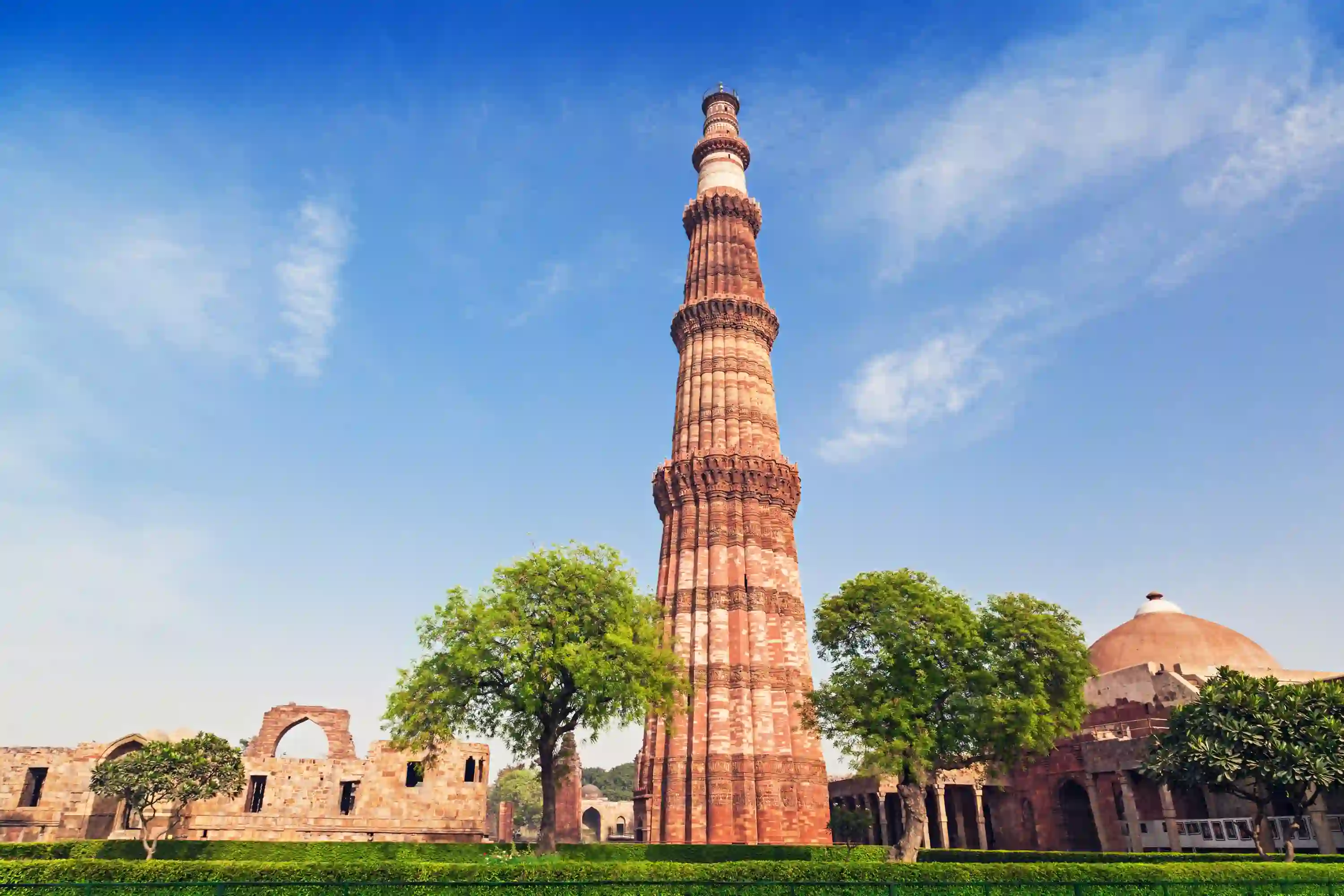
Continue south toward Qutub Minar, one of Delhi's most recognizable historical landmarks. The soaring tower dominates the archaeological complex and represents an important period in the history of the Delhi Sultanate.
The surrounding complex contains several structures, ruins, arches, inscriptions, and architectural remains, making it much more than a single monument.
A guide can help you understand the different periods represented at the site and explain why the complex is historically significant.
The height and intricate surface decoration of Qutub Minar make it particularly impressive when viewed from different angles. Photography enthusiasts should spend some time exploring the complex rather than taking only the standard front-facing photograph.
Visit Lotus Temple
Depending on your interests and the opening schedule, Lotus Temple can be added to the second day. Its distinctive lotus-shaped design makes it one of New Delhi's most recognizable modern religious structures.
The temple belongs to the Bahá'í tradition and welcomes people from different backgrounds. The atmosphere is intentionally peaceful, making it an interesting contrast to the monumental historical sites visited earlier.
Visitors should check current entry procedures and opening days before including it in the itinerary, as religious sites can have specific visitor arrangements.
If you are traveling with family, the Lotus Temple can be an enjoyable addition because its unusual architecture is visually striking even for visitors who are not deeply interested in history.
Explore Delhi's Markets
A two-day itinerary should leave some room for shopping if that interests you. Delhi offers everything from traditional handicrafts and textiles to modern fashion, souvenirs, spices, jewelry, and decorative items.
The ideal market depends on what you want to buy. Old Delhi is particularly useful for traditional goods and local food experiences, while other areas of the city offer different shopping environments.
Do not schedule an extended shopping session immediately before an important attraction. Shopping can take longer than expected, particularly if you are negotiating prices or comparing products.
If you are purchasing handicrafts, ask your guide about reputable shops and be clear about your budget.
Experience Delhi's Religious Diversity
Delhi's cultural richness is also reflected in its religious landmarks. Hindu temples, mosques, Sikh gurdwaras, churches, Jain temples, and Bahá'í sites exist throughout the city.
Including one or two religious sites in your itinerary can provide a deeper understanding of contemporary Delhi. These places are not simply tourist attractions; many remain active centers of worship.
Visitors should follow local etiquette, dress appropriately, remove shoes where required, and respect photography restrictions.
A private guide can explain the significance of each place and help you navigate visitor procedures respectfully.
Best Time for a Two-Day Delhi City Tour
Delhi can be visited throughout the year, but the weather can strongly influence your experience. The cooler months are generally comfortable for outdoor sightseeing, while summer afternoons can become very hot.
Winter mornings can be cool and may occasionally experience fog. Summer travelers should plan outdoor attractions earlier in the day and take regular breaks.
The monsoon season can bring humidity and rain, but the city can also appear greener during this period.
There is no single perfect month for every traveler. Your preferred season depends on whether you prioritize comfortable temperatures, fewer crowds, photography, or travel availability.
How to Travel Around Delhi During the Tour
A private vehicle is particularly useful for a two-day sightseeing itinerary because attractions are spread across a large area. Your driver can handle navigation, parking arrangements, and transfers while you focus on sightseeing.
Delhi also has an extensive Metro network, which can be useful for independent travelers. However, a private car provides greater convenience when carrying belongings, traveling with family, or visiting several attractions that are not directly connected by one route.
The key advantage of private transportation is time. Instead of spending your sightseeing day figuring out connections, you can move directly from one attraction to another.
What Should You Pack?
Pack light but prepare for a full day of walking. Comfortable footwear is essential.
Depending on the season, useful items may include sunscreen, sunglasses, a hat, a light jacket, an umbrella, water, and a small day bag.
Carry identification and any necessary travel documents. Keep expensive or unnecessary items at your hotel whenever possible.
Because monument security policies can change, check the latest visitor rules before the tour.
Is a Two-Day Delhi Tour Good for Families?
Yes. Two days are often better than one for families because the pace can be less demanding. Children can become tired quickly when visiting several large monuments, so spreading the sightseeing over two days provides more flexibility.
Parents can also select attractions that appeal to children, such as Qutub Minar, India Gate, markets, and visually striking religious buildings.
Private transportation makes it easier to stop for snacks, meals, and rest periods when needed.
The best family itinerary is one that leaves some empty space rather than filling every hour.
Is It Suitable for Couples?
A two-day private Delhi tour can be an enjoyable experience for couples because it provides a combination of history, architecture, food, photography, and local culture.
Couples can explore Old Delhi's markets on the first day and enjoy the grand monuments and gardens of New Delhi on the second. There is also enough flexibility to include a special meal or shopping experience.
The private format means you do not have to follow another group's schedule, which can make the trip feel more relaxed and personal.
How Much Does a Two-Day Delhi Tour Cost?
The price depends on several factors, including vehicle type, hotel category if accommodation is included, guide services, monument tickets, meals, group size, and the exact attractions included.
Rather than choosing a tour based solely on the lowest advertised price, compare the complete package. A slightly higher price may include a private guide, better vehicle, hotel transfers, and entrance tickets, making it better value overall.
| Tour Element | Usually Included or Optional |
|---|---|
| Private vehicle | Usually included |
| Driver | Usually included |
| Hotel pickup/drop-off | Usually included |
| Private guide | Often included |
| Monument tickets | Package-dependent |
| Meals | Usually optional |
| Accommodation | Depends on package |
| Shopping | Personal expense |
Always confirm the inclusions before booking so that the final price is clear.
Tips for Planning the Perfect Two-Day Itinerary
The most important tip is to group attractions geographically. Delhi is large, and unnecessary cross-city travel can consume hours.
Start early when possible, particularly during warmer months. Keep the busiest attractions earlier in the day and leave some flexibility for traffic.
Do not attempt to visit every monument. Choose the places that best match your interests.
If you enjoy history, prioritize the Red Fort, Humayun's Tomb, Qutub Minar, and other major heritage sites. If food is important, dedicate more time to Old Delhi. If architecture interests you, spend longer at the Mughal and Sultanate monuments.
The itinerary should serve your interests rather than simply reproduce a generic checklist.
Common Mistakes to Avoid
One of the biggest mistakes is underestimating Delhi traffic. A location that appears close on a map may take much longer to reach during busy periods.
Another mistake is planning too many attractions in one day. Two days give you more time, but Delhi still cannot be fully explored in 48 hours.
Visitors should also check weekly closures and current opening hours before finalizing their itinerary. Monument schedules can change, and religious sites may have special arrangements.
Finally, do not forget to leave room for spontaneous experiences. Some of the best memories may come from an unexpected market, conversation, food stop, or architectural detail that was never on your original itinerary.
Why Choose a Private Two-Day Delhi Tour?
A private two-day tour offers the right balance between structure and freedom. You have transportation, local knowledge, and a planned route, but you can still adjust the day according to your interests.
For international visitors, this can reduce the stress of navigating an enormous city. For families, it provides comfort and flexibility. For couples, it creates a more personal experience. For history enthusiasts, it allows additional time at important monuments.
Most importantly, it gives Delhi the time it deserves.
Conclusion
A Delhi City Tour: Explore the Best of Delhi Tour in 2 Days is an ideal way to discover the capital's extraordinary mixture of history, architecture, religion, food, markets, and modern life. Instead of rushing through a long list of attractions, you can divide the experience naturally between Old Delhi and New Delhi.
Day one can introduce you to the Mughal heart of the city through the Red Fort, Jama Masjid, Chandni Chowk, Raj Ghat, and surrounding historic areas. Day two can reveal another side of Delhi through India Gate, Rashtrapati Bhavan, Humayun's Tomb, Qutub Minar, Lotus Temple, and other southern and central landmarks.
The greatest advantage of a two-day private itinerary is flexibility. You can travel at a comfortable pace, spend more time at places that interest you, take breaks when necessary, and avoid turning your vacation into a race between monuments.
Delhi is not a city that reveals itself instantly. Its stories are scattered across forts, tombs, markets, temples, mosques, gardens, government buildings, and busy streets. Give it two days, explore with curiosity, and you will leave with much more than photographs—you will have a clearer understanding of the many historical and cultural layers that make India's capital so extraordinary.
FAQs
1. Is two days enough to explore Delhi?
Two days are enough to visit many of Delhi's major attractions, especially with a well-planned private itinerary. You will not see everything, but you can experience the most important historical and cultural highlights comfortably.
2. What should I see on the first day in Delhi?
The first day is ideal for Old Delhi. Popular highlights include the Red Fort, Jama Masjid, Chandni Chowk, and Raj Ghat. You can also add other historic attractions depending on your available time.
3. What should I see on the second day?
The second day can focus on New Delhi and southern Delhi, including India Gate, Rashtrapati Bhavan, Humayun's Tomb, Qutub Minar, and Lotus Temple. The exact itinerary can be customized according to your interests.
4. Is a private car necessary for a two-day Delhi tour?
It is not essential, but a private car can make the experience significantly more convenient. Delhi's attractions are spread across a large area, and private transportation helps reduce the time and stress associated with changing between different forms of transport.
5. Can I customize a two-day Delhi city tour?
Yes. A private tour can usually be customized according to your interests, travel pace, preferred attractions, shopping plans, food preferences, and available sightseeing hours. The final itinerary should take opening hours, traffic, and current visitor restrictions into account.

 English
 Arabic
 French
 Spanish
 Portuguese
 Deutsch
 Turkish
 Dutch
Dutch
 Italiano
 Romaian
 Portuguese (Brazil)
 Greek
Greek