


4 Days Golden Triangle Tour
4 Days Golden Triangle Tour
A 4 Days Golden Triangle Tour is an ideal way to explore the three most celebrated destinations of North India—Delhi, Agra, and Jaipur—without feeling quite as rushed as a shorter three-day itinerary. The journey combines the historic character of Delhi, the magnificent Mughal heritage of Agra, and the royal architecture of Jaipur into one carefully connected travel experience. Along the way, you can visit iconic landmarks such as the Red Fort, India Gate, Taj Mahal, Agra Fort, Amber Fort, City Palace, Jantar Mantar, and Hawa Mahal while also experiencing local food, traditional markets, and the distinctive cultures of each destination.
Four days create a useful balance between sightseeing and travel. Instead of trying to compress every major attraction into an extremely tight schedule, you can divide your time more naturally between the three cities. You can explore Delhi on the first day, spend a dedicated day discovering Agra and the Taj Mahal, travel onward to Jaipur, and then devote a full day to the Pink City's royal heritage before returning to Delhi or continuing your journey. This makes the itinerary particularly attractive for first-time visitors who want to see the highlights while still having enough breathing room to enjoy the experience.
What Is the Golden Triangle of India?
The Golden Triangle is the popular tourism circuit connecting Delhi, Agra, and Jaipur. These three destinations form a rough triangle on the map and collectively provide an introduction to several important periods and cultural traditions in northern India.
Delhi represents the country's modern capital while preserving layers of Mughal, Sultanate, and colonial history. Agra is strongly associated with the Mughal Empire and is home to the Taj Mahal, one of the world's most recognizable monuments. Jaipur introduces travelers to Rajasthan's Rajput heritage through its forts, palaces, observatory, markets, and distinctive architectural style.
The remarkable thing about the route is how quickly the atmosphere changes. The busy streets of Delhi give way to Agra's monumental Mughal landscape, and then the architecture and colors shift again as you enter Rajasthan.
That variety makes a 4 Days Golden Triangle Tour more than a sightseeing trip. It is a compact cultural journey through different chapters of India's history.
Why Choose a 4-Day Golden Triangle Tour?
Four days give you an important advantage: time. A three-day tour can cover the principal landmarks, but it often requires early starts, long sightseeing days, and careful scheduling. Adding one more day makes it easier to slow down and appreciate the destinations.
You can spend more meaningful time at the Taj Mahal instead of rushing through the Agra itinerary. Jaipur can also receive a full sightseeing day, allowing you to visit Amber Fort, City Palace, Jantar Mantar, Hawa Mahal, and selected markets without constantly watching the clock.
The additional day is also helpful for families and older travelers. You can include breaks, enjoy meals without rushing, and adapt the itinerary if traffic or weather causes delays.
For couples, the extra time allows for a more relaxed travel rhythm. For photographers, it creates more opportunities to explore monuments under different lighting conditions. For first-time visitors, it provides enough time to understand the character of each city rather than simply checking attractions off a list.
Day 1: Delhi Sightseeing and Delhi to Agra
Your 4 Days Golden Triangle Tour can begin with a full day of sightseeing in Delhi. As India's capital, Delhi provides a fascinating introduction to the country's history, politics, architecture, religion, food, and modern urban life.
The city is enormous, so it is impossible to see everything in one day. A well-planned itinerary should therefore focus on the landmarks that best represent Old and New Delhi.
Depending on your interests and arrival time, your first day can include the Red Fort, Jama Masjid, Chandni Chowk, Raj Ghat, India Gate, Humayun's Tomb, and a drive through the government district.
At the end of the day, travel to Agra by private vehicle or another suitable transportation option. Staying overnight in Agra allows you to begin the following morning close to the Taj Mahal.
Explore the Red Fort
The Red Fort is one of Delhi's most important historical monuments and an excellent place to begin your Golden Triangle journey. Built during the reign of Mughal Emperor Shah Jahan, the fort became a major center of imperial power.
The massive red sandstone walls immediately communicate the scale of the Mughal capital. Inside, the complex contains courtyards, audience halls, palace structures, gardens, and decorative architectural elements.
The fort is especially interesting when visited with a knowledgeable guide. Rather than seeing only beautiful buildings, you can learn how the Mughal court functioned and why particular structures were designed in specific ways.
Its historical importance extends into modern India as well. The Red Fort has become closely associated with India's Independence Day celebrations and the country's national identity.
Allow enough time to explore the principal areas without rushing. The complex is large, and its significance is better appreciated when you pause to examine the architecture.
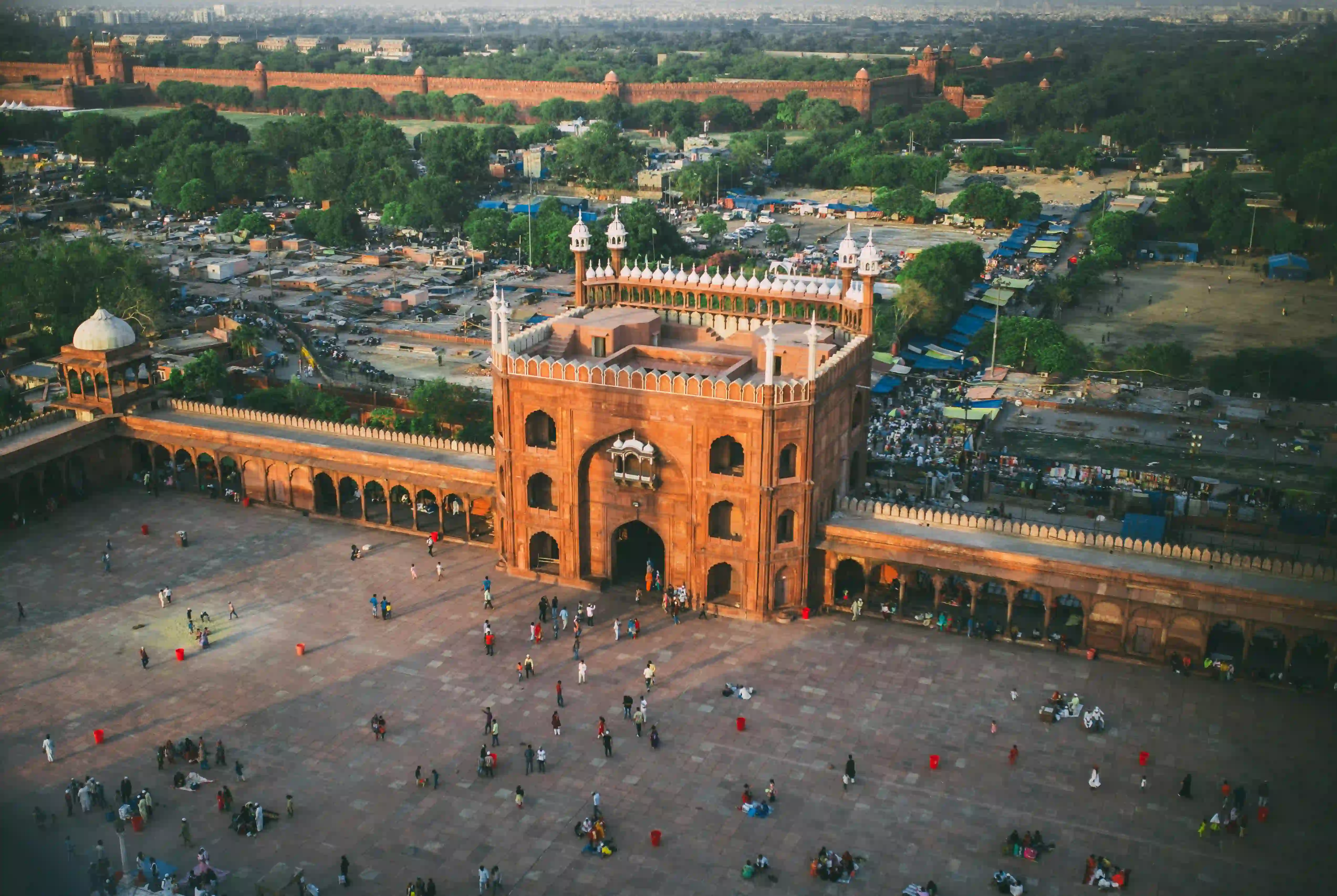
Visit Jama Masjid and Old Delhi
After the Red Fort, continue toward Jama Masjid, another important Mughal-era landmark in Old Delhi.
The mosque's enormous courtyard, domes, minarets, and sandstone architecture make it one of the most recognizable religious structures in the city. Visitors should respect the site's religious character and follow current visitor and clothing requirements.
Nearby, Chandni Chowk provides a completely different experience. Instead of monumental architecture, you encounter crowded lanes, traditional businesses, food vendors, spice shops, textile stores, jewelry sellers, and everyday Delhi life.
This is one of the places where a private guide can make a major difference. The lanes can be confusing for first-time visitors, while a local guide can introduce you to selected areas without wasting hours searching for them.
Experience Chandni Chowk
Chandni Chowk is one of Delhi's best places to experience the city's living heritage.
The market developed as part of the historic Mughal capital and has remained an important commercial area. Its narrow lanes are filled with shops selling everything from spices and sweets to fabrics, jewelry, religious goods, and traditional clothing.
Food is another major attraction. Old Delhi is famous for its street-food culture, although travelers should choose food outlets carefully and consider their own dietary requirements.
A short cycle-rickshaw ride can be an enjoyable way to experience the atmosphere without attempting to walk through every lane.
The key is to explore selectively. You do not need to see every shop to appreciate what makes Chandni Chowk special.
Visit India Gate
If your itinerary includes New Delhi, India Gate is an easy and worthwhile stop.
The monumental arch stands along one of the capital's most important ceremonial avenues and commemorates Indian soldiers who died during World War I and later conflicts.
The surrounding area is spacious, making it a useful photography stop. It also provides a contrast with Old Delhi because the urban planning, roads, and architecture feel much more open and monumental.
You can combine India Gate with a drive past the government district, including views of Rashtrapati Bhavan and other major administrative buildings, subject to current traffic and security restrictions.
Discover Humayun's Tomb
Humayun's Tomb is another major Delhi highlight and particularly valuable for travelers interested in Mughal architecture.
The monument is surrounded by formal gardens and features a large dome, symmetrical planning, red sandstone, marble detailing, arches, and decorative elements.
The site is also important because it represents a significant stage in the development of Mughal garden-tomb architecture. Visitors who see Humayun's Tomb before the Taj Mahal can better appreciate the evolution of Mughal architectural ideas.
Take time to walk through the gardens rather than viewing the monument only from the entrance.
Travel From Delhi to Agra
After completing your Delhi sightseeing, begin the journey to Agra.
Traveling by private car offers flexibility because you can be collected from your hotel or final sightseeing location and taken directly to your Agra accommodation.
The exact travel time depends on traffic, road conditions, departure location, and rest breaks, so it is wise to avoid scheduling an additional major attraction late in the evening.
Once you arrive in Agra, check into your hotel and relax.
If you still have energy, you can enjoy dinner at your hotel or explore a nearby area. Since the Taj Mahal is best visited early in the morning, getting a good night's sleep is more valuable than trying to squeeze another major attraction into the evening.
Day 2: Taj Mahal and Agra Sightseeing
Day two is the centerpiece of your Golden Triangle journey.
Wake up early and prepare for the Taj Mahal. The monument is widely regarded as one of the world's greatest examples of Mughal architecture and is the attraction most travelers associate with Agra.
An early visit can be particularly rewarding because the light is softer, temperatures can be more comfortable, and you have the rest of the day available for other attractions.
Before your trip, always verify the current opening schedule, ticketing arrangements, security requirements, and weekly closure information because visitor policies can change.
Experience the Taj Mahal
The Taj Mahal was commissioned by Mughal Emperor Shah Jahan as a mausoleum for Mumtaz Mahal. Its white marble architecture, symmetrical gardens, monumental gateway, decorative inlay, calligraphy, and large central dome have made it one of the world's most recognizable monuments.
Seeing the Taj Mahal in person feels different from seeing photographs. The scale becomes clearer as you approach, while the marble changes appearance depending on the light.
Walk through the formal garden and take time to view the monument from different angles. Photography is naturally a major part of the experience, but try not to let the camera completely replace the experience of simply standing in front of the building.
A knowledgeable guide can explain the symbolism, architecture, construction techniques, and history behind the monument.
Explore Agra Fort
After the Taj Mahal, continue to Agra Fort.
This enormous red sandstone complex was an important Mughal imperial residence and administrative center. Different rulers expanded and modified the fort, creating a mixture of massive defensive walls and sophisticated palace interiors.
The fort offers another perspective on Mughal history. While the Taj Mahal is associated with imperial romance and architectural refinement, Agra Fort demonstrates the political and military power of the Mughal court.
Some viewpoints within the complex also provide views toward the Taj Mahal.
A guided visit can help you understand the relationship between the fort and the Mughal rulers who lived there.
Optional Visit to Itmad-ud-Daulah
If you have sufficient time, consider visiting Itmad-ud-Daulah's Tomb, sometimes called the "Baby Taj."
The smaller monument is known for its delicate marble work and decorative inlay. It offers an interesting contrast with the much larger Taj Mahal.
Because the itinerary already includes major attractions, this stop is best treated as optional.
If you prefer a slower day, spend the extra time at Agra Fort, enjoy lunch, or explore the city instead.
Visit Mehtab Bagh
Another optional attraction is Mehtab Bagh, a garden located across the Yamuna River from the Taj Mahal.
The garden is particularly attractive for photographers who want a different perspective of the monument.
Its inclusion depends on your schedule and interests. A four-day itinerary provides more flexibility than a three-day trip, but there is still no reason to turn the day into a race.
Choose optional attractions based on what you genuinely enjoy.
Discover Agra's Craft Traditions
Agra is known for traditional handicrafts, especially marble inlay work inspired by the decorative techniques found in Mughal monuments.
Local shops may offer marble tables, decorative boxes, miniature Taj Mahal replicas, textiles, leather goods, and other souvenirs.
If you plan to shop, ask questions about the materials, craftsmanship, origin, and price before purchasing.
A private guide can help you find established businesses, but you should always make your own purchasing decisions.
Enjoy an Agra Food Experience
Agra offers several opportunities to sample North Indian cuisine.
You can enjoy Mughlai dishes, vegetarian specialties, breads, sweets, and local snacks depending on your preferences.
If you are traveling with family or have dietary restrictions, choose a restaurant that can comfortably accommodate your needs.
Lunch should ideally be scheduled between sightseeing stops so that you can relax without losing valuable time.
Evening in Agra
After completing your sightseeing, keep the evening relaxed.
You can enjoy dinner, explore a local market, or simply rest at your hotel.
This is one of the advantages of a four-day itinerary. You do not necessarily have to fill every evening with sightseeing.
A relaxed evening prepares you for the next day's journey toward Jaipur.
Day 3: Agra to Jaipur and Jaipur Highlights
Day three takes you from Agra toward Jaipur, the capital of Rajasthan and one of India's most visually distinctive cities.
The atmosphere changes significantly as you enter Rajasthan. The architecture becomes more strongly associated with Rajput traditions, and the landscape and urban environment take on a different character.
Depending on your departure time, you may have the option of visiting Fatehpur Sikri before continuing toward Jaipur.
Optional Stop at Fatehpur Sikri
Fatehpur Sikri was developed by Mughal Emperor Akbar and served as an imperial capital for a relatively short period.
The historic complex contains palaces, courtyards, religious buildings, and monumental gateways.
Its architecture provides another fascinating look at Mughal design and the cultural influences present during Akbar's reign.
If you include Fatehpur Sikri, allow sufficient time for the visit and remember that it will reduce the amount of time available later in Jaipur.
For travelers who are especially interested in Mughal history, however, it can be a worthwhile addition.
Arrive in Jaipur
Once you reach Jaipur, check into your hotel and begin sightseeing according to your schedule.
If you arrive early enough, you can explore one or two major attractions on day three and reserve the remaining highlights for day four.
This approach is one of the biggest benefits of a four-day Golden Triangle itinerary. You do not have to force all Jaipur sightseeing into one afternoon.
Day 4: Full-Day Jaipur Sightseeing
Your final full day is dedicated to Jaipur.
Known as the Pink City, Jaipur was founded in 1727 by Maharaja Sawai Jai Singh II. The city's historic center is famous for its planned streets, distinctive architecture, royal complexes, colorful markets, and connection with Rajasthan's Rajput heritage.
A good sightseeing route should begin with Amber Fort before continuing toward the central Pink City.
Explore Amber Fort
Amber Fort is one of Jaipur's most impressive attractions.
Built on a hill overlooking the surrounding landscape, the fort combines Rajput and Mughal architectural influences. Its massive walls, gateways, courtyards, gardens, palace halls, and decorative interiors reveal the sophistication of Jaipur's royal past.
The Sheesh Mahal, or Mirror Palace, is particularly famous for its decorative mirror work.
Because the complex is extensive, wear comfortable footwear and allow enough time to explore.
A private guide can explain how the different palace areas were used and how Rajput rulers interacted with the Mughal Empire.
Stop at Jal Mahal
On the way back toward the city, stop at Jal Mahal, the palace situated in Man Sagar Lake.
The structure appears to float on the water and provides one of Jaipur's most recognizable photographic scenes.
The usual experience is to view the palace from the lakeside rather than enter the building. Current access arrangements should be checked before your visit.
A short stop is usually sufficient.
Visit City Palace
Continue to City Palace, located within the historic Pink City.
The complex includes courtyards, museums, royal residences, gardens, and decorative gateways. It provides insight into Jaipur's royal traditions and artistic heritage.
The architecture combines Rajput and Mughal influences, reflecting the political and cultural relationships that shaped the region.
Visitors interested in history, textiles, weaponry, manuscripts, decorative arts, and royal lifestyles may particularly enjoy the museum collections.
Discover Jantar Mantar
Just beside City Palace is Jantar Mantar, the historic astronomical observatory established under Sawai Jai Singh II.
The huge instruments were designed to make astronomical observations and calculations.
At first, the structures may resemble enormous geometric sculptures. Once their purpose is explained, however, the site becomes much more fascinating.
It is an excellent reminder that Jaipur's royal history was connected not only with warfare and architecture but also with astronomy, mathematics, and scientific observation.
Photograph Hawa Mahal
No visit to Jaipur is complete without seeing Hawa Mahal.
Its distinctive facade contains numerous small windows arranged in a honeycomb-like pattern. The building was designed to allow royal women to observe public life while maintaining privacy.
The best-known view is from the street opposite the facade.
Spend some time photographing the building, then explore the nearby streets and markets if your schedule permits.
Explore Jaipur's Markets
Jaipur is famous for traditional handicrafts, jewelry, textiles, block printing, blue pottery, leather goods, spices, and decorative products.
The markets are an excellent place to experience contemporary Jaipur while surrounded by historic architecture.
If shopping is one of your priorities, dedicate a specific amount of time rather than allowing it to take over the day.
Your guide can explain traditional crafts and help you identify reputable shops, but always compare prices before making significant purchases.
Enjoy a Traditional Rajasthani Meal
A Rajasthani thali is an excellent way to experience several regional flavors during one meal.
Depending on the restaurant, you may encounter dal, vegetables, breads, rice, sweets, chutneys, and other local preparations.
Rajasthani cuisine is particularly known for its creative use of ingredients and spices in a region where historical environmental conditions influenced food traditions.
If you prefer vegetarian food, Jaipur offers many choices.
Suggested 4-Day Golden Triangle Itinerary
| Day | Route | Main Attractions |
|---|---|---|
| Day 1 | Delhi → Agra | Red Fort, Jama Masjid, Chandni Chowk, India Gate, Humayun's Tomb |
| Day 2 | Agra | Taj Mahal, Agra Fort, optional Itmad-ud-Daulah, Mehtab Bagh |
| Day 3 | Agra → Jaipur | Optional Fatehpur Sikri, Jaipur arrival and selected sightseeing |
| Day 4 | Jaipur | Amber Fort, Jal Mahal, City Palace, Jantar Mantar, Hawa Mahal, markets |
The itinerary can be modified according to your arrival and departure locations. Travelers arriving in Delhi late may need to move some Delhi sightseeing to another day, while those flying out of Jaipur can finish the tour there instead of returning to Delhi.
Why Choose a Private Golden Triangle Tour?
A private tour provides greater control over your itinerary.
You can choose your departure time, vehicle type, sightseeing pace, meal stops, photography breaks, and optional attractions.
This is particularly valuable because the Golden Triangle covers three major cities and several long transfers.
A private driver also allows you to travel directly between your hotels and attractions without arranging separate transportation.
For families, this means greater flexibility. For couples, it creates a more intimate experience. For photographers, it means you can stop when the light or scenery looks interesting.
What Is Usually Included?
The exact inclusions depend on the tour provider and package category.
A private four-day package may include private air-conditioned transportation, driver services, hotel accommodation, breakfast, hotel pickup and drop-off, sightseeing, and private local guides.
Monument entrance fees may be included or excluded.
Meals other than breakfast may also be optional.
| Tour Feature | Typical Arrangement |
|---|---|
| Private vehicle | Usually included |
| Professional driver | Usually included |
| Delhi pickup | Usually included |
| Agra accommodation | Usually included in multi-day packages |
| Jaipur accommodation | Usually included |
| Breakfast | Often included |
| Private guides | Often included |
| Monument tickets | Package-dependent |
| Lunch and dinner | Usually package-dependent |
| Shopping | Personal expense |
Before booking, read the inclusions carefully and ask whether taxes, tolls, parking, entrance tickets, guide fees, and accommodation are included.
How Much Does a 4-Day Golden Triangle Tour Cost?
There is no single price for a four-day Golden Triangle tour because the final cost depends on several variables.
The number of travelers, hotel category, vehicle type, guide services, season, meal plan, monument tickets, and pickup or drop-off location can all influence the price.
A budget tour using comfortable three-star accommodation will naturally cost less than a luxury itinerary using premium hotels and higher-category vehicles.
Private tours also tend to become more economical per person as the number of travelers increases because transportation and guide costs can be shared.
Instead of choosing a package based solely on the lowest price, compare what you actually receive for that price.
Best Time to Take a Golden Triangle Tour
The cooler season is generally more comfortable for sightseeing because the itinerary includes substantial outdoor walking.
Winter can provide pleasant daytime sightseeing conditions, although early mornings and evenings may be chilly and fog can occasionally affect visibility.
Summer can be hot, particularly during the afternoon. Travelers visiting during hotter months should prioritize early starts, hydration, and regular breaks.
The monsoon period can bring rain and humidity, but it may also create greener scenery.
The best season ultimately depends on your personal preferences and travel schedule.
What Should You Pack?
Pack comfortable walking shoes because you will visit large forts, palaces, gardens, and archaeological complexes.
Your clothing should match the season. Lightweight breathable clothing is useful during warmer periods, while layers are helpful during cooler months.
A small day bag can carry essentials such as water, sunglasses, sunscreen, medications, identification, and a phone or camera.
Modest clothing is recommended when visiting religious places.
If you intend to shop for handicrafts, leave enough space in your luggage for purchases.
Is a 4-Day Golden Triangle Tour Suitable for Families?
Yes. In fact, four days can be more comfortable for families than a three-day version because there is additional flexibility.
Children may enjoy the forts, palaces, colorful markets, and distinctive architecture, but they can also become tired during long sightseeing sessions.
A private vehicle provides a comfortable place to rest between destinations.
Families can also adjust the itinerary by removing optional attractions and including additional meal or rest breaks.
The key is to avoid overloading each day.
Is It Suitable for Couples?
A four-day Golden Triangle journey can be an excellent choice for couples.
The Taj Mahal naturally provides one of the trip's most memorable experiences, while Jaipur's palaces, forts, and colorful streets create a completely different atmosphere.
The extra day makes the journey less rushed than shorter Golden Triangle itineraries.
Couples can also customize the itinerary around photography, dining, shopping, or cultural experiences.
Golden Triangle Tour by Private Car vs Group Tour
| Feature | Private Tour | Group Tour |
|---|---|---|
| Schedule | Flexible | Fixed |
| Vehicle | Private | Shared |
| Sightseeing pace | Personalized | Group-dependent |
| Meal stops | Flexible | Usually scheduled |
| Photography breaks | Easy to arrange | Limited |
| Family convenience | High | Moderate |
| Customization | High | Limited |
| Privacy | High | Shared |
For travelers who prioritize convenience and customization, private transportation is generally the more flexible option.
Common Mistakes to Avoid
The biggest mistake is trying to add too many attractions.
Four days provide more breathing room than three, but Delhi, Agra, and Jaipur still contain far more attractions than anyone can reasonably see during one short trip.
Another mistake is ignoring travel time. Traffic, weather, road conditions, and sightseeing delays can affect the schedule.
Start early whenever possible and maintain some flexibility.
Do not forget to confirm monument opening schedules before visiting. Some attractions have weekly closures or specific visitor rules.
Finally, avoid choosing a tour simply because it advertises an unusually low price. Check the hotel category, vehicle, guide services, entrance tickets, meals, and other inclusions before comparing packages.
How to Make the Most of Your 4-Day Golden Triangle Tour
Start with a realistic plan.
Prioritize the Taj Mahal, Red Fort, Agra Fort, Amber Fort, City Palace, Jantar Mantar, and Hawa Mahal.
Use optional attractions only when they fit naturally into the route.
Keep your mornings productive and afternoons flexible.
Drink plenty of water, wear comfortable footwear, and allow time to rest.
Most importantly, look beyond the famous monuments. Try local food, observe traditional crafts, walk through historic markets, and talk with your guide about the stories behind the places you visit.
These small experiences often become the memories you remember longest.
Conclusion
A 4 Days Golden Triangle Tour offers an excellent balance between sightseeing, travel, and relaxation. In four days, you can experience the historic complexity of Delhi, the extraordinary Mughal heritage of Agra, and the royal atmosphere of Jaipur without compressing every attraction into an exhausting schedule.
The journey begins in Delhi, where the Red Fort, Jama Masjid, Chandni Chowk, India Gate, and Humayun's Tomb reveal different sides of India's capital. Agra then brings you face-to-face with the Taj Mahal and Agra Fort, creating the emotional and architectural centerpiece of the journey. Finally, Jaipur introduces you to Rajasthan through Amber Fort, Jal Mahal, City Palace, Jantar Mantar, Hawa Mahal, and colorful local markets.
The additional day compared with a shorter itinerary makes a real difference. You have more time for meaningful sightseeing, meals, photography, shopping, and rest. A private vehicle makes the route even more convenient by giving you control over departure times and sightseeing priorities.
For first-time visitors to India, the 4 Days Golden Triangle Tour is not simply a checklist of famous monuments. It is an introduction to the country's history, architecture, cuisine, craftsmanship, and cultural diversity. You may arrive expecting to see the Taj Mahal, but you are likely to leave with memories of busy Delhi streets, Mughal courtyards, Rajasthani palaces, local food, colorful markets, and the many people who bring these historic cities to life.
FAQs
1. Is four days enough for the Golden Triangle?
Yes. Four days are enough to see the major highlights of Delhi, Agra, and Jaipur at a more comfortable pace than a three-day itinerary. It is still a highlights-focused tour rather than an exhaustive exploration.
2. Can I visit the Taj Mahal at sunrise?
Yes, when the monument's current visitor schedule permits it. A sunrise visit is popular because the early light can be beautiful and temperatures are generally more comfortable. Always verify the latest opening and ticket information before your visit.
3. Which city should I spend the most time in?
For a first-time visitor, giving a full sightseeing day to Jaipur and a dedicated day to Agra works well, while Delhi can be explored through carefully selected highlights. Travelers with specific interests can adjust this balance.
4. Can I customize a 4-day Golden Triangle itinerary?
Yes. A private itinerary can usually be customized around your preferred attractions, hotels, transportation, shopping, food experiences, and sightseeing pace. Optional stops such as Fatehpur Sikri, Mehtab Bagh, or Itmad-ud-Daulah can be added when the schedule allows.
5. Is a private car the best way to travel the Golden Triangle?
A private car is one of the most convenient options because it provides door-to-door transportation and flexibility between Delhi, Agra, and Jaipur. It is particularly useful for families, couples, and travelers who want a customized itinerary.

 English
 Arabic
 French
 Portuguese
 Deutsch
 Turkish
 Dutch
Dutch
 Italiano
 Russian
 Romaian
 Portuguese (Brazil)
 Greek
Greek