


Delhi One Day Tour
Delhi One Day Tour: The Ultimate Guide to Exploring Delhi in One Day
A Delhi One Day Tour is the perfect introduction to India's fascinating capital when you have limited time but still want to experience its history, architecture, culture, food, and vibrant streets. Delhi is a city where ancient monuments stand surprisingly close to modern neighborhoods, where Mughal-era architecture shares the landscape with colonial landmarks, and where traditional markets exist alongside contemporary shopping districts. Trying to see everything in 24 hours would be exhausting, so the smartest approach is to focus on the city's major highlights and organize them geographically. A carefully planned one-day itinerary can take you from the magnificent Red Fort and lively lanes of Old Delhi to the peaceful grounds of Humayun's Tomb, the towering Qutub Minar, and the broad avenues around India Gate. You can also experience local food, visit historic religious sites, and explore a market before ending your day. Delhi is not a city that reveals itself completely through a checklist of attractions. It is better understood as a collection of stories layered on top of one another. With an early start, reliable transportation, comfortable shoes, and a realistic schedule, a Delhi sightseeing tour for one day can give you a surprisingly rich taste of India's capital.
Why Take a One Day Delhi Tour?
Delhi is an ideal city for a short sightseeing tour because many of its most important attractions can be connected within a single itinerary. You can explore centuries of history without traveling hundreds of kilometers between destinations.
The city contains remnants of several historical periods, including the Delhi Sultanate, Mughal Empire, British colonial era, and independent India. That variety means every stop can feel different.
A one-day tour is particularly useful for travelers with a short stopover, business visitors, or people beginning a longer journey through India. If you are planning a Golden Triangle trip, Delhi can also serve as the perfect introduction before continuing to Agra and Jaipur.
The key is not to visit every attraction. Choose the places that best represent the city and leave enough time to enjoy them.
Best Time to Start Your Delhi Sightseeing Tour
Start as early as possible. Delhi can become busy as the day progresses, and an early departure gives you a better chance of completing your itinerary comfortably.
Morning is also useful for outdoor attractions because temperatures can become uncomfortable during the warmer months. Starting early allows you to visit major monuments before the strongest afternoon heat.
If you are visiting during winter, mornings can sometimes be cool and foggy, so check the weather before leaving your hotel.
Your starting point also matters. If you are staying in central Delhi, you can usually organize a different route than someone staying near the airport or farther south.
Red Fort: Begin Your Day in Old Delhi
The Red Fort is one of the best places to begin a Delhi one-day itinerary. Built during the Mughal period, the enormous red sandstone complex provides an immediate introduction to the city's imperial history.
The fort contains monumental gateways, courtyards, palaces, halls, gardens, and museums. Walking through its grounds gives you a sense of the scale and ambition of Mughal architecture.
The fort is also located near several other Old Delhi attractions, making it an efficient first stop.
Allow enough time to explore rather than simply taking a photograph outside. If you enjoy history and architecture, you could easily spend a couple of hours here.
Jama Masjid and Old Delhi
After the Red Fort, continue toward Jama Masjid, one of Delhi's most recognizable historic mosques.
The surrounding Old Delhi neighborhood provides a completely different experience from the quiet monument grounds. The streets are busy, colorful, crowded, and full of food, shops, bicycles, rickshaws, and local life.
A short walk or rickshaw ride through Old Delhi can be one of the most memorable parts of the day because you are experiencing the living city rather than only visiting monuments.
If you are interested in food, this is also an excellent area to sample traditional Delhi cuisine. Choose reputable establishments and be mindful of hygiene, particularly if you are not accustomed to local street food.
Chandni Chowk Experience
Chandni Chowk is one of Delhi's most famous market areas and a natural addition to an Old Delhi itinerary.
The area has a long commercial history and remains a major shopping and food district. You can find textiles, spices, jewelry, sweets, street food, household goods, and countless small shops.
Rather than trying to explore every lane, choose a small section and enjoy the atmosphere. A cycle rickshaw ride can also be a convenient way to experience some of the area without exhausting yourself.
Chandni Chowk is particularly rewarding for travelers who want to see the contrast between Delhi's historical architecture and its modern commercial energy.
India Gate
After exploring Old Delhi, travel toward India Gate and central New Delhi.
India Gate is one of the city's most recognizable landmarks and sits within a broad area of ceremonial avenues and green spaces.
The atmosphere is very different from Old Delhi. Instead of narrow streets and crowded bazaars, you encounter open spaces and large avenues associated with New Delhi's planned urban landscape.
India Gate is particularly attractive in the late afternoon or early evening when the surrounding area becomes lively.
Do not spend too much time here if your schedule is tight. A short visit and photographs may be enough before continuing to your next destination.
Humayun's Tomb
Humayun's Tomb is one of Delhi's most important Mughal-era monuments and an excellent stop for travelers interested in architecture.
Its symmetrical gardens, monumental gateway, sandstone construction, and distinctive dome make it one of the city's most beautiful historic sites.
The monument is also significant in the development of Mughal architecture. Its design is often discussed in relation to later Mughal architectural achievements, including the Taj Mahal.
If you are planning to visit Agra after Delhi, Humayun's Tomb can provide useful architectural context before you see the Taj Mahal.
Allow approximately one to two hours depending on your interest in photography and historical details.
Qutub Minar
The Qutub Minar is another essential stop for a Delhi one-day tour.
The towering minaret is part of a larger archaeological complex containing several historic structures and remains. Its height and detailed stonework make it one of Delhi's most visually impressive monuments.
Because Qutub Minar is located in southern Delhi, it is usually more efficient to visit it after central Delhi attractions rather than trying to return to Old Delhi later.
If you have limited time, prioritize the major monument and surrounding complex rather than attempting to explore every historical detail.
Lotus Temple
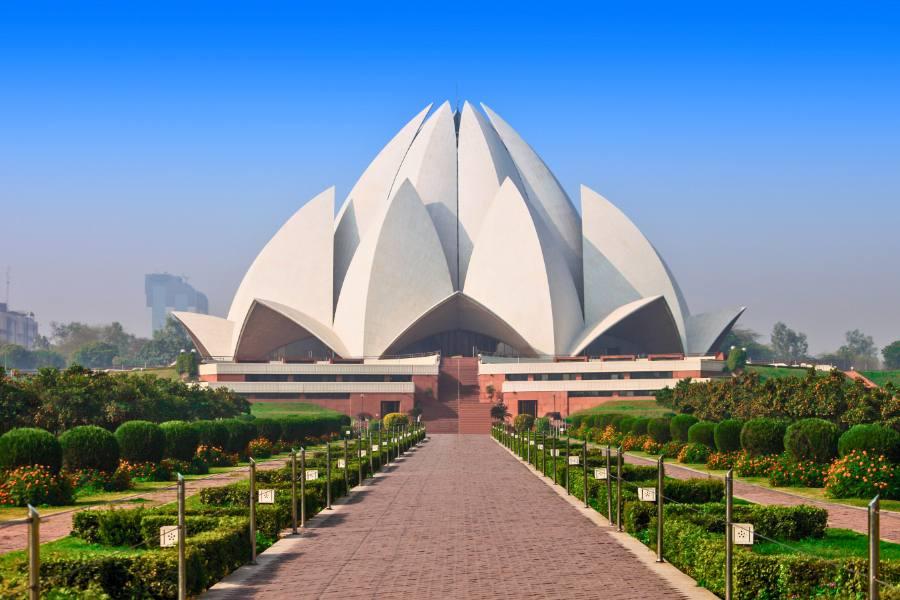
The Lotus Temple is another popular Delhi attraction, particularly for visitors interested in modern architecture and peaceful spaces.
Its distinctive lotus-inspired structure makes it immediately recognizable. The temple is associated with the Bahá'í Faith and welcomes people from different backgrounds.
The atmosphere is very different from the city's Mughal monuments. Rather than focusing on royal history, the experience emphasizes architecture, quiet reflection, and openness.
Whether you should include it depends on your interests and available time. If history is your priority, you may prefer spending additional time at Humayun's Tomb or Qutub Minar.
Akshardham Temple
Akshardham is another major attraction in Delhi, known for its monumental architecture, gardens, exhibitions, and cultural presentation.
However, it can require considerable time because of security procedures and the size of the complex. Visitors should check current opening days, entry requirements, photography rules, and security restrictions before planning a visit.
For a strict one-day itinerary, Akshardham is usually better treated as an alternative rather than an addition to every other major monument.
If it is one of your priorities, design the rest of your day around it.
A Practical Delhi One Day Tour Itinerary
A realistic itinerary could begin early in Old Delhi.
8:00 AM: Start with the Red Fort.
10:00 AM: Visit Jama Masjid and explore part of Old Delhi.
11:00 AM: Walk or take a rickshaw through Chandni Chowk and enjoy an early lunch or snack.
12:30 PM: Travel toward Humayun's Tomb.
2:00 PM: Visit Humayun's Tomb.
3:30 PM: Continue toward Qutub Minar.
4:30 PM: Explore Qutub Minar.
6:00 PM: Finish around India Gate or central Delhi.
7:00 PM onward: Enjoy dinner before returning to your hotel.
This is an example rather than a rigid timetable. Delhi traffic, queues, weather, attraction schedules, and your own pace can change the day considerably.
Delhi One Day Tour by Car
A private car with driver can be one of the most convenient ways to explore Delhi in a single day.
The main advantage is flexibility. You can move directly from one attraction to another without waiting for public transportation or carrying your belongings through crowded stations.
A private car is especially useful for families, older travelers, or groups.
However, traffic remains a factor. A private vehicle does not eliminate congestion, so avoid assuming that every journey will take exactly the amount of time shown on a map.
Delhi One Day Tour by Metro
Delhi's Metro system is an excellent option for travelers who prefer independent transportation.
The metro can help you avoid road traffic and connect several parts of the city efficiently. However, many attractions are not directly outside metro stations, so you may need a short auto-rickshaw, taxi, or walk at either end.
For confident travelers, combining metro travel with local transportation can be both economical and efficient.
If you are unfamiliar with Delhi, a private car may be more convenient for a first visit, particularly when your sightseeing window is very short.
Delhi One Day Tour for Families
Families can enjoy Delhi, but a one-day itinerary should not be overloaded.
Children may enjoy the Red Fort, India Gate, markets, and the unusual sights of Old Delhi. They may also appreciate the contrast between ancient monuments and modern city life.
Build in breaks for food and rest. Delhi's heat, crowds, and traffic can be tiring.
Comfortable footwear and water are essential, especially when visiting several monuments in one day.
Delhi Food Experience
Food is one of the best reasons to leave some flexibility in your Delhi itinerary.
Old Delhi is particularly famous for traditional dishes and snacks. Depending on your preferences, you can try parathas, kebabs, chaat, sweets, butter chicken, and other North Indian specialties.
If you are trying street food for the first time, choose busy vendors with high turnover and good hygiene practices.
For a more relaxed meal, choose a reputable restaurant rather than trying to fit every famous food stall into a tight sightseeing schedule.
Shopping During Your Delhi Tour
Delhi offers shopping opportunities ranging from traditional bazaars to modern shopping centers.
Chandni Chowk is ideal for traditional goods, textiles, spices, jewelry, and local products.
Other areas offer handicrafts, clothing, books, souvenirs, and contemporary shopping.
Do not allow shopping to consume your entire itinerary unless it is one of your main priorities. A one-day tour disappears surprisingly quickly.
What to Wear in Delhi
Comfortable clothing and shoes are essential.
During hot weather, lightweight clothing, sunglasses, sunscreen, and a hat are useful. During winter, bring layers because mornings and evenings can be chilly.
When visiting religious sites, dress respectfully and follow the specific rules of each location.
Because you may spend much of the day outdoors, comfortable footwear is more important than trying to create an elaborate sightseeing outfit.
What to Carry
For a one-day Delhi tour, keep your day bag light.
Carry your identification, phone, wallet, water, sunscreen, any necessary medication, and a power bank.
Avoid bringing unnecessary valuables.
Some attractions have security restrictions, so check the current rules before visiting. If you are carrying a large bag, you may encounter additional security procedures or storage requirements.
Best Time of Year for a Delhi One Day Tour
The cooler months are generally more comfortable for sightseeing, while the hottest months can make walking around monuments challenging.
Winter can provide pleasant daytime conditions but may also bring foggy mornings.
The monsoon season can bring rain and humidity, so flexible planning is useful.
If you are visiting during a particularly hot period, schedule outdoor monuments for early morning and late afternoon and take breaks during the middle of the day.
Delhi One Day Tour for International Travelers
International visitors should avoid trying to understand the entire city in one day.
Instead, think of your tour as an introduction. Focus on the major historical landmarks, experience Old Delhi, eat a local meal, and observe the contrast between historic and modern Delhi.
If Delhi is the first stop on your India trip, allow yourself time to adjust to the climate, traffic, crowds, and pace of the city.
A good guide can also make a significant difference by explaining the history behind the monuments and helping you navigate busy areas.
Common Mistakes to Avoid
The biggest mistake is trying to visit every famous attraction.
Delhi is too large and historically rich to cover completely in one day. A successful itinerary is selective.
Another mistake is underestimating traffic. Distances that look short on a map can take much longer during busy periods.
Do not skip meals or hydration just to stay on schedule.
Finally, avoid treating the city as a series of photographs. Spend a little time observing the neighborhoods, markets, food, and people around the monuments.
Is a One Day Delhi Tour Enough?
A one-day Delhi tour is enough for an introduction, but not enough to fully explore the city.
You can experience several of the major landmarks and get a feel for Old and New Delhi, but the city contains far more museums, neighborhoods, monuments, markets, restaurants, and cultural experiences than can fit into one day.
If you have two or three days, you can slow down considerably.
But if one day is all you have, do not worry. With an early start and a carefully selected route, you can still experience a remarkable amount of Delhi.
Conclusion
A Delhi One Day Tour can be an exciting introduction to India's capital when planned around a realistic selection of attractions. Begin with the historic atmosphere of Old Delhi, explore the Red Fort and Jama Masjid, experience Chandni Chowk, and then move toward the grander spaces of New Delhi. Depending on your interests, finish with Humayun's Tomb, Qutub Minar, India Gate, or another major attraction.
The most important thing is to avoid overloading your schedule. Delhi rewards curiosity, but it also demands patience. Traffic, crowds, security checks, weather, and unexpected discoveries can all change your timing.
Choose a convenient transportation method, wear comfortable shoes, stay hydrated, and leave some breathing room between attractions. Most importantly, allow yourself to experience Delhi rather than simply ticking landmarks off a list.
Even in one day, Delhi can reveal its remarkable character: Mughal architecture, ancient traditions, colonial planning, modern India, colorful markets, unforgettable food, and an energy that is unmistakably its own.

 English
 French
 Spanish
 Portuguese
 Deutsch
 Turkish
 Dutch
Dutch
 Italiano
 Russian
 Romaian
 Portuguese (Brazil)
 Greek
Greek