


Golden triangle tour 5 days
Golden Triangle Tour 5 Days: The Perfect Delhi, Agra and Jaipur Itinerary
A Golden Triangle Tour 5 Days is an excellent way to experience the cultural heart of North India without rushing through every destination. The classic route connects Delhi, Agra, and Jaipur, three cities that together offer an extraordinary combination of ancient history, Mughal architecture, royal heritage, colorful markets, traditional food, and modern Indian life. Five days gives you more breathing room than a four-day itinerary, allowing you to explore the major landmarks while still leaving space for photographs, local experiences, meals, and relaxed travel between destinations.
The beauty of this route is its variety. Delhi introduces you to India's capital and its extraordinary mixture of old and new. Agra brings the emotional highlight of the journey, the Taj Mahal, along with Agra Fort and other Mughal-era monuments. Jaipur then changes the atmosphere completely with its pink architecture, hilltop forts, palaces, bazaars, jewelry, textiles, and Rajasthani traditions. Instead of feeling like three similar sightseeing stops, the journey unfolds like three different chapters of Indian history.
Five days is also a particularly useful duration for travelers who want to see the highlights without committing to a long holiday. You can dedicate meaningful time to Delhi, enjoy a sunrise or morning visit to the Taj Mahal, explore Agra Fort, travel toward Jaipur, and then spend a full day discovering the Pink City. The official Taj Mahal website currently confirms that the monument opens 30 minutes before sunrise, closes 30 minutes before sunset, and remains closed to general visitors on Fridays.
Why Choose a 5-Day Golden Triangle Tour?
A five-day itinerary strikes a useful balance between sightseeing and relaxation. Four days can cover the essential attractions, but the schedule can become tight, particularly if you want to spend enough time in Delhi and Jaipur. With five days, you have an additional opportunity to slow down and experience the destinations rather than simply checking monuments off a list.
The route is also ideal for first-time visitors to India. You do not need to travel enormous distances across the country to experience several different sides of Indian culture. Within a relatively compact circuit, you can see Mughal monuments, historic forts, royal palaces, traditional bazaars, religious landmarks, modern city life, and some of North India's most famous architectural masterpieces.
Another advantage is flexibility. You can choose to spend the first two days exploring Delhi and Agra before moving to Jaipur, or you can adjust the itinerary around your arrival and departure flights. A private vehicle makes the route especially flexible, while trains can be incorporated for travelers who enjoy rail travel.
The most important principle is to avoid filling every hour. Five days should give you enough time to see the major sights without turning your vacation into a race.
What Is the Golden Triangle of India?
The Golden Triangle of India refers to the popular tourism circuit connecting Delhi, Agra, and Jaipur. The name comes from the approximate triangular shape formed by these three destinations on a map.
Each city contributes something different.
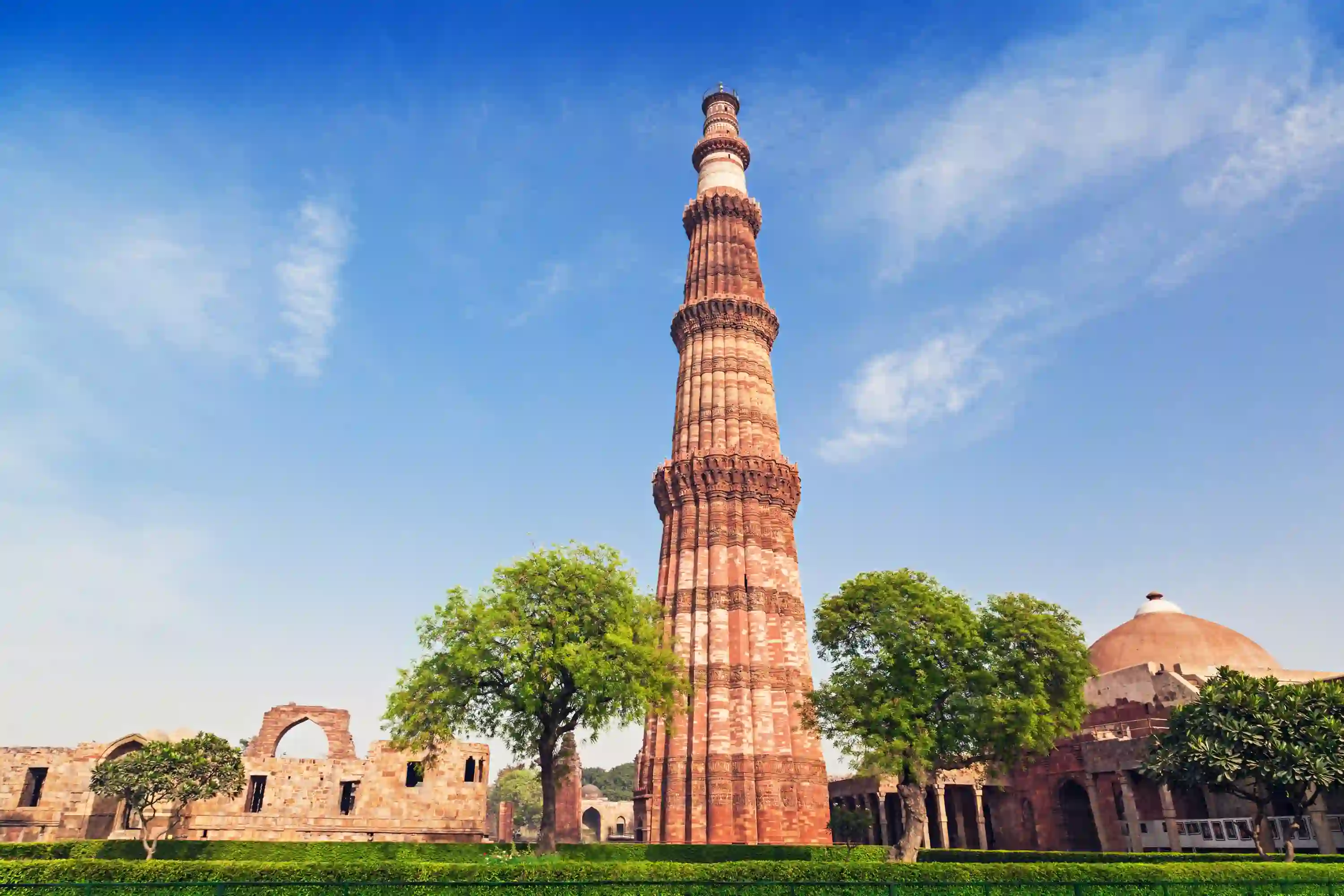
Delhi is the country's capital and a vast historical and modern metropolis. It offers attractions such as Qutub Minar, Humayun's Tomb, India Gate, the Red Fort, Jama Masjid, and the lively streets of Old Delhi.
Agra is the home of the Taj Mahal and one of India's most important Mughal heritage destinations. Agra Fort and Fatehpur Sikri add further historical depth to the city.
Jaipur is the capital of Rajasthan and is famous for Amber Fort, City Palace, Hawa Mahal, Jantar Mantar, traditional markets, and royal heritage.
Together, these destinations provide a remarkably broad introduction to India's history, architecture, cuisine, and culture.
Golden Triangle Tour 5 Days Itinerary at a Glance
| Day | Route | Main Experiences |
|---|---|---|
| Day 1 | Delhi | Old Delhi and New Delhi sightseeing |
| Day 2 | Delhi → Agra | Travel to Agra, Agra Fort, local sightseeing |
| Day 3 | Agra → Jaipur | Sunrise Taj Mahal, Fatehpur Sikri, Jaipur |
| Day 4 | Jaipur | Amber Fort, City Palace, Jantar Mantar, Hawa Mahal |
| Day 5 | Jaipur → Delhi | Jaipur morning sightseeing, shopping, return to Delhi |
This itinerary can be customized depending on your flight schedule. If you arrive in Delhi early on the first day, you can explore several major attractions. If your international flight arrives late, you may prefer to use Day 1 for a lighter introduction and focus on the major monuments on Day 2.
The schedule also works in reverse. Some travelers prefer to begin in Delhi, travel to Jaipur first, continue to Agra, and finish in Delhi. However, the traditional Delhi → Agra → Jaipur route is especially convenient for travelers who want to experience the Taj Mahal before continuing into Rajasthan.
Day 1: Discover Delhi
Your first day introduces you to one of India's most fascinating cities. Delhi can feel overwhelming at first because of its enormous size and energy, but that diversity is part of its charm. The city contains layers of history stretching across centuries, alongside modern neighborhoods, business districts, shopping areas, restaurants, and cultural institutions.
For a first visit, divide your sightseeing between Old Delhi and New Delhi. Old Delhi provides a lively introduction to historic Delhi, while New Delhi showcases broad avenues, monumental buildings, gardens, and landmarks associated with India's modern history.
If you enjoy architecture and history, start with Qutub Minar or Humayun's Tomb. Both offer excellent examples of Indo-Islamic and Mughal architectural traditions. Later, head toward central Delhi to see India Gate and other important landmarks.
If food and local culture interest you more, devote part of the afternoon to Old Delhi. The streets around Chandni Chowk are crowded and energetic, with shops selling everything from textiles and jewelry to snacks and traditional foods.
Best Delhi Attractions for a Short Visit
With only one full day in Delhi, prioritization is essential. You could spend an entire week exploring the city, so attempting to visit every attraction would be unrealistic.
Qutub Minar is an excellent choice for travelers interested in medieval history and architecture. Humayun's Tomb is ideal for those who appreciate Mughal design and formal gardens. Red Fort provides an important connection to Mughal imperial history, while Jama Masjid and Chandni Chowk introduce you to Old Delhi's distinctive atmosphere.
India Gate is particularly convenient if you are exploring central Delhi because it can be included during a sightseeing drive.
If your interests are primarily historical, prioritize monuments. If you are more interested in everyday culture, leave enough time for Old Delhi and its markets.
The goal is to experience Delhi rather than simply collect photographs.
Day 2: Delhi to Agra
Start Day 2 early and travel from Delhi to Agra. You can make the journey by private car or train, depending on your travel preferences.
Private transportation is especially useful if you want flexibility. You can leave your hotel according to your schedule and travel directly to Agra without worrying about station transfers.
Train travel can be faster and comfortable on suitable services, but you need to coordinate the railway timetable with your hotel departure and sightseeing schedule.
Once you arrive in Agra, check into your hotel or leave your luggage with the hotel and begin sightseeing.
For the afternoon, Agra Fort is an excellent choice. It allows you to explore Mughal history before visiting the Taj Mahal the following morning.
Exploring Agra Fort
Agra Fort is one of the most important monuments in the city and provides a fascinating counterpoint to the Taj Mahal.
The official Taj Mahal website lists Agra Fort as open from sunrise to sunset and currently lists the monument among Agra's principal attractions.
The fort contains massive defensive walls, royal residences, courtyards, audience halls, mosques, and palace areas. From some locations inside the fort, you can also see the Taj Mahal in the distance.
Take your time here. The fort is not simply a place to walk through quickly for photographs. Its architecture helps explain the political and imperial environment in which the Taj Mahal was created.
After the fort, you can relax at your hotel or explore a local market.
Optional Agra Attractions
If you arrive in Agra early enough, there are several additional attractions worth considering.
Itimad-ud-Daulah's Tomb, often called the Baby Taj, is a smaller but highly detailed Mughal monument. Its decorative marble work makes it particularly attractive to photographers.
Mehtab Bagh offers a different perspective of the Taj Mahal from across the Yamuna River. It can be particularly beautiful around sunset, although the exact conditions depend on the season and weather.
You could also visit Sikandra, the tomb of Akbar, if your interests are strongly focused on Mughal history.
Do not feel obligated to visit all of them. Save your energy for the Taj Mahal the next morning.
Day 3: Sunrise Taj Mahal and Agra to Jaipur
Day 3 is the centerpiece of your trip.
Wake up early and head to the Taj Mahal for a sunrise or early-morning visit. The official Taj Mahal website currently states that the monument opens 30 minutes before sunrise and closes 30 minutes before sunset. It is closed to general visitors on Fridays.
The official FAQ also notes that sunrise is preferred by many visitors because early morning can provide cooler conditions and potentially fewer crowds, while the changing light creates a distinctive appearance.
This is one of those travel experiences where waking up early is genuinely worth it.
Why Sunrise Is Special
The Taj Mahal's marble changes visually as the light changes. Early morning can create soft shades across the dome, minarets, arches, and gardens.
The long reflecting pool provides the classic symmetrical composition, but do not spend the entire visit looking through your camera.
Walk slowly through the complex and observe the craftsmanship. Look at the marble inlay, carved screens, calligraphy, arches, gardens, and geometric symmetry.
The monument's famous appearance is only one part of its appeal. The closer you look, the more details you discover.
Current Taj Mahal Visiting Information
The official website currently lists the foreign tourist entry fee at ₹1,100, with an additional ₹200 for optional entry into the main mausoleum. For Indian/OCI visitors, the listed base entry fee is ₹50, with the same additional ₹200 mausoleum charge where applicable. Children below 15 currently have no entry fee according to the official information.
Ticket windows open one hour before sunrise and close 45 minutes before sunset, according to the official ticketing information. Online ticketing is also available.
Because fees and procedures can change, verify the official information close to your travel date.
Important Taj Mahal Security Rules
Travel light when visiting the Taj Mahal.
The official guidance states that drones are prohibited and lists several restricted items, including large bags, eating materials, tobacco products, tripods without appropriate permission, and various electronic items. Photography is also prohibited inside the main mausoleum.
A water bottle is allowed under the current guidelines. Visitors should also carry government-issued identification where required.
Following the rules makes security faster and reduces unnecessary delays.
Agra to Jaipur via Fatehpur Sikri
After the Taj Mahal, have breakfast and prepare for the journey to Jaipur.
One of the best ways to make the transfer more interesting is to stop at Fatehpur Sikri.
Located near Agra, Fatehpur Sikri was developed under Mughal Emperor Akbar and contains impressive red sandstone architecture. The complex provides a different architectural experience from the Taj Mahal and Agra Fort.
If you are interested in history, it is an excellent addition.
If you are already tired or want more time in Jaipur, you can skip it. A five-day itinerary gives you more breathing room than four days, but there are still limits to how many monuments you can comfortably visit.
After Fatehpur Sikri, continue toward Jaipur.
Evening in Jaipur
Arriving in Jaipur in the evening gives you an opportunity to experience the city without committing to a full sightseeing schedule.
You could explore a local market, visit Hawa Mahal for an exterior photograph, enjoy traditional Rajasthani cuisine, or simply relax at your hotel.
Jaipur's atmosphere is especially enjoyable in the evening. The historic architecture, illuminated buildings, restaurants, shops, and busy streets create a very different mood from Agra.
This is also a good opportunity to try regional food such as dal baati churma, gatte ki sabzi, and other Rajasthani dishes.
Day 4: Full-Day Jaipur Sightseeing
Day 4 is dedicated almost entirely to Jaipur.
Start with Amber Fort, then continue to City Palace, Jantar Mantar, Hawa Mahal, and other attractions according to your interests and available time.
Jaipur is sometimes called the Pink City because of the distinctive color associated with many buildings in its historic center. The city was founded in the 18th century and became a major center of Rajput political and cultural life.
Amber Fort
Amber Fort should be your first major attraction.
The fort's location among the hills gives it a dramatic appearance, while its courtyards, gateways, palaces, decorative halls, and viewpoints provide plenty to explore.
Start early to avoid the strongest afternoon heat and allow enough time to walk through the complex.
Photography is particularly rewarding here because the fort combines architecture with surrounding hills and landscapes.
City Palace
After Amber Fort, continue to City Palace.
The palace complex combines royal residences, courtyards, museums, gateways, and decorative architecture. It offers insight into the lifestyle and traditions of Jaipur's former royal family.
If you are interested in textiles, weapons, costumes, manuscripts, or traditional crafts, allow additional time here.
Jantar Mantar
Jantar Mantar offers something completely different.
Rather than another palace or fort, it is an astronomical observatory containing large-scale instruments designed to measure time and observe celestial positions.
It is a fascinating reminder that India's architectural heritage is not limited to palaces and religious monuments. Science and astronomy also played an important role in historical Indian society.
Hawa Mahal
Hawa Mahal is perhaps the most recognizable symbol of Jaipur.
Its elaborate façade features numerous small windows and decorative elements, creating one of the city's most photographed views.
You do not need hours here. A short visit can be enough, particularly if you have a full schedule.
For the best experience, combine it with a walk through the surrounding old-city area.
Jal Mahal
Jal Mahal is another popular photography stop.
The palace appears to sit in the middle of Man Sagar Lake and provides a beautiful contrast to the surrounding landscape.
It is usually better treated as a short viewpoint stop rather than a major sightseeing session.
Day 5: Jaipur Markets and Return to Delhi
Your final day gives you something that a four-day itinerary often lacks: breathing room.
Instead of immediately rushing into another long list of monuments, use the morning for a relaxed Jaipur experience.
You can revisit a favorite attraction, explore local markets, purchase handicrafts, or enjoy breakfast at your hotel.
Jaipur is famous for textiles, block printing, jewelry, gemstones, handicrafts, traditional clothing, and decorative items.
If you are shopping, compare prices and quality before purchasing expensive items. For gemstones or high-value jewelry, use reputable sellers and request proper documentation.
After lunch, begin your journey toward Delhi according to your onward flight or hotel plans.
If you have a late flight from Delhi, allow substantial buffer time for the road journey. If your flight is early the next morning, staying near Delhi airport can be more convenient.
Best Way to Travel on a 5-Day Golden Triangle Tour
For most travelers, a private car offers the easiest transportation solution.
The reason is flexibility.
You can leave Delhi early, travel directly to Agra, move between Agra attractions, stop at Fatehpur Sikri, continue to Jaipur, and return to Delhi without constantly arranging separate transportation.
A private vehicle is particularly useful for families and couples.
Train travel is another excellent option, particularly between Delhi and Agra or Jaipur and Delhi. It can be comfortable and efficient, but you need to coordinate station transfers and fixed departure times.
If you enjoy independent travel, a combination of trains and local taxis can work well.
If convenience is your priority, private transportation is usually the simpler choice.
Golden Triangle Tour by Train for 5 Days
A five-day schedule gives you more flexibility to incorporate trains than a four-day itinerary.
You could take an early train from Delhi to Agra, arrange local transportation for sightseeing, and then continue toward Jaipur by road or rail depending on your schedule.
Another option is using a train between Jaipur and Delhi at the end of the trip.
The main advantage of trains is that you can relax during the journey instead of dealing with road traffic.
The disadvantage is that every station transfer takes additional time. You should also arrive at the station early enough for boarding.
For first-time visitors, combining trains with a private local vehicle can offer a good balance between convenience and authentic travel.
How Much Does a 5-Day Golden Triangle Tour Cost?
The price varies widely depending on accommodation, transportation, group size, guide services, entrance fees, meals, and travel season.
A budget Golden Triangle Tour 5 Days can use three-star hotels, standard transportation, and independent sightseeing.
A mid-range package can include comfortable four-star hotels, private transportation, professional guides, breakfast, and selected entrance fees.
A luxury itinerary can include heritage hotels, premium vehicles, private guides, fine dining, and personalized experiences.
When comparing prices, do not look only at the headline amount.
Check whether the package includes:
- Hotel accommodation
- Breakfast
- Private transportation
- Fuel and tolls
- Airport or railway transfers
- Monument entrance fees
- Professional guides
- Parking charges
- Driver accommodation and meals where applicable
A slightly more expensive package may offer better value if it includes the services you would otherwise pay for separately.
Best Time for a Golden Triangle Tour
The best time depends on your tolerance for heat and your preferred sightseeing experience.
The cooler season is generally comfortable for walking around monuments, forts, gardens, and markets.
Winter mornings can sometimes bring haze, particularly around Delhi and Agra, which can influence visibility and photography. However, cooler temperatures make extensive sightseeing much easier.
Spring can provide pleasant conditions before the hottest part of the year.
Summer can be very hot, particularly during afternoon sightseeing. If you travel during hotter months, schedule outdoor monuments early and take breaks during the middle of the day.
Monsoon months can bring rain and cloudy skies but can also produce greener landscapes and dramatic weather.
Rather than looking for one universally perfect month, consider what matters most to you: comfortable temperatures, photography, fewer crowds, or seasonal atmosphere.
Golden Triangle Tour 5 Days for Couples
Five days is an excellent duration for couples.
The Taj Mahal naturally provides the romantic centerpiece, while Jaipur offers heritage hotels, palace architecture, rooftop restaurants, markets, and beautiful evening experiences.
A private car gives couples greater freedom to stop for photographs, change the itinerary, or spend additional time at places they enjoy.
You can also make the trip more romantic by choosing accommodation with a rooftop restaurant or heritage atmosphere.
Do not underestimate the value of unplanned time. Sitting together over dinner or walking through Jaipur's old city can become more memorable than rushing through another monument.
Golden Triangle Tour 5 Days for Families
Families can also enjoy the route, particularly because five days reduces the pressure compared with a four-day itinerary.
Children may find forts and palaces exciting, while the Taj Mahal provides a memorable visual experience.
Parents should schedule regular breaks, particularly during hot weather.
A private vehicle can be especially useful because children can rest between destinations.
Avoid trying to explain every historical detail. Instead, make the trip interactive by asking children questions, showing them architectural details, and allowing them to photograph interesting things.
A relaxed family itinerary is usually more enjoyable than an aggressive sightseeing schedule.
What Should You Pack?
Pack comfortable clothing and shoes because you will walk extensively.
Your luggage should be easy to move between hotels because the itinerary involves multiple city transfers.
Depending on the season, bring:
- Comfortable walking shoes
- Lightweight clothing
- A light jacket for cooler mornings
- Sunglasses
- Sunscreen
- Hat or cap
- Personal medications
- Phone charger/power bank
- Small day bag
For the Taj Mahal, keep your day bag small and check the latest prohibited-item rules before visiting.
You do not need to carry your entire suitcase during sightseeing.
Common Mistakes to Avoid
One of the biggest mistakes is trying to visit too many attractions.
Five days sounds comfortable, but Delhi alone can consume several days if you explore it deeply.
Another mistake is ignoring the Taj Mahal's weekly closure. The monument is closed on Fridays, so check your dates before booking hotels and transportation.
Do not leave your return transportation until the last possible moment.
Avoid choosing hotels only according to price. Location matters, especially when you have limited time.
Finally, do not forget to leave some space for food, markets, photographs, and simply enjoying the atmosphere.
A good itinerary should feel organized—not exhausting.
Can You Add Ranthambore to a 5-Day Golden Triangle Tour?
You technically can, but it is not ideal if you want to enjoy Delhi, Agra, and Jaipur properly.
Ranthambore adds another destination, travel time, and safari scheduling. A better plan is to extend the trip to seven or eight days if wildlife is important to you.
That would give you enough time for the Golden Triangle while allowing one or two safaris in Ranthambore.
If your primary goal is architecture and culture, keep the five-day itinerary focused on Delhi, Agra, and Jaipur.
If wildlife is a major priority, make it a longer journey.
Why Choose a Private Golden Triangle Tour?
A private tour gives you control over the pace.
You can spend more time at the Taj Mahal if photography is important, stop at Fatehpur Sikri if you enjoy history, or reduce sightseeing when you are tired.
A professional guide can also provide historical context that is difficult to obtain from photographs and signs alone.
For international visitors unfamiliar with India's transportation system, having a dedicated driver can remove considerable stress.
The best private tours are not simply transportation packages. They should give you enough flexibility to experience the destinations in your own way.
Golden Triangle Tour 5 Days vs. 4 Days
| Feature | 4 Days | 5 Days |
|---|---|---|
| Delhi sightseeing | Limited | More comfortable |
| Taj Mahal | Yes | Yes |
| Agra Fort | Yes | Yes |
| Fatehpur Sikri | Possible | Easier |
| Jaipur sightseeing | Busy | More relaxed |
| Shopping | Limited | Better opportunity |
| Free time | Very limited | More flexibility |
| Recommended for | Short trips | First-time visitors |
The extra day makes a surprisingly large difference.
A four-day itinerary can be excellent for travelers with strict schedules, but five days allows you to experience the same destinations with less pressure.
Conclusion
A Golden Triangle Tour 5 Days offers an excellent balance between sightseeing, cultural exploration, and relaxation. In five days, you can experience the historic energy of Delhi, stand before the Taj Mahal in Agra, explore the mighty Agra Fort, discover the heritage of Fatehpur Sikri, and immerse yourself in Jaipur's royal architecture and colorful markets.
The itinerary works because each destination contributes something different.
Delhi gives you history and modernity. Agra gives you the unforgettable Taj Mahal and Mughal heritage. Jaipur brings Rajasthan's forts, palaces, crafts, food, and royal traditions.
The official Taj Mahal information currently confirms that the monument opens 30 minutes before sunrise, closes 30 minutes before sunset, and remains closed on Fridays, so checking the official schedule before finalizing your itinerary is essential.
For the best experience, travel early, keep transportation organized, choose hotels strategically, and avoid overloading your schedule.
Five days will not reveal every side of India—and that is perfectly fine.
A well-planned Golden Triangle Tour 5 Days gives you something more valuable: a memorable first taste of India's architecture, history, food, people, and extraordinary cultural diversity.
FAQs
1. Is 5 days enough for a Golden Triangle Tour?
Yes. Five days is a very good duration for experiencing the major highlights of Delhi, Agra, and Jaipur without the extreme pace of a shorter itinerary.
2. What is the best itinerary for a 5-day Golden Triangle Tour?
A popular route is Delhi → Agra → Jaipur → Delhi. Spend Day 1 in Delhi, Day 2 traveling to and exploring Agra, Day 3 visiting the Taj Mahal and continuing to Jaipur, Day 4 exploring Jaipur, and Day 5 enjoying additional Jaipur sightseeing before returning to Delhi.
3. Can I visit the Taj Mahal on Friday?
No. The Taj Mahal is currently closed to general visitors on Fridays. On other normal operating days, it opens 30 minutes before sunrise and closes 30 minutes before sunset.
4. Should I choose a private car or train for the Golden Triangle?
Both can work. A private car provides greater flexibility and is particularly convenient when traveling between multiple attractions. Trains can be comfortable and efficient for selected city connections, especially if you prefer rail travel.
5. Can I add Ranthambore to a 5-day Golden Triangle Tour?
It is possible, but it will make the itinerary significantly more rushed. If you want to include Ranthambore properly, extending the trip to seven or eight days is recommended so you have enough time for the safari experience.

 English
 Arabic
 French
 Spanish
 Portuguese
 Deutsch
 Dutch
Dutch
 Italiano
 Russian
 Romaian
 Portuguese (Brazil)
 Greek
Greek