


Golden triangle tour with Haridwar and Rishikesh
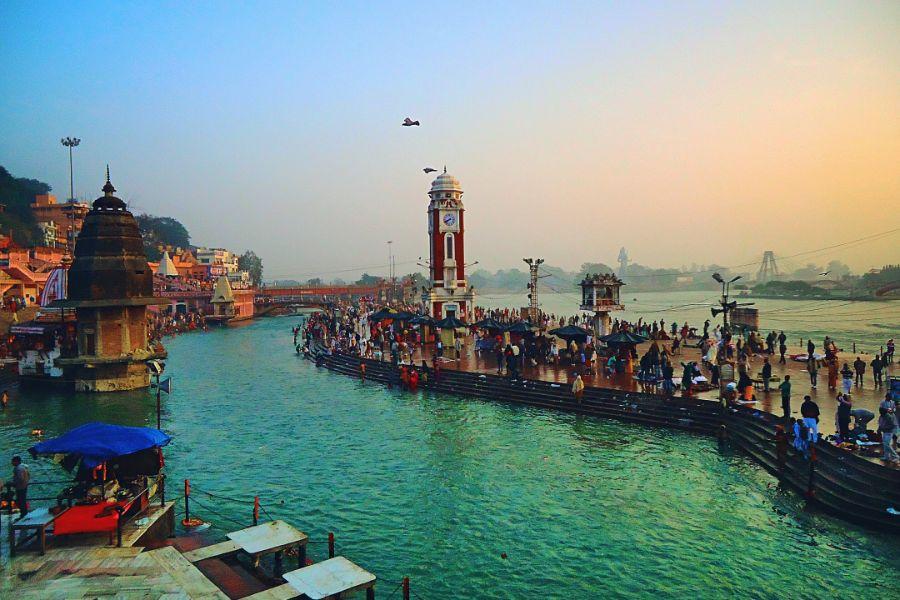
Golden Triangle Tour with Haridwar and Rishikesh: Complete India Travel Guide
A Golden Triangle Tour with Haridwar and Rishikesh is a wonderful choice for travelers who want to combine India's famous historical landmarks with spirituality, yoga, nature, and the peaceful atmosphere of the Himalayan foothills. The classic Golden Triangle connects Delhi, Agra, and Jaipur, while Haridwar and Rishikesh add a completely different cultural experience. Instead of focusing only on forts, palaces, and Mughal monuments, this extended journey allows you to experience sacred rivers, ancient temples, evening Ganga Aarti, yoga traditions, ashrams, and the dramatic landscapes surrounding the Ganges.
The route works particularly well for first-time visitors who want a broader introduction to northern India. Delhi provides the country's historical and contemporary capital experience, Agra introduces the Taj Mahal and Mughal heritage, and Jaipur showcases Rajasthan's royal culture. After these three cities, Haridwar and Rishikesh change the pace of the trip completely. The atmosphere becomes quieter, more spiritual, and more closely connected with the River Ganges and the Himalayan landscape.
A comfortable version of this itinerary takes around 8 to 10 days, although travelers with limited time can create a shorter route. The additional days are worthwhile because Haridwar and Rishikesh are not destinations you should experience only as quick stopovers. Sunrise beside the Ganges, an evening Ganga Aarti, yoga sessions, temple visits, river walks, and time in the surrounding foothills all deserve some breathing room.
What Is a Golden Triangle Tour with Haridwar and Rishikesh?
The traditional Golden Triangle consists of Delhi, Agra, and Jaipur. Adding Haridwar and Rishikesh creates an extended northern India itinerary that combines history, architecture, spirituality, and nature.
A popular route is:
Delhi → Agra → Jaipur → Delhi → Haridwar → Rishikesh → Delhi
However, the itinerary can be rearranged depending on your arrival and departure arrangements.
Delhi is the natural starting point for many international travelers. Agra follows with the Taj Mahal and Agra Fort. Jaipur introduces Rajasthan's forts and palaces. Haridwar then brings you to one of India's major sacred destinations, while Rishikesh provides a blend of spirituality, yoga, adventure, and Himalayan scenery.
This combination is especially attractive if you want your holiday to have more variety than a conventional Golden Triangle itinerary.
Why Combine the Golden Triangle with Haridwar and Rishikesh?
The biggest advantage is contrast.
Imagine spending one morning photographing the Taj Mahal, another day walking through Jaipur's royal palaces, and a few days later watching the Ganges flow past the ghats of Rishikesh. These experiences feel completely different, yet together they create a much richer understanding of northern India.
The Golden Triangle is primarily associated with historical and architectural sightseeing. Haridwar and Rishikesh introduce spiritual and natural experiences.
Haridwar is known for its sacred relationship with the Ganges and its major religious gatherings and ceremonies. Rishikesh is internationally recognized for yoga and meditation, while also offering river activities, suspension bridges, temples, ashrams, cafés, and access to the Himalayan foothills.
The itinerary therefore appeals to several types of travelers: couples, families, spiritual seekers, photography enthusiasts, adventure travelers, and first-time international visitors.
Recommended 9-Day Itinerary
| Day | Destination | Main Experiences |
|---|---|---|
| Day 1 | Delhi | Old Delhi and New Delhi |
| Day 2 | Delhi → Agra | Agra Fort and local sightseeing |
| Day 3 | Agra → Jaipur | Taj Mahal sunrise, Fatehpur Sikri, Jaipur |
| Day 4 | Jaipur | Amber Fort, City Palace, Jantar Mantar, Hawa Mahal |
| Day 5 | Jaipur → Delhi | Return to Delhi and onward travel |
| Day 6 | Delhi → Haridwar | Travel to Haridwar, evening Ganga Aarti |
| Day 7 | Haridwar → Rishikesh | Temples, ghats, Ganges, Rishikesh |
| Day 8 | Rishikesh | Yoga, sightseeing, adventure or relaxation |
| Day 9 | Rishikesh → Delhi | Return to Delhi |
This itinerary can be adjusted according to your arrival and departure flights.
If you have ten or eleven days, adding an additional night in Rishikesh is highly recommended.
Day 1: Explore Delhi
Begin your journey in Delhi.
Because Delhi is enormous, you should resist the temptation to see everything in one day. Instead, choose a balanced selection of historical attractions.
Start with Qutub Minar, Humayun's Tomb, or the Red Fort, depending on your interests and hotel location.
Continue toward central Delhi to see India Gate and important government buildings before spending some time in Old Delhi.
Chandni Chowk provides an excellent introduction to the energy of historic Delhi. Its narrow lanes, food stalls, markets, religious buildings, and old architecture create a completely different environment from the broad avenues of New Delhi.
If food is important to you, consider adding a guided food walk.
Delhi is not merely the starting point of the tour. It is a destination worth experiencing on its own.
Day 2: Delhi to Agra
Start early and travel to Agra.
You can travel by private car or train. Private transportation offers more flexibility, while trains can provide an efficient alternative.
Once you reach Agra, check into your hotel and begin sightseeing.
Agra Fort should be one of your priorities.
The enormous fort complex contains palaces, courtyards, audience halls, mosques, and other structures connected with Mughal imperial history.
The fort also provides a distant view toward the Taj Mahal.
If you have enough time, consider visiting Mehtab Bagh around sunset for another perspective of the Taj Mahal.
Keep the evening relaxed.
You will want to wake early the next morning.
Day 3: Sunrise Taj Mahal and Agra to Jaipur
The Taj Mahal is the emotional centerpiece of the Golden Triangle.
Arrive early for a sunrise visit.
The official Taj Mahal website currently states that the monument opens 30 minutes before sunrise and closes 30 minutes before sunset. It is closed to general visitors on Fridays.
Morning light can create beautiful conditions for photography, while cooler temperatures make walking around the complex more comfortable.
Take time to examine the marble inlay, carved screens, calligraphy, gardens, arches, and symmetrical design.
Do not rush.
The Taj Mahal is one of those attractions where slowing down makes the experience better.
Taj Mahal Visitor Information
Current official information lists foreign tourist admission at ₹1,100, with an additional ₹200 charge for entry into the main mausoleum. The listed admission for Indian and OCI visitors is ₹50, with the same additional mausoleum fee where applicable. Children under 15 are currently listed as having free entry.
Ticketing rules and fees can change, so travelers should verify current information before visiting.
After the Taj Mahal, return to your hotel for breakfast.
Then begin the journey toward Jaipur.
Stop at Fatehpur Sikri
Fatehpur Sikri makes a useful stop between Agra and Jaipur.
The former Mughal city was developed during the reign of Emperor Akbar and is known for its red sandstone buildings and impressive architectural complex.
For history lovers, it adds another layer to the Mughal story.
After exploring Fatehpur Sikri, continue to Jaipur.
Day 4: Discover Jaipur
Jaipur brings a dramatic change in atmosphere.
The Pink City is famous for its forts, palaces, markets, textiles, jewelry, and Rajasthani culture.
Begin with Amber Fort.
The fort's hilltop location makes it one of Jaipur's most impressive landmarks.
After Amber Fort, visit City Palace, Jantar Mantar, and Hawa Mahal.
Amber Fort
Allow enough time to explore Amber Fort properly.
Its courtyards, gateways, palace areas, decorative halls, and surrounding hills provide plenty of opportunities for photography and historical exploration.
Morning visits are generally preferable because of the heat.
City Palace
City Palace offers insight into Jaipur's royal heritage.
The complex contains museums, courtyards, palace buildings, and collections associated with the city's former rulers.
If you enjoy textiles, costumes, weapons, and traditional craftsmanship, spend additional time here.
Jantar Mantar
Jantar Mantar is one of Jaipur's most unusual attractions.
The enormous astronomical instruments demonstrate the historical importance of astronomy and scientific observation.
It provides a welcome change from the forts and palaces that dominate most Golden Triangle itineraries.
Hawa Mahal
Hawa Mahal is one of Jaipur's most recognizable landmarks.
The intricate façade with its many windows makes it a favorite photography location.
Afterward, explore the surrounding markets.
Jaipur is an excellent place to shop for textiles, handicrafts, jewelry, block-printed fabrics, and traditional clothing.
Day 5: Jaipur to Delhi
Day 5 can be used as a flexible travel day.
If you missed an attraction in Jaipur, use the morning to visit it.
Alternatively, enjoy a relaxed breakfast and explore the markets before traveling back to Delhi.
If your next destination is Haridwar, you do not necessarily need to spend another full night sightseeing in Delhi.
You can arrange transportation according to your onward schedule.
For travelers who dislike rushed itineraries, spending the night in Delhi can be worthwhile.
Day 6: Delhi to Haridwar
Now the character of the journey changes.
Travel from Delhi toward Haridwar, a major Hindu pilgrimage destination situated along the Ganges.
Depending on your preferred transportation, you can travel by train or private vehicle.
After checking into your hotel, explore the area around Har Ki Pauri, one of Haridwar's most famous riverfront locations.
The evening is the perfect time for Ganga Aarti.
Haridwar Ganga Aarti
The evening ceremony beside the Ganges is one of Haridwar's defining experiences.
As lamps are offered to the river, chants and bells create an atmosphere that is dramatically different from the monuments of Agra and Jaipur.
Arrive early if you want a good viewing position.
Be respectful of the religious nature of the ceremony.
Rather than treating it only as a photography opportunity, take time to observe what is happening around you.
For many visitors, this becomes the emotional transition between the historical Golden Triangle and the spiritual part of the journey.
Day 7: Haridwar to Rishikesh
After breakfast, travel to Rishikesh.
The two destinations are relatively close, so you do not need to spend the entire day traveling.
Rishikesh sits along the Ganges near the foothills of the Himalayas and has become internationally associated with yoga, meditation, spirituality, wellness, and adventure.
Explore the riverside areas and suspension bridges, including Ram Jhula and Lakshman Jhula area, while checking current access conditions because infrastructure and pedestrian arrangements can change.
Spend time near the river and explore local cafés and markets.
The pace should be slower here.
After several days of monuments and city sightseeing, Rishikesh gives you an opportunity to breathe.
Day 8: Experience Rishikesh
Day 8 should be flexible.
You can choose according to your interests.
If spirituality is your priority, attend a yoga or meditation session and visit an ashram.
If nature interests you, explore the riverside areas and nearby trails.
Adventure travelers can consider activities such as rafting when conditions and local operators permit.
Rishikesh is also an excellent place to simply slow down.
Sit beside the Ganges.
Read a book.
Walk along the river.
Watch the mountains change color as the sun moves.
Not every day of a good India itinerary needs to be packed with attractions.
Yoga and Meditation in Rishikesh
Rishikesh has developed a global reputation as a yoga destination.
Visitors can find everything from short introductory classes to longer retreats.
If you are new to yoga, choose a reputable school or instructor and explain your experience level beforehand.
The most rewarding experience is not necessarily the most intensive program.
A simple morning session followed by breakfast beside the river can be enough to make the day memorable.
Day 9: Rishikesh to Delhi
On your final day, return to Delhi.
If your international flight is scheduled for the same day, leave sufficient time for transportation and airport procedures.
For greater peace of mind, spend your final night in Delhi if your flight is early the next morning.
This is particularly useful after a multi-city itinerary where delays can occasionally affect travel plans.
A relaxed final day is much better than ending your holiday with unnecessary stress.
Golden Triangle with Haridwar and Rishikesh by Train
Rail travel can be incorporated into this itinerary effectively.
The Delhi-Agra route has frequent train options, while Delhi-Haridwar is also well connected by rail.
Train travel provides a chance to experience an important part of Indian transportation culture.
However, travelers should check current schedules, availability, station locations, and class options before booking.
A private vehicle can be more convenient for sightseeing days because you can travel directly from hotel to monument without dealing with station transfers.
For many travelers, a hybrid approach works best: trains for longer city connections and private vehicles for local sightseeing.
How Many Days Do You Need?
A 7-day Golden Triangle Tour with Haridwar and Rishikesh is possible, but it will be fairly active.
An 8-day itinerary works better for travelers with limited vacation time.
A 9-day itinerary provides a much more comfortable balance.
Ten days or more is ideal if you want additional yoga, wellness, shopping, or nature experiences.
The extra time becomes especially valuable in Rishikesh.
The Golden Triangle can be sightseeing-intensive. Rishikesh is the perfect place to slow down, so rushing through it defeats part of the reason for adding it.
Best Time for This Tour
The cooler months are generally comfortable for a multi-city itinerary involving extensive walking and outdoor sightseeing.
Winter can be especially pleasant for exploring Delhi, Agra, Jaipur, Haridwar, and Rishikesh.
However, mornings in Delhi and Agra can sometimes be hazy, which may affect Taj Mahal photography.
Summer temperatures can be intense, particularly in Delhi, Agra, and Jaipur. If traveling during hotter months, schedule outdoor sightseeing early.
The monsoon season can bring rain but also greener landscapes around Rishikesh.
Your ideal travel period ultimately depends on whether you prioritize comfortable temperatures, photography, greenery, or seasonal atmosphere.
Golden Triangle with Haridwar and Rishikesh for Couples
Couples can create a particularly memorable itinerary from this route.
The Taj Mahal provides the iconic romantic experience, while Jaipur offers heritage hotels, rooftop restaurants, and colorful evening markets.
Haridwar and Rishikesh bring a completely different kind of atmosphere.
A private sunrise experience beside the Ganges, a yoga session together, or an evening river ceremony can become meaningful shared memories.
The key is to avoid turning the trip into a race.
Leave enough time for dinner, walks, photographs, and spontaneous discoveries.
Golden Triangle with Haridwar and Rishikesh for Families
Families can enjoy the itinerary as well, although the number of hotel changes should be considered.
Children may particularly enjoy Amber Fort, the Taj Mahal, Jaipur's markets, and the scenery around Rishikesh.
Parents should schedule regular breaks and avoid excessive afternoon sightseeing during hot weather.
A private vehicle is often convenient for families because children can rest during transfers.
If considering adventure activities in Rishikesh, choose reputable operators and activities appropriate for the children's ages and abilities.
Golden Triangle with Haridwar and Rishikesh Cost
The total cost varies depending on accommodation, transportation, group size, guides, meals, entrance fees, and season.
| Tour Style | Typical Features |
|---|---|
| Budget | 3-star hotels, standard transportation, selected sightseeing |
| Mid-range | 4-star hotels, private vehicle, breakfast, local guides |
| Luxury | 5-star or heritage hotels, premium vehicle, private guides, customized experiences |
When comparing tour packages, look beyond the headline price.
Check whether the package includes hotels, breakfast, transportation, fuel, tolls, parking, monument tickets, guides, railway tickets, airport transfers, and driver expenses.
A package that costs slightly more can offer better value if it eliminates unexpected expenses.
What to Pack
Because this journey combines cities, temples, riverfront areas, and outdoor attractions, comfortable packing is essential.
Bring comfortable walking shoes, lightweight clothing, sunscreen, sunglasses, a hat, a reusable water bottle, and a small day bag.
During cooler months, pack a light jacket or sweater for early mornings and evenings.
Modest clothing is useful when visiting temples and religious locations.
For Rishikesh, comfortable casual clothing is appropriate, while travelers participating in yoga should bring suitable clothing.
Keep important documents and valuables secure during transportation.
Important Travel Tips
Book major transportation in advance during busy travel periods.
Check the Taj Mahal's opening schedule before finalizing your Agra itinerary.
Start monument visits early whenever possible.
Avoid scheduling too many attractions in one day.
Keep some flexibility for traffic and transportation delays.
Respect local religious customs, particularly in Haridwar and Rishikesh.
Be especially respectful around ceremonies and sacred areas.
If participating in rafting or other adventure activities, use established operators and follow safety instructions.
Most importantly, do not judge the success of the trip by how many attractions you photograph.
A memorable India journey is about experiences, not just checklists.
Why This Tour Is Worth Taking
A traditional Golden Triangle tour already introduces travelers to some of India's most famous destinations.
Adding Haridwar and Rishikesh makes the experience more diverse.
You begin with Delhi's historical layers, experience Mughal architecture in Agra, explore Rajasthan's royal heritage in Jaipur, and then move toward the spiritual and natural landscapes of the Ganges.
It is a journey from monuments to mountains.
From imperial palaces to sacred rivers.
From busy city streets to peaceful ashrams.
That contrast is exactly what makes this itinerary special.
Conclusion
A Golden Triangle Tour with Haridwar and Rishikesh is an excellent choice for travelers who want to experience more than India's famous monuments. Delhi, Agra, and Jaipur provide an extraordinary introduction to the country's history, architecture, and royal traditions, while Haridwar and Rishikesh add spirituality, yoga, nature, and the timeless presence of the Ganges.
For a comfortable experience, plan around 8 to 10 days. This gives you enough time to see the Taj Mahal without rushing, explore Jaipur's major forts and palaces, experience Haridwar's evening Ganga Aarti, and enjoy Rishikesh at a slower pace.
If you have additional vacation time, consider adding another night in Rishikesh rather than filling the schedule with another city. The peaceful atmosphere is one of the reasons travelers choose this extension in the first place.
Ultimately, the route offers a fascinating contrast between India's royal past and its living spiritual traditions. You can stand before the Taj Mahal in the morning, explore a Rajasthan palace another day, and later sit beside the Ganges watching the evening lights reflect on the water.
That combination makes this more than a sightseeing holiday—it becomes a genuine introduction to the many different faces of India.
FAQs
1. How many days are enough for a Golden Triangle Tour with Haridwar and Rishikesh?
Eight to ten days is a comfortable duration. Seven days is possible, but the itinerary will be faster and leave less time for relaxation in Rishikesh.
2. What is the best route for this tour?
A convenient route is Delhi → Agra → Jaipur → Delhi → Haridwar → Rishikesh → Delhi. It can be modified according to your flights and preferred transportation.
3. Can I visit the Taj Mahal and Rishikesh on the same trip?
Yes. Combining the Taj Mahal with Haridwar and Rishikesh creates an excellent mix of Mughal architecture, Rajasthan's royal heritage, Hindu spirituality, yoga, and Himalayan scenery.
4. Is Rishikesh suitable for families?
Yes. Families can enjoy the Ganges, temples, sightseeing, nature, and cultural experiences. Adventure activities should be selected according to age, experience, weather, and operator safety standards.
5. Can I add Ranthambore to this itinerary?
Yes, but adding Ranthambore is better with an additional two or three days. A 10–12 day itinerary can comfortably combine Delhi, Agra, Jaipur, Ranthambore, Haridwar, and Rishikesh without making every day excessively busy.

 English
 Arabic
 French
 Spanish
 Portuguese
 Deutsch
 Turkish
 Dutch
Dutch
 Italiano
 Romaian
 Portuguese (Brazil)
 Greek
Greek