


Can Ozempic Increase the Risk of NAION?
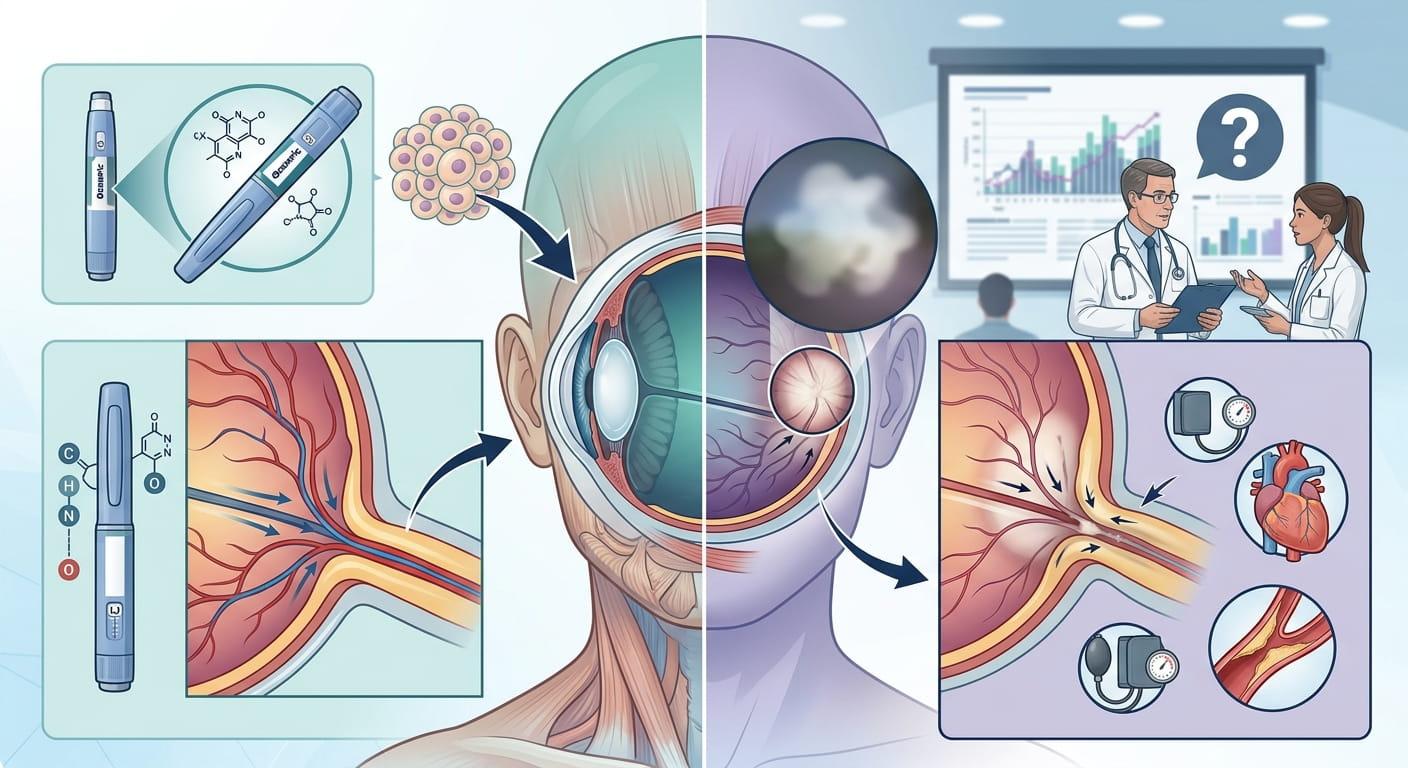
If you have experienced sudden vision changes while taking Ozempic, you may be asking, “Can Ozempic increase the risk of NAION?” Researchers and regulators have been investigating a potential connection between semaglutide, the active ingredient in Ozempic, and nonarteritic anterior ischemic optic neuropathy (NAION). If you are concerned that a medication may have contributed to serious vision problems, Ozempic Vision Loss Legal Information can help you learn more about potential pharmaceutical injury claims.
What Is NAION?
NAION, or nonarteritic anterior ischemic optic neuropathy, is an optic nerve condition that can cause sudden, usually painless vision loss. It occurs when blood flow to part of the optic nerve is reduced, potentially damaging the nerve fibers responsible for transmitting visual information from the eye to the brain.
NAION commonly affects one eye, although the condition can affect the other eye later in some patients.
Possible symptoms include:
-
Sudden vision loss in one eye
-
Blurred or reduced vision
-
A dark or missing area in the visual field
-
Difficulty seeing details
-
Changes in color perception
-
Vision problems noticed after waking
Sudden vision loss can have many possible causes, however. Anyone experiencing an abrupt change in vision should seek prompt medical evaluation rather than assuming NAION is responsible.
What Is Ozempic?
Ozempic contains semaglutide, a GLP-1 receptor agonist approved for certain adults with type 2 diabetes and cardiovascular risk reduction in appropriate patients. The FDA's current approved product information identifies Ozempic as semaglutide injection.
Semaglutide is also the active ingredient in other medications, including Wegovy and Rybelsus, although their approved uses and formulations differ.
Because semaglutide medications are widely used, researchers have been examining potential adverse events associated with them, including possible effects on vision.
Can Ozempic Increase the Risk of NAION?
There is evidence suggesting a potential association between semaglutide exposure and NAION, but it is important to distinguish an association from proof that Ozempic causes NAION.
The FDA listed non-arteritic anterior ischemic optic neuropathy (NAION) among potential serious-risk signals it was evaluating for several medications, including Ozempic, Rybelsus, and Wegovy. The FDA stated that it was evaluating whether regulatory action was needed.
This safety signal does not mean that every person taking Ozempic will develop NAION. It also does not establish that Ozempic caused an individual patient's vision loss.
Instead, it means the potential relationship has been considered important enough for continued regulatory and scientific evaluation.
What Does Research Say About Ozempic and NAION?
Research into semaglutide and NAION has produced findings that warrant attention while also showing why the issue remains medically complex.
A 2024 study published in JAMA Ophthalmology reported an association between semaglutide prescriptions and NAION. The researchers emphasized that the study could identify an association but could not establish a definitive cause-and-effect relationship.
A larger 2025 multicenter study also examined the relationship between semaglutide and NAION in adults with type 2 diabetes. The findings suggested a modest increase in relative incidence, while the researchers noted that additional research was needed to clarify the potential mechanism and establish causality.
More recent research has continued examining the issue. The overall scientific question is not simply whether people taking semaglutide ever develop NAION, but whether semaglutide changes the risk compared with similar patients who are not exposed to the medication.
That distinction is important when discussing both medical safety and potential legal claims.
How Could NAION Affect Your Vision?
The optic nerve plays a critical role in sight. When blood flow to the optic nerve is disrupted, damage may cause a noticeable change in vision.
For some people, NAION may cause:
Sudden Vision Loss
Vision can decrease unexpectedly, often in one eye.
Visual Field Defects
You may notice a dark, blurred, or missing section of your visual field.
Reduced Visual Sharpness
Reading, recognizing faces, or seeing fine details may become more difficult.
Changes in Color Vision
Some people may notice that colors appear less clear or vivid.
Long-Term Visual Impairment
NAION can cause lasting damage, and some people may have permanent visual deficits.
The severity and outcome can vary. A medical evaluation is necessary to determine the cause and extent of vision loss.
Who May Have Other Risk Factors for NAION?
NAION can occur in people with various underlying health factors. Potential risk factors include:
-
Diabetes
-
High blood pressure
-
High cholesterol
-
Sleep apnea
-
Cardiovascular or vascular conditions
-
Older age
-
Certain anatomical characteristics of the optic nerve
This is important because a person taking Ozempic may have other medical conditions that could also influence the risk of NAION.
Therefore, if vision loss occurs, healthcare professionals generally need to consider the complete medical history rather than attributing the injury to one factor automatically.
What Should You Do If You Experience Vision Loss While Taking Ozempic?
Sudden vision loss should be treated seriously.
1. Seek Prompt Medical Care
Contact an eye-care professional or seek urgent medical evaluation. Sudden vision loss can result from several conditions, some of which require immediate treatment.
2. Explain Your Ozempic Use
Tell your healthcare provider that you are taking Ozempic. Provide information about when you started the medication, your dosage, and any recent changes.
3. Record When Your Symptoms Began
Write down when you first noticed the vision problem and whether it affected your right eye, left eye, or both.
4. Keep Your Medical Records
Save ophthalmology reports, diagnostic testing, prescriptions, pharmacy records, and treatment information.
5. Do Not Change Medication Without Medical Advice
If you are concerned about Ozempic, discuss your concerns with your prescribing healthcare professional before making changes to your treatment.
What Evidence May Matter in an Ozempic Vision Loss Claim?
If you believe Ozempic contributed to your vision injury, documentation can be important.
Potential evidence may include:
-
Ozempic prescription records
-
Pharmacy records
-
Medication dosage and treatment history
-
Date your symptoms began
-
Ophthalmology records
-
NAION diagnosis
-
Visual field testing
-
OCT or other imaging
-
Medical expenses
-
Lost income
-
Documentation of quality-of-life changes
A clear timeline showing Ozempic use → onset of symptoms → medical evaluation → diagnosis → resulting losses may help an attorney understand the circumstances of a potential claim.
Can You File an Ozempic NAION Lawsuit?
Experiencing NAION after taking Ozempic does not automatically mean that you have a successful lawsuit.
A potential Ozempic NAION lawsuit would depend on the specific facts and evidence of the individual case. A pharmaceutical injury attorney may examine the medication history, diagnosis, timing, medical records, scientific evidence, alternative causes, and resulting damages.
Vision Loss Lawyer focuses on inquiries involving serious vision problems allegedly associated with medications and pharmaceutical injury claims.
Potential damages in a pharmaceutical injury case may include medical expenses, ongoing treatment costs, lost income, diminished earning capacity, pain and suffering, and loss of quality of life, depending on the circumstances and applicable law.
Why the Difference Between Risk and Causation Matters
When discussing Ozempic and NAION, it is important not to confuse a possible increased risk with proof of causation.
For example, if research finds that NAION occurs more frequently among people exposed to a medication, that finding may indicate an association. But researchers still need to determine whether the medication itself caused the increase and whether other factors could explain the result.
The same principle applies to individual legal claims. A person must have their specific medical circumstances evaluated rather than relying only on general research.
Final Thoughts
So, can Ozempic increase the risk of NAION? Current evidence and regulatory monitoring indicate that there is a potential association between semaglutide-containing medications and NAION, and the FDA has identified NAION as a potential serious-risk signal involving Ozempic and related semaglutide products.
However, this does not establish that Ozempic causes NAION in every patient. Researchers continue to study the relationship, and individual cases require careful medical evaluation.
If you experience sudden or unexplained vision loss while taking Ozempic, seek prompt medical attention. If you are diagnosed with NAION and believe your medication may have contributed to your injury, preserve your medical records and medication history and consider discussing your circumstances with a qualified pharmaceutical injury attorney.
FAQs
1. Can Ozempic increase the risk of NAION?
Current research and regulatory monitoring indicate a potential association between semaglutide-containing medications and NAION. However, an association does not establish that Ozempic causes NAION in every patient.
2. What are the symptoms of NAION?
NAION may cause sudden, usually painless vision loss, often in one eye. Other symptoms can include blurred vision, visual-field defects, and difficulty seeing details.
3. What should I do if I experience sudden vision loss while taking Ozempic?
Seek prompt medical evaluation. Tell your healthcare provider that you are taking Ozempic and explain when the vision changes began.
4. Can NAION cause permanent vision loss?
NAION can cause lasting optic nerve damage and permanent visual impairment in some people. The outcome varies depending on the individual case.
5. Can I file an Ozempic vision loss lawsuit if I develop NAION?
Possibly, depending on the facts and evidence of your individual situation. A pharmaceutical injury attorney can review your medication history, diagnosis, timing, medical records, and resulting damages to determine whether you may have a potential claim.

 English
 Arabic
 French
 Spanish
 Portuguese
 Deutsch
 Turkish
 Dutch
Dutch
 Italiano
 Romaian
 Portuguese (Brazil)
 Greek
Greek