


Oil and Gas Field Equipment: What UAE Operators Need to Know
A cracked seal or an undersized valve rarely fails quietly in the field — it fails during a shutdown window, on a night shift, with a rig sitting idle. That is why sourcing oil and gas field equipment in the UAE has become less about catalogue browsing and more about vetting the people who actually build the parts.
Operators across Sharjah, Abu Dhabi, and the wider Gulf are dealing with tighter maintenance windows and harsher operating conditions than most equipment was originally rated for, which puts the spotlight squarely on how that equipment is designed, machined, and certified before it ever reaches site.
Why Field Conditions Change the Equipment Equation
Desert heat, high salinity, and sand ingress do not show up in a standard datasheet, yet they shorten the working life of pumps, valves, and connectors faster than almost anywhere else. Oil & gas field equipment that performs well in a temperate climate can degrade within months when exposed to UAE summer temperatures that regularly cross 45°C at the wellhead, particularly when seals and elastomers were never tested against that range.
This is one reason experienced buyers ask suppliers for material certificates and coating specifications rather than taking a product page at face value. A flange rated for standard service is not automatically rated for sour gas exposure or for the vibration loads typical of a workover rig, and the difference often only becomes obvious after a part has already been installed.
The Main Categories of Equipment Used on UAE Sites
Most oilfield programs in the region rely on a fairly consistent set of equipment categories, even though the specifications shift from block to block. Wellhead components, choke valves, gaskets, and replacement fittings make up the bulk of routine procurement, alongside structural brackets and housings that support surface equipment and instrumentation.
Knowing which category a part falls into changes how it should be sourced. Off-the-shelf items with generic tolerances are usually fine for non-critical brackets, but anything touching pressure containment or flow control benefits from purpose-built equipment made to the exact drawing, rather than the nearest stock size pulled from a distributor's shelf. Treating every purchase the same way, regardless of its role in the system, is where a lot of avoidable downtime originates.
A useful way to think about it is by consequence of failure rather than by part name. A bracket that loosens can usually be re-tightened on the next scheduled visit, but a gasket that fails at the wellhead can mean an unplanned shutdown measured in days, not hours. Sorting procurement priorities this way, rather than by unit price, tends to point buyers toward the parts that genuinely deserve a custom-built approach.
What to Verify Before Placing an Order
A short pre-order checklist saves far more time than it costs, especially on projects where a delivery delay pushes back a broader maintenance schedule. Before signing off on a purchase order, buyers should confirm:
-
Material traceability certificates matching the exact heat and batch number
-
Machining tolerances documented on a dimensional inspection report
-
Applicable industry standards (API, ASME, or ISO) referenced on the drawing
-
Lead time commitments in writing, with penalties for late delivery
-
A named engineering contact who can answer technical questions directly
Suppliers who hesitate to provide any of the above are usually reselling rather than manufacturing, which matters when a part needs to be modified quickly under a tight turnaround and there is no engineer on the other end of the phone to advise on a change.
Where Precision Manufacturing Fits Into the Picture
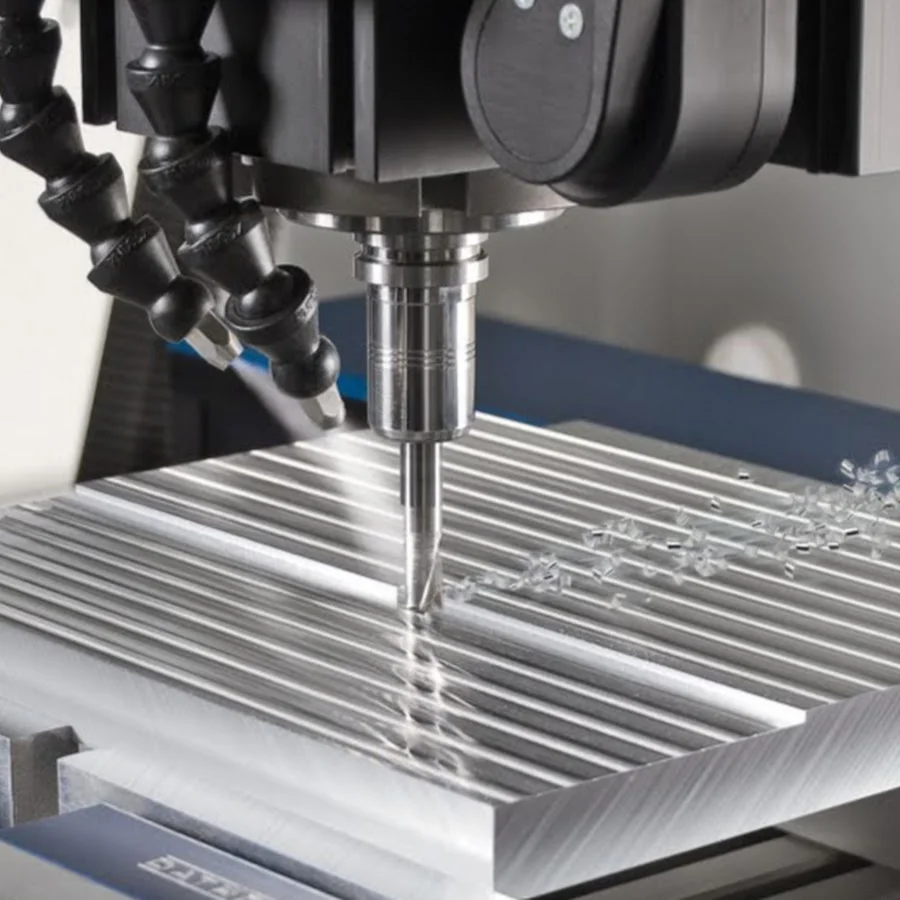
The gap between a part that lasts eighteen months and one that lasts five years almost always comes down to how it was machined. Precision manufacturing gives engineers control over tolerances measured in microns, surface finish, and material consistency — details that directly affect how a seal seats, how a valve stem resists wear, and how evenly load is distributed across a threaded connection.
Genesis-MFG's certified machine shop applies this same discipline to oil & gas field equipment, working from client drawings to produce parts that match the original specification rather than an approximate substitute. That level of accuracy is what allows a replacement component to be dropped into an existing assembly without rework on site, which matters enormously when a rig is already down and every extra hour has a cost attached to it.
Consistency across an entire batch matters just as much as accuracy on a single part. A well-run machine shop holding a tolerance of plus or minus 0.02 millimetres across a production run gives operators managing multiple wells a fleet of components that all behave the same way, which reduces the unpredictability that maintenance teams otherwise have to plan around. That kind of repeatability is hard to achieve with manual machining and is one of the clearer arguments for working with a dedicated shop rather than a general parts distributor.
Conclusion
Reliable oil and gas field equipment is rarely the cheapest option on the table, but it is consistently the one that avoids repeat failures and unplanned downtime. Working with a supplier that treats precision manufacturing as a baseline rather than an upsell gives operators a much clearer picture of what they are actually installing in the field, and it removes a lot of the guesswork from procurement decisions.
If your team is evaluating a supplier for an upcoming project, it is worth asking to see a sample inspection report before the first order is placed — a small step that tells you a lot about how the rest of the relationship will go, and one that a genuine manufacturer will never hesitate to provide.
FAQs
1. How is oil & gas field equipment different from standard industrial parts?
Field equipment is built to withstand pressure, corrosive media, and extreme temperature swings that standard industrial components are not designed for, so material selection and tolerances are held to tighter specifications throughout production.
2. Can existing oilfield parts be reverse-engineered if drawings are lost?
Yes. An experienced machine shop can measure a worn or damaged sample and produce accurate drawings before manufacturing a replacement, which is common for legacy equipment with no available documentation.
3. What certifications should a UAE equipment supplier hold?
ISO 9001 is the minimum baseline for quality management, and suppliers working on pressure-related components should also be able to reference relevant API or ASME standards on request.
4. How long does custom equipment fabrication typically take?
Timelines vary with complexity, but a well-organized machine shop should be able to give a firm lead time once the drawing and material are confirmed, usually ranging from a few days to several weeks.

 English
 Arabic
 French
 Spanish
 Portuguese
 Deutsch
 Turkish
 Dutch
Dutch
 Italiano
 Romaian
 Portuguese (Brazil)
 Greek
Greek