


Top 10 Essential Oil Packaging Ideas for Modern Brands
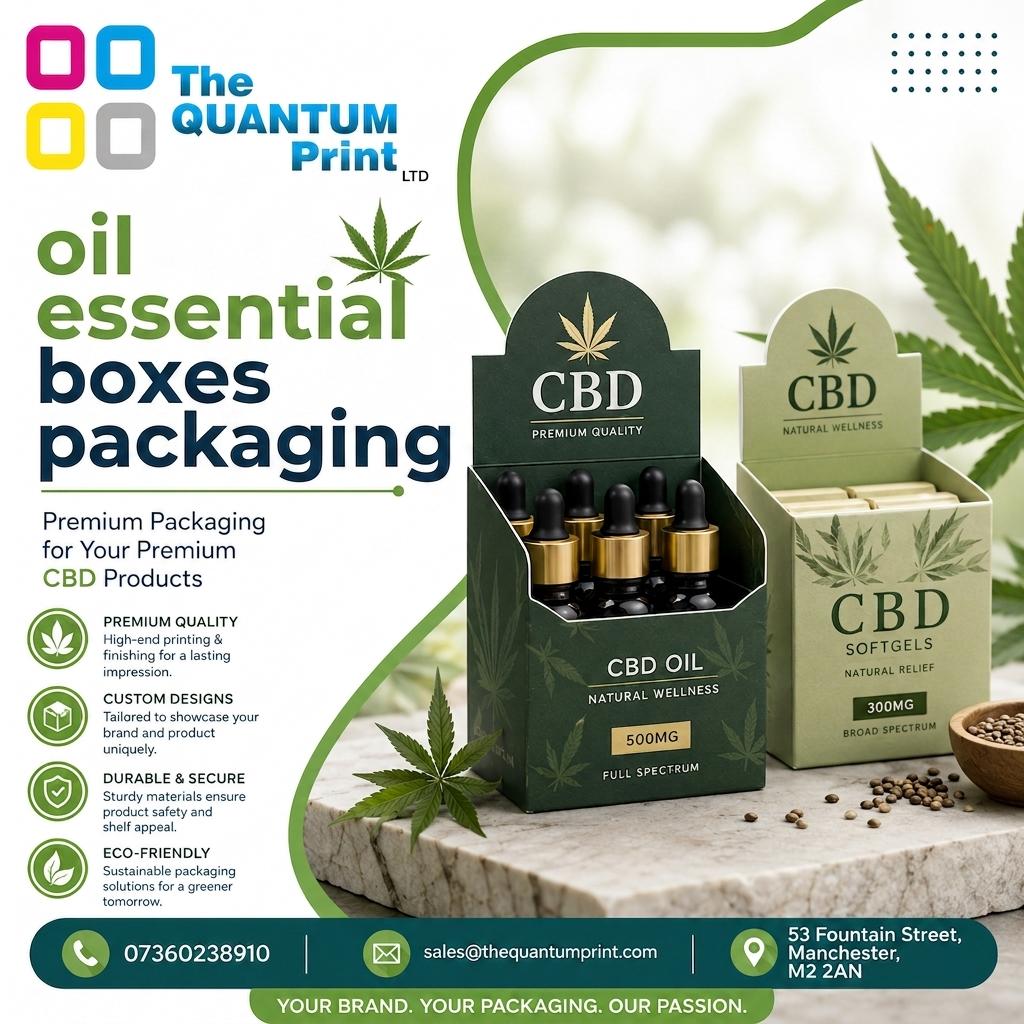
Essential oils have become increasingly visible across wellness, aromatherapy, personal care, and natural beauty markets. As these products move from specialist retailers to e-commerce stores and lifestyle brands, packaging has taken on a broader role than simply holding a bottle. It must protect delicate containers, communicate product information, support brand identity, and create a reliable customer experience.
For manufacturers and retailers, choosing suitable oil essential boxes therefore requires attention to materials, structural design, printing, sustainability, and practical handling. Well-planned packaging can reduce common problems such as bottle damage, leakage, poor shelf presentation, and insufficient product information while helping brands establish a consistent visual identity.

Why Essential Oil Packaging Requires Careful Planning
Essential oil bottles are often small, but their packaging requirements can be surprisingly demanding. Glass containers are vulnerable to impact, while closures and labels need protection during storage and transportation. Some oils can also be sensitive to light, making material and packaging design relevant to product preservation.
Effective oil essential boxes packaging should address several requirements at the same time:
- Protection against knocks, compression, and movement during transportation
- Appropriate internal dimensions for different bottle shapes and sizes
- Clear product identification and regulatory information
- Easy opening without compromising structural strength
- Attractive presentation for retail shelves and online orders
- Material choices that align with sustainability objectives
- Efficient storage and shipping considerations
A common mistake is to focus almost entirely on appearance. A visually impressive box that does not hold the bottle securely can create more problems than it solves. Structural performance should come first, followed by visual and communication elements.
Choosing the Right Materials for Essential Oil Boxes
Paperboard and corrugated materials are widely used in modern product packaging because they provide flexibility in design while offering different levels of protection. The appropriate choice depends on bottle weight, distribution conditions, retail requirements, and the number of products included in a package.

For lightweight individual bottles, folding carton board may provide a practical balance between appearance and protection. Thicker board can improve rigidity where needed, while corrugated structures may be more suitable for products that face greater handling demands during delivery.
Material selection should consider:
Product protection
The packaging should keep the bottle stable rather than allowing excessive movement inside the box. Inserts, dividers, and fitted compartments can be useful for multi-bottle collections or delicate containers.
Sustainability
Many packaging businesses are reducing unnecessary plastic and exploring recyclable or responsibly sourced paper-based materials. Right-sizing a box can also reduce material consumption and shipping volume.
Printing compatibility
The selected board should support the desired printing process and finish. Smooth surfaces generally provide better results for detailed graphics, colour reproduction, typography, and product imagery.
The Role of Printing in Essential Oil Packaging
Packaging is one of the most immediate ways a customer encounters a product. This makes oil essential boxes printing important for both information and visual communication.
Good packaging printing does not necessarily mean using complex graphics or excessive decorative elements. Instead, the design should establish a clear hierarchy so customers can understand the product quickly.
Important printed elements may include:
- Product name and variety
- Brand identity
- Ingredients or composition information where applicable
- Directions for use
- Safety information
- Net quantity
- Batch or product identification details
- Storage guidance
- Manufacturer or distributor information
- Recycling or disposal symbols where appropriate
Typography is particularly important for small essential oil packages. Overcrowding the available space with tiny text can make important information difficult to read. A well-organised layout gives priority to the most important details while maintaining sufficient whitespace.

Colour can also contribute to product differentiation. For example, a wellness range might use a consistent colour system to distinguish lavender, peppermint, eucalyptus, citrus, or blended products. However, colour choices should remain consistent with the overall brand identity rather than relying on decorative trends alone.
Structural Design: From Single Bottles to Product Sets
Essential oil products are sold in many formats. A single bottle may require a compact carton, while gift collections or sampler sets need more sophisticated internal structures.
For individual products, a snug-fitting carton can reduce movement and create a clean presentation. For collections, internal dividers or inserts can separate bottles and prevent them from striking each other.
Packaging designers should assess:
- Bottle dimensions and shape
- Closure and cap design
- Product weight
- Number of bottles per package
- Shipping distance
- Retail display requirements
- Storage conditions
- Opening and closing expectations
Prototyping is particularly valuable before moving into larger production runs. A sample package can reveal whether the bottle fits securely, whether the box is easy to assemble, and whether printed information remains visible after assembly.
This practical testing stage can prevent expensive changes later.

Common Packaging Challenges and Practical Solutions
Bottle movement inside the box
Excessive internal space can allow bottles to move during transportation. This may lead to scratches, damaged labels, or breakage.
Solution: Use appropriately sized cartons, inserts, dividers, or other internal supports where necessary.
Packaging that is difficult to open
A box that is too rigid or poorly designed can frustrate customers, especially when the product is intended for everyday use.
Solution: Balance structural strength with practical opening features and test the packaging with real users before finalising the design.
Excessive packaging
Oversized cartons can increase material consumption and shipping costs without adding meaningful protection.
Solution: Use right-sized packaging based on the actual dimensions and protection requirements of the product.
Weak brand differentiation
Products in the same category can easily look similar when packaging relies on generic labels and stock designs.
Solution: Develop a consistent visual system using typography, colours, illustrations, finishes, and structural features that reflect the brand.
Poor print readability
Small cartons often have limited space, which can result in overcrowded layouts.
Solution: Establish an information hierarchy and prioritise legibility. Important instructions and safety information should remain easy to find.
Sustainability and the Future of Essential Oil Packaging
Sustainability is increasingly influencing packaging decisions across the retail sector. Customers, retailers, and businesses are paying closer attention to material sourcing, recyclability, packaging waste, and shipping efficiency.

For essential oil brands, sustainable packaging does not necessarily require sacrificing presentation. Paper-based cartons can provide a professional appearance while supporting recycling objectives, depending on the materials, coatings, inks, and local recycling infrastructure involved.
Several approaches can contribute to more responsible packaging:
- Reduce unnecessary layers and oversized structures
- Select recyclable paper-based materials where appropriate
- Consider material sourcing and certification
- Avoid unnecessary decorative components
- Optimise packaging dimensions for transportation
- Design packaging for practical disposal after use
Sustainability should be considered from the beginning of the design process rather than added as an afterthought.
Creating Packaging That Works Across Retail and E-Commerce
Essential oils may be sold through independent shops, pharmacies, wellness stores, online marketplaces, and direct-to-consumer websites. Each channel introduces different packaging considerations.
Retail packaging must communicate quickly from a shelf or display. E-commerce packaging has to withstand additional handling and transportation while still creating a positive unboxing experience.
This means modern essential oil packaging boxes often need to balance three objectives: protection, presentation, and efficiency.
For online sellers, packaging dimensions can also influence shipping costs and warehouse storage. A compact, lightweight structure that provides sufficient protection can be more practical than an oversized package designed primarily for visual impact.

Businesses developing or reviewing packaging can also study specialist packaging providers for examples of structural formats, printing options, and finishing techniques. The Quantum Print, for instance, provides information specifically focused on oil essential box packaging, making it a useful reference when researching packaging approaches.
Practical Checklist for Better Essential Oil Packaging
Before finalising a packaging design, businesses should evaluate the complete customer and distribution journey.
Ask:
- Does the box securely hold the bottle?
- Can the packaging withstand normal transportation?
- Is all essential information readable?
- Does the design clearly identify the product?
- Is the box appropriately sized?
- Are materials suitable for the intended application?
- Can the packaging be stored efficiently?
- Does the printed design remain clear after production?
- Is the opening experience practical?
- Are sustainability considerations addressed?
Testing these areas helps move packaging decisions beyond aesthetics and toward measurable functionality.

Conclusion
Effective essential oil packaging combines product protection, clear communication, visual consistency, and practical usability. From selecting suitable board and internal structures to planning printing and sustainability, every element contributes to the final customer experience.
The most successful oil essential boxes are not simply attractive containers. They are carefully engineered packaging solutions that protect the product, communicate relevant information, support efficient distribution, and reinforce a recognisable brand identity.
As the wellness and personal care markets continue to evolve, packaging will remain an important part of how essential oil products are presented and experienced. Businesses that approach packaging as a combination of design, engineering, communication, and responsible material use will be better positioned to meet changing retail and consumer expectations.
Read More :
Top 10 Essential Oil Packaging Ideas for Modern Brands
Top 10 Soap Packaging Boxes Ideas for Modern Brands
Top 10 Chocolate Box Packaging Trends Every UK Retailer Should Know

 English
 Arabic
 French
 Portuguese
 Deutsch
 Turkish
 Dutch
Dutch
 Italiano
 Russian
 Romaian
 Portuguese (Brazil)
 Greek
Greek