


Magnesium Carbonate Price Trend June 2026 Update
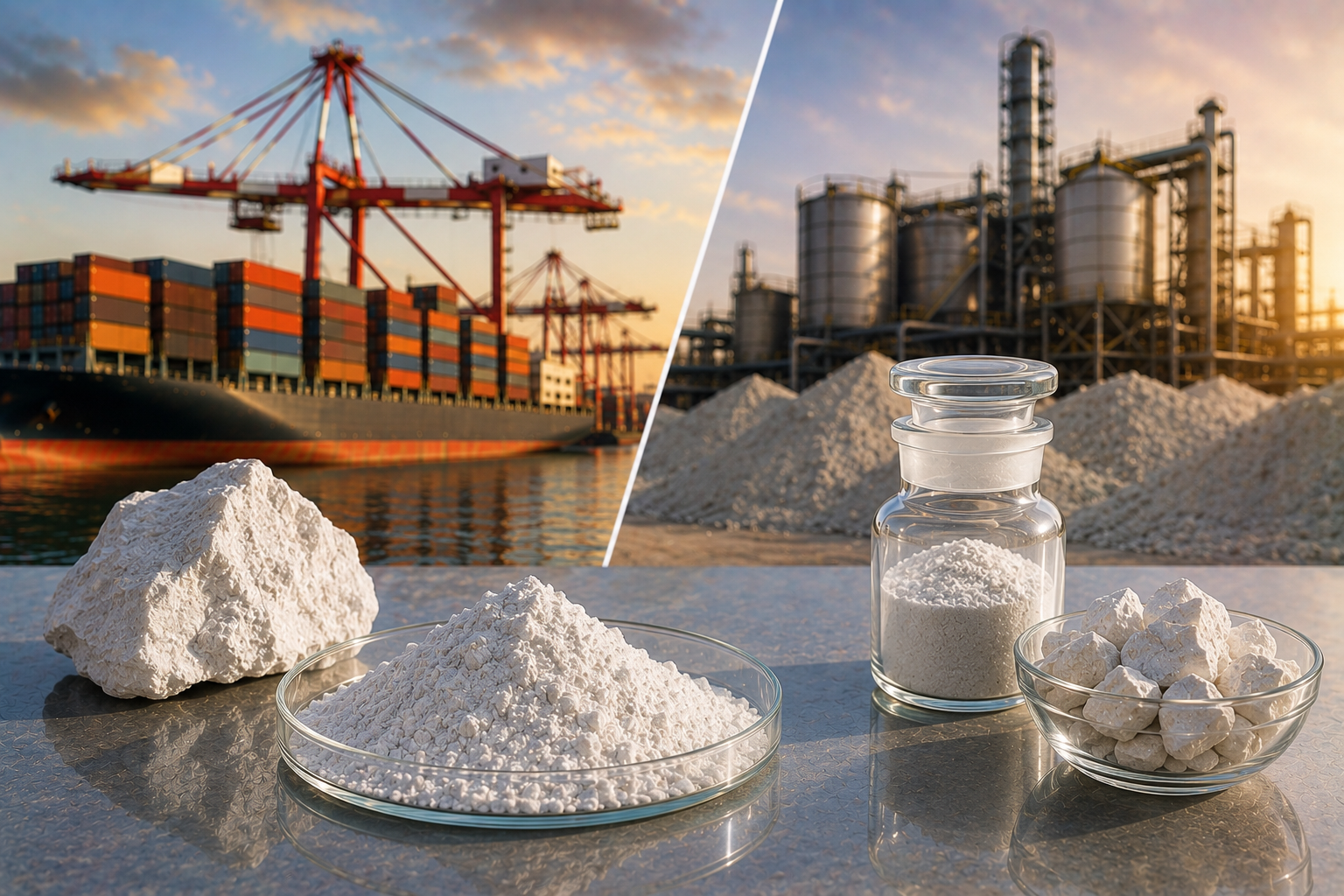
Magnesium Carbonate Price Trend June 2026: China and India Compared
Magnesium carbonate just posted fresh numbers for June 2026, and there's a gap worth paying attention to. China is quoting USD 1,204.71/MT on an FOB basis. India comes in at USD 1,292.71/MT CIF. That's a difference of USD 88 per ton, which adds up fast once you're buying at scale.
Why should procurement teams care about a mineral most people never think about? Magnesium carbonate shows up everywhere once you start looking. Refractory bricks, rubber compounds, fire retardants, even some pharmaceutical fillers. A price move here doesn't stay isolated. It works its way into manufacturing costs across several industries within a quarter or two.
Current Magnesium Carbonate Prices: China vs India
| Product | Region | Incoterm Basis | Price | Last Updated |
|---|---|---|---|---|
| Magnesium Carbonate | China | FOB | USD 1,204.71/MT | June 2026 |
| Magnesium Carbonate | India | CIF | USD 1,292.71/MT | June 2026 |
Price Source :- Procurement Resource
USD 88 per ton separates the two. Not massive on a single shipment. But multiply that across a bulk order and it becomes real budget territory.
A few points buyers should keep in mind:
- China's FOB price only covers the cost of loading goods onto the vessel at origin. Freight and insurance aren't included.
- India's CIF price folds in both freight and insurance, so a chunk of that USD 88 gap is structural, not market driven.
- Both figures reflect June 2026. Mineral pricing can shift within weeks depending on mining output and shipping availability.
FOB and CIF aren't directly comparable numbers. Anyone buying from China FOB still needs to add their own freight and insurance before the true landed cost matches up against India's figure. Worth running that math before assuming China is automatically the cheaper source.
What's Behind the Magnesium Carbonate Price Trend
A handful of forces tend to shape where this price lands each month.
Mining and extraction costs. Magnesium carbonate comes from natural deposits, mainly magnesite ore. Extraction costs, labor, and energy prices at the mine site all filter into the base cost before the material even reaches a port.
Export demand from China. China dominates global magnesium carbonate supply. When Chinese domestic demand rises, less material is left for export, and prices tend to climb. Export quotas and environmental restrictions on mining regions can squeeze supply further.
India's import reliance. India still depends heavily on imported magnesium carbonate for its refractory and rubber industries. That reliance keeps upward pressure on the CIF price, especially when shipping capacity out of Asia tightens.
Energy and processing costs. Converting raw magnesite into usable magnesium carbonate requires processing. Energy prices, particularly for kilns and drying equipment, feed directly into the final quoted price.
Currency movements. Both prices are quoted in dollars. Local currency depreciation against the dollar raises the effective cost for importers even when the dollar price hasn't shifted at all.
Reading the Numbers: Q&A for Buyers
Does the China-India gap mean China is always cheaper?
Not necessarily. Once freight and insurance get added to China's FOB price, the landed cost can end up close to or even above India's CIF figure depending on the shipping route and current freight rates.
Should buyers lock in long-term contracts right now?
Depends on risk tolerance. Locking in during a stable month protects against sudden spikes, but it also means missing out if prices soften later in the quarter.
Is the price gap likely to close?
Possibly, if India's domestic mining capacity expands. Several producers have been investing in local processing to reduce import dependency, which could narrow the spread over time.
What This Means for Buyers and Investors
Procurement teams sourcing from China should factor in the full landed cost before comparing against India. FOB looks cheaper on paper. It rarely stays that way once shipping and insurance get added.
Investors watching the industrial minerals space might find India's import dependency worth a closer look. Rising CIF costs create an incentive for domestic capacity growth, and that's exactly the kind of gap that draws capital toward local production.
Business advisers working with refractory, rubber, or pharmaceutical clients should treat this price trend as an early cost signal. Raw material increases here tend to show up in finished product pricing a few weeks later, so tracking this now helps with margin planning ahead of time.
Looking Ahead: June 2026 and Beyond
Nobody can say with certainty where magnesium carbonate prices head next. What's clear is that the structural gap between FOB China and CIF India isn't going away soon. Mining output, export policy, and shipping costs all move independently, and any one of them can shift the numbers within a month.
Buyers relying on outdated pricing risk locking in unfavorable terms. Treat the June 2026 figures as a snapshot, not a permanent baseline. Check current rates before finalizing any contract.
Conclusion
The magnesium carbonate price trend for June 2026 shows China at USD 1,204.71/MT FOB and India at USD 1,292.71/MT CIF. That USD 88 gap reflects incoterm differences, import dependency, and mining economics working together, not random market noise. For procurement teams, investors, and advisers tracking industrial mineral costs, staying current on this data is part of managing risk properly.
FAQ Section
What is the current magnesium carbonate price trend in China and India?
China's magnesium carbonate is priced at USD 1,204.71/MT FOB as of June 2026. India's runs USD 1,292.71/MT CIF. The gap reflects differences in incoterm basis, freight costs, and how much India relies on imported material for its refractory and rubber industries.
Why is magnesium carbonate more expensive in India?
India's price includes freight and insurance since it's quoted CIF, while China's FOB figure doesn't. India also imports a significant share of its magnesium carbonate, adding to the total landed cost once shipping and local logistics are factored in.
What drives magnesium carbonate prices the most?
Mining and extraction costs matter most, followed by China's export availability, processing energy costs, and currency movements. China dominates global supply, so any shift in domestic demand or export policy there tends to ripple through international pricing fairly quickly.
How often does the magnesium carbonate price change?
Prices can move weekly depending on mining output, shipping capacity, and energy costs. The June 2026 figures serve as a useful reference point, but buyers negotiating contracts should always verify current rates rather than relying on month-old data.
What's the outlook for magnesium carbonate prices going forward?
The China-India spread will likely persist in the near term, tied to mining economics and India's import dependency. If India expands domestic processing capacity, the gap could narrow over the following quarters, though that shift would take time to materialize.

 English
 French
 Spanish
 Portuguese
 Deutsch
 Turkish
 Dutch
Dutch
 Italiano
 Russian
 Romaian
 Portuguese (Brazil)
 Greek
Greek