


How Leaf Shape and Vein Patterns Help Identify Tree Species
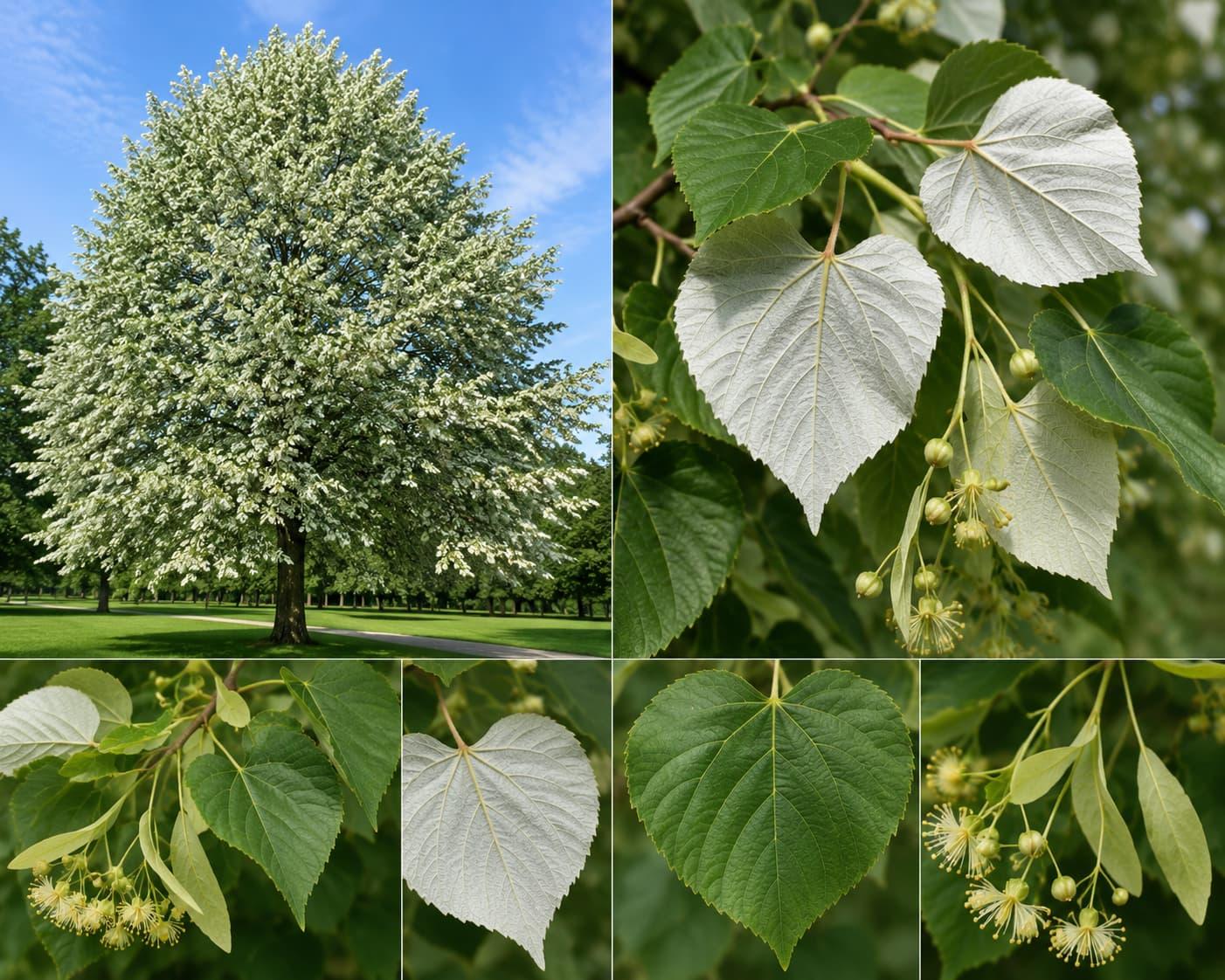
Identifying a tree can seem difficult when several species have similar bark, flowers, or overall shapes. One of the most effective places to start is the leaf. Leaf shape and vein patterns provide a remarkable amount of information and can help distinguish tree species even when you are new to botany.
From the deeply lobed leaves of maples to the asymmetrical bases of elm leaves, trees have evolved an enormous variety of leaf forms. By learning how to examine these characteristics, you can become much better at tree identification and make more informed use of an AI tree identifier or other identification tools.
This guide explains the most important leaf characteristics, how vein patterns work, and how you can use them for accurate tree identification online.
Why Leaf Shape Matters in Tree Identification
Leaves are among the most useful features for identifying deciduous trees because their shape is influenced by the species' genetics and often remains relatively consistent.
When examining a leaf, don't simply ask, "What color is it?" Instead, look at its complete structure.
Important characteristics include:
-
Overall leaf shape
-
Leaf size
-
Leaf tip
-
Leaf base
-
Leaf margin
-
Number of lobes
-
Leaf arrangement
-
Vein pattern
-
Texture
-
Surface characteristics
-
Petiole or leaf stalk
The combination of these features creates a visual profile that can help distinguish one species from another.
For example, a maple may have several pointed lobes, while a tulip poplar has a distinctive four-lobed shape with a relatively flat or notched tip. An elm often has an asymmetrical leaf base and double-serrated edges.
These differences make tree identification by leaf one of the most practical methods for beginners.
Understanding Leaf Shape
The first step is to determine the general shape of the leaf.
Common leaf shapes include:
Oval
Oval leaves are wider around the middle and gradually narrow toward both ends. Many common tree species have oval leaves.
Heart-Shaped
Heart-shaped leaves have a broad base with a noticeable indentation where the leaf attaches to the petiole.
Redbud and basswood are examples of trees with heart-shaped leaves.
Triangular
Some trees have leaves that are broadly triangular, with the widest part near the base.
Cottonwood species can have triangular or deltoid-shaped leaves.
Lance-Shaped
Lanceolate leaves are long and narrow, resembling the shape of a spearhead.
Several willow species have narrow, lance-shaped leaves.
Round
Some species produce nearly circular leaves. Their exact shape, margin, and venation should be examined to distinguish them from similar species.
Lobed
Lobed leaves have deep indentations extending inward from the margin.
Maples, oaks, and tulip poplars are excellent examples of trees with distinctive lobed leaves.
Understanding these basic categories makes it easier to narrow down potential species when using a tree identifier online.
Leaf Margins Provide Important Clues
The leaf margin is the outer edge of the leaf.
It can be:
-
Smooth or entire
-
Finely toothed
-
Coarsely toothed
-
Doubly serrated
-
Wavy
-
Lobed
-
Spiny
This feature is particularly useful when two species have similar overall leaf shapes.
For example, an elm leaf generally has a serrated margin, while some maple species have smoother margins between their lobes.
When photographing a leaf for an AI tree identification tool, make sure the entire margin is visible. Cropping the edges can remove important information.
Leaf Tips Can Help Separate Similar Species
The tip of a leaf is called the apex.
It may be:
-
Pointed
-
Tapered
-
Rounded
-
Blunt
-
Notched
-
Long-pointed
A pointed tip is common among many tree species, so it should not be considered by itself.
However, when combined with leaf lobes, margins, and veins, the tip can become a useful identification feature.
Tulip poplar is a good example. Its unusual four-lobed leaf usually has a flat or slightly notched upper edge, making it quite distinctive.
Leaf Bases Are Often Overlooked
The leaf base is the area where the blade meets the petiole.
It may be:
-
Rounded
-
Heart-shaped
-
Tapered
-
Straight
-
Unequal or asymmetrical
An asymmetrical leaf base is particularly useful when identifying elm species.
One side of an elm leaf may extend farther down the petiole than the other. This characteristic can help separate elm from other trees with similar oval leaves.
When performing leaf identification, always inspect the base instead of focusing only on the overall outline.
What Are Leaf Veins?
Leaf veins are the vascular structures that transport water, minerals, and sugars through the leaf.
They also create visible patterns that can be used for tree identification.
The main central vein is called the midrib. Smaller veins branch from the midrib and extend throughout the leaf blade.
These secondary and tertiary veins can form distinctive patterns.
When examining a leaf, look at:
-
The central midrib
-
Secondary veins
-
The angle of the veins
-
Vein spacing
-
Whether veins reach the margin
-
Whether veins curve toward the tip
-
The visibility of smaller veins
These characteristics can provide additional evidence when identifying a species.
Common Types of Leaf Venation
Pinnate Venation
Pinnate venation resembles the structure of a feather.
A single main midrib runs through the center, with secondary veins branching from it.
Many broadleaf trees have pinnate venation.
Palmate Venation
In palmate venation, several major veins radiate from approximately the same point near the leaf base.
Maple leaves are a familiar example.
The major veins spread outward into different lobes, creating a hand-like appearance.
Parallel Venation
Parallel venation occurs when veins run roughly parallel to one another.
This pattern is more commonly associated with grasses and monocots than with most familiar broadleaf trees, but recognizing the distinction can still help when studying plant identification.
Arcuate Venation
With arcuate venation, secondary veins curve toward the leaf tip rather than extending directly outward.
This characteristic can be especially useful when combined with leaf shape and margin.
How Vein Patterns Help Distinguish Similar Trees
Sometimes two leaves look almost identical at first glance.
This is where vein patterns can become especially useful.
Imagine two species with oval leaves and serrated margins. Their overall appearance may be confusing, but one might have strongly curved secondary veins while the other has straighter veins that extend toward the margin.
Instead of relying on a single characteristic, examine the entire combination:
Shape + Margin + Tip + Base + Venation + Arrangement
This multi-feature approach is much more reliable.
Leaf Arrangement on the Twig
Leaf identification should not stop at the leaf itself.
Look at how leaves are arranged on the twig.
The three common arrangements are:
Alternate
One leaf emerges from each point along the twig, alternating from one side to the other.
Opposite
Two leaves emerge at approximately the same point, directly opposite each other.
Whorled
Three or more leaves emerge around the same point on the stem.
Leaf arrangement can help narrow down the possibilities before you even examine detailed vein patterns.
Compound Leaves vs. Simple Leaves
Another important distinction is whether a leaf is simple or compound.
A simple leaf has one continuous leaf blade.
A compound leaf is divided into multiple leaflets attached to a central stalk.
Black walnut, ash, and locust trees are examples of species with compound leaves.
This distinction is extremely useful because what looks like a group of leaves may actually be one compound leaf.
When using an AI tree identifier, photograph the entire compound leaf if possible rather than photographing only one leaflet.
How to Photograph Leaves for AI Identification
If you are using an AI tree identifier, image quality can have a major effect on the result.
Follow these steps:
1. Use Good Lighting
Natural daylight usually provides enough detail without creating extreme shadows.
2. Photograph a Complete Leaf
Include the tip, base, margin, and petiole.
3. Keep the Image Sharp
Make sure the leaf surface and edges are in focus.
4. Show the Veins
A photograph taken at a useful angle should make the midrib and secondary veins visible.
5. Photograph Both Sides
Some species have noticeably different upper and lower leaf surfaces.
6. Include the Twig
A photograph showing the leaf attached to the twig can reveal its arrangement.
These simple steps can make an online tree identifier much more useful.
Using a Free Tree Identifier
A free tree identifier can be a convenient starting point for beginners.
Many online tools allow users to upload photographs and receive possible species suggestions.
A tree identification online free tool can be particularly useful while hiking, studying local trees, or exploring a backyard.
However, users should avoid treating an automated identification as absolute proof.
Instead, use the result as a starting point and verify it by examining additional characteristics.
AI Tree Identification and Image Recognition
Modern AI tree identification systems use computer vision to analyze visual patterns in photographs.
An AI tree identifier may examine characteristics such as:
-
Leaf outline
-
Lobes
-
Margins
-
Veins
-
Color
-
Texture
-
Bark
-
Flowers
-
Fruits
The model compares visual patterns with information learned from plant images.
This can make identifying an unfamiliar tree much faster than manually searching through hundreds of species.
However, closely related species can still be difficult to distinguish from one photograph.
What Kind of Tree Is This?
One of the most common questions people ask after photographing an unfamiliar tree is:
"AI, what kind of tree is this?"
An image-based identification tool can provide possible answers, but the quality of the photograph matters.
If the image contains only a distant view of the entire tree, there may not be enough information for a confident identification.
A close-up leaf photograph containing the complete shape, margin, veins, and petiole gives an AI tree identifier far more useful information.
Tree Identification Online: A Practical Method
If you want to identify a tree using an online tree identifier, follow this simple workflow:
Step 1: Photograph the entire tree.
Step 2: Take a clear photograph of a complete leaf.
Step 3: Capture the leaf's upper and lower surfaces.
Step 4: Photograph the twig and leaf arrangement.
Step 5: Take a close-up showing the veins and margins.
Step 6: Photograph bark, flowers, fruit, or seeds if available.
Step 7: Upload the clearest images to your identification tool.
Step 8: Compare the suggested species with botanical references.
This approach is much more reliable than depending on a single photograph.
Examples of Useful Leaf Characteristics
Here are several examples of how individual features can help.
Maple
Maple leaves are commonly palmately lobed, with major veins radiating from the base.
Elm
Elm leaves are typically oval with pointed tips, serrated margins, and an asymmetrical base.
Oak
Oak leaves are usually lobed, although the exact lobe shape varies significantly between species.
Tulip Poplar
Tulip poplar has a highly distinctive four-lobed leaf with a flattened or notched tip.
Basswood
Basswood produces large heart-shaped leaves with serrated margins and prominent veins.
Willow
Willow leaves are generally narrow, elongated, and finely toothed, with a prominent central vein.
These examples show why learning leaf morphology can dramatically improve your identification skills.
Don't Rely on One Characteristic
One of the most important rules of tree identification is to avoid identifying a species based on one characteristic alone.
For example, many species have serrated leaves. Many have pointed tips. Many have oval leaves.
But when you combine:
-
Leaf shape
-
Leaf margin
-
Leaf base
-
Leaf tip
-
Venation
-
Leaf arrangement
-
Bark
-
Habitat
the possibilities become much narrower.
This is the same principle used by experienced botanists: identification is generally based on a combination of characteristics.
Final Thoughts
Leaf shape and vein patterns are two of the most valuable tools for identifying trees. By learning to examine the leaf outline, margins, lobes, tip, base, petiole, and venation, beginners can quickly develop stronger tree identification skills.
An AI tree identifier can make this process even easier by analyzing photographs and suggesting potential species. Whether you use a free tree identifier, an online tree identifier, or traditional botanical resources, the best results come from combining technology with careful observation.
The next time you see an unfamiliar tree, don't just look at its color. Pick up a leaf and examine its shape. Look at the edges. Study the veins. Check the base and tip. Then compare those characteristics with the tree's bark, branching pattern, habitat, and geographic location.

 English
 Arabic
 French
 Portuguese
 Deutsch
 Turkish
 Dutch
Dutch
 Italiano
 Russian
 Romaian
 Portuguese (Brazil)
 Greek
Greek