


How to Prepare Large and Bulky Items for Moving
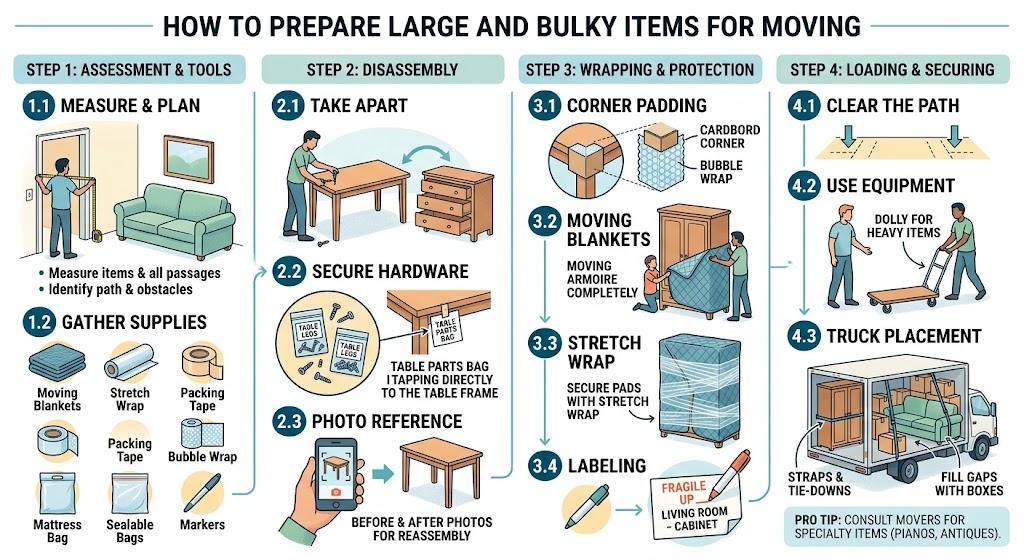
Moving large and bulky items can be one of the most challenging parts of relocating. Sofas, mattresses, refrigerators, dining tables, wardrobes, exercise equipment, and other oversized belongings require more than simply wrapping them and carrying them out the door. Without proper preparation, these items can be scratched, dented, damaged, or even become a safety hazard during the move.
If you are working with San Jose movers and packers, preparing oversized belongings ahead of time can make moving day much smoother. Professional movers can handle the heavy lifting, but homeowners still play an important role in getting bulky items ready for transport. Taking time to clean, disassemble, protect, and measure your belongings can reduce delays and help prevent avoidable damage.
Start by Making a Plan
Before moving anything heavy, walk through your home and identify every large or unusually shaped item that needs to be transported. Consider furniture, appliances, outdoor equipment, large electronics, fitness machines, and other objects that may require special handling.
Measure the height, width, and depth of particularly large items. Then measure doorways, hallways, staircases, elevators, and other areas the item must pass through. An item that fits comfortably inside a room may not fit through a narrow doorway or around a tight corner.
Planning the route in advance can prevent unpleasant surprises on moving day. If something cannot pass through normally, you may need to disassemble it or explore another exit.
Declutter Before Packing Bulky Items
Moving is a good opportunity to decide whether every large item is worth taking with you. Bulky possessions take up considerable truck space, so transporting something you no longer use can add unnecessary work and expense.
Ask yourself whether the item still serves a purpose, fits your new home, and is worth the effort required to move it. Consider donating, selling, recycling, or disposing of unwanted furniture and equipment before moving day.
Reducing the number of oversized belongings can make the entire move more manageable. It also gives you more space to organize the items you actually want to keep.
Clean Large Items Before Moving
Large belongings should generally be cleaned before they are wrapped and loaded. Dust, food residue, grease, and dirt can become trapped beneath protective materials and potentially transfer to other belongings.
Furniture
Vacuum upholstered furniture thoroughly and wipe down hard surfaces. Remove cushions and clean underneath them. Make sure furniture is completely dry before wrapping it.
Appliances
Clean refrigerators, freezers, washing machines, dryers, and other appliances according to their individual requirements. Appliances that use water should be drained and dried properly before transportation.
Outdoor Equipment
Remove dirt, grass, leaves, and moisture from lawn equipment, patio furniture, grills, and other outdoor items. Allow everything to dry before packing.
Cleaning also gives you a chance to inspect each item for existing scratches, dents, cracks, or other damage. Taking photographs before the move can provide a useful record of the item's condition.
Disassemble What You Can
Many large items become significantly easier to move when they are taken apart. Tables may have removable legs, bed frames can often be separated into several pieces, and shelving units may be dismantled.
However, do not disassemble an item unless you understand how it comes apart and can safely put it back together.
Keep screws, bolts, washers, brackets, and other small hardware together in clearly labeled bags. Attach the bag to the corresponding furniture piece whenever possible. For complicated items, take photographs during disassembly so you have a visual reference when reassembling them.
Avoid putting loose hardware into a general box. Small pieces can easily disappear among other packing materials.
Protect Furniture From Scratches and Damage
Bulky furniture needs protection from more than just impacts. During a move, surfaces can rub against walls, floors, other furniture, and the inside of a moving truck.
Use suitable moving blankets, furniture pads, stretch wrap, cardboard, or other protective materials depending on the item.
Protect Corners and Edges
Corners are especially vulnerable because they can hit door frames and walls while being carried. Wrap sharp or delicate edges with padding before moving the item.
For wooden furniture, avoid placing adhesive tape directly on finished surfaces because it may leave residue or damage the finish.
Protect Upholstery
Sofas, chairs, and mattresses should be covered with appropriate protective materials. Avoid wrapping damp upholstery because trapped moisture can contribute to unpleasant odors or mold growth.
Mattresses should be placed inside protective mattress bags or covers designed for moving. This keeps them away from dirt, dust, and moisture during transportation.
Prepare Large Appliances Carefully
Appliances require additional preparation because they contain electrical components, moving parts, water connections, or other systems that can be damaged during transportation.
For refrigerators and freezers, remove food and allow enough time for defrosting when necessary. Drain and dry the interior, then secure removable shelves and drawers separately.
Washing machines should be disconnected from water and power supplies and drained properly. Depending on the model, transport bolts may be required to stabilize the drum.
Dryers should be disconnected and prepared according to the manufacturer's instructions. Gas appliances require particular care and should be disconnected by a qualified professional when appropriate.
Never assume every appliance can be handled in exactly the same way. Check the manufacturer's instructions before preparing an expensive or complicated appliance for transportation.
Handle Large Electronics With Extra Care
Televisions, desktop computers, large speakers, and other electronics may be awkward to move because they combine size with delicate components.
Whenever possible, use the original packaging. If that is unavailable, wrap the item with appropriate protective padding and place it in a sturdy box or specialized moving container.
Remove detachable cables and accessories and label them. For televisions and monitors, avoid placing pressure directly on the screen. Keep screens upright during transportation unless the manufacturer's instructions specifically state otherwise.
Back up important data before moving computers or storage devices. A move can involve unexpected bumps, so protecting your information is just as important as protecting the hardware.
Secure Drawers, Doors, and Moving Parts
Before carrying a large item, check whether it has doors, drawers, wheels, lids, or other components that can move unexpectedly.
Remove drawers from heavy dressers when doing so safely reduces the weight. Secure cabinet doors so they do not swing open during handling. However, avoid using tape directly on delicate finishes.
For reclining chairs, exercise equipment, folding furniture, and similar items, secure moving parts according to the manufacturer's recommendations.
The goal is to prevent components from shifting while the item is being carried or transported.
Be Careful With Heavy Items
Large objects can cause serious injuries when moved without proper technique or equipment. Never try to move an extremely heavy item alone simply because it appears manageable.
Use enough people for the size and weight of the object. Clear the pathway before lifting and remove rugs, clutter, boxes, and other obstacles that could cause someone to trip.
When lifting, bend your knees rather than relying entirely on your back. Communicate clearly with everyone helping. One person should ideally coordinate movements so everyone lifts, turns, and lowers the item at the same time.
For exceptionally heavy belongings, professional moving equipment may be the safest option.
Protect Your Home During the Move
Preparing the item itself is only half the job. You should also protect your home from damage while bulky possessions are being moved through it.
Cover floors when necessary, particularly if the weather is wet or muddy. Use corner protection in narrow hallways and protect walls around tight turns.
Keep doors fully open where possible and make sure lighting is adequate. If you are moving items down stairs, check that the staircase is clear and dry.
Planning the route beforehand makes it easier to identify areas where extra padding or additional assistance may be needed.
Prepare Bulky Items the Day Before
Try not to leave all the preparation until the morning of the move. Give yourself enough time to disconnect appliances, clean furniture, remove personal belongings, disassemble suitable pieces, and gather protective materials.
Create a designated area for hardware, removable parts, cords, manuals, and other accessories. Labeling everything clearly will make unpacking much easier later.
It is also helpful to keep essential tools nearby rather than packing them into a box that will be loaded onto the moving truck.
What Not to Do When Moving Oversized Items
Some shortcuts can create more problems than they solve. Avoid dragging heavy furniture across floors without suitable protection. Do not overload drawers or cabinets while moving them. Never lift something that is clearly beyond your ability simply to save time.
Do not assume an item will fit through a doorway without measuring it first. Similarly, avoid wrapping furniture while it is still wet or using unsuitable packing materials that can damage finishes.
Most importantly, do not rush. Moving a large item safely is more important than moving it quickly.
Final Thoughts
Preparing large and bulky items properly can make moving day safer, faster, and far less stressful. Start by measuring your belongings and the spaces they need to pass through, then clean, disassemble, protect, and secure each item according to its design. Pay special attention to appliances, electronics, upholstered furniture, and anything unusually heavy or fragile.
Good preparation also helps movers work more efficiently because they can focus on safely transporting items rather than stopping to solve avoidable problems. Whether you are handling part of the move yourself or working with Brother Movers, a little preparation before moving day can go a long way toward protecting your belongings and your home. The goal is not simply to get everything from one address to another it is to arrive with your valuable possessions in the same condition they were in before the move.

 English
 Arabic
 French
 Spanish
 Portuguese
 Turkish
 Dutch
Dutch
 Italiano
 Russian
 Romaian
 Portuguese (Brazil)
 Greek
Greek