


Wastewater Expansion and Water Reuse Are Transforming Saudi Arabia’s Pumping Infrastructure
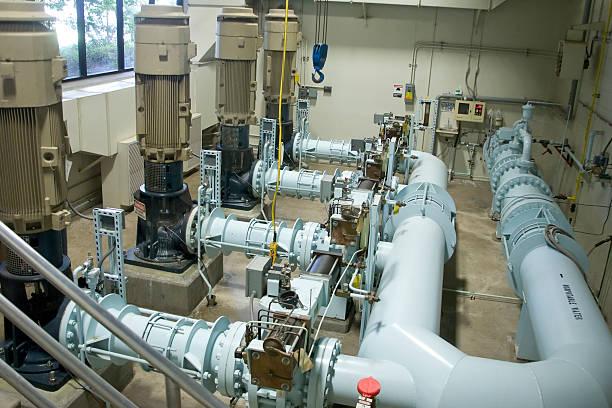
Saudi Arabia’s water and wastewater infrastructure is undergoing significant transformation as the Kingdom expands sanitation networks, increases wastewater treatment capacity, develops treated-water reuse systems, and strengthens long-term water security. In an arid country where water must frequently be produced, transferred, treated, and redistributed across considerable distances, pumps are essential infrastructure.
According to a Vyansa Intelligence report, the Saudi Arabia water & wastewater pump market was valued at USD 100 million in 2025 and is projected to reach USD 120 million by 2032, representing a 2.64% CAGR during 2026–2032.
Water Security Creates Complex Pumping Requirements
Saudi Arabia has extremely limited renewable freshwater resources. The Ministry of Environment, Water and Agriculture (MEWA) identifies scarce renewable water, pressure on groundwater resources, and high water demand among the Kingdom’s fundamental water challenges.
This makes water movement particularly important. Pumps are required across groundwater abstraction, desalinated-water transmission, municipal distribution, wastewater collection, sewage treatment, and reclaimed-water systems.
For a Saudi Arabia water & wastewater pump market analysis, water security therefore provides a fundamental driver for reliable and efficient pumping infrastructure.
Sanitation Network Expansion Is Creating New Infrastructure Needs
Saudi Arabia plans a major expansion of wastewater collection. According to the Saudi Water Partnership Company’s 2024–2030 planning statement, wastewater network coverage increased from 56.7% in 2019 to approximately 64% in 2024, with a target of 95% by 2030.
Extending sewerage networks naturally increases requirements for sewage pumping stations, particularly where topography prevents wastewater from moving entirely by gravity.
As the network expands, operators will also require replacement pumps, controls, motors, monitoring equipment, spare parts, and maintenance services.
Wastewater Volumes Require Additional Treatment Capacity
Greater collection coverage means significantly more wastewater will reach treatment infrastructure. SWPC projects collected wastewater to reach approximately 14.1 million cubic metres per day by 2030, requiring treatment capacity of roughly 14.8 million cubic metres per day after including a capacity buffer.
These detailed industry insights are particularly relevant to pumping equipment. Wastewater must be transferred into and through treatment facilities, while sludge and treated effluent require additional movement during later stages.
New treatment capacity therefore creates multiple potential pump applications rather than a single requirement at the facility entrance.
Independent Sewage Treatment Plants Expand the Equipment Base
Saudi Arabia is developing Independent Sewage Treatment Plants (ISTPs) in several regions. SWPC’s planning documentation identifies facilities across locations including Jeddah, Dammam, Madinah, Buraydah, Tabuk, Riyadh, Makkah, and Taif.
Such facilities require dependable pumps capable of handling different process conditions. Raw sewage pumps need strong solids-handling capabilities, while other treatment stages may require equipment optimized for sludge, process water, or treated effluent.
For a water & wastewater pump industry report, this geographic expansion creates opportunities across both municipal infrastructure and specialized treatment applications.
Treated-Water Reuse Adds Another Pumping Network
Saudi Arabia increasingly regards treated wastewater as an important water resource. SWPC’s national planning framework targets treated sewage effluent reuse of 70% by 2030.
MEWA also maintains a dedicated Water Reuse Division focused on maximizing treated-water utilization and reducing reliance on groundwater for irrigation by increasing treated-wastewater allocations.
Reuse creates additional pumping requirements because treated water must be transferred from wastewater plants to storage facilities, irrigation networks, industrial users, or other suitable destinations.
Pump Efficiency Matters in an Energy-Intensive Water System
Moving large quantities of water can require considerable energy, particularly where supplies need to travel long distances or overcome substantial elevation differences.
MEWA’s National Water Strategy specifically identifies high transmission costs associated with pumping water from coastal areas toward inland locations.
The latest industry analysis therefore needs to consider lifecycle energy consumption. Efficient motors, optimized hydraulics, variable-frequency drives, and correct pump sizing can help reduce operating expenses across continuously operated infrastructure.
Digital Monitoring Can Strengthen Reliability
Saudi water infrastructure is also moving toward greater automation and data-driven management. Pumps integrated with sensors and control systems can provide information on pressure, flow, vibration, temperature, and power consumption.
Monitoring these indicators can help operators identify abnormal performance before equipment fails. This becomes particularly valuable across geographically dispersed sewage pumping stations and water networks where unexpected downtime can disrupt essential services.
Predictive maintenance can consequently become an important complement to conventional preventive servicing.
Wastewater Applications Demand Specialized Engineering
Raw sewage creates very different equipment requirements from drinking-water distribution. Solids, fibres, abrasive substances, and variable flow conditions can increase clogging and mechanical wear.
Pump selection therefore needs to consider impeller configuration, solids-handling capacity, corrosion resistance, sealing systems, and maintenance accessibility.
Saudi Arabia’s expanding wastewater infrastructure can create stronger demand for equipment designed specifically around these operating conditions rather than general-purpose pumping systems.
Innovation Is Entering Wastewater Treatment
MEWA identifies wastewater treatment and reuse as a priority technology area within its research and innovation agenda. Its current water-sector innovation work highlights emerging approaches ranging from advanced treatment technologies to AI-driven treatment optimization.
For pump suppliers, greater treatment sophistication can increase demand for precise control, automation, monitoring, and integration with wider plant-management systems.
Reliable Pumping Will Support Saudi Water Resilience
Saudi Arabia’s water infrastructure development increasingly connects wastewater collection, treatment expansion, reclaimed-water reuse, water security, and operational efficiency.
Pump suppliers that combine dependable hydraulic performance with solids-handling capabilities, energy-efficient motors, variable-speed controls, digital monitoring, and strong maintenance support can address these evolving requirements.
As sanitation coverage expands and more treated wastewater becomes a usable resource, pumping infrastructure will remain essential to moving water efficiently between treatment facilities, distribution systems, and end users.

 English
 Arabic
 Spanish
 Portuguese
 Deutsch
 Turkish
 Dutch
Dutch
 Italiano
 Russian
 Romaian
 Portuguese (Brazil)
 Greek
Greek