


How is a Laminar Airflow System Turnkey Project Company different from a general HVAC contractor?
INTRODUCTION
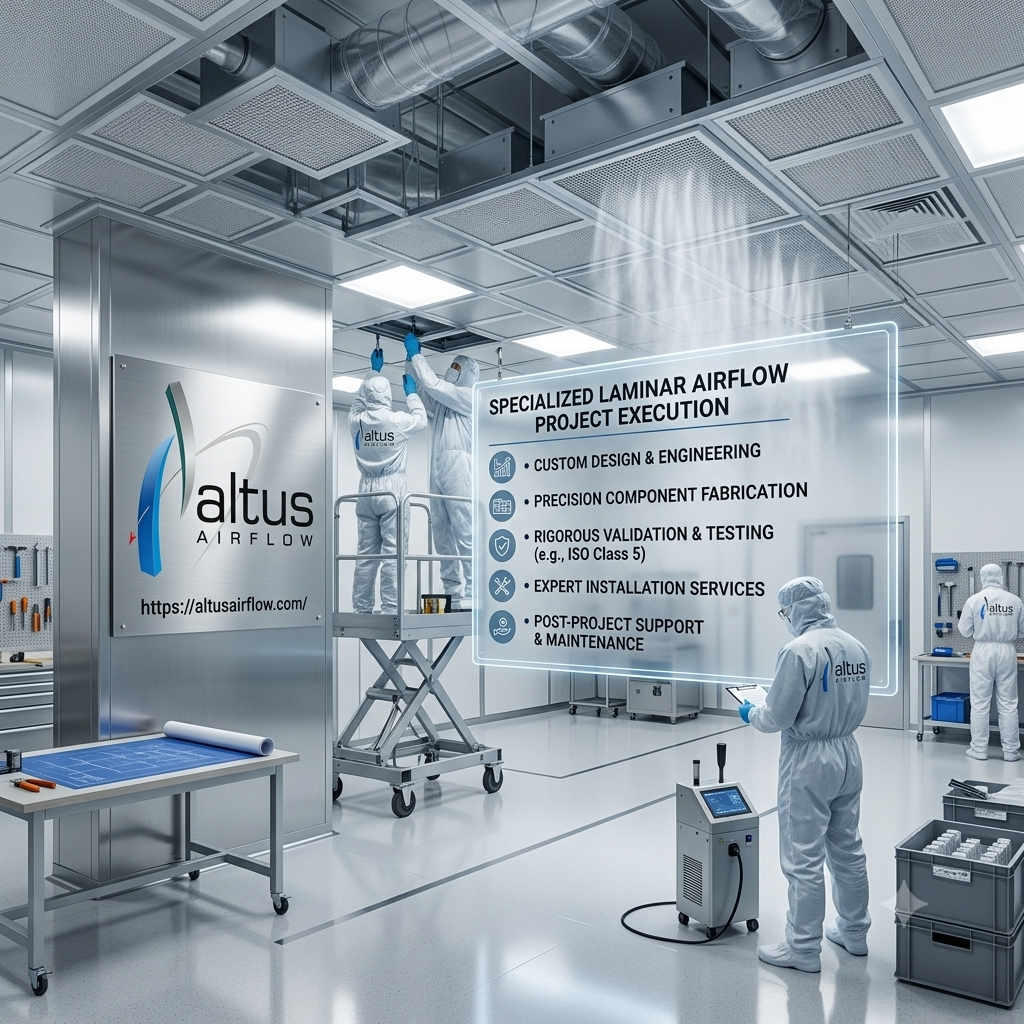
A Laminar Airflow System Turnkey Project Company is different from a general HVAC contractor because it focuses on controlled airflow, cleanroom engineering, HEPA filtration, contamination control, airflow distribution, environmental monitoring, testing, validation, and complete project execution rather than conventional heating, ventilation, and air-conditioning alone. While both types of providers work with ventilation and air-handling systems, a laminar airflow turnkey specialist typically approaches a project from the perspective of controlled environmental performance. This distinction is especially important for hospitals, pharmaceutical facilities, laboratories, biotechnology facilities, IVF centres, research institutions, medical manufacturing units, and other environments where air quality and contamination control are critical.
What Is a Laminar Airflow System?
A laminar airflow system is designed to provide a controlled and relatively uniform movement of filtered air across a defined area.
Depending on the application, airflow may be configured as:
- Vertical airflow
- Horizontal airflow
- Unidirectional airflow
- Localized clean airflow
- Controlled clean-zone airflow
The system typically combines filtration, air distribution, air-handling equipment, controls, and appropriate room engineering.
The objective is to reduce airborne particulate contamination and create a controlled airflow environment suitable for the intended process.
What Does a General HVAC Contractor Do?
A general HVAC contractor primarily designs, supplies, installs, and maintains systems intended to control indoor environmental conditions.
Typical services include:
- Air-conditioning
- Ventilation
- Heating
- Cooling
- Ductwork
- Air-handling units
- Chillers
- Fans
- Temperature controls
- General filtration
- HVAC maintenance
For an office or commercial building, the primary objective may be occupant comfort and adequate ventilation.
For a controlled environment, however, temperature control is only one part of the engineering requirement.
What Does a Laminar Airflow Turnkey Company Do?
A specialized turnkey provider can manage a broader project scope, such as:
- Requirement assessment
- Site survey
- Airflow design
- Cleanroom planning
- HVAC integration
- HEPA filtration
- Modular construction
- Air distribution
- Pressure management
- Electrical integration
- Monitoring systems
- Installation
- Testing
- Commissioning
- Documentation
- Maintenance support
The exact scope depends on the project specification.
The key difference is that the provider is responsible for achieving a defined controlled-environment outcome rather than simply installing an HVAC system.
1. Difference in Engineering Focus
The most important difference is engineering focus.
A conventional HVAC contractor generally focuses on:
- Cooling load
- Heating load
- Fresh air
- Ventilation
- Temperature
- Humidity
- Energy consumption
A specialized laminar airflow provider may additionally focus on:
- Airflow direction
- Air velocity
- Filtration efficiency
- Particle control
- Pressure differentials
- Airflow uniformity
- Cleanroom zoning
- Contamination control
- Environmental monitoring
This requires specialized engineering knowledge.
2. Difference in Application
General HVAC systems are commonly used in:
- Offices
- Hotels
- Retail buildings
- Commercial facilities
- Residential buildings
- Conventional industrial spaces
Laminar airflow systems can be used in:
- Operation theatres
- Pharmaceutical facilities
- IVF laboratories
- Biotechnology laboratories
- Medical device manufacturing
- Research laboratories
- Cleanrooms
- Electronics manufacturing
The required design approach changes according to the application.
3. Difference in Airflow Design
Conventional HVAC systems distribute air primarily to achieve thermal comfort and ventilation.
Controlled airflow systems require more detailed consideration of:
- Supply-air patterns
- Return-air locations
- Air velocity
- Airflow uniformity
- Turbulence
- Room geometry
- Equipment obstruction
- Personnel movement
A specialized provider can model or calculate airflow according to the requirements of the controlled space.
4. Difference in HEPA Filtration
HEPA filtration is frequently incorporated into controlled environments.
A specialist may handle:
- HEPA filter selection
- Filter housing
- Terminal filter modules
- Sealing
- Pressure drop
- Filter access
- Filter integrity testing
- Replacement planning
A general HVAC contractor may provide conventional filters, but specialized controlled environments often require more advanced filtration engineering.
5. Difference in Contamination Control
A general HVAC system is not necessarily designed around contamination-control objectives.
A laminar airflow project may address potential contamination from:
- Airborne particles
- Personnel
- Equipment
- Materials
- External air
- Construction activities
Strategies may include:
- HEPA filtration
- Controlled airflow
- Pressure management
- Cleanroom zoning
- Hygienic surfaces
- Controlled access
- Environmental monitoring
The HVAC system therefore becomes part of a broader contamination-control strategy.
6. Difference in Cleanroom Engineering
Cleanroom engineering involves more than installing an air-conditioning system.
It may include:
- Room classification
- Zoning
- Pressure cascades
- Airflow patterns
- HEPA filtration
- Hygienic construction
- Personnel flow
- Material flow
- Environmental monitoring
The building envelope, ceiling, HVAC system, filtration, and controls must work together.
A turnkey specialist can coordinate these components as one integrated system.
7. Difference in Pressure Management
Pressure relationships can influence how air moves between adjacent rooms.
A controlled facility may require specific pressure relationships between:
- Clean areas
- Less-controlled areas
- Corridors
- Preparation rooms
- Support spaces
Pressure management involves:
- Supply airflow
- Return airflow
- Exhaust
- Door leakage
- Pressure sensors
- Control systems
Testing is required to verify whether the intended pressure relationships have been achieved.
8. Difference in Environmental Monitoring
A conventional HVAC installation may monitor temperature and humidity.
A controlled airflow project may additionally monitor:
- Differential pressure
- Airflow
- Filter pressure
- Particle levels
- Air quality
- System alarms
The monitoring requirements depend on the application.
Real-time monitoring can help facility teams identify deviations and respond appropriately.
9. Difference in Project Scope
One major advantage of a turnkey provider is integrated execution.
A turnkey project may cover:
Design
- Site assessment
- Layout planning
- Airflow calculations
- HVAC design
- Filtration design
Manufacturing and Procurement
- Modular panels
- HEPA filters
- HVAC equipment
- Airflow modules
- Controls
- Electrical components
Installation
- Modular construction
- HVAC installation
- Filtration
- Electrical systems
- Monitoring
Commissioning
- Air balancing
- Airflow testing
- Pressure testing
- Filter integrity testing
- Environmental verification
This reduces the number of independent vendors that an organization must coordinate.
10. Difference in Testing
Testing is particularly important in controlled environments.
Depending on the project, testing may include:
- Airflow measurement
- Air velocity measurement
- HEPA filter integrity testing
- Pressure differential testing
- Particle counting
- Temperature testing
- Humidity testing
- Airflow visualization
The testing program should be based on the project's technical specifications and applicable requirements.
A general HVAC contractor may perform standard commissioning but may not provide the full controlled-environment testing scope.
11. Difference in Validation
Validation provides documented evidence that the system performs according to predetermined requirements.
Depending on the application, validation can include:
- HVAC performance verification
- Filtration testing
- Airflow verification
- Pressure testing
- Environmental monitoring
- Functional testing
For pharmaceutical, healthcare, and laboratory projects, documentation can be particularly important.
12. Difference in Documentation
A turnkey controlled-environment project can require extensive documentation.
Documents may include:
- Approved drawings
- Equipment specifications
- HVAC calculations
- Filter certificates
- Testing reports
- Air balancing reports
- Commissioning records
- Operation manuals
- Maintenance instructions
Complete documentation supports future maintenance and audits.
13. Difference in Modular Construction
Many laminar airflow projects are integrated with modular cleanroom or operation theatre construction.
Modular systems may include:
- Wall panels
- Ceiling panels
- Sealed doors
- Observation windows
- Service panels
- Hygienic finishes
The airflow system must be coordinated with the modular ceiling and wall systems.
A turnkey provider can manage these interfaces during design and installation.
14. Healthcare Applications
Healthcare facilities may use controlled airflow systems in:
- Operation theatres
- Ophthalmic OTs
- Cardiac OTs
- Orthopedic OTs
- Sterile processing areas
- Specialized procedure rooms
- Isolation environments
The airflow design must be coordinated with surgical equipment, staff movement, lighting, medical gases, and other utilities.
Ophthalmic Operation Theatres
Ophthalmic OTs often require careful equipment positioning because operating microscopes and other precision equipment occupy important areas around the operating table.
Airflow design should account for:
- Operating table
- Microscope
- Surgical lights
- Staff
- Equipment
- Ceiling configuration
IVF Laboratories
IVF laboratories can require controlled environmental conditions for sensitive laboratory procedures.
HVAC planning may address:
- Temperature
- Humidity
- Filtration
- Airflow
- Pressure
- VOC management
- Environmental monitoring
Pharmaceutical Facilities
Pharmaceutical applications can require controlled environments for:
- Sterile manufacturing
- Compounding
- Packaging
- Laboratory activities
- Research
The appropriate system depends on the process and applicable environmental requirements.
15. Difference in Equipment Expertise
A general HVAC contractor may commonly install:
- Chillers
- AHUs
- VRF systems
- Ductwork
- Fans
- Conventional filters
A specialized laminar airflow provider may additionally work with:
- HEPA filter modules
- Laminar airflow units
- Cleanroom AHUs
- Filtration housings
- Pressure-control systems
- Airflow monitoring
- Environmental monitoring
- Cleanroom control systems
This does not mean every project requires every component.
The system should be selected according to the application's needs.
16. Difference in Project Coordination
A turnkey project may involve several engineering disciplines.
The project team can coordinate:
- Architects
- HVAC engineers
- Electrical engineers
- Medical gas contractors
- Biomedical teams
- Modular installation teams
- Equipment suppliers
- Testing personnel
Coordination reduces the risk of conflicts between different systems.
17. Difference in Maintenance
Conventional HVAC maintenance may involve:
- Filter cleaning
- Coil cleaning
- Fan inspection
- Refrigerant checks
- Electrical inspection
Controlled airflow systems can require additional maintenance, such as:
- HEPA filter inspection
- Filter replacement
- Airflow verification
- Pressure checks
- Sensor calibration
- Air balancing
- Environmental monitoring
Maintenance should be planned during the design stage.
18. Importance of Lifecycle Planning
A low initial cost does not necessarily mean the system will be economical over its lifetime.
Organizations should consider:
- Energy consumption
- Filter replacement
- Maintenance
- System reliability
- Testing costs
- Downtime
- Equipment availability
- Future expansion
A properly engineered system can provide better long-term value.
19. Why Site Assessment Is Important
A specialist begins by understanding the site.
The assessment can review:
- Existing HVAC systems
- Room dimensions
- Ceiling height
- Structural limitations
- Utility availability
- Equipment
- Workflow
- Access
- Expansion plans
This information helps the engineering team develop an appropriate solution.
20. Why Customization Matters
Every facility has different requirements.
A customized solution may account for:
- Room dimensions
- Airflow requirements
- Equipment layout
- Filtration requirements
- Utility capacity
- Environmental conditions
- Operational workflow
Standard equipment may still be used, but the overall system should be configured around the facility.
21. How to Select the Right Provider
Organizations should evaluate:
Technical Experience
Does the provider have experience with similar controlled environments?
Engineering Capability
Can the company perform airflow, HVAC, filtration, and pressure calculations?
Testing Capability
Does it provide commissioning and performance testing?
Project Management
Can it coordinate multiple engineering disciplines?
Documentation
Are complete technical records supplied?
Maintenance Support
Is preventive maintenance available?
Turnkey Capability
Can one team manage the complete project?
22. When Should a General HVAC Contractor Be Used?
A general HVAC contractor can be an appropriate choice for projects where the primary requirements involve:
- Comfort cooling
- Conventional ventilation
- Office air-conditioning
- Commercial HVAC
- General industrial ventilation
However, where controlled airflow and contamination-sensitive environments are involved, organizations should assess whether specialized cleanroom and airflow expertise is required.
23. Can Both Types of Contractors Work Together?
Yes.
A project can involve both providers.
For example, a general HVAC contractor may provide:
- Chillers
- Primary AHUs
- Main ductwork
- Utility connections
A specialized turnkey provider may handle:
- Laminar airflow
- HEPA filtration
- Cleanroom construction
- Environmental controls
- Air balancing
- Testing
- Validation
Clear responsibilities should be established in the project contract.
24. Benefits of Choosing a Turnkey Specialist
A specialized turnkey approach can provide:
- Single-point coordination
- Integrated engineering
- Controlled airflow design
- Specialized filtration
- Cleanroom expertise
- Testing and commissioning
- Complete documentation
- Maintenance planning
- Reduced coordination complexity
The exact benefits depend on project scope and execution quality.
Common Mistakes to Avoid
Organizations should avoid:
- Selecting a provider based only on price
- Treating laminar airflow as ordinary ventilation
- Ignoring airflow calculations
- Failing to coordinate equipment
- Skipping performance testing
- Neglecting maintenance access
- Designing HVAC separately from the cleanroom
- Failing to define documentation requirements
The provider should be evaluated on technical capability and lifecycle value.
Conclusion
A Laminar Airflow System Turnkey Project Company differs from a general HVAC contractor through its specialized approach to controlled airflow, HEPA filtration, cleanroom engineering, contamination control, pressure management, environmental monitoring, testing, validation, and integrated project execution. While general HVAC contractors remain valuable for conventional heating, cooling, and ventilation projects, contamination-sensitive environments require additional engineering and commissioning expertise. Hospitals, pharmaceutical organizations, laboratories, biotechnology companies, research facilities, and other specialized industries should evaluate their environmental requirements before selecting a project partner. For integrated laminar airflow, cleanroom, HVAC, filtration, installation, testing, and commissioning solutions, Altus Airflow provides specialized controlled-environment infrastructure services.
Frequently Asked Questions
1. How is a Laminar Airflow System Turnkey Project Company different from a general HVAC contractor?
A Laminar Airflow System Turnkey Project Company focuses on controlled airflow, HEPA filtration, cleanroom engineering, contamination control, pressure management, testing, validation, and integrated project execution, whereas a general HVAC contractor generally focuses on conventional heating, cooling, and ventilation.
2. Can a general HVAC contractor install a laminar airflow system?
A general HVAC contractor may perform certain installation activities, but a Laminar Airflow System Turnkey Project Company generally offers more specialized expertise in controlled airflow, HEPA filtration, cleanroom integration, testing, and commissioning.
3. Why is HEPA filtration important in a laminar airflow project?
HEPA filtration can help reduce airborne particulate contamination. A Laminar Airflow System Turnkey Project Company can select and integrate filtration according to the project's environmental requirements and coordinate applicable integrity testing.
4. What testing does a turnkey laminar airflow provider perform?
Depending on the project, a Laminar Airflow System Turnkey Project Company may coordinate airflow measurements, air velocity testing, HEPA filter integrity testing, pressure differential testing, particle counting, temperature and humidity verification, and functional commissioning.
5. Which industries use laminar airflow systems?
Industries and applications can include healthcare, pharmaceutical manufacturing, biotechnology, IVF laboratories, research facilities, medical device manufacturing, electronics, and other controlled environments. A Laminar Airflow System Turnkey Project Company can customize the solution according to application requirements.
Read Our Previous Blog------>What zoning and workflow requirements are important for IVF Lab Design In India?

 English
 Arabic
 French
 Spanish
 Portuguese
 Deutsch
 Turkish
 Italiano
 Russian
 Romaian
 Portuguese (Brazil)
 Greek
Greek