


What Happens If You Use the Wrong Engine Oil Grade?
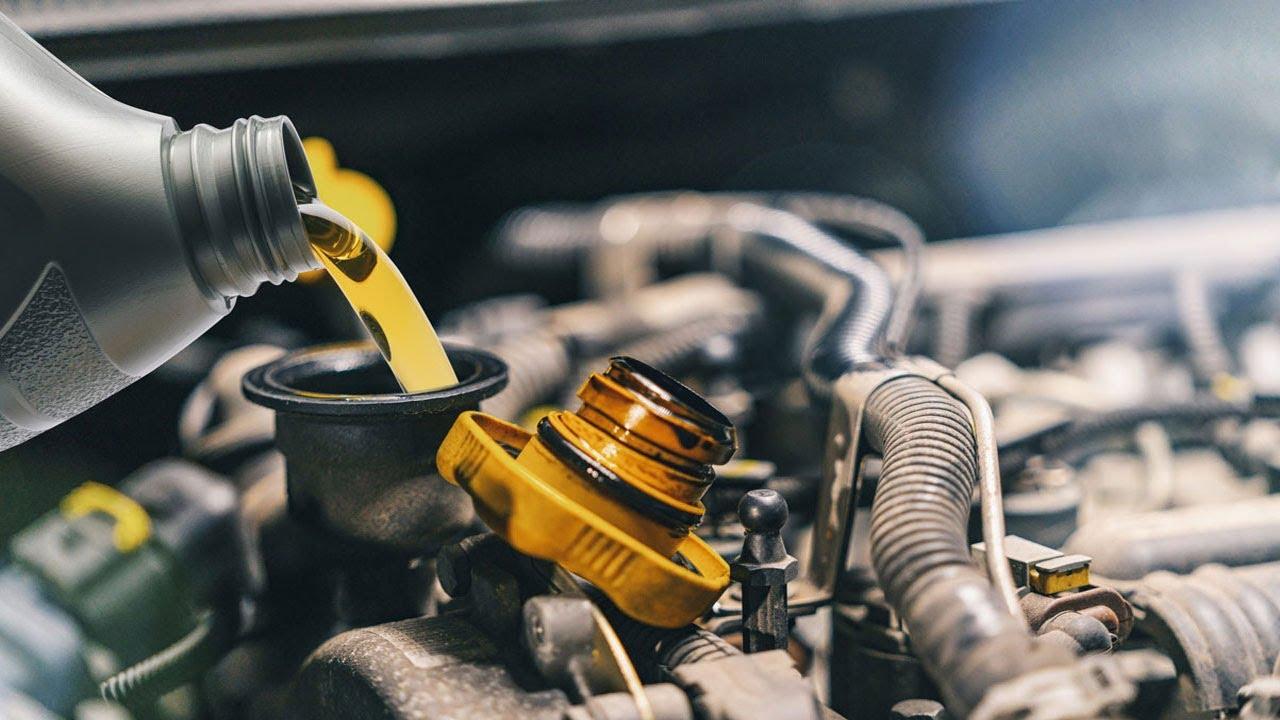
A normal oil change may not result in your car starting normally. There may be no warning light on the dashboard, and the engine can sound normal. However, when the workshop fills your engine with the wrong grade of engine oil, the consequences may start forming a long time before you realize something is not right.
Engine oil is formulated to form a protective layer between fast-moving metal parts and to help manage heat, deposits, and friction. Oil that is too thick or too thin can be used, but it will alter the rate at which the oil circulates in the engine and its ability to lubricate the engine's critical parts.
For Pakistani vehicle owners who have to contend with hot weather, traffic jams, dust, and long stop-and-go traffic, the correct oil grade should be given special consideration rather than just picking the thickest oil available.
What Does Engine Oil Grade Actually Mean?
Numbers (0W-20), (5W-30), (10W-40), and (20W-50) are used to express engine oil viscosity or the movement of the oil in various temperatures. SAE J300 defines the viscosity grading of engine lubricants, and API recommends following the vehicle manufacturer's recommended SAE viscosity grade.
The initial component in a grade like 5W-30 indicates the oil's low-temperature performance, and the second figure indicates the oil's viscosity at higher operating temperatures.
This difference is important because each engine is configured with specific clearances, oil passages, pumps, bearings, and operating requirements. Oil performance can be affected by a significant change in viscosity, even in high-quality oil, in ways that differ from what the manufacturer recommends.
This is why a costlier or thicker oil may not necessarily be the best for your specific car.
What Happens If the Oil Is Too Thick?
The most widespread misconception among drivers is that thicker oil is always more effective at protecting, particularly in Pakistan's hot climate.
Imagine that a relatively new engine is designed for 0W-20/5W-30, and you pour 20W-50 into it just because it is hot outside. Viscous oil can be harder to pump through narrow oil passages, especially at startup, when rapid lubrication is needed.
Improper viscosity may increase internal resistance and even cause a slow engine response or poor fuel economy. Polishing of space planned around a lower viscosity may result in more wear over time due to inadequate lubrication.
There is usually a reason why modern, fuel-efficient engines require relatively low-viscosity oils. In cases where the vehicle manufacturer recommends 5W-30, such as Atlantic NEOTRIC ULTRA 5W-30 SP, it is a 100% synthetic choice for passenger cars and light trucks, including modern gasoline and turbocharged engines.
The temperature in Pakistan during summer should not be considered a sufficient reason to disregard the manufacturer's recommendation.
What If the Engine Oil Is Too Thin?
Conversely, the opposite scenario can also have undesirable consequences for oil grade.
Older engines, those with high mileage, or engines designed to run on higher-viscosity lubricants may need a thicker oil film at operating temperature. When an oil is much thinner than its stated grade, it might not exhibit the desired load-bearing and lubricating properties.
The symptoms may include high engine noise, higher oil consumption, low oil pressure in certain applications, and accelerated wear. In extreme or chronic situations, inadequate lubrication may contribute to engine damage involving bearings, cylinder walls, piston rings, or other moving parts.
This is why 20W-50 is still applicable to some older or high-mileage Pakistani cars, rather than being replaced by modern low-viscosity oils everywhere. Atlantic Oil Store PK also lists 20W-50 among the grades usually used in older engines that need thicker protection.
If the vehicle manufacturer specifies this viscosity, a choice in this heavier-viscosity category is the ATLANTIC X 20W-50 SL.
Can the Wrong Oil Grade Affect the Fuel Economy?
Yes. The viscosity also determines the resistance the engine must overcome to circulate the oil and lubricate the parts.
Unnecessarily thick oil can increase pumping and frictional resistance, which could adversely impact efficiency. However, selecting an excessively thin oil to increase the mileage is not a viable option when the engine is supposed to use a heavier grade.
The right balance is the viscosity specified by the engine's design and operating conditions.
A grade like 10W-40 can be between modern lighter oils and heavier 20W-50 products. In compatible cars, Atlantic NEOTRIC ULTRA 10W-40 SP is a synthetic oil with API SP performance claims, designed for use in passenger cars and light trucks.
Synthetic vs Mineral Oil: Does Type Matter More Than Grade?
Synthetic vs. mineral oil is a significant debate, but it should not replace the question of viscosity.
Even a premium synthetic oil of the wrong viscosity grade can still be unsuitable for your engine. On the same note, a mineral or semi-synthetic oil of the appropriate grade and necessary performance specification might be suitable in some older automobiles.
The benefits of synthetic oils tend to be in temperature stability, oxidation resistance, and control of deposits, depending on the formulation. Yet, viscosity grade, API performance category, vehicle manufacturer requirements, engine age, and operating conditions should all be considered.
That is, do not select engine oil based on terms like synthetic, premium, or high mileage. Read the required specification first.
Can Pakistan's Hot Climate Change the Recommended Grade?
Climate is important, but it does not necessarily imply that all vehicles in Pakistan require 20W-50.
Even modern engines in Lahore, Karachi, Islamabad, Multan, and other hot cities could still be designed to use 0W-20, 5W-30, or other fairly low-viscosity oils. Cooling and lubrication systems are designed by the manufacturer based on specific viscosity ranges; thus, the owner's manual needs to be the starting point.
API similarly recommends that vehicle owners adhere to the manufacturer's SAE viscosity recommendations and not choose a grade based on guesswork.
When viscosity is recommended to be changed to balance oil burn-off, worn piston rings, leakage, or mechanical noise, older engines can sometimes use heavier grades, but this should not be considered an alternative to diagnosing the underlying condition.
How to Choose the Right Engine Oil Grade
Your owner manual is always the best place to start with the safest decision. Check the recommended SAE viscosity, the required API or other performance specifications, and any alternative grades allowed within specific temperature ranges.
Then look at the engine's age and condition, miles covered, driving style, and how often the vehicle is used in heavy city traffic or under heavy loads.
Most importantly, you should not select oil just because a mechanic, a friend, or a prior owner tells you that a thicker grade is better in Pakistan. The right oil is the one that meets your car's engineering requirements.
Protect Your Engine by Choosing the Correct Grade
The immediate effect of using the wrong engine oil does not necessarily ruin an engine overnight. However, continued use can affect lubrication, fuel economy, engine starting, and the life of engine parts.
Instead of guessing, ensure that before changing your oil next time, you know the viscosity and performance specifications required for your vehicle.
To find genuine engine oils with various viscosity grades, visit Atlantic Oil Store PK, where you can compare different engine oil grades and choose the grade that suits your vehicle.

 English
 Arabic
 French
 Spanish
 Portuguese
 Deutsch
 Turkish
 Dutch
Dutch
 Italiano
 Russian
 Romaian
 Portuguese (Brazil)