

Becoming a pilot is a dream for many students who are interested in flying aircraft and building a career in aviation. It is a profession that requires proper education, medical fitness, practical flying experience, and dedication. If you want to become a pilot in India, understanding the complete process can help you make the right decisions about your education and training. Many students start planning their pilot careers after completing Class 10 or Class 12, but they may not know which qualifications are required, where to start training, or how to obtain a pilot licence. Learning about these steps can make the journey easier to understand and help you prepare for the future.
What Are the Basic Requirements to Become a Pilot in India?
Before starting pilot training, students should understand the basic eligibility requirements. If you want to become a commercial pilot in India, you generally need to complete Class 12 with Physics and Mathematics from a recognised board or an equivalent qualification accepted under the applicable DGCA rules. Students who have studied Arts or Commerce can also explore completing the required Physics and Mathematics subjects through an accepted educational route. Medical fitness is another important requirement because pilots must meet the medical standards prescribed by the Directorate General of Civil Aviation (DGCA).
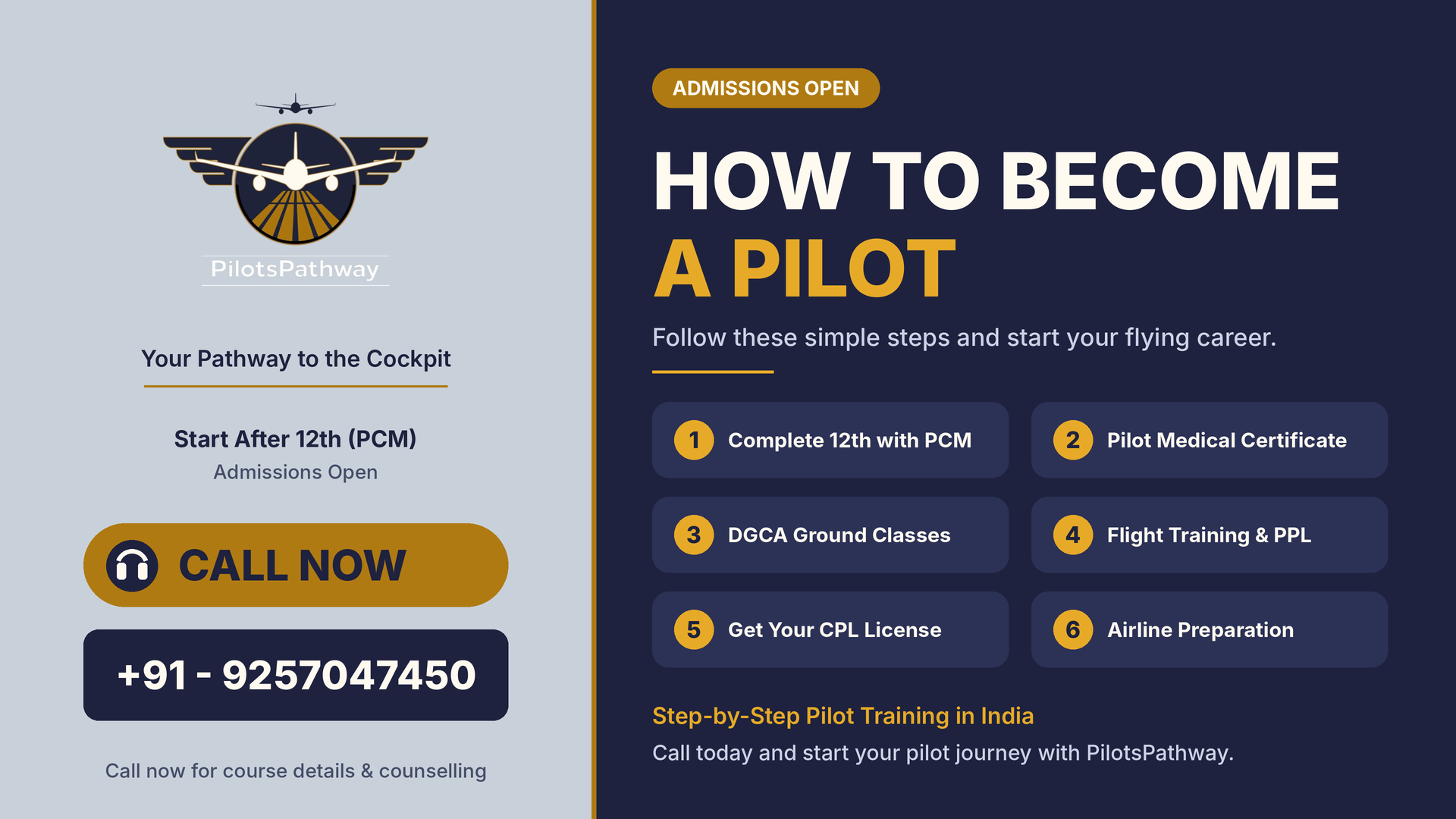
Step-by-Step Process: How To Become A Pilot
If you are wondering How To Become A Pilot, you should follow a clear process that includes education, medical examinations, theoretical learning, and practical flying training. Each stage plays an important role in preparing you for the responsibilities of flying an aircraft.
1. Complete Your Class 12 Education
The first step is completing your Class 12 education. For a commercial pilot career in India, Physics and Mathematics are generally required under the applicable eligibility rules. These subjects help students understand important concepts related to aircraft movement, navigation, calculations, and aviation science. If you are still studying in school, choosing the right subjects can help you prepare for future pilot training.
2. Complete Your DGCA Medical Examination
Medical fitness is an important part of becoming a pilot. Students need to meet the medical standards prescribed by the DGCA. The medical process generally includes different examinations to check whether a candidate is physically fit for flying duties. Students planning to become commercial pilots should understand the requirements for DGCA Class 2 and Class 1 medical assessments. It is a good idea to check medical eligibility at an early stage so that you can plan your training properly.
3. Understand the Pilot Licence Options
Before selecting a flying training programme, students should understand the different types of pilot licences available in India. Two important options are the Private Pilot Licence and the Commercial Pilot Licence. Each licence has a different purpose, eligibility criteria, and training requirements.
A Private Pilot License in India is suitable for individuals who want to fly aircraft for private and personal purposes rather than work as professional pilots for commercial operations. It provides an opportunity to learn basic flying skills, aircraft handling, and aviation procedures. Students interested in making aviation a professional career should understand that a PPL alone does not provide the same commercial flying privileges as a CPL.
A Commercial Pilot Licence is designed for candidates who want to pursue professional flying opportunities. It requires the completion of prescribed examinations, medical requirements, flying experience, and practical assessments.
4. Complete DGCA Ground Training and Examinations
After understanding the eligibility and licence requirements, students need to prepare for the required DGCA examinations. Ground training covers important aviation subjects such as Air Navigation, Aviation Meteorology, Air Regulations, and Aircraft and Engines. These subjects help students understand how aircraft operate and how pilots make decisions during different flying conditions.
Proper preparation is important because theoretical knowledge is directly connected to practical flying. Students should follow the prescribed syllabus, practise regularly, and develop a clear understanding of each subject before appearing for the examinations.
5. Complete Practical Flying Training
Practical flying training is one of the most important stages of becoming a pilot. Students learn how to operate aircraft under the supervision of qualified flight instructors at recognised flying training organisations. During this stage, they develop important skills such as aircraft control, take-offs, landings, navigation, communication, and handling different flying situations.
The required flying experience must be completed according to the applicable DGCA regulations. Students should maintain their flying records and complete the required training and assessments before applying for their licence.
6. Obtain Your Commercial Pilot Licence
After completing the required education, medical examinations, DGCA examinations, flying experience, and skill assessments, eligible candidates can apply for their Commercial Pilot Licence. Obtaining a CPL is an important achievement for students who want to build a professional aviation career. Depending on their career goals, pilots may also need additional qualifications, aircraft ratings, and type-specific training before applying for particular airline positions.
Understanding Pilot Training Fees In India
One of the most common questions among students and parents is about Pilot Training Fees In India. The total cost of pilot training depends on several factors, including the flying training organisation, aircraft used, flying hours, location, training duration, and additional requirements. The cost may also vary depending on whether a student chooses a structured cadet programme or a traditional flying training route.
Before selecting an institute, students should ask for a clear breakdown of the complete training fees. This should include ground classes, flying charges, examination fees, medical assessments, accommodation, equipment, and other applicable expenses. It is also important to understand whether additional training or aircraft ratings will involve separate charges.
Students should not select a flying school only because it offers a lower price. They should check the organisation's approval status, training facilities, aircraft availability, instructor experience, and student support. Comparing these details can help students make a more informed decision about their investment in aviation education.
Important Commercial Pilot License Requirements
Understanding the Commercial Pilot License Requirements is essential before beginning professional pilot training. Candidates must meet the applicable educational and age criteria, satisfy DGCA medical standards, pass the required examinations, and complete the prescribed flying experience and skill assessments.
Students should also understand that obtaining a CPL and getting selected by an airline are two different stages. An airline may have additional recruitment requirements, assessments, interviews, and training standards. Some airlines also offer cadet pilot programmes with their own eligibility criteria and selection processes. Therefore, students should prepare for both the licensing process and their future career opportunities.
How Pilots Pathway Helps Students Prepare for Pilot Training
Choosing the right training guidance is an important part of starting an aviation career. Pilots Pathway provides aviation training courses for students who want to understand and prepare for different stages of pilot education. Its training options include Private Pilot Licence (PPL), CPL Ground Training, CPL Flight Training, Flight Simulator Training, Airline Preparation, Cadet Pilot Course, Foundation Course, and DGCA Ground Classes.
Students can explore these courses according to their educational background, career plans, and training requirements. Ground classes help students prepare for aviation subjects, while practical flying training focuses on developing aircraft handling skills. Flight simulator training also helps students become familiar with flight procedures and different training situations in a controlled environment.
Before enrolling in any programme, students should understand the course structure, training facilities, applicable approvals, fees, and eligibility conditions. Having clear information about these points can help them select a suitable training path and prepare for their aviation journey.
Conclusion
Learning How To Become A Pilot requires proper planning, the right education, medical fitness, theoretical knowledge, and practical flying experience. Students should begin by understanding the eligibility criteria, completing the required subjects, checking their medical fitness, and preparing for DGCA examinations. They should also compare training options and understand the complete cost before choosing a flying training organisation.
A career as a pilot requires patience, regular learning, and responsibility. With the right preparation and suitable training, students can work towards obtaining their pilot licence and exploring professional opportunities in aviation. Pilots Pathway offers different aviation courses to help students prepare for their pilot training journey and understand the steps involved in building a career in the aviation industry.


