

How Banquet Inventory Management Software Helps Event Businesses Improve Efficiency and Control

The event and hospitality industry is constantly evolving. From weddings and corporate conferences to birthday celebrations and private parties, banquet venues handle multiple events, customers, and operational responsibilities every day. Managing these activities successfully requires proper planning, coordination, and attention to detail. One of the most important yet challenging responsibilities is inventory management. Keeping track of furniture, decorations, catering supplies, equipment, and other event essentials can become complicated without an organised system. This is where banquet inventory management software plays an important role.
Modern banquet businesses need more than traditional registers and spreadsheets to manage their daily operations. They require reliable digital solutions that help them monitor stock, organise resources, reduce unnecessary expenses, and improve overall productivity. With the right technology, banquet managers can spend less time handling administrative tasks and more time delivering memorable experiences to their customers.
Understanding the Importance of Inventory Management in Banquet Businesses
Inventory management is an essential part of running a successful banquet hall or event management business. Every event requires different resources depending on its size, theme, duration, and customer requirements. A wedding reception may need hundreds of chairs, dining tables, decorative items, lighting equipment, and catering supplies, while a corporate meeting may require projectors, microphones, conference furniture, and presentation equipment.
Managing these resources manually can create several challenges. Items may be misplaced, stock information may become outdated, and staff members may struggle to identify which equipment is available for upcoming events. Such problems can affect event preparation and customer satisfaction.
An organised inventory management process helps businesses maintain accurate records, understand resource availability, and prepare for upcoming bookings. It also allows management teams to identify frequently used items and make better purchasing decisions.
What Is Banquet Inventory Management Software?
Banquet inventory management software is a digital solution designed to help banquet halls, hotels, event venues, and hospitality businesses manage their inventory efficiently. It provides a centralised platform where businesses can record, monitor, organise, and update information about their available resources.
Instead of depending on paperwork or multiple spreadsheets, managers can access important inventory information through a structured digital system. Depending on the software's features, businesses can track stock quantities, monitor equipment usage, manage item categories, and coordinate inventory requirements for different events.
The purpose is simple: to make inventory-related activities easier, more transparent, and more organised.
For growing banquet businesses, this type of technology can become an important part of everyday operations. It helps teams maintain better control over resources while reducing the chances of operational mistakes.
1. Better Control Over Available Stock
One of the biggest advantages of using banquet inventory management software is improved stock visibility. Banquet businesses often maintain large quantities of different items, including chairs, tables, crockery, cutlery, linen, stage equipment, decorative accessories, and sound systems.
Without proper records, it can be difficult to determine the exact quantity of available items. Staff members may need to physically inspect storage areas or contact different departments before confirming availability.
A digital inventory system makes this process more organised. Managers can maintain item records and update stock information whenever equipment is purchased, transferred, used, or returned.
This improves transparency and helps businesses understand their actual inventory position. It also makes event preparation more convenient because teams can identify available resources before making arrangements.
2. Reducing Inventory Losses and Unnecessary Expenses
Inventory represents a significant investment for banquet venues. Furniture, catering equipment, decorative materials, and event accessories all contribute to operating costs.
When businesses do not monitor these resources properly, items can become damaged, misplaced, or unnecessarily replaced. These issues gradually increase expenses and affect profitability.
A structured inventory management system helps businesses maintain better records of their assets. Managers can monitor item quantities, identify shortages, and review inventory movement more effectively.
For example, if a banquet hall regularly uses hundreds of chairs across multiple events, maintaining accurate records can help the management team understand how many chairs are available, how many require maintenance, and whether additional purchases are necessary.
Better tracking supports smarter financial decisions and helps reduce avoidable spending.
3. Simplifying Event Planning and Preparation
Successful event management begins long before guests arrive at the venue. Every function requires careful coordination between different departments, including catering, decoration, housekeeping, maintenance, and event operations.
Inventory availability directly affects this preparation process.
Imagine organising two large wedding functions on the same weekend. Both events may require similar furniture, catering equipment, decorative materials, and lighting arrangements. Without an organised system, staff members may struggle to allocate resources correctly.
Banquet inventory management software helps management teams maintain clearer information about available resources. This makes it easier to plan inventory requirements and prepare for upcoming functions.
When everyone has access to accurate information, departments can coordinate more effectively, reducing last-minute confusion.
4. Improving Staff Productivity
Manual inventory management often requires employees to perform repetitive tasks such as checking stock, updating registers, searching for equipment, and preparing inventory reports.
These activities consume valuable time that could otherwise be spent on customer service and event preparation.
Digital inventory solutions simplify several administrative responsibilities by keeping information organised in one place. Employees can access relevant records without repeatedly checking physical registers or asking different departments for updates.
This improves workplace productivity and allows teams to focus on their primary responsibilities.
It can also make communication between management and operational staff more effective, especially in venues that organise multiple events simultaneously.
5. Maintaining Accurate Inventory Records
Accurate information is essential for making effective business decisions. If inventory records are outdated or incomplete, managers may find it difficult to understand the actual condition of their resources.
For example, a spreadsheet might show that a banquet venue has 200 dining chairs. However, some chairs may be damaged, under repair, or allocated to another event.
A properly maintained digital system can help businesses record these changes and maintain more reliable information.
Depending on the available features, managers may also use reports to review stock movement, identify frequently used items, and understand purchasing requirements.
Having organised records improves accountability and creates a stronger foundation for daily business operations.
6. Supporting Better Financial Planning
Inventory management is closely connected to financial planning. Every purchase, replacement, repair, and maintenance activity affects the operating budget of a banquet business.
When managers understand which resources are being used regularly and which items remain unused, they can make more informed purchasing decisions.
For example, a banquet venue may discover that certain decorative accessories are rarely requested while specific types of seating arrangements are consistently needed. This information can help management prioritise future investments.
Similarly, accurate inventory records can help businesses identify items that require regular maintenance instead of immediate replacement.
These small improvements can contribute to better cost management over time.
7. Creating a More Organised Customer Experience
Customers usually judge a banquet venue by the overall experience it provides. While attractive interiors and quality catering are important, smooth event execution also plays a major role in customer satisfaction.
Imagine a customer requesting a specific seating arrangement or additional dining equipment. If the venue cannot confirm availability quickly, it may create unnecessary uncertainty.
An organised inventory system helps staff respond to such requests with greater confidence. They can check available resources, communicate requirements, and coordinate arrangements more effectively.
Although inventory management happens behind the scenes, its impact can be clearly noticed in the quality of service delivered to customers.
Features to Look for in Banquet Inventory Management Software
Choosing the right software is an important decision for any banquet business. Different venues have different operational requirements, so management teams should evaluate available features before selecting a solution.
Some useful capabilities include:
Centralised Inventory Records: The system should provide a structured place to maintain information about furniture, equipment, catering supplies, and other resources.
Stock Tracking: Businesses should be able to update quantities whenever items are purchased, used, transferred, or returned.
Item Categorisation: Organising inventory into categories makes it easier to locate specific resources and maintain accurate records.
Reporting and Analytics: Useful reports can help managers understand stock movement, purchasing patterns, and inventory requirements.
Easy Accessibility: A user-friendly interface makes it easier for employees and managers to access information without extensive training.
Event Coordination: Inventory information should support event preparation and resource planning wherever the software provides relevant functionality.
Scalability: Growing banquet businesses should consider software that can support increasing inventory volumes and operational complexity.
Selecting a solution based on actual business requirements can help avoid unnecessary complexity and improve long-term usability.
Why Digital Management Is Better Than Traditional Methods
Traditional inventory management methods still exist in many banquet businesses. Registers, handwritten notes, and spreadsheets may appear convenient initially, particularly for smaller operations.
However, these methods can become difficult to maintain as the business grows.
Information may be stored in different places, updates may be delayed, and multiple employees may accidentally maintain conflicting records. Finding historical information can also become time-consuming.
Digital inventory management offers a more organised approach. It helps centralise records, simplifies updates, and makes information easier to retrieve.
This does not mean every manual process must disappear immediately. Businesses can gradually introduce digital systems while training employees and improving their existing workflows.
The most important objective is to create a reliable process that supports accurate information and efficient operations.
How Banquet Businesses Can Implement an Inventory Management System
Introducing new software requires proper planning. Simply purchasing a digital solution does not automatically improve inventory management. Businesses must understand their existing processes and establish clear procedures.
The first step is to conduct a complete inventory audit. Management should identify all available resources, record their quantities, and organise them into suitable categories.
The next step is to define inventory responsibilities. Employees should understand who can update records, approve stock movements, and report damaged or missing items.
Once the initial information is organised, businesses can introduce the software and transfer relevant inventory records into the system.
Staff training is equally important. Employees should know how to search for items, update quantities, and maintain accurate information.
Finally, managers should review inventory reports regularly and make improvements whenever necessary.
A consistent approach helps ensure that the software becomes a useful part of everyday operations rather than another administrative responsibility.
The Future of Inventory Management in the Hospitality Industry
Technology is transforming the hospitality and event management industry. Businesses are increasingly adopting digital tools to improve coordination, reduce operational delays, and deliver better customer experiences.
Inventory management is also becoming more technology-driven. Modern solutions can offer improved reporting, centralised information, automated updates, and integration with other business processes.
As banquet venues expand their services and handle larger events, the importance of accurate inventory information will continue to increase.
Businesses that adopt organised digital processes can build stronger operational foundations and respond more effectively to changing customer expectations.
The future of banquet management will not depend only on attractive venues or premium services. Efficient systems behind the scenes will also play an important role in business growth.
Why Choose BanquetFirst for Better Banquet Business Management?
Managing a banquet business involves several interconnected responsibilities, from handling event bookings and coordinating staff to maintaining resources and ensuring smooth daily operations.
Having an organised digital management approach can make these responsibilities easier to handle.
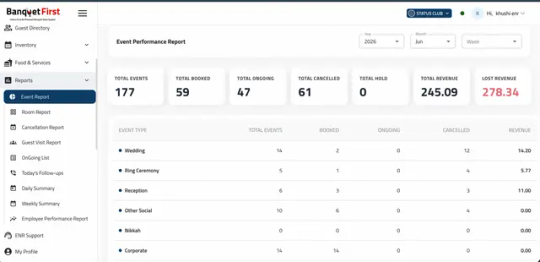
BanquetFirst is a platform worth exploring for banquet businesses looking to improve the way they manage their operations. Businesses can visit BanquetFirst to learn more about its solutions and understand how its platform may support their management requirements.
Before selecting any software, banquet owners should evaluate the available features, understand their operational needs, and determine whether the platform fits their business processes.
The right digital solution should simplify everyday work, improve visibility, and support the long-term development of the business.
Final Thoughts
Running a successful banquet business requires much more than organising beautiful events. Behind every memorable celebration is a team managing resources, coordinating departments, controlling expenses, and ensuring that everything is ready at the right time.
Banquet inventory management software helps bring these responsibilities into a more organised system. From improving stock visibility and reducing unnecessary expenses to supporting event preparation and maintaining accurate records, digital inventory management offers several practical advantages.
For banquet halls, hotels, and event management companies looking to improve operational efficiency, investing in the right technology can be a valuable step forward.
By adopting organised inventory practices and exploring solutions such as BanquetFirst, businesses can build more efficient operations, improve resource utilisation, and focus on what matters most: delivering exceptional experiences to their customers.


