


HSE Training in Malaysia for Building a Strong Safety Culture
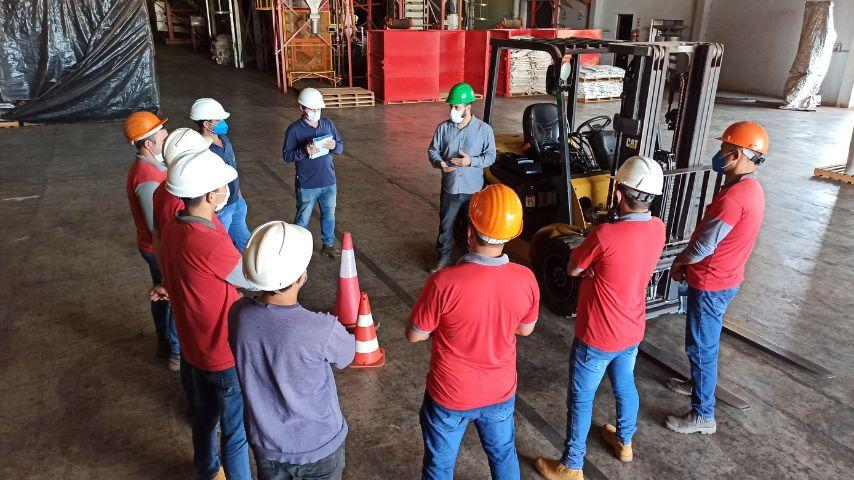
HSE training in Malaysia builds a strong safety culture by moving a workforce beyond simply following rules because management enforces them, toward genuinely valuing safety as a shared responsibility that employees actively own and reinforce among each other. Safety culture is not the safety manual on the shelf or the number of toolbox talks logged last quarter — it is the underlying set of shared beliefs and unwritten behaviors that determine what employees actually do when no one is watching, and Malaysian research specifically shows this maturity varies considerably even within a single industry. This article explains what safety culture maturity actually looks like in measurable terms, what Malaysian research reveals about where local workplaces currently sit, and how structured HSE training moves an organization through the stages that separate a reactive, compliance-driven workplace from a genuinely safety-owning one.
What Does "Safety Culture" Actually Mean, and How Is It Different From Safety Compliance?
Safety culture means the shared beliefs, attitudes, and unwritten behavioral norms that drive how employees actually act around hazards, distinct from safety compliance, which refers only to whether documented rules and procedures are being followed on paper. A company can be fully compliant — holding a valid certificate, maintaining complete documentation, passing every audit — while still having a weak safety culture, if employees follow procedures only because they are told to rather than because they genuinely understand and value the reasoning behind them (Safety Evolution, 2026).
The clearest sign of a mature safety culture is what employees do without being told: a construction crew that voluntarily refuses to pour concrete in dangerous wind conditions because "that is how we do things here," or a new hire who reports a near-miss on their second day because a supervisor made clear that reporting is genuinely welcomed rather than punished, both reflect culture functioning as intended rather than compliance being enforced from above (Safety Evolution, 2026). HSE training's role in building this kind of culture goes well beyond teaching the content of a specific procedure — it needs to build genuine understanding of why the procedure exists in the first place.
Is a High Safety Compliance Score Evidence of a Strong Safety Culture?
No, a high safety compliance score is not by itself evidence of a strong safety culture, since compliance measures whether documented requirements are being met, while culture measures whether employees would maintain safe behavior even without active enforcement or audit pressure. An organization can score well on compliance audits while still sitting at a relatively immature stage of safety culture, which is precisely why culture requires its own distinct assessment rather than being inferred from compliance metrics alone.
What Does Malaysian Research Reveal About Safety Culture Maturity in Local Workplaces?
Malaysian research on safety culture maturity, including a study of 387 automotive manufacturing workers using the standardized 28-item SASTO questionnaire, found that despite documented high accident rates in the sector, safety culture maturity and its associated sociodemographic and occupational risk factors required specific empirical investigation to understand — reflecting that safety culture cannot simply be assumed to be strong based on an industry's formal safety infrastructure alone (International Journal of Occupational Safety and Health, 2022). This kind of empirical study matters because it demonstrates that even in a sector with mature formal OSH requirements, actual worker attitudes and behaviors toward safety vary considerably and need to be measured directly rather than inferred from compliance documentation.
This finding is consistent with a broader pattern in Malaysian occupational safety research: workers' attitudes and behaviors toward safety directly influence accident outcomes, meaning the underlying culture — not just the formal safety management system — is a genuine, independent driver of workplace risk (International Journal of Occupational Safety and Health, 2022). For Malaysian businesses, this research reinforces that HSE training focused purely on regulatory compliance content, without attention to attitude and behavior change, may be missing a meaningful part of what actually reduces accident risk.
Why Would a High-Accident-Rate Sector Still Need to Study Its Safety Culture Specifically?
A high-accident-rate sector needs to study its safety culture specifically because accident rates alone do not reveal why those accidents are occurring — whether from genuine attitudinal and behavioral gaps, insufficient formal training, inadequate engineering controls, or some combination of these factors. Understanding the specific safety culture maturity level and its associated risk factors allows an organization to target interventions — including HSE training design — at the actual underlying cause, rather than applying generic safety messaging that may not address the sector's specific cultural gaps.
What Is the Bradley Curve, and How Does It Help Explain Safety Culture Progression?
The Bradley Curve, developed by Vernon Bradley at DuPont in 1995, maps four stages of organizational safety culture maturity — Reactive, Dependent, Independent, and Interdependent — against declining injury rates as an organization progresses through each stage (Safety Evolution, 2026). In the Reactive stage, safety happens by instinct with no formal program, and incidents are addressed only after they occur, often without genuine root-cause analysis; in the Dependent stage, safety is driven by management and supervision, with workers following rules primarily because they are told to rather than through personal conviction (Safety Mint, 2024).
The more mature Independent stage sees employees taking personal ownership of their own safety, proactively spotting risks before an incident occurs, while the most mature Interdependent stage sees teams actively supporting and challenging each other on safety, with injury rates approaching zero as people feel genuinely empowered to act as needed to work safely (dss+, n.d.). Most organizations implementing their first formal safety management system, including many Malaysian SMEs newly navigating OSH Coordinator requirements, sit somewhere between the Reactive and Dependent stages, since a documented system alone typically only carries an organization to the point of management-enforced compliance rather than genuine employee ownership.
Can HSE Training Move an Organization Through These Stages on Its Own?
HSE training is a necessary but not sufficient driver of movement through the Bradley Curve's stages, since progressing from Dependent to Independent and eventually Interdependent maturity also requires visible, sustained leadership commitment and genuine trust that employees can act on safety without fear of blame. The Bradley Curve framework itself notes that responses indicating employees' safety maturity has outpaced management's should be read as a particularly strong signal of a leadership gap, since it becomes very difficult for management to provide meaningful safety leadership once the workforce's genuine safety commitment already exceeds what leadership visibly demonstrates (Quentic, n.d.).
How Does HSE Training Specifically Support Movement From Reactive Toward Independent Safety Culture?
HSE training, such as that provided by Wellkinetics, supports movement from Reactive toward Independent safety culture by building the practical hazard-recognition and risk-assessment skills that allow employees to genuinely spot risks proactively, rather than waiting for a supervisor's instruction or reacting only after an incident occurs. Training that specifically explains the reasoning behind procedures — not just the procedures themselves — helps employees internalize safety principles they can then apply independently to situations a written procedure may not have explicitly anticipated, which is precisely the behavior that distinguishes Independent-stage employees from Dependent-stage compliance.
For organizations at the earlier Reactive stage, practical first steps include establishing regular safety audits and starting a genuine near-miss reporting system, since a functioning reporting culture — where employees trust that reporting a close call will not result in blame — is a foundational building block for the more proactive behavior later stages require (Safety Mint, 2024). HSE training that builds this trust explicitly, alongside its technical content, helps organizations establish the reporting habits that later-stage safety culture depends on.
What Role Does Leadership Training Play in This Progression Specifically?
Leadership-focused HSE training plays a distinct and important role in this progression, since organizations further along the Bradley Curve specifically benefit from offering leadership training to employees who have already begun taking safety into their own hands, reinforcing and channeling that emerging ownership into a more structured, organization-wide capability (Safety Mint, 2024). Without this kind of targeted leadership development, individual employees who develop strong personal safety ownership may remain isolated examples rather than becoming the catalysts for broader Interdependent-stage culture change across their teams.
How Should a Malaysian Organization Measure Its Own Safety Culture Maturity?
A Malaysian organization should measure its safety culture maturity through a combination of quantitative and qualitative methods, including standardized survey instruments such as the Nordic Occupational Safety Climate Questionnaire (NOSACQ-50) or the NIOSH Safety Climate Survey, leading indicator metrics such as near-miss report rates and hazard observation rates, and qualitative methods including structured leadership interviews and frontline worker focus groups (SmartQHSE, 2026). The most robust assessments triangulate across several of these methods rather than relying on a single survey score, since safety culture is a genuinely multidimensional construct that no single metric captures completely.
This kind of structured measurement is particularly valuable before designing an HSE training program aimed specifically at culture change, since it allows an organization to identify precisely where its culture gaps sit — whether in management commitment, worker involvement, communication, or incident reporting norms — rather than applying generic culture-building content that may not address the organization's actual weak points.
Is a Formal Safety Culture Survey Necessary for Smaller Malaysian SMEs?
A formal, validated survey instrument such as NOSACQ-50 may be disproportionate for a very small SME, but some form of structured feedback — even informal but consistent conversations with frontline workers about how they genuinely perceive safety, alongside tracking near-miss reporting trends over time — provides a meaningful, lower-cost proxy for safety culture maturity that smaller organizations can reasonably implement without a full formal survey programme.
What Are the Common Criticisms of Safety Culture Frameworks Such as the Bradley Curve?
The most common criticism of the Bradley Curve specifically is that while it remains useful for describing an organization's transition from lower to interdependent stages of safety culture maturity, it can be insufficient on its own when describing highly developed safety cultures, due to inconsistencies in its evaluative parameters at the more mature end of the scale (PMC, 2026). This limitation has led some organizations, including DuPont itself, to develop supplementary frameworks — such as the DuPont Integrated Safety Approach, built around the concept of visible leadership specifically to sustain lasting cultural change at all organizational stages — to address gaps the original Bradley model alone does not fully capture.
More broadly, critics of safety culture frameworks in general note that measuring culture through survey instruments and self-reported behavior carries an inherent risk of social desirability bias, where employees report attitudes they believe are expected rather than their genuine views, potentially producing an inflated picture of an organization's actual safety culture maturity. Defenders of structured culture assessment respond that triangulating across multiple measurement methods — surveys, leading indicators, and qualitative interviews together — meaningfully reduces this risk compared to relying on any single self-reported measure alone, even if no method eliminates the bias entirely.
How Should Malaysian Businesses Structure HSE Training to Build Genuine Safety Culture Rather Than Just Compliance?
Malaysian businesses should structure HSE training to build genuine safety culture by explicitly teaching the reasoning behind procedures rather than only the procedures themselves, establishing and actively protecting a genuine near-miss reporting system as an early foundational step, and pairing frontline training with dedicated leadership development so that emerging employee safety ownership is reinforced and channeled rather than left isolated. Training that treats culture-building as a separate, ongoing workstream — rather than an automatic byproduct of completing statutory HSE Coordinator or SHO training — is considerably more likely to actually move an organization along the Bradley Curve's stages over time.
Given what Malaysian research specifically shows about safety culture maturity varying meaningfully even within high-accident sectors with mature formal OSH infrastructure, businesses should treat culture measurement as a genuine, ongoing diagnostic exercise rather than assuming that meeting statutory training requirements alone is sufficient to produce the kind of interdependent, self-sustaining safety culture that most effectively reduces workplace harm.
Conclusion
HSE training builds genuine safety culture only when it goes beyond teaching procedural compliance and actively targets the underlying attitudes, trust, and shared ownership that determine how employees behave when no one is directly enforcing the rules. Malaysian research specifically demonstrates that safety culture maturity cannot simply be assumed from an industry's formal safety infrastructure or accident statistics alone, and businesses that combine structured, reasoning-focused HSE training with genuine leadership commitment and honest culture measurement are the ones most likely to progress from a reactive, compliance-driven workplace toward the interdependent safety culture where injury rates approach zero not because of enforcement, but because employees genuinely choose to work safely.
References
- dss+. (n.d.). Bradley Curve: dss+ safety culture model. https://www.consultdss.com/transform-culture/dss-bradley-curve/
- International Journal of Occupational Safety and Health. (2022). Safety culture maturity and related risk factors among automotive workers in Malaysia. https://www.nepjol.info/index.php/IJOSH/article/view/76571
- PMC (National Center for Biotechnology Information). (2026). Influence of occupational safety culture on the occupational risk level in the organization. https://pmc.ncbi.nlm.nih.gov/articles/PMC12237939/
- Quentic. (n.d.). Using the Bradley Curve to improve occupational safety. https://www.quentic.com/articles/using-the-bradley-curve/
- Safety Evolution. (2026, April 7). Safety culture: The complete guide. https://www.safetyevolution.com/blog/safety-culture
- Safety Mint. (2024, October 16). What is the Bradley Curve? Understanding safety culture maturity. https://www.safetymint.com/blog/the-bradley-curve/
- SmartQHSE. (2026, April 8). Safety culture maturity: The Bradley Curve & Hearts and Minds model. https://www.smartqhse.com/safety-blog/safety-culture-maturity-model

 English
 Arabic
 French
 Spanish
 Portuguese
 Deutsch
 Turkish
 Dutch
Dutch
 Italiano
 Romaian
 Portuguese (Brazil)
 Greek
Greek