


Custom Motorcycle Jackets and Leather Vests: A Practical Guide
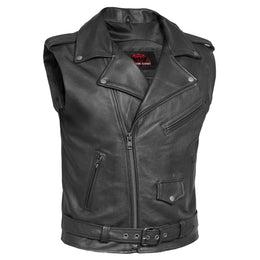
Motorcycle clothing serves more than a style purpose. The right jacket or vest can improve comfort, provide useful storage, accommodate protective equipment, and help riders create a look that reflects their riding preferences. Custom motorcycle jackets and leather vests are particularly popular because they allow riders to select materials, fits, colors, graphics, and other details according to their needs.
However, customization involves more than choosing an attractive design. Riders should consider the type of riding, weather conditions, leather quality, protection, ventilation, fit, and maintenance before ordering a customized garment.
Why Choose Customized Motorcycle Apparel?
Standard motorcycle apparel is produced in predetermined sizes and designs. Customized apparel gives riders greater control over the final garment.
A rider may want additional pockets, a particular collar style, different closures, extra room for protective gear, or a specific combination of materials. Customization can also help accommodate unusual body proportions that are difficult to fit with standard sizing.
For riders interested in denim, custom denim jackets can provide another option. Denim is generally associated with casual riding and lifestyle wear, while leather is often selected for its durability, traditional appearance, and resistance to abrasion.
Customization should therefore begin with the intended purpose of the garment rather than its appearance alone.
Understanding the Main Jacket Styles
Different jacket designs offer different characteristics. A traditional motorcycle jacket usually emphasizes durability, riding comfort, and compatibility with protective equipment.
A custom bomber jacket, for example, can offer a distinctive casual appearance while incorporating personalized colors, patches, embroidery, or other details. However, a bomber-inspired design should not automatically be considered motorcycle protective equipment. Riders should check whether the finished garment has appropriate protective features.
For someone who wants complete creative control, the ability to design your own jacket can be useful. The design process may include selecting leather, lining, hardware, pockets, cuffs, graphics, and other construction details.
What to Consider When Customizing a Leather Jacket
Before deciding to customize a leather jacket, riders should understand the properties of the leather being used. Different leather types vary in thickness, grain, flexibility, durability, and appearance.
A quality custom garment should also have construction appropriate for its intended use. Important details can include seam quality, stitching, zippers, closures, lining, and reinforcement in areas exposed to greater wear.
Anyone looking to customize a leather jacket should also consider whether the garment will be worn primarily for riding, everyday use, or both. A fashion-focused jacket may have different priorities from motorcycle equipment designed around abrasion resistance and protective armor.
Selecting a Custom Leather Jacket Maker
The manufacturer or craftsman can have a major influence on the finished product. A custom leather jacket maker should be able to explain the available leather options, measurements, construction methods, customization choices, and expected production process.
It is useful to review previous work before placing an order. Photographs of completed garments can provide insight into stitching, panel alignment, hardware, finishing, and overall construction quality.
Buyers should also clarify sizing procedures. Accurate measurements are particularly important because a custom garment may be made specifically around the supplied measurements.
Are Custom-Made Leather Jackets Worth It?
Custom made leather jackets can be useful for riders who have specific requirements that are difficult to meet with off-the-shelf clothing.
The main advantage is personalization. A rider can request particular dimensions, pockets, colors, hardware, graphics, or other details. Custom construction may also provide a better fit when standard sizes do not work well.
The disadvantages include higher prices, longer production times, and the possibility that the final garment may differ from expectations. Clear communication with the maker and an accurate specification can reduce these problems.
Exploring Leather Motorcycle Vests
Motorcycle vests are another established part of riding apparel. Unlike full jackets, vests leave the arms uncovered and can be useful when riders want additional torso coverage without wearing a full-sleeved garment.
Leather motorcycle vests can also provide storage through multiple pockets and offer a traditional motorcycle-inspired appearance. Their suitability depends heavily on weather, riding conditions, and whether additional protective equipment is being used.
Choosing Leather for Different Riding Conditions
Genuine leather motorcycle vests are often selected for their natural durability and distinctive texture. However, genuine leather can vary considerably in quality, so the term alone does not guarantee that a particular vest will be suitable for motorcycle use.
For warm conditions, summer leather vests motorcycle riders choose should provide a reasonable balance between leather coverage and ventilation. A lightweight design can make riding more comfortable when temperatures rise.
Lightweight motorcycle leather vests may also be practical for riders who want the appearance and utility of leather without the bulk of a heavy jacket. Nevertheless, lighter construction should not be confused with stronger protective performance.
When temperatures fall, motorcycle winter leather vests can be layered over suitable clothing. The effectiveness of this approach depends on the vest's insulation, fit, and the clothing worn underneath.
Combining Style With Practical Riding Needs
Appearance is an important part of motorcycle culture, but practical requirements should come first when clothing is intended for riding.
Cool leather motorcycle vests may feature distinctive colors, patches, graphics, hardware, or decorative elements. These details can personalize the garment without necessarily affecting its basic function.
Some riders prefer more dramatic designs, including skeleton leather motorcycle vests. Such graphics can create a recognizable visual identity while maintaining the basic vest format.
However, decorative customization should not interfere with closures, pockets, protective inserts, visibility, or the structural integrity of the garment.
Motorcycle-Riding Leather Vests and Protection
Motorcycle-riding leather vests can provide useful torso coverage, but a vest does not automatically provide complete motorcycle protection.
A rider should examine whether a particular vest is designed to accommodate armor and whether it provides suitable coverage for the intended type of riding. Riders should also remember that an open-arm vest leaves the shoulders and arms exposed.
For regular road riding, protective clothing should be selected based on the risks involved rather than appearance alone. A vest can complement protective equipment, but it should not be assumed to replace a properly designed motorcycle jacket.
How to Make a Custom Jacket More Practical
Customization works best when every requested feature has a purpose.
Additional pockets can improve storage, but excessive pockets may add weight. A special lining can influence comfort and temperature management. Different closures can change convenience and durability.
Riders should also think about how the garment will be used while sitting in a riding position. A jacket that feels comfortable while standing may fit differently when the rider is leaning forward on a motorcycle.
The sleeve length, torso length, shoulder width, and waist fit should therefore be considered during the measurement process.
Caring for Customized Leather Apparel
Leather requires appropriate maintenance to preserve its appearance and flexibility. Riders should follow the care instructions supplied by the manufacturer because different leather finishes can require different treatment.
Leather garments should generally be kept away from excessive moisture and stored in a cool, dry environment. Strong heat sources can dry or damage leather.
Regular inspection is also useful. Riders can check stitching, zippers, snaps, pockets, and other components for signs of wear. Early maintenance can help prevent minor problems from becoming larger ones.
Conclusion
Customized motorcycle clothing offers riders an opportunity to combine personal style with practical requirements. From jackets and denim garments to leather vests, customization can address fit, storage, appearance, materials, and riding preferences.
The best approach is to determine how the garment will be used before selecting its design. Leather quality, construction, fit, weather conditions, ventilation, and compatibility with protective equipment should all be considered.
Whether selecting a customized jacket or a leather motorcycle vest, riders should prioritize functional construction first and use personalization to complement those practical requirements.
Frequently Asked Questions
1. What is the advantage of a custom motorcycle jacket?
A customized jacket can provide a more personalized fit and allow the rider to choose specific materials, colors, pockets, closures, graphics, and other design elements.
2. Is genuine leather suitable for motorcycle vests?
Genuine leather can be a durable material for motorcycle vests, but quality varies between products. Riders should evaluate leather thickness, construction, stitching, and whether the garment is actually designed for motorcycle use.
3. Can a custom leather jacket include motorcycle armor?
Some custom jackets can be designed to accommodate protective armor. Buyers should discuss armor compatibility and pocket placement with the manufacturer before production rather than assuming that every customized jacket supports protective inserts.
4. Are leather motorcycle vests suitable for summer riding?
They can be suitable for some warm-weather riding, particularly when the design is lightweight and provides reasonable ventilation. However, riders should consider temperature, humidity, riding duration, and the level of protection required.
5. How should a rider choose a custom jacket maker?
A rider should examine the maker's previous work, leather options, construction quality, measurement process, customization choices, production timeline, and policies before placing an order. Clear specifications can help ensure that the finished garment matches the intended use.

 Arabic
 French
 Spanish
 Portuguese
 Deutsch
 Turkish
 Dutch
Dutch
 Italiano
 Russian
 Romaian
 Portuguese (Brazil)
 Greek
Greek