


Best Marketing Strategies for UK Food Delivery Businesses
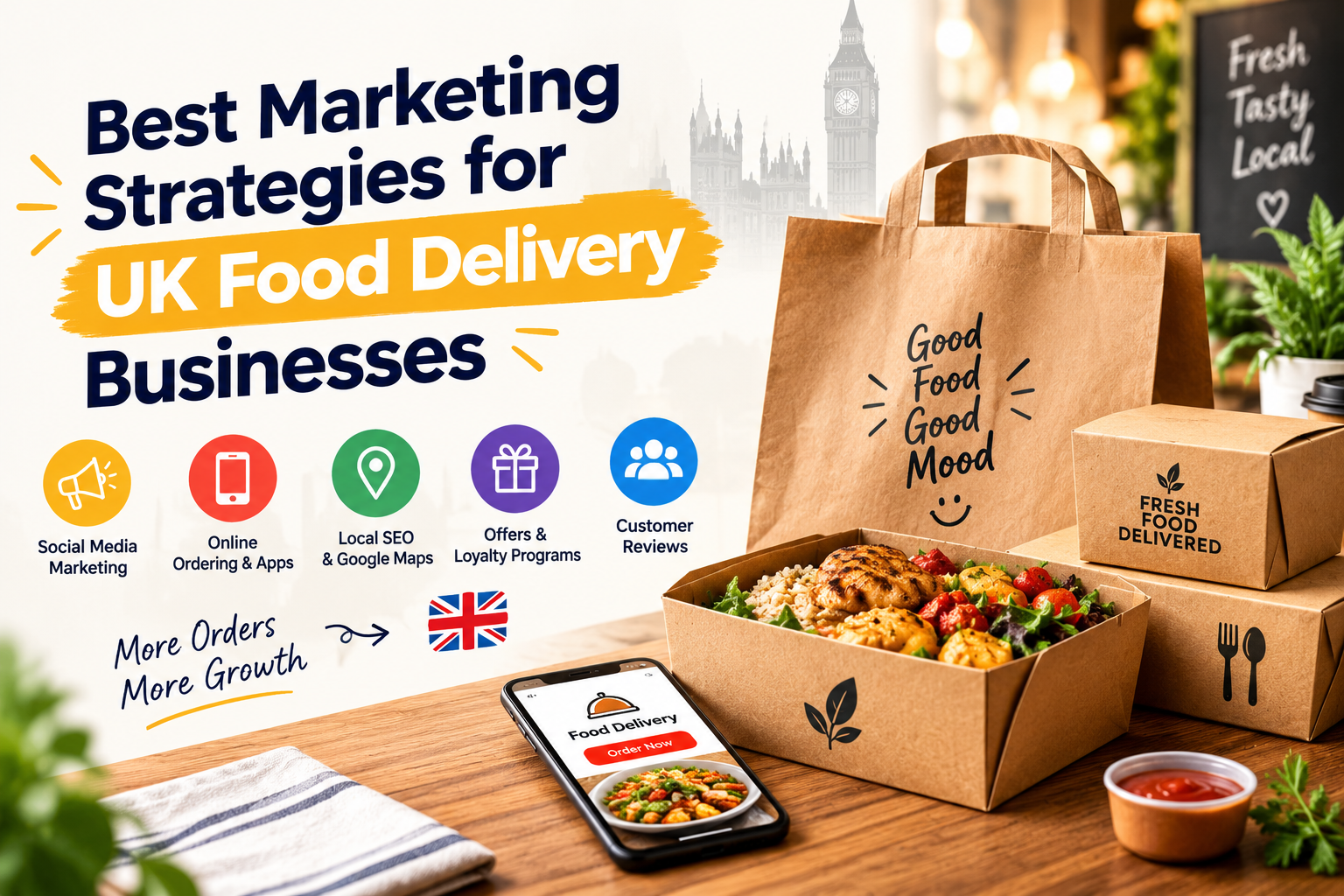
The UK food delivery market is growing fast. People now order meals from restaurants, cafés, takeaways and food brands from the comfort of their homes. This gives food delivery businesses a great chance to grow. However, competition is also high.
A good food delivery business needs more than tasty food. It needs strong marketing, good customer service, clear branding and a smooth ordering process. The right marketing plan can help a small takeaway become a trusted local brand.
Here are some of the best marketing strategies for UK food delivery businesses.
1. Build a Strong Brand
Your brand is more than your logo. It includes your colours, packaging, food photos, website, social media and the way you speak to customers.
A strong brand helps people remember your business. Try to use the same logo, colours and style across your website, social media pages and packaging.
Think about what makes your food business different. Maybe you offer homemade meals, healthy food, family deals or late-night delivery. Make this clear in your marketing.
When customers understand what makes your business special, they have a stronger reason to order from you.
2. Use Social Media Marketing
Social media is one of the easiest ways for food delivery businesses to reach new customers. Platforms such as Instagram, Facebook and TikTok can help you show your food in an attractive way.
Post clear and bright photos of your meals. You can also share short videos of food preparation, new menu items, customer reviews and special offers.
For example, a pizza business could post a short video showing cheese melting over a fresh pizza. A burger shop could show how a burger is prepared and packed for delivery.
Try to post regularly instead of posting many times on one day and then disappearing for weeks.
3. Create Offers for New Customers
People often compare different food delivery businesses before placing an order. A simple first-order offer can help you win new customers.
You could offer:
-
10% off the first order
-
A free drink with selected meals
-
A free side dish
-
Family meal deals
-
Free delivery above a certain order value
Keep your offers simple and easy to understand. Avoid making customers follow too many steps to receive a discount.
Once a new customer has tried your food, good taste and service can encourage them to order again.
4. Focus on Local SEO
Local SEO is very important for food delivery businesses. Many customers search online for phrases such as “food delivery near me”, “pizza delivery in Manchester” or “best takeaway in Birmingham”.
Make sure your business information is correct online. Your business name, address, phone number, opening hours and website should be easy to find.
Create pages on your website for the towns and areas you serve. However, these pages should contain useful information rather than simply repeating the same keywords.
Customer reviews can also help build trust. Ask happy customers to leave honest reviews about their experience.
5. Make Your Website Easy to Use
Your website is often the first place customers visit before ordering. If it is slow or confusing, people may leave and choose another business.
Your website should work well on mobile phones because many customers order food using their smartphones.
Show your menu clearly. Include prices, food descriptions, photos and information about delivery areas. Make the order button easy to see.
A simple ordering process can reduce lost sales. Customers should not have to click through many pages just to order one meal.
6. Use Attractive Food Packaging
Food packaging is an important part of the customer experience. Customers see your packaging before they eat the food, so it can help create a strong first impression.
Good packaging should protect food during delivery and help keep it fresh. It should also be practical for customers to carry, open and dispose of.
Branded packaging can make your business look more professional. Custom Food Boxes with Logo can help food delivery brands put their logo, colours and other brand details directly onto their boxes.
Your packaging can also encourage customers to remember your business after the meal. A clear logo and simple brand message can make your food more recognisable.
7. Encourage Repeat Orders
Getting a new customer is useful, but getting that customer to order again is even better. Repeat customers can become an important part of your business.
You can create a simple loyalty scheme. For example, customers could receive a discount after five orders or get a free item after reaching a certain spending level.
You can also send email offers to customers who have agreed to receive marketing messages. Keep these messages useful and do not send too many.
Personal offers can work well. If a customer often orders burgers, you could send them an offer for a burger meal rather than a random product.
8. Work with Food Influencers
Food influencers and local creators can help introduce your business to new people.
You do not always need to work with a famous influencer. A small local creator may have a stronger connection with people in your target area.
Invite suitable creators to try your food and share their honest experience. Always choose people whose audience matches your customers.
Authentic reviews are often more useful than advertisements that feel forced.
9. Use Seasonal Marketing
Seasonal campaigns can give customers another reason to order.
You could create special menus or offers for occasions such as Christmas, Valentine's Day, Easter, summer events or major sporting occasions.
For example, a takeaway could create a family meal deal during the Christmas period. A dessert business could offer Valentine's gift boxes.
Plan seasonal campaigns early. This gives you enough time to prepare your menu, advertising and packaging.
10. Improve Your Delivery Experience
Marketing can bring customers to your business, but poor delivery can make them leave.
Customers expect their food to arrive on time and in good condition. Make sure meals are packed correctly and delivery staff understand your service standards.
Use suitable packaging for hot, cold and fragile food. Clear labelling can also help prevent order mistakes.
Ask customers for feedback about delivery times, food quality and packaging. Use this feedback to improve your service.
11. Try Paid Online Advertising
Paid advertising can help food delivery businesses reach people in specific areas.
You can run adverts on search engines and social media. For example, you could target people within a set distance of your restaurant.
Start with a small budget. Test different photos, offers and messages. Then focus more money on the adverts that bring good results.
Do not judge an advert only by the number of clicks. Check whether those clicks turn into real orders and paying customers.
12. Work with Local Businesses
Local partnerships can also help your food delivery business grow.
You could work with offices, gyms, schools, hotels or local event organisers where suitable. For example, a food business could offer lunch deals for local office workers.
Another option is to create a referral deal with a nearby business. Both businesses can promote each other to their customers.
This type of marketing can help you build strong local connections and reach new audiences.
13. Choose Packaging Suppliers Carefully
Packaging costs can affect your profit, especially when your business starts handling many orders. Buying packaging in suitable quantities can help control costs.
Businesses should compare material quality, printing options, box strength, sizes and delivery times before choosing a supplier.
For businesses that need larger quantities, Plus Custom Boxes Wholesale can be considered when looking for packaging solutions that support regular food delivery orders.
The main goal should not simply be finding the cheapest box. Good packaging should offer a balance between cost, protection, appearance and practicality.
14. Track Your Marketing Results
A good marketing strategy should be measured. Keep track of where your customers come from and which campaigns bring the most orders.
You can monitor:
-
Website visits
-
Online orders
-
Social media engagement
-
Discount code use
-
Repeat customers
-
Average order value
-
Customer reviews
This information helps you understand what works and what needs to change.
For example, if Instagram brings many orders but one advertising campaign brings very few, you can adjust your budget and focus on the strategy that performs better.
Conclusion
The UK food delivery market offers many opportunities for businesses that understand their customers and provide a good experience.
Strong branding, social media, local SEO, useful offers, simple online ordering and reliable delivery can all help a food business grow. Good packaging also plays an important role because it protects the food while supporting the brand.
The most successful businesses do not depend on one marketing method. They test different ideas, listen to customers and improve over time.
Start with a few clear strategies, measure the results and build from there. With good food, reliable service and smart marketing, a UK food delivery business can build trust, attract new customers and turn first-time buyers into loyal customers.

 English
 Arabic
 French
 Spanish
 Portuguese
 Deutsch
 Turkish
 Dutch
Dutch
 Italiano
 Russian
 Portuguese (Brazil)
 Greek
Greek