


How Engineering Competitions Inspire Sustainable Innovation
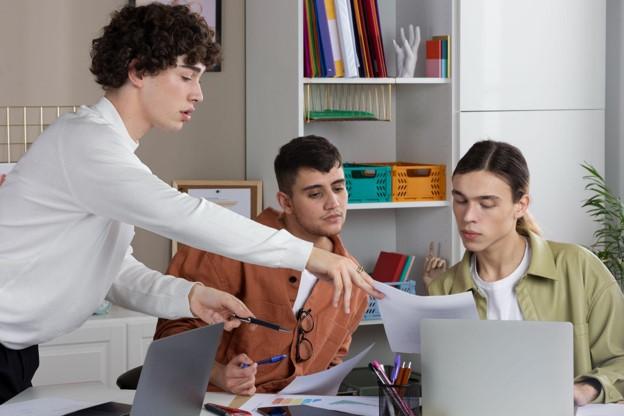
A classroom design project has a due date and a grade attached to it. A competition entry has a judging panel, a real community it's designed for, and a public result. That difference sounds small, but it changes how students actually think through a problem — and it's a big part of why engineering competitions have quietly become one of the most effective training grounds in the clean energy sector.
Why Competitions Teach Differently Than Coursework
Most engineering coursework is built around a known answer. A textbook problem has a correct load calculation, a correct efficiency figure, a correct final number. Competitions don't work that way. A community energy design brief comes with conflicting constraints — cost ceilings, maintenance realities, a client who has to actually live with the outcome — and no single right answer. Students have to defend a set of trade-offs to a panel that will push back on them.
That shift matters more than it sounds. Research on engineering education consistently finds that open-ended, client-facing design work builds judgment in a way that closed-form problem sets don't, because it forces students to justify decisions rather than just compute them. A competition adds two more ingredients coursework rarely has: a hard deadline that mirrors a real project timeline, and a public outcome that creates actual accountability for the choices a team made.
Real Constraints Change the Design Process
When a design has to work for an actual population — a fixed budget, a specific climate, a maintenance plan someone will have to follow after the students graduate — the engineering gets harder in a useful way. Teams stop optimizing for the most technically impressive solution and start optimizing for the one that will still be running in five years. That's a professional skill, not just an academic one, and it's difficult to teach outside of a project with real stakes attached.
The Track Record Is Already Public
This isn't a new theory. The U.S. Department of Energy has run collegiate energy competitions for more than three decades, starting with the Advanced Vehicle Technology Competitions in 1988 and expanding through programs like the Solar Decathlon, which has engaged more than 25,000 students across over 40 countries since it launched in 2002. DOE built these programs specifically to give students an on-ramp into the clean energy workforce — hands-on experience, direct contact with industry professionals, and a portfolio piece that demonstrates real design judgment rather than just coursework completion.
The pattern shows up in outcomes, not just program descriptions. Students who compete in these programs routinely point to specific technical skills — running simulations, sizing systems, defending a design to a technical audience — that carried directly into internships and early-career roles. That's a stronger signal than a syllabus objective: it's evidence the format works.
What Makes a Competition Actually Useful — Not Just a Trophy Exercise
Not every competition produces this effect. The ones that do share a few features:
- A real client or community, not a hypothetical one, so trade-offs have actual consequences.
- Mentorship from working professionals, who can flag a technically elegant idea that won't survive contact with a real maintenance budget.
- Cross-disciplinary teams, since a working energy system is never purely a technical problem — it's technical, financial, and logistical at once, which mirrors how the job actually works after graduation.
That combination — real-world design constraints paired with professional guidance rather than a purely academic grading rubric — is the model behind a growing number of experiential energy education initiatives, which treat the competition itself as the curriculum rather than an add-on to one.
Cross-Disciplinary Teams Mirror the Actual Job
An engineer working on a real community energy project rarely works alone. They're coordinating with a project manager on budget, a local partner on maintenance capacity, and often a policy or financing specialist on how the system gets paid for. Competition teams that mirror that structure — rather than a single-discipline group solving a purely technical problem — tend to produce designs closer to what actually gets built and stays operational.
Where This Is Headed
DOE's newer competition formats, including entrepreneurship-focused programs built to move student research toward commercialization, suggest the model is expanding beyond pure design work into the business and deployment side of clean energy. That's a natural next step: a great technical design still needs financing, a delivery plan, and community buy-in to become a functioning system rather than a prototype.
The Takeaway
Competitions work as a training ground precisely because they refuse to simplify the problem the way a classroom exercise does. Students have to design for a real constraint set, defend their choices publicly, and answer to people who will actually use what they built. Energy Mentors' own Power the Community competition follows that same logic — student teams design real energy infrastructure for a community of 2,000 families, with mentorship from industry professionals built into the process rather than added on afterward. It's a small-scale version of the same mechanism DOE has run at national scale for over 30 years, and it's a reminder that some of the best engineering education doesn't happen in a classroom at all.
1. What makes engineering competitions different from regular coursework or internships?
Coursework usually has one correct answer and internships often limit students to a narrow slice of a project. Competitions ask teams to design a full solution against real constraints — budget, maintenance capacity, and a specific community's needs — then defend those trade-offs to a judging panel. That combination of open-ended design and public accountability is hard to replicate in a classroom.
2. Do engineering competitions actually help students get jobs in clean energy?
Yes — this isn't just anecdotal. The U.S. Department of Energy has run collegiate energy competitions for over 35 years specifically to build the clean energy workforce, and its Solar Decathlon alone has involved more than 25,000 students across 40+ countries since 2002. Students frequently point to specific competition skills — running simulations, sizing systems, defending designs technically — that carried directly into internships and entry-level roles.
3. What skills do students gain from a community-focused energy design competition?
Beyond core engineering skills, students learn to balance technical performance against affordability, local maintenance capacity, and community input — the same trade-offs professional engineers navigate on real projects. Cross-disciplinary teamwork is also part of it, since a working energy system involves financing and logistics as much as technical design.
4. How does mentorship factor into competition-based learning?
Mentorship from working professionals helps students avoid a common trap: designing something technically impressive that wouldn't survive real-world conditions. A mentor who has already made that mistake can flag the risk early, which is part of why competitions paired with active mentorship tend to produce more realistic, deployable designs than competitions alone.
5. What is Energy Mentors' Power the Community competition, and how is it different from other collegiate energy competitions?
Power the Community is an international college design competition where student teams design real energy infrastructure for a community of 2,000 families, with a $10,000 grand prize and $31,000 total prize pool. Unlike most collegiate energy competitions, it builds professional mentorship into the process itself rather than treating mentorship as a separate, optional resource — students get guidance from energy professionals throughout the design work, not just at the end.
1. What makes engineering competitions different from regular coursework or internships?
Coursework usually has one correct answer and internships often limit students to a narrow slice of a project. Competitions ask teams to design a full solution against real constraints — budget, maintenance capacity, and a specific community's needs — then defend those trade-offs to a judging panel. That combination of open-ended design and public accountability is hard to replicate in a classroom.
2. Do engineering competitions actually help students get jobs in clean energy?
Yes — this isn't just anecdotal. The U.S. Department of Energy has run collegiate energy competitions for over 35 years specifically to build the clean energy workforce, and its Solar Decathlon alone has involved more than 25,000 students across 40+ countries since 2002. Students frequently point to specific competition skills — running simulations, sizing systems, defending designs technically — that carried directly into internships and entry-level roles.
3. What skills do students gain from a community-focused energy design competition?
Beyond core engineering skills, students learn to balance technical performance against affordability, local maintenance capacity, and community input — the same trade-offs professional engineers navigate on real projects. Cross-disciplinary teamwork is also part of it, since a working energy system involves financing and logistics as much as technical design.
4. How does mentorship factor into competition-based learning?
Mentorship from working professionals helps students avoid a common trap: designing something technically impressive that wouldn't survive real-world conditions. A mentor who has already made that mistake can flag the risk early, which is part of why competitions paired with active mentorship tend to produce more realistic, deployable designs than competitions alone.
5. What is Energy Mentors' Power the Community competition, and how is it different from other collegiate energy competitions?
Power the Community is an international college design competition where student teams design real energy infrastructure for a community of 2,000 families, with a $10,000 grand prize and $31,000 total prize pool. Unlike most collegiate energy competitions, it builds professional mentorship into the process itself rather than treating mentorship as a separate, optional resource — students get guidance from energy professionals throughout the design work, not just at the end.
1. What makes engineering competitions different from regular coursework or internships?
Coursework usually has one correct answer and internships often limit students to a narrow slice of a project. Competitions ask teams to design a full solution against real constraints — budget, maintenance capacity, and a specific community's needs — then defend those trade-offs to a judging panel. That combination of open-ended design and public accountability is hard to replicate in a classroom.
2. Do engineering competitions actually help students get jobs in clean energy?
Yes — this isn't just anecdotal. The U.S. Department of Energy has run collegiate energy competitions for over 35 years specifically to build the clean energy workforce, and its Solar Decathlon alone has involved more than 25,000 students across 40+ countries since 2002. Students frequently point to specific competition skills — running simulations, sizing systems, defending designs technically — that carried directly into internships and entry-level roles.
3. What skills do students gain from a community-focused energy design competition?
Beyond core engineering skills, students learn to balance technical performance against affordability, local maintenance capacity, and community input — the same trade-offs professional engineers navigate on real projects. Cross-disciplinary teamwork is also part of it, since a working energy system involves financing and logistics as much as technical design.
4. How does mentorship factor into competition-based learning?
Mentorship from working professionals helps students avoid a common trap: designing something technically impressive that wouldn't survive real-world conditions. A mentor who has already made that mistake can flag the risk early, which is part of why competitions paired with active mentorship tend to produce more realistic, deployable designs than competitions alone.
5. What is Energy Mentors' Power the Community competition, and how is it different from other collegiate energy competitions?
Power the Community is an international college design competition where student teams design real energy infrastructure for a community of 2,000 families, with a $10,000 grand prize and $31,000 total prize pool. Unlike most collegiate energy competitions, it builds professional mentorship into the process itself rather than treating mentorship as a separate, optional resource — students get guidance from energy professionals throughout the design work, not just at the end.

 English
 Arabic
 French
 Spanish
 Deutsch
 Turkish
 Dutch
Dutch
 Italiano
 Russian
 Romaian
 Portuguese (Brazil)
 Greek
Greek