


Public Art & Monumental Sculpture | PakistaniArt
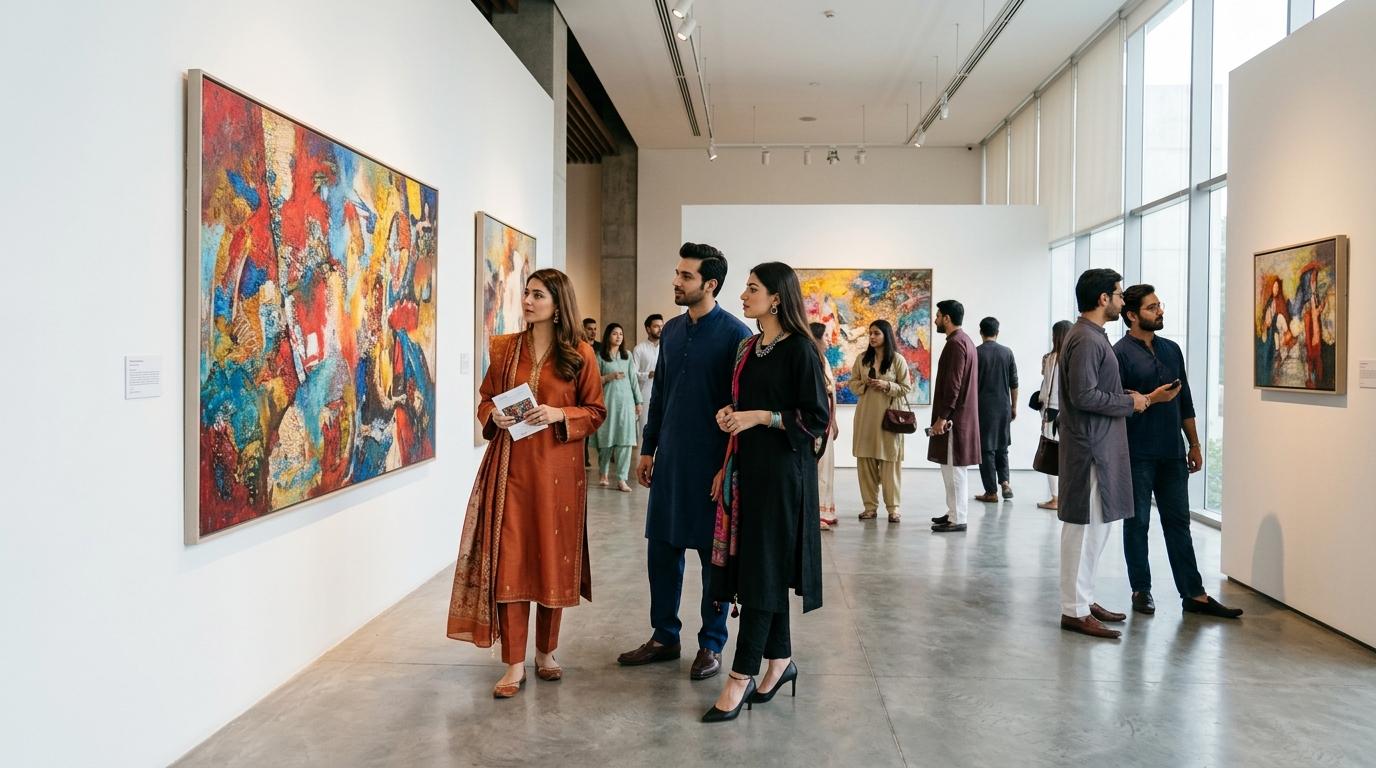
Most art lives indoors, behind a door, on a wall, in a room with good lighting. Public art is different. It lives where people live, and it has to earn its place every single day. That's why so few people attempt it — and why the ones who do matter.
What monumental sculpture does
A big sculpture changes how a space is used. It becomes a meeting point, a landmark, a thing people photograph and argue about. It gives a city a physical memory, the way a great building does, but with nothing to enter and nothing to buy.
That uselessness is the point. Public art insists that a place can be for more than transit and commerce.
The practitioners who pull it off
Monumental sculpture is a specialist's game. The engineering alone — scale, weight, weather, safety — is a discipline most artists never touch. The figures who succeed at it tend to be as much engineers as artists.
Anish Kapoor is the obvious reference point. His work — the mirrored forms, the voids, the vast red wax — is built at a scale that turns a single object into a whole environment. Love it or hate it, it's public art with real gravity.
The South Asian connection
Kapoor's story matters to this region. Born in Mumbai, trained in London, he became one of the world's most visible sculptors — proof that a South Asian artist can define the global conversation about form and space, not just follow it.
It's the kind of precedent that makes the field feel less distant for artists working here.
Why Pakistan has so little of it
The usual answers: budgets, politics, maintenance, and a cultural wariness of statues. Commissioning public art means committing to a decade of upkeep and a permanent argument about taste. Few institutions want that fight.
But the appetite is real. When a good piece does appear, people adopt it instantly. The demand exists; the commissioning culture is what's missing.
The case for trying anyway
A city that never risks a public artwork is a city that's given up on its own imagination.
PakistaniArt covers the field through its profiles of sculptors like Anish Kapoor and the broader sculpture scene. It's a reminder of what's possible when art stops hiding indoors.

 English
 Arabic
 French
 Spanish
 Portuguese
 Turkish
 Dutch
Dutch
 Italiano
 Russian
 Romaian
 Portuguese (Brazil)
 Greek
Greek