


Types of Liver Damage
Introduction
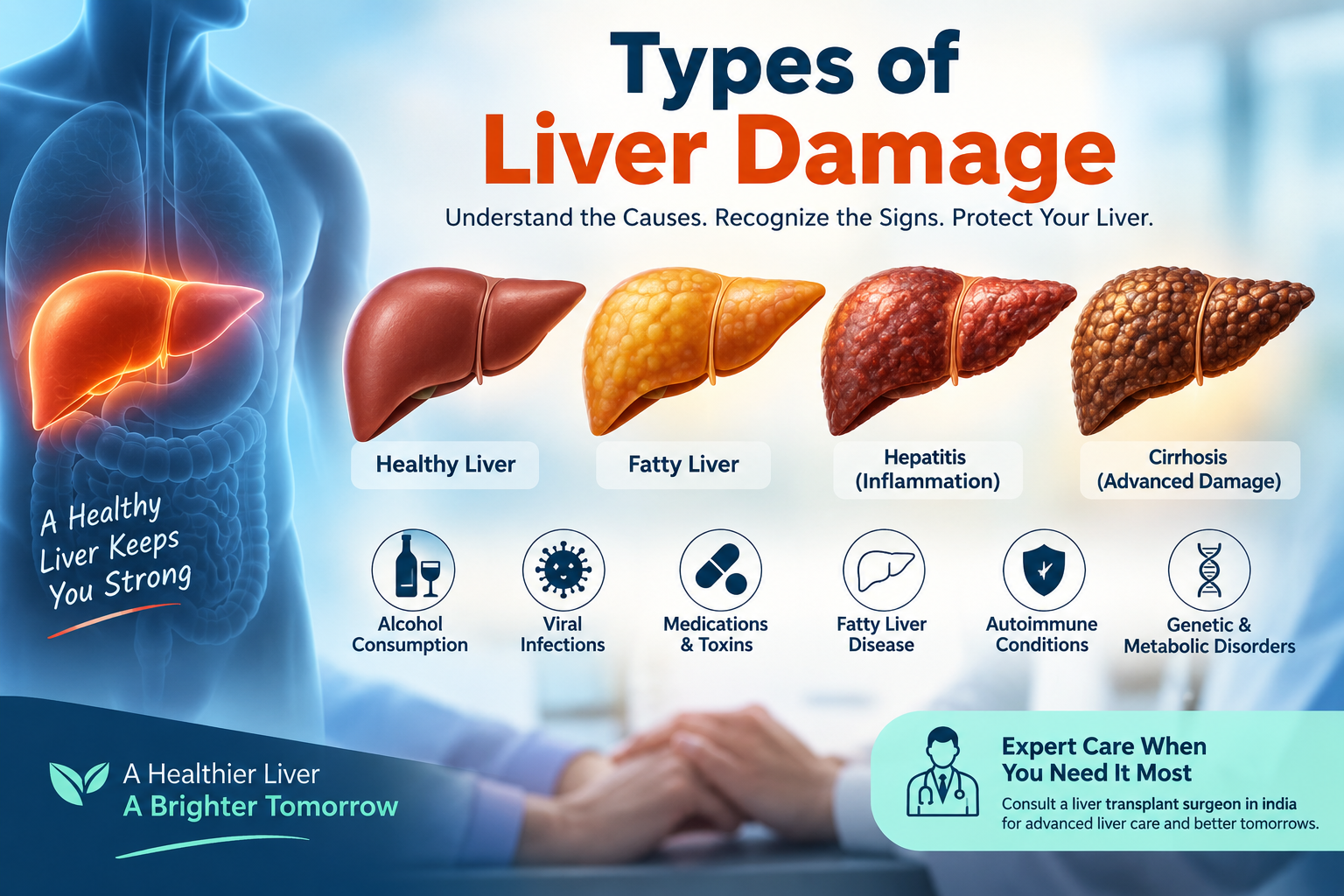
Your liver is one of the body's hardest-working organs. It helps process nutrients, removes harmful substances from the blood, produces important proteins, and supports digestion. But like any vital organ, it can become damaged by infections, alcohol, medications, metabolic conditions, and other health problems.
Liver damage does not always happen suddenly. In many people, it develops quietly over months or years. Understanding the types of liver damage can help you recognize warning signs early and seek appropriate medical care.
If liver disease becomes severe, treatment may require specialist care. In advanced cases, consulting an experienced liver transplant surgeon in india can help patients understand whether transplantation or another treatment option is appropriate.
1. What Is Liver Damage?
Liver damage occurs when liver cells become injured and can no longer function normally. The liver has an impressive ability to repair itself, especially when damage is identified early and its cause is treated.
Think of your liver like a busy factory. If a few machines stop working, the factory may continue operating. But if the damage continues for years, more machines break down, production slows, and eventually the entire system can be affected.
Liver damage can range from mild inflammation to extensive scarring and liver failure. The severity depends on the underlying cause, how long the liver has been exposed to it, and whether treatment begins early.
2. How Does the Liver Become Damaged?
There is no single cause of liver damage. Several conditions can affect the liver in different ways.
Common causes include:
- Excessive alcohol consumption
- Fat accumulation in the liver
- Hepatitis B and hepatitis C infections
- Certain medications and toxic substances
- Autoimmune diseases
- Inherited liver disorders
- Metabolic conditions
- Long-term blockage of bile flow
- Certain cancers and other serious diseases
Sometimes, a person may have more than one cause at the same time. For example, someone with fatty liver disease who also consumes excessive alcohol may experience faster progression of liver injury.
3. Fatty Liver Disease
Fatty liver disease occurs when too much fat builds up inside liver cells. It is increasingly common and may initially cause little or no noticeable symptoms.
One major form is metabolic dysfunction-associated steatotic liver disease, often associated with obesity, insulin resistance, type 2 diabetes, high cholesterol, and other metabolic problems.
Fat accumulation does not always mean severe liver disease. However, in some people, it can lead to liver inflammation and progressive scarring.
Can Fatty Liver Cause Permanent Damage?
Yes. Fatty liver can sometimes progress from simple fat accumulation to inflammation, fibrosis, cirrhosis, and eventually liver failure.
The encouraging part is that early fatty liver may improve significantly when the underlying causes are addressed. Weight management, regular physical activity, appropriate nutrition, and medical treatment of associated conditions can be important parts of management.
4. Alcohol-Related Liver Damage
Long-term excessive alcohol consumption can injure liver cells. Alcohol-related liver disease can develop in several stages.
The main forms include:
- Alcohol-related fatty liver
- Alcohol-associated hepatitis
- Alcohol-related cirrhosis
Early fatty changes may improve when alcohol exposure stops. However, repeated injury can cause permanent scarring.
Alcohol-associated hepatitis can cause significant inflammation and may become life-threatening in severe cases.
Cirrhosis represents advanced scarring in which normal liver tissue is replaced by scar tissue. Once extensive scarring develops, the liver may struggle to perform its normal functions.
People who drink heavily should speak with a healthcare professional about safely reducing or stopping alcohol. For some individuals, suddenly stopping alcohol can be medically dangerous and may require supervised care.
5. Viral Hepatitis and Liver Damage
Viral hepatitis is inflammation of the liver caused by viruses. Hepatitis A, B, and C are among the best-known forms, although other hepatitis viruses also exist.
Hepatitis A generally does not cause chronic infection, while hepatitis B and hepatitis C can become long-term conditions in some people.
Chronic hepatitis B or C may continuously irritate liver tissue. Over time, this can result in fibrosis and cirrhosis and can increase the risk of liver cancer.
Fortunately, modern medicine offers effective ways to prevent and treat several forms of viral hepatitis.
Vaccination is an important prevention strategy for hepatitis A and hepatitis B in appropriate individuals. Hepatitis C can often be cured with modern antiviral medicines.
Early testing is particularly important because chronic viral hepatitis can remain unnoticed for years.
6. Drug- and Toxin-Related Liver Injury
Certain medications, supplements, herbal products, chemicals, and toxins can injure the liver. This is known as drug-induced liver injury.
The risk varies depending on the substance, dose, duration of use, and individual factors.
Some liver injuries occur because a medication directly harms liver cells. Others may result from an unusual reaction in a particular person.
This is why you should not assume that a product is safe simply because it is described as "natural."
How Can You Reduce the Risk?
Use medications exactly as recommended by your doctor or pharmacist. Avoid combining multiple products without checking whether they contain overlapping ingredients, and tell your healthcare provider about supplements or herbal products you use.
Never intentionally exceed recommended doses.
If you develop symptoms such as severe nausea, yellowing of the skin or eyes, dark urine, or unusual abdominal discomfort after starting a medication, seek medical advice promptly.
7. Autoimmune Liver Diseases
Sometimes, the body's immune system mistakenly attacks liver tissue or the bile ducts.
Examples include:
- Autoimmune hepatitis
- Primary biliary cholangitis
- Primary sclerosing cholangitis
These conditions can cause ongoing inflammation and damage.
Autoimmune hepatitis, for example, can gradually injure liver cells if untreated. Other autoimmune-related diseases primarily affect the small or large bile ducts, potentially causing progressive liver damage.
Diagnosis may involve blood tests, imaging studies, and sometimes a liver biopsy. Treatment depends on the specific condition and may include medicines that control abnormal immune activity or manage complications.
8. Fibrosis: Early Scarring of the Liver
Fibrosis occurs when repeated liver injury causes scar tissue to build up.
Imagine repeatedly scratching the same area of skin. Your body tries to repair it, but repeated injury can leave a scar. A similar process occurs inside the liver.
Fibrosis can range from mild to advanced. Importantly, fibrosis is not necessarily the same as cirrhosis.
When the underlying cause is treated early, liver inflammation and fibrosis may sometimes stabilize or improve. This is one reason early diagnosis matters.
Doctors may estimate the amount of fibrosis using blood tests, ultrasound-based technologies, or other imaging methods. In selected cases, a liver biopsy may be recommended.
9. Cirrhosis: Advanced Liver Damage
Cirrhosis is advanced scarring of the liver that changes its normal structure and function.
As scar tissue accumulates, blood flow through the liver can become difficult. The liver may also lose its ability to perform essential functions effectively.
Cirrhosis can be compensated or decompensated.
In compensated cirrhosis, the liver may still perform many functions adequately, and the person may have few symptoms.
Decompensated cirrhosis can cause serious complications such as:
- Fluid accumulation in the abdomen
- Bleeding from enlarged veins in the digestive tract
- Confusion caused by toxin buildup
- Jaundice
- Kidney problems
- Serious infections
- Liver failure
At this stage, specialist evaluation becomes particularly important.
10. Acute vs. Chronic Liver Damage
Liver damage can also be classified according to how quickly it develops.
Acute liver injury occurs suddenly, sometimes over days or weeks. Causes can include certain toxins, medication overdose, viral infections, or other severe insults.
In some cases, acute liver injury can lead to acute liver failure, which requires emergency medical treatment.
Chronic liver damage develops gradually over months or years. Fatty liver disease, chronic viral hepatitis, autoimmune diseases, and long-term alcohol-related injury are examples of conditions that can cause chronic damage.
The distinction matters because acute and chronic liver problems may require very different treatment approaches.
11. Symptoms and Warning Signs
One of the challenging things about liver disease is that significant damage can occur before obvious symptoms appear.
Possible warning signs include:
- Persistent tiredness
- Loss of appetite
- Nausea
- Unexplained weight loss
- Abdominal discomfort
- Yellow skin or eyes
- Dark-colored urine
- Pale stools
- Itchy skin
- Swelling in the legs
- Abdominal swelling
- Easy bruising or bleeding
- Confusion or changes in alertness
Jaundice, vomiting blood, severe confusion, significant abdominal swelling, or sudden deterioration should be treated as urgent warning signs.
Do not wait for symptoms to become severe before getting evaluated. Routine medical testing can sometimes identify liver problems much earlier.
12. How Is Liver Damage Diagnosed?
Doctors use several tools to determine whether the liver is injured and how advanced the problem may be.
Common investigations include:
Blood Tests
Liver blood tests can measure enzymes, bilirubin, proteins, and other markers that provide clues about liver function and injury.
Ultrasound and Other Imaging
Ultrasound can help evaluate the liver's appearance, bile ducts, blood vessels, and surrounding structures. Other imaging tests may be recommended when more detailed information is needed.
Fibrosis Assessment
Specialized non-invasive tests can help estimate liver stiffness and the degree of scarring.
Liver Biopsy
A biopsy involves examining a small sample of liver tissue under a microscope. It is not required for every patient, but it may be useful when the diagnosis or degree of injury remains uncertain.
The doctor will choose tests based on the person's symptoms, medical history, and suspected cause.
13. Treatment and Prevention
Treatment for liver damage depends largely on its cause and severity. There is no single medicine that treats every type of liver disease.
Management may include:
- Treating viral infections
- Avoiding harmful alcohol exposure
- Managing body weight and metabolic health
- Stopping or changing a harmful medication under medical supervision
- Treating autoimmune disease
- Managing complications of cirrhosis
- Screening for liver cancer when appropriate
- Following a liver-friendly lifestyle
Lifestyle Changes Matter
A balanced diet, regular physical activity, maintaining a healthy weight, avoiding unnecessary supplements, and limiting or avoiding alcohol can support liver health.
However, lifestyle measures should complement—not replace—medical treatment when a liver condition has already been diagnosed.
14. When Is a Liver Transplant Needed?
Most people with liver damage do not immediately need a transplant. Transplantation is considered when the liver has become severely damaged and can no longer adequately support the body's needs, or in certain cases of liver cancer or acute liver failure.
A transplant replaces the diseased liver with a healthy donor liver.
The decision is complex and depends on factors such as liver function, complications, overall health, the underlying disease, and transplant suitability.
If you or a family member has advanced liver disease, consulting a qualified liver transplant surgeon in india can provide a clearer understanding of available treatment options.
A transplant specialist can evaluate the condition, explain whether transplantation may be appropriate, discuss the evaluation process, and help patients understand what to expect before and after surgery.
15. Frequently Asked Questions
1. What are the most common types of liver damage?
Common types include fatty liver disease, alcohol-related liver injury, viral hepatitis-related damage, drug-induced liver injury, autoimmune liver disease, fibrosis, and cirrhosis. The causes and progression can vary considerably from one person to another.
2. Can liver damage be reversed?
Some forms of early liver damage can improve or stabilize when the underlying cause is treated. For example, reducing harmful alcohol exposure or managing metabolic risk factors may improve certain early liver conditions. Advanced cirrhosis, however, generally involves permanent scarring.
3. What are the first signs of liver damage?
Early liver disease may cause no noticeable symptoms. When symptoms occur, they can include tiredness, poor appetite, nausea, abdominal discomfort, itching, or jaundice. Regular medical evaluation is important when risk factors are present.
4. Does fatty liver always lead to cirrhosis?
No. Many people with fatty liver do not develop advanced liver disease. However, some develop ongoing inflammation and fibrosis that can eventually progress to cirrhosis. Identifying and managing risk factors can reduce the likelihood of progression.
5. When should I consult a liver transplant surgeon in india?
You may need a transplant specialist's evaluation when liver disease becomes advanced, complications of cirrhosis develop, liver failure occurs, or a treating doctor believes transplantation should be considered. Early specialist evaluation can help determine the most appropriate treatment pathway.
Conclusion
Liver damage can range from mild, potentially reversible injury to advanced cirrhosis and liver failure. The key is recognizing the cause and addressing it as early as possible. Healthy lifestyle choices, appropriate medical treatment, and regular monitoring can help protect liver function.
If liver disease has progressed significantly, a liver transplant surgeon in india can assess whether transplantation is appropriate and explain the available options. Most importantly, do not ignore persistent symptoms or known liver disease. Early medical attention can make a meaningful difference in long-term liver health.

 Arabic
 French
 Spanish
 Portuguese
 Deutsch
 Turkish
 Dutch
Dutch
 Italiano
 Russian
 Romaian
 Portuguese (Brazil)
 Greek
Greek