


How to Balance Property Debt With Retirement Security
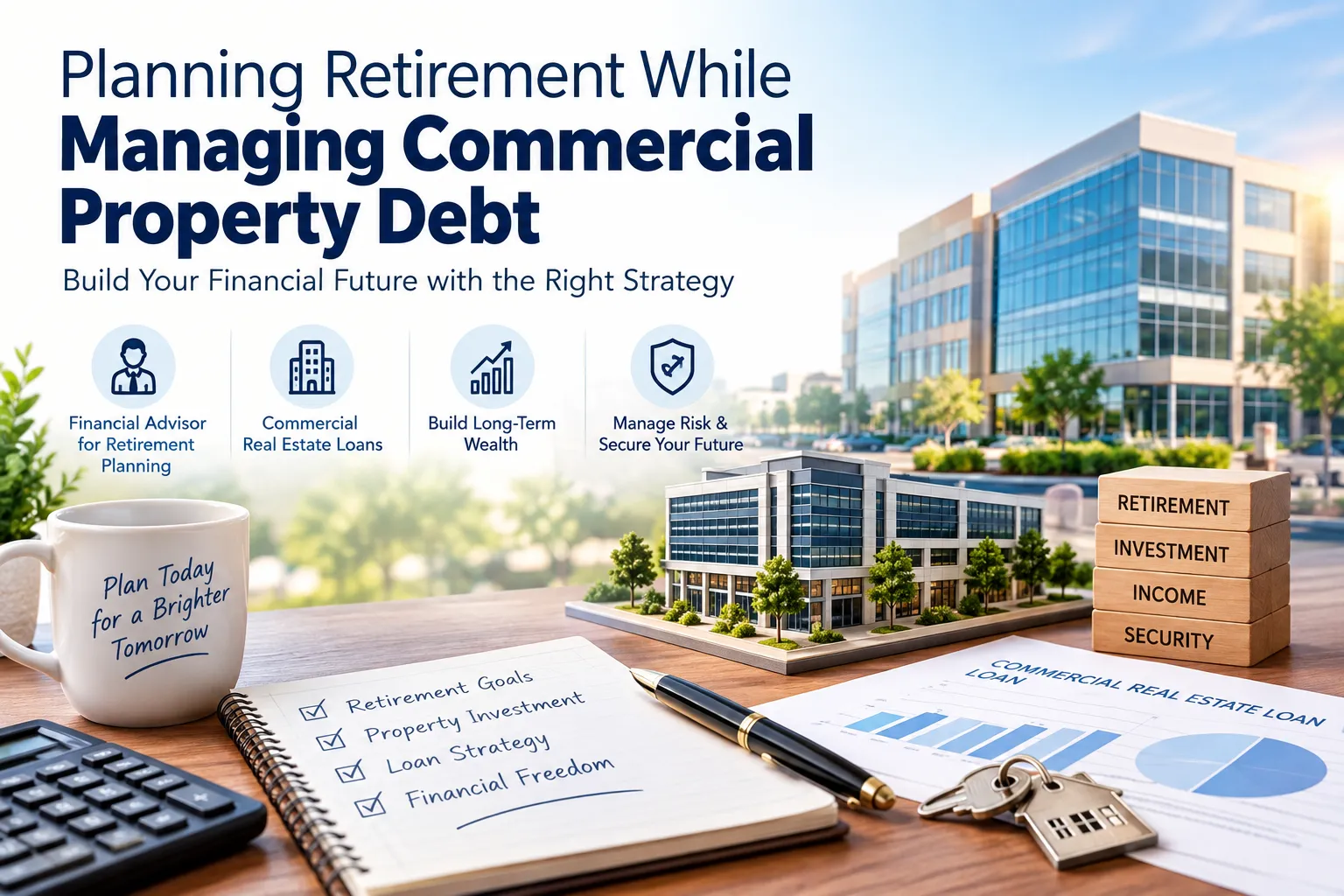
Owning commercial real estate can be a powerful way to build long-term wealth, but property debt can also become a challenge when retirement gets closer. Monthly loan payments, maintenance costs, vacancies, taxes, and refinancing requirements can all affect the amount of money available for retirement savings and personal expenses.
The solution is not necessarily to avoid commercial real estate. Instead, investors need to understand how property financing fits into their complete financial picture.
A well-structured plan can help balance real estate opportunities with retirement security. This means looking beyond the property's potential appreciation and considering cash flow, debt obligations, liquidity, investment diversification, and future income needs.
Why Commercial Property Debt Requires Long-Term Planning
Commercial properties often involve larger financing commitments than residential investments. The loan may remain in place for many years, and the terms can affect both business finances and personal wealth.
When retirement is several years away, a property loan may seem manageable because employment or business income provides another source of cash flow. The situation can change once that income decreases.
Before taking on or refinancing commercial property debt, consider how the loan could affect your finances at different stages of life.
Important questions include:
- When will the loan mature?
- How much principal will remain at retirement?
- Will rental income cover operating expenses and debt payments?
- How much cash should be kept in reserve?
- What happens if the property becomes vacant?
- Could refinancing become more expensive?
- Will the property remain suitable for your long-term goals?
Answering these questions early can prevent a financing decision from becoming a retirement problem later.
Understanding Commercial Real Estate Loans
Commercial Real Estate Loans are generally used to finance properties intended for business, investment, or income-producing purposes. They may be used for acquisitions, refinancing, construction, renovations, or property expansion.
Lenders can evaluate several factors when considering an application. These may include the property's value, income-producing ability, borrower's financial strength, credit history, down payment, debt-service coverage ratio, and overall transaction risk.
Loan terms can differ considerably between lenders and properties. Interest rates, amortization schedules, maturity dates, fees, collateral requirements, and prepayment provisions can all influence the total financial commitment.
For this reason, comparing financing based only on the interest rate can produce an incomplete picture.
Calculate the Property's True Cash Flow
Rental income alone does not determine whether a commercial property is financially healthy.
An investor should account for operating expenses before deciding how much income the property can realistically contribute toward financial goals.
Potential expenses include:
- Property taxes
- Insurance
- Repairs and maintenance
- Property management
- Utilities
- Leasing expenses
- Capital improvements
- Vacancy losses
- Loan payments
After accounting for these costs, the remaining cash flow provides a more useful picture of the property's financial performance.
Conservative projections are especially important for retirement planning. Assuming maximum occupancy and continuous rent increases may make an investment look stronger than it actually is.
How a Financial Advisor for Retirement Planning Can Help
A financial advisor for retirement planning can look at commercial property debt alongside retirement accounts, investments, savings, insurance, taxes, and expected future expenses.
This broader perspective can reveal issues that may be missed when real estate is evaluated independently.
For example, an investor might have significant equity in commercial property but relatively little liquid savings. On paper, their net worth may appear strong. However, limited liquidity could become a problem if the property requires a major repair or experiences a prolonged vacancy.
A retirement-focused financial review can help determine whether the overall balance between real estate and liquid investments is appropriate.
Should You Pay Down the Property Loan?
Paying down commercial debt before retirement can reduce future interest expenses and monthly obligations. However, using all available cash to reduce a loan may not always be the best approach.
Consider an investor with a large commercial mortgage and minimal emergency savings. Making an aggressive principal payment could reduce debt but leave insufficient cash for unexpected expenses.
Another investor may have strong liquidity and a loan with unfavorable terms. Accelerating repayment could make more sense in that situation.
The decision should consider:
- Interest rate
- Loan maturity
- Available cash
- Investment returns
- Tax considerations
- Retirement timeline
- Expected property income
- Personal risk tolerance
There is no single debt-reduction strategy that works for every property owner.
Pay Attention to Loan Maturity
Loan maturity deserves special attention as retirement approaches.
Some commercial financing arrangements have a maturity date that occurs before the underlying amortization schedule would fully repay the balance. This can leave the borrower with a substantial amount that needs to be refinanced or paid off.
Refinancing may appear straightforward when market conditions are favorable. But future rates, property values, lender requirements, and economic conditions cannot be guaranteed.
If a loan is expected to mature near retirement, consider potential repayment or refinancing options well in advance.
Protect Your Retirement With Adequate Liquidity
Real estate can be valuable without being easy to convert into cash.
Selling a commercial property can take months and may involve commissions, taxes, legal expenses, and other transaction costs. That makes liquid assets particularly important for investors who depend on property income.
Maintaining appropriate cash reserves can help cover:
- Unexpected property repairs
- Temporary vacancies
- Loan payments
- Personal emergencies
- Healthcare expenses
- Investment opportunities
Liquidity can provide flexibility when circumstances do not go according to plan.
Avoid Depending on One Property for Retirement Income
A commercial property may become an important source of retirement cash flow, but relying too heavily on one asset can increase financial risk.
Tenant turnover, local market conditions, property damage, economic changes, and unexpected expenses can affect income.
Diversifying across retirement accounts, market investments, cash reserves, and real estate may help reduce dependence on any single source.
The appropriate mix depends on individual goals, time horizon, financial resources, and risk tolerance.
Stress-Test Your Retirement Strategy
One of the most useful ways to identify potential problems is to test your financial plan under unfavorable conditions.
Consider what would happen if the property experienced:
- Six months of vacancy
- Higher-than-expected maintenance costs
- Lower rental income
- Rising insurance expenses
- A decline in property value
- Higher refinancing costs
- A delayed sale
Then consider whether your personal finances could absorb the difference.
If the answer is no, you may need larger reserves, lower leverage, additional income sources, or a different investment strategy.
Review the Tax and Estate Implications
Commercial property can have tax and estate-planning considerations that extend beyond loan payments.
Property income, depreciation, capital gains, ownership structure, and eventual transfer of the asset can all influence long-term financial outcomes.
A financial professional can help coordinate these considerations with qualified tax and legal professionals when appropriate. The goal is to make sure the property strategy supports broader financial and estate objectives.
Create a Plan Before Retirement Gets Close
Waiting until retirement is only a few years away can make financial adjustments more difficult.
Ideally, investors should periodically review commercial property debt throughout the years leading up to retirement. This allows time to reduce leverage, increase liquid savings, diversify investments, or reconsider the property's role in the overall portfolio.
A regular review can also help identify whether the property is still producing the income and financial benefits originally expected.
Final Thoughts
Commercial real estate can contribute to long-term wealth, but the debt used to acquire property should be managed with retirement in mind. A loan that works well during peak earning years may create unnecessary pressure when employment or business income decreases.
The most effective approach is to evaluate the entire financial picture. Review property cash flow, loan maturity, refinancing risk, liquidity, investment diversification, retirement income, and future expenses together.
For property owners preparing for retirement, professional planning can make it easier to identify financial gaps and decide whether reducing debt, maintaining reserves, diversifying assets, or adjusting the property strategy makes sense.

 Arabic
 French
 Spanish
 Portuguese
 Deutsch
 Turkish
 Dutch
Dutch
 Italiano
 Russian
 Romaian
 Portuguese (Brazil)
 Greek
Greek