


Geometry Dash: A Fun Way to Experience the Thrill of a Geometry Jump
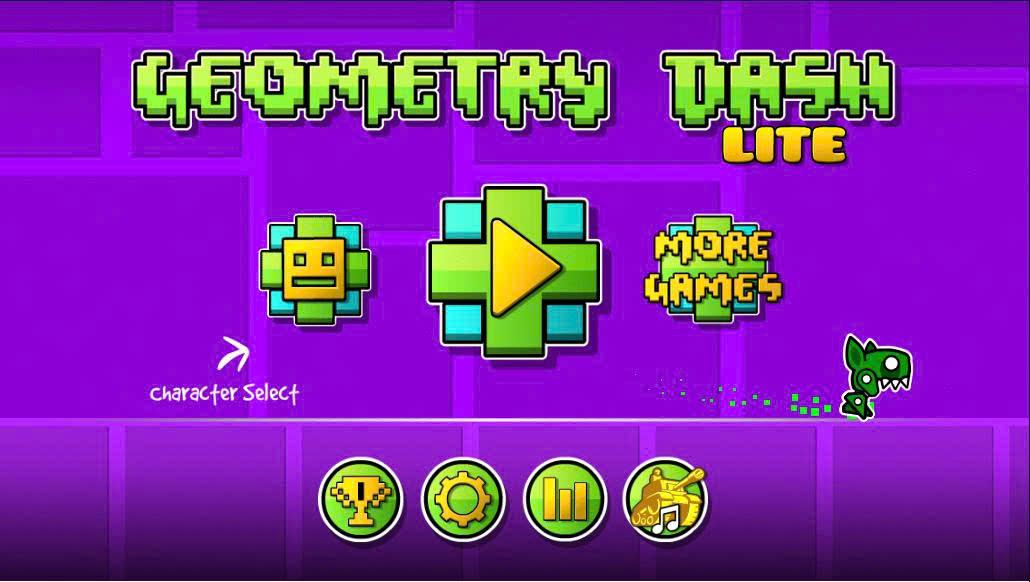
If you want a game that feels simple at first but quickly turns into a real test of rhythm, timing, and patience, Geometry Dash is a great place to start. It looks like a tiny jumping game, but once you begin playing, you realize there is much more happening under the surface. Every level mixes music, movement, and fast reaction time in a way that makes even a short session feel memorable.
Introduction
At its heart, Geometry Dash is a platform game built around one basic action: jumping. You control a small geometric icon and guide it through levels filled with spikes, gaps, moving objects, and sudden traps. The rules are easy to understand, which is part of the charm. You do not need a long tutorial or complicated controls. You just tap, jump, and try to survive.
What makes the game interesting is how it turns that one action into so many different moments. A level can start calmly and then suddenly speed up. A section may look safe, then change rhythm and demand perfect timing. Because of that, the game creates a strong feeling of tension and focus. It is the kind of experience that keeps you saying, “Just one more try.”
Another reason people enjoy it is the music. In Geometry Dash, the soundtrack is not just background sound. It helps shape the pace of the level and gives your jumps a kind of rhythm to follow. When you start syncing your movement with the beat, the game feels more natural and more enjoyable. Even failed attempts can feel like part of the learning process rather than pure frustration.
Gameplay
The gameplay in Geometry Dash is built around quick reactions and pattern recognition. You usually control your icon with one button or one tap. That single input may seem too simple, but the challenge comes from using it at the right moment. Jump too early, and you hit an obstacle. Jump too late, and you fall into a gap. The game asks you to stay alert from beginning to end.
Levels often include different forms of movement. You may begin as a cube, then switch into a ship, ball, wave, or other form with different controls and behavior. Each section changes the way you think about timing. For example, the ship form requires careful press-and-release control, while the wave form feels sharp and fast, almost like drawing a zigzag through the air. These changes keep the gameplay fresh and prevent it from feeling repetitive.
One of the most satisfying parts of the game is learning a level step by step. At first, a difficult stage may seem impossible. But after several tries, you begin to notice the pattern. You remember where the spikes are. You learn the rhythm of the music. You figure out when to jump and when to wait. That sense of improvement is a big reason players keep coming back.
Geometry Dash also works well because each attempt is short. If you fail, you restart quickly and try again. This makes the game easy to pick up even if you only have a few minutes. You can play for a long session or just enjoy a handful of runs. Either way, the loop is simple and satisfying: try, learn, improve, repeat.
Tips
A good way to enjoy Geometry Dash is to stop thinking of failure as a problem. In this game, failing is part of learning. Every crash teaches you something about timing, movement, or level design. Instead of getting annoyed, it helps to treat each run as practice. That mindset makes the game feel much more enjoyable.
It also helps to listen closely to the music. The beat often gives useful clues about when to jump or how fast the level is moving. You do not need to follow the music perfectly, but letting it guide your sense of timing can make a big difference. Many players find that once they start moving with the rhythm, the game becomes easier to read.
Another useful tip is to stay relaxed. Tension can make your timing worse. If you press too hard or rush through a section, you are more likely to make mistakes. A calm approach often leads to better results. Short breaks can help too, especially after repeated failures. Stepping away for a minute can reset your focus and make the next attempt feel cleaner.
If you are playing a level for the first time, try to learn it in sections. Do not worry about finishing the whole thing immediately. Focus on one difficult part at a time. Once you understand how a section works, the full level becomes much less intimidating. This method is especially useful for harder stages where memory and consistency matter.
It is also a good idea to practice levels you enjoy. Since Geometry Dash rewards repetition, having fun with the stage matters. When the music, visuals, and movement all feel satisfying, you are more likely to keep improving naturally. A level you like will always feel easier to revisit than one that only feels stressful.
Conclusion
Geometry Dash is a small game with a surprisingly big impact. Its simple jump-based control system, fast retries, and strong music-driven design make it easy to understand but hard to master. That balance is what gives it lasting appeal. You can play it casually, challenge yourself with harder levels, or simply enjoy the rhythm of moving through each stage.
If you like games that test timing while still feeling light and approachable, Geometry Dash is worth experiencing. It is not about flashy promises or complicated systems. It is about one clean idea done well: jump, learn, and keep going.

 English
 Arabic
 Spanish
 Portuguese
 Deutsch
 Turkish
 Dutch
Dutch
 Italiano
 Russian
 Romaian
 Portuguese (Brazil)
 Greek
Greek