


Trusted Neem Powder Manufacturers & Suppliers in India
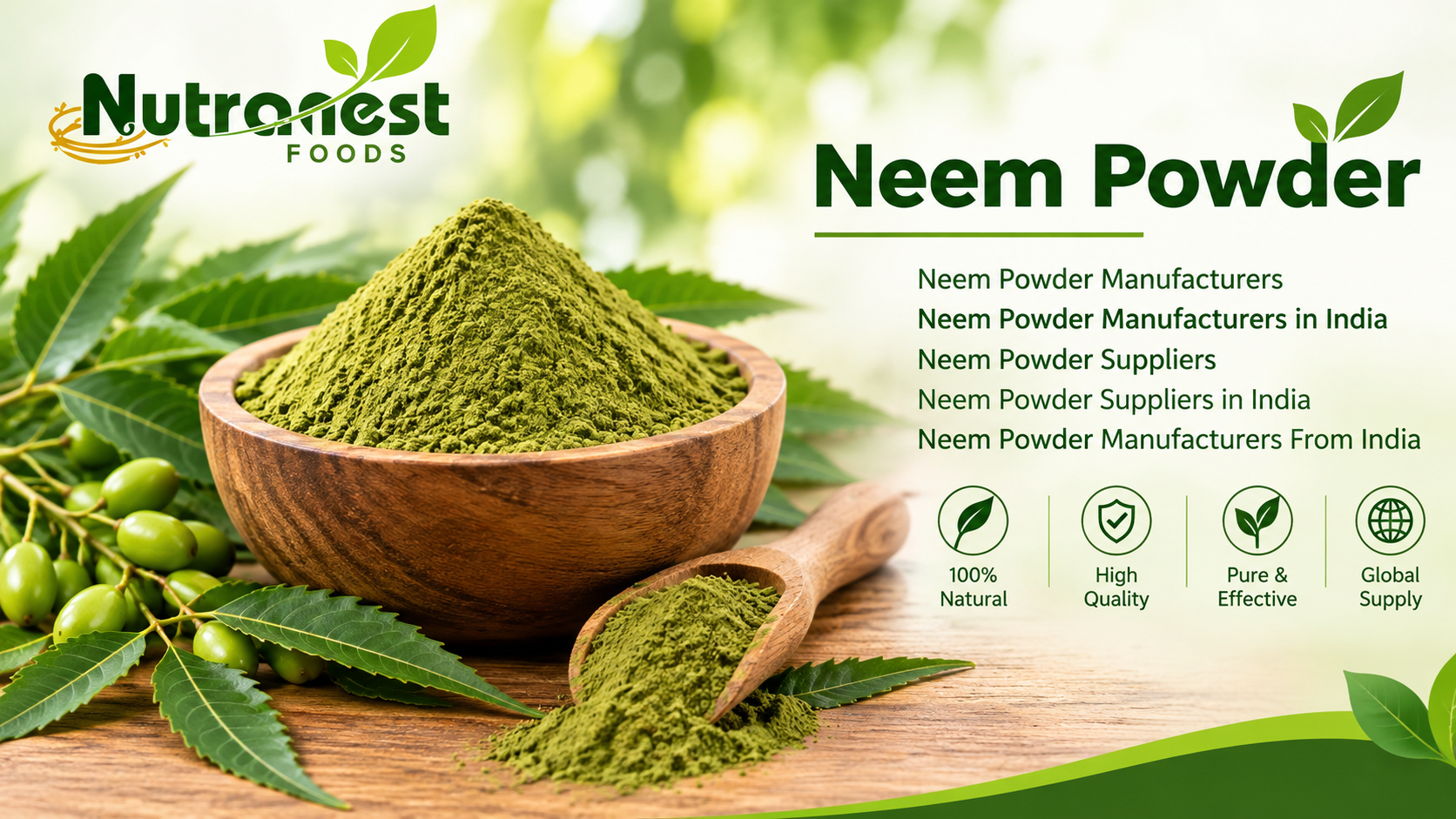
A buyer in Rotterdam once asked us why his last Neem Powder shipment smelled faintly of diesel. The answer was simple and depressing: his supplier dried the leaves next to a highway, on tarpaulin sheets, with trucks idling twenty feet away. Neem powder quality gets decided long before it reaches a mixing vessel at the drying yard, at the grinding stage, in decisions most buyers never see. Nobody tells you that the cheapest quote often hides the dirtiest process. Sourcing from serious Neem Powder Manufacturers means asking questions that make weak suppliers uncomfortable.
The Drying Method Most Buyers Never Ask About
Neem Powder isn't one product. It varies by leaf source, drying method, and particle size — and each variable changes what the buyer actually receives.
Leaf Source and Harvest Timing
Leaves harvested pre-monsoon carry different azadirachtin concentrations than post-monsoon leaves. Suppliers who can't tell you their harvest window usually can't tell you their potency either.
Drying Method
Sun-drying on open ground invites dust, insect matter, and moisture inconsistency. Shade-drying or controlled hot-air drying at 40-45°C preserves bioactive compounds and keeps microbial load down. This single detail sun-dried versus shade-dried is the one most procurement managers skip past, and it's the one that determines whether your finished product passes a microbial test six months from now.
Mesh Size and Sieving
80-mesh, 100-mesh, 120-mesh the finer the grind, the higher the surface area exposed to oxidation. Fine powder for cosmetic use needs different packaging than coarse powder headed for agricultural formulations.
Five Questions That Separate Real Suppliers From Traders
Before signing with any Neem Powder Suppliers, run the relationship through these five checks. A bad answer is more informative than a good one.
-
Do they have a Certificate of Analysis that matches that particular batch, not a template they can make? A bad answer sounds like "we can arrange that after order confirmation." That means the batch hasn't been tested yet.
-
Do they know their azadirachtin content range without checking? A bad answer is “it’s high quality” with no number attached.
-
Is their FSSAI license current and batch-traceable? A bad answer involves a license photo that's clearly several renewal cycles old.
-
Will they commit to a moisture content ceiling in writing? A bad answer is "moisture varies by season," offered as if that settles the matter instead of raising it.
-
Do they have export documentation experience — phytosanitary certificates, fumigation records? A bad answer is silence, followed by "our logistics partner handles that."
A supplier who says "we'll handle defects case by case" doesn't have a policy. That's a negotiation you'll lose after the shipment lands.
Why Working With an Audited Manufacturer Protects Your Margin
Sourcing decisions here aren't about finding the lowest per-kilo rate. They're about avoiding costs that show up three months downstream.
Working with a manufacturer who controls the full chain from leaf collection to final packaging cuts your exposure to adulteration, since blended or diluted batches usually originate somewhere in a multi-hand trading chain you can't audit. Consistent particle size across batches means your downstream formulation doesn't need re-calibration every reorder, which saves both time and rework cost. A supplier with documented moisture control reduces the risk of microbial growth in transit, particularly relevant for shipments crossing humid ports. Traceable batch numbers mean that if a client ever raises a quality complaint, you can pinpoint the exact production run instead of guessing across an entire quarter's stock. And working directly with a manufacturer, rather than a layered trading network, typically shortens your lead time by one full sourcing cycle, because there's no intermediary renegotiating terms before your order even reaches the factory floor.
None of this is glamorous. It's the boring due diligence that keeps a supply chain from falling apart during a busy season.
Sourcing From Surat: A Supply Chain Advantage Buyers Overlook
Gujarat's position matters more than most procurement teams realize. Surat sits within reach of Nhava Sheva port, cutting inland transit time for containerized export shipments compared to sourcing from landlocked herbal-processing clusters further north.
The region also has an established base of small and mid-size herb processors, which means manufacturers here can often source raw neem leaf from multiple nearby districts rather than depending on a single supply zone vulnerable to a bad monsoon. That diversification matters more than it sounds — a drought in one district doesn't necessarily halt your order if your manufacturer sources from three others.
About Us
We've been processing herbal and Ayurvedic powders out of Surat since 2013, and neem has been part of our production line for most of that stretch. We stopped sourcing from one long-standing leaf collector in 2022 after two consecutive batches came in with moisture readings above our internal ceiling not catastrophic, but enough that we didn't want to explain it to a client later. We switched collectors within three weeks. That's the kind of call you can only make when quality control isn't an afterthought bolted onto sales.
Our processing runs through controlled shade-drying, mechanical sieving, and batch-level testing before anything gets bagged. We're not the cheapest name in the directory. We're the one that hasn't had a client come back with a rejected container.
Send us your target mesh size, required azadirachtin range if applicable, and destination port. We typically respond within 24 business hours with a quote and sample availability. Our minimum order quantity for neem powder starts at 500 kg for domestic orders and 1 MT for export containers. Reach out to Nutranestfood directly we'll walk you through moisture specs and COA documentation before you commit to anything.
Conclusion
Neem Powder sourcing rewards buyers who ask uncomfortable questions early rather than convenient ones late. The right Neem Powder partner isn't the one with the fastest reply time it's the one whose answers hold up under a microbial test six months from now. Choose the supplier whose process you'd actually want to see in person.
FAQs
1. What's the shelf life of neem powder under proper storage?
Around 18-24 months in airtight, moisture-controlled packaging, stored away from direct sunlight. It degrades faster than that if the original moisture content was too high to begin with — which is why we test before packaging, not after a complaint.
2. What's the difference between neem leaf powder and neem bark powder?
Leaf powder is more common for cosmetic and agricultural formulations; bark powder carries different compound concentrations and is used more in traditional Ayurvedic preparations. They're not interchangeable in a formulation.
3. Can neem powder manufacturers in India handle private labeling?
Most established manufacturers offer this, including us, but it usually requires a higher minimum order quantity than standard bulk packaging.
4. What certifications should I look for beyond FSSAI?
ISO 22000 and, where relevant, USDA or EU organic certification if the buyer's end market requires it. Ask for the actual certificate number and verify it independently — don't take a PDF at face value.
5. How do neem powder manufacturers from India handle quality disputes after shipment?
A serious manufacturer will have a documented claims process tied to the batch's retained sample, not a case-by-case conversation. If a supplier can't produce a retained sample from your specific batch, that's worth knowing before you order again.

 English
 Arabic
 French
 Portuguese
 Deutsch
 Turkish
 Dutch
Dutch
 Italiano
 Russian
 Romaian
 Portuguese (Brazil)
 Greek
Greek