


Regenerative Medicine for Liver Disease: How Close Are We to Repairing the Liver?
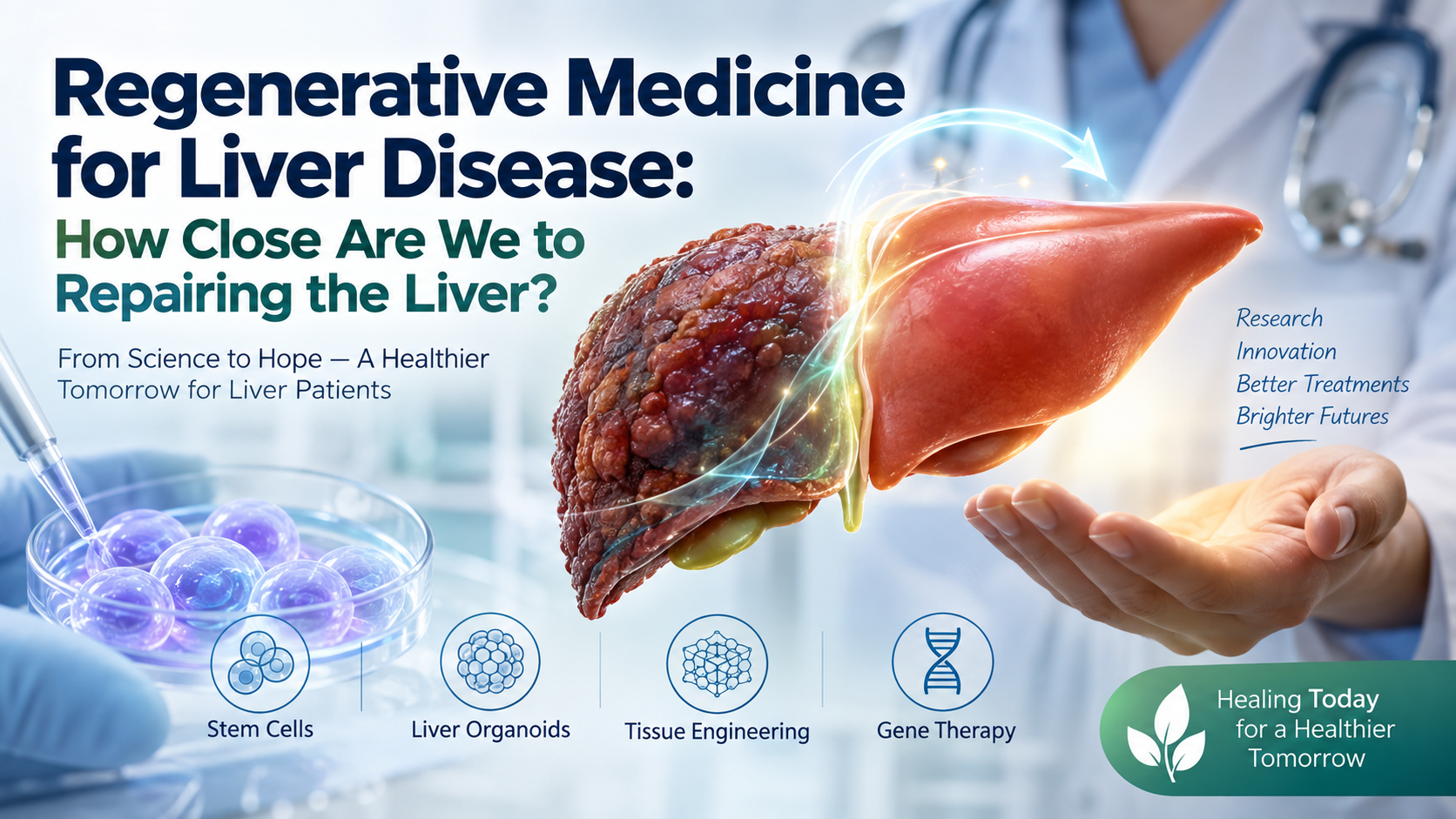
The liver is one of the body's most remarkable organs. It can repair and regenerate itself after certain types of injury. But what happens when liver damage becomes too severe for natural healing? Could science one day repair a badly damaged liver instead of replacing it?
Regenerative medicine for liver disease is exploring exactly this possibility. Researchers are studying stem cells, organoids, tissue engineering, gene-based treatments, and other approaches that could help restore damaged liver tissue.
Explore how regenerative medicine may repair liver damage, its current progress, limitations, and how a liver transplant surgeon in India can help.
Although some of these technologies are still experimental, progress has been encouraging. For people living with advanced liver disease, the big question remains: How close are we to routinely repairing a damaged liver?
The answer is promising—but we are not there yet.
Table of Contents
| Sr# | Headings |
|---|---|
| 1 | What Is Regenerative Medicine for Liver Disease? |
| 2 | Why Can the Liver Regenerate Naturally? |
| 3 | What Happens When Liver Regeneration Fails? |
| 4 | How Stem Cells Could Help Repair the Liver |
| 5 | The Role of Liver Organoids |
| 6 | Tissue Engineering and Artificial Liver Tissue |
| 7 | Gene Therapy and Liver Regeneration |
| 8 | Can Regenerative Medicine Replace Liver Transplantation? |
| 9 | Current Challenges and Limitations |
| 10 | How Close Are We to Regenerating a Human Liver? |
| 11 | What Could the Future of Liver Treatment Look Like? |
| 12 | The Role of a Liver Transplant Surgeon in India |
| 13 | Conclusion |
| 14 | Frequently Asked Questions |
1. What Is Regenerative Medicine for Liver Disease?
Regenerative medicine is a field of medicine focused on repairing, replacing, or restoring damaged cells, tissues, or organs.
Instead of only treating symptoms or managing complications, researchers want to help the body rebuild what has been damaged.
For liver disease, this could involve several approaches:
- Stem cells that develop into liver-like cells
- Organoids that mimic some functions of the liver
- Tissue engineering to create replacement liver tissue
- Gene-based treatments designed to correct or modify disease processes
- Cell-based therapies intended to support the liver's natural repair mechanisms
Think of the liver as a large factory. If a few machines break down, the factory may repair them and continue operating. But if too many machines are destroyed and the structure itself becomes damaged, simple repairs may no longer be enough.
Regenerative medicine aims to provide the liver with the biological tools it needs to rebuild and restore function.
2. Why Can the Liver Regenerate Naturally?
One reason scientists are interested in liver regeneration is that the liver already has an impressive ability to repair itself.
After certain injuries or surgical removal of part of the liver, the remaining liver tissue can grow and restore much of the organ's original volume and function.
However, regeneration does not mean the liver is completely immune to permanent damage.
Repeated injury from conditions such as chronic viral hepatitis, alcohol-related liver disease, metabolic dysfunction-associated steatotic liver disease, autoimmune disorders, or other causes can lead to fibrosis and cirrhosis.
In cirrhosis, normal liver architecture becomes severely distorted by scar tissue. At this stage, simply encouraging liver cells to multiply may not be enough.
This distinction is crucial: a liver can regenerate cells without necessarily being able to completely rebuild healthy liver architecture.
3. What Happens When Liver Regeneration Fails?
Chronic liver injury can gradually reduce the liver's ability to perform its essential jobs.
The liver helps:
- Process nutrients
- Remove or transform harmful substances
- Produce important blood proteins
- Help regulate metabolism
- Produce bile
- Store certain nutrients
- Support immune functions
As liver disease progresses, patients may develop complications such as fluid accumulation, jaundice, bleeding problems, confusion caused by hepatic encephalopathy, or liver cancer.
For advanced liver failure, liver transplantation remains an established potentially life-saving treatment for appropriately selected patients.
This is where regenerative medicine faces one of its biggest challenges. Researchers are not simply trying to produce new liver cells. They need to restore a functioning organ with the correct structure, blood supply, bile drainage, and interactions with other tissues.
4. How Stem Cells Could Help Repair the Liver
Stem cells have received enormous attention in regenerative medicine.
Their attraction comes from their ability to develop into different types of cells under suitable conditions. Researchers are investigating whether particular stem-cell populations can generate liver cells or influence the damaged liver's own repair mechanisms.
There are several broad approaches being studied.
Replacing damaged cells: Scientists are exploring whether laboratory-grown liver cells can be introduced into a patient and contribute to liver function.
Supporting existing liver cells: Some cell therapies may work less like replacement parts and more like repair crews, releasing signals that influence inflammation, fibrosis, or regeneration.
Creating patient-specific cells: Advances in cellular reprogramming may eventually allow researchers to create liver-like cells from a person's own cells.
However, promising laboratory results do not automatically translate into a safe and effective treatment for patients.
Researchers must establish questions such as:
- Do transplanted cells survive?
- Do they perform the right liver functions?
- Can they integrate with existing tissue?
- Can they receive an adequate blood supply?
- Are there risks of abnormal cell growth?
- How long do the benefits last?
These questions are still being investigated.
5. The Role of Liver Organoids
One of the most exciting developments in regenerative biology is the creation of organoids.
Organoids are small, three-dimensional structures grown in laboratories from cells. They are not complete organs, but they can reproduce some characteristics of real tissues.
Researchers have developed liver organoid models to study liver development, disease, drug responses, and potential regenerative therapies.
Why is this important?
Imagine being able to build a miniature version of a damaged liver in a laboratory and study how it responds to different treatments. Scientists could potentially test therapies before moving to human clinical trials.
In the longer term, researchers are investigating whether organoid technology could contribute to cell replacement or tissue repair.
But creating a tiny functioning liver-like structure is very different from creating an entire transplantable human liver.
A future regenerative treatment must overcome major biological engineering challenges, especially vascularization, organization, scale, and long-term function.
6. Tissue Engineering and Artificial Liver Tissue
Another approach combines biology with engineering.
Researchers are exploring ways to create scaffolds that provide a framework on which liver cells can grow. These structures may be designed to resemble aspects of the liver's natural architecture.
The idea is somewhat like rebuilding a damaged house.
You cannot simply deliver bricks and expect a functioning home to appear. You need the correct foundation, rooms, wiring, plumbing, and connections.
Similarly, a functional liver needs an intricate network of:
- Blood vessels
- Liver cells
- Bile ducts
- Supporting cells
- Extracellular structures
- Chemical signaling pathways
Researchers are therefore investigating biomaterials, 3D bioprinting, decellularized organs, and engineered tissues.
These technologies remain largely in the research and development stage when it comes to creating complete replacement livers for routine human transplantation.
7. Gene Therapy and Liver Regeneration
Genes control many of the instructions used by cells. Some liver diseases are caused by genetic abnormalities, while other diseases involve complex changes in cellular pathways.
Gene therapy aims to modify genetic material or its expression to address particular diseases.
For certain inherited liver disorders, gene-based approaches have already moved beyond basic laboratory research, with some therapies being studied or used clinically depending on the specific disease and regulatory approval.
The regenerative potential is particularly interesting because correcting an underlying biological problem could, in some situations, allow healthier liver tissue to function or regenerate more effectively.
However, gene therapy is not a universal solution for liver failure.
Different liver diseases have different causes, and cirrhosis caused by long-term injury presents a very different challenge from a single-gene disorder.
8. Can Regenerative Medicine Replace Liver Transplantation?
This is perhaps the question patients ask most often.
At present, regenerative medicine cannot generally replace liver transplantation for people with established end-stage liver failure.
A transplant provides an entire functioning donor liver, whereas many regenerative approaches are designed to repair selected cells or tissues.
That does not mean transplantation and regenerative medicine are competing ideas.
In the future, they could potentially complement one another.
For example, regenerative technologies might:
- Improve the condition of donor organs
- Help preserve organs before transplantation
- Support recovery after liver surgery
- Treat particular genetic liver diseases
- Reduce liver damage in selected conditions
- Provide new ways to study and test treatments
- Eventually contribute to engineered liver tissue
The ultimate goal may not be a single "replacement" for transplantation. Instead, treatment could become more personalized, with regenerative therapies used at different stages of liver disease.
9. Current Challenges and Limitations
Regenerative medicine is exciting, but it is important to separate scientific potential from established clinical treatment.
Several challenges remain.
Cell survival
Introducing cells into damaged tissue does not guarantee that they will survive. They need oxygen, nutrients, appropriate signals, and connections with surrounding tissue.
Blood supply
A full-sized liver requires an extensive blood-vessel network. Developing functional vascular connections remains one of the major challenges in engineering large organs.
Scar tissue
Advanced cirrhosis involves extensive structural changes. Simply adding healthy liver cells may not remove the underlying scarred architecture.
Safety
Any therapy involving cells or genetic modification must be carefully assessed for unwanted effects, including abnormal growth or inappropriate tissue formation.
Long-term results
A treatment may appear promising initially but still fail if its effects do not last. Researchers need long-term evidence showing that regenerative therapies provide meaningful clinical benefits.
Manufacturing
Producing large numbers of high-quality cells or tissues consistently, safely, and affordably is another major hurdle.
For these reasons, patients should be cautious about clinics promising a "complete liver regeneration" treatment without strong clinical evidence.
10. How Close Are We to Regenerating a Human Liver?
So, how close are we?
The most accurate answer is: regenerative medicine has made substantial progress, but a fully regenerated or laboratory-grown replacement liver for routine clinical transplantation remains a major scientific challenge.
Scientists can already manipulate cells, grow liver-like tissues, study organoids, and develop increasingly sophisticated gene and cell therapies.
But a complete replacement organ must do far more than look like a liver.
It must:
- Have the correct three-dimensional structure.
- Contain functioning liver cells.
- Connect safely to the patient's blood circulation.
- Process nutrients and chemicals effectively.
- Produce essential proteins.
- Handle bile appropriately.
- Remain functional for many years.
- Avoid rejection or other serious complications.
We are closer to targeted liver regeneration than to growing an entire replacement liver on demand.
That distinction is important.
The coming years may bring therapies that help selected patients repair or preserve liver function, even before science reaches the point of creating complete replacement organs.
11. What Could the Future of Liver Treatment Look Like?
Imagine a future in which doctors can take a patient's cells, reprogram them into liver cells, grow them under controlled laboratory conditions, and use them to repair damaged areas.
Or imagine a personalized liver organoid being used to determine which medicine works best for a particular patient's disease.
These possibilities are being investigated, although many remain experimental.
Future liver treatment could potentially combine several technologies:
Precision medicine + regenerative cells + gene therapy + tissue engineering + artificial intelligence
Rather than treating every patient with the same approach, doctors may eventually select therapies based on the cause, stage, genetics, and biological characteristics of an individual's liver disease.
However, medicine advances through carefully conducted research. Treatments must demonstrate safety and effectiveness before they become routine care.
12. The Role of a Liver Transplant Surgeon in India
For someone with advanced liver disease, understanding emerging treatments is valuable—but knowing what is medically appropriate today is even more important.
A liver transplant surgeon in India can assess the severity and cause of liver disease and determine whether transplantation, surgery, medical treatment, clinical-trial participation, or another approach may be appropriate.
Specialist evaluation is particularly important when a patient has signs of advanced liver disease or liver failure.
Regenerative medicine may eventually transform liver care, but liver transplantation remains an important established treatment for selected patients with irreversible end-stage liver disease.
Patients should therefore avoid delaying proven treatment while waiting for experimental regenerative therapies to become available.
At the same time, ongoing research offers genuine hope. Better understanding of liver biology could eventually lead to treatments that prevent progression, restore damaged tissue, improve donor organs, or reduce the need for transplantation in some situations.
13. Conclusion
Regenerative medicine for liver disease is no longer purely science fiction. Stem cells, organoids, gene therapy, tissue engineering, and related technologies are creating new possibilities for treating liver damage.
But we should keep expectations realistic. Repairing a few damaged cells is much easier than rebuilding an entire cirrhotic liver with its complex blood vessels, bile ducts, and microscopic architecture.
For now, complete liver regeneration is not a routine replacement for liver transplantation. Yet the field is moving forward, and future therapies could change how liver disease is prevented and treated.
The liver's natural ability to regenerate gives researchers an extraordinary starting point. The challenge now is learning how to safely guide that ability—and perhaps one day help the liver rebuild itself.
14. Frequently Asked Questions
1. Can a damaged liver repair itself?
Yes, the liver has a remarkable ability to regenerate after certain types of injury. However, severe or long-term damage can cause cirrhosis and permanent changes that may not be reversible through natural regeneration alone.
2. Can stem cells regenerate a cirrhotic liver?
Stem-cell-based therapies are being investigated, but there is currently no established stem-cell treatment that can reliably regenerate a severely cirrhotic human liver and replace the need for transplantation.
3. Are liver organoids available as a treatment for patients?
Liver organoids are primarily being studied as research models and potential future therapeutic tools. They are not currently equivalent to a complete transplantable human liver.
4. Will regenerative medicine eliminate the need for liver transplantation?
It is possible that future regenerative treatments could reduce the need for transplantation in some conditions, but there is no certainty that they will eliminate transplantation. For advanced irreversible liver failure, transplantation remains an established treatment option for appropriately selected patients.
5. When should someone with severe liver disease see a liver specialist?
Anyone with known advanced liver disease, worsening jaundice, abdominal swelling, confusion, gastrointestinal bleeding, or other signs of liver failure should seek prompt medical evaluation. A specialist can determine the appropriate treatment and whether transplant assessment is needed.

 English
 Arabic
 Spanish
 Portuguese
 Deutsch
 Turkish
 Dutch
Dutch
 Italiano
 Russian
 Romaian
 Portuguese (Brazil)
 Greek
Greek