


Wet Timing Belt Replacement Guide: Costs, Symptoms and Benefits
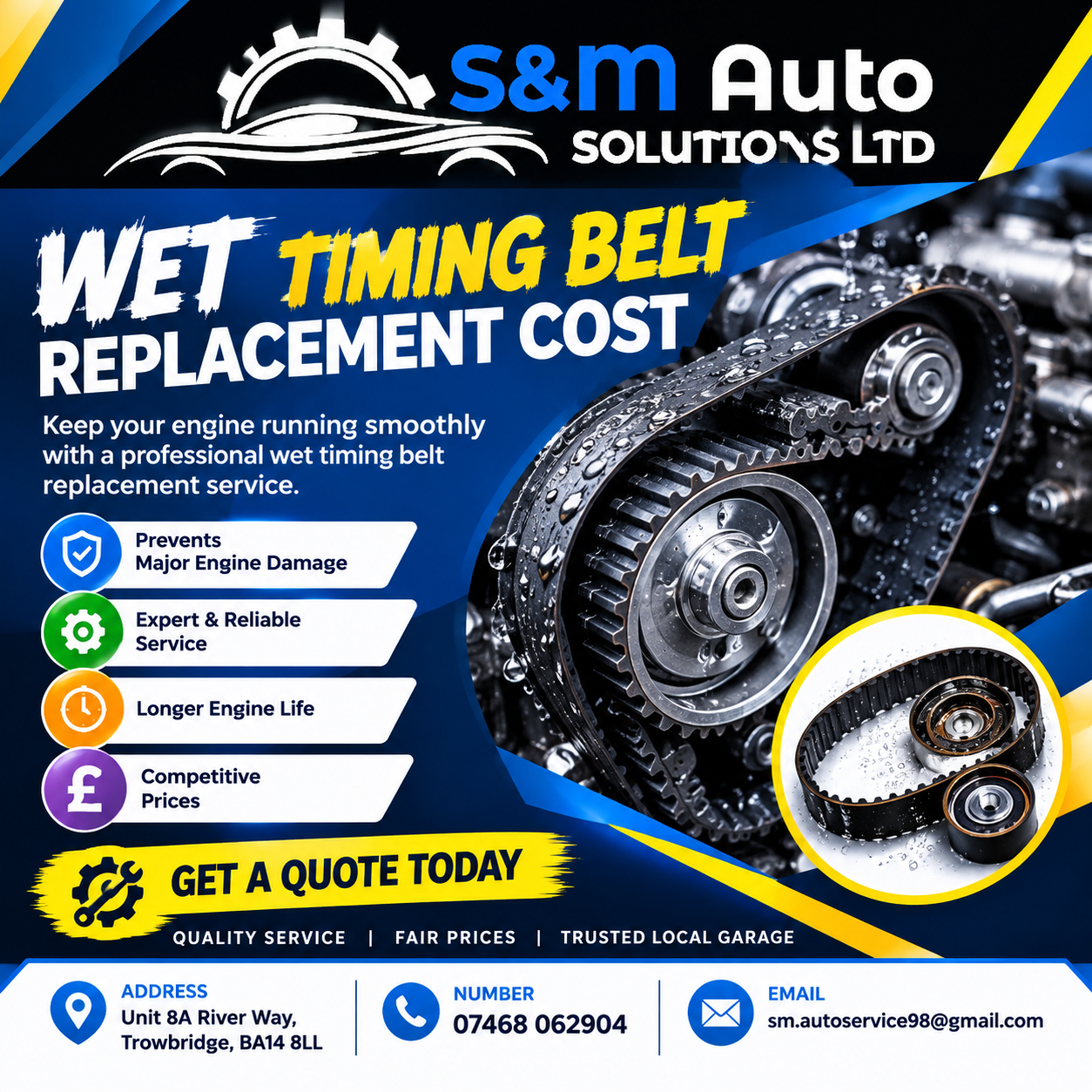
Modern engines are designed to deliver better fuel efficiency, lower emissions, and smoother performance. One technology used in some newer engines is the wet timing belt, which operates inside the engine and is lubricated by engine oil. While this design can offer engineering advantages, it also means that maintenance requirements can be different from those of a conventional dry timing belt.
For vehicle owners, understanding the wet timing belt replacement cost, warning signs, and replacement process can help prevent unexpected repair bills and serious engine damage.

What Is a Wet Timing Belt?
A wet timing belt is a reinforced rubber belt that runs within the engine and operates in an oil environment. Its main job is to synchronise the crankshaft and camshaft so that the engine’s valves open and close at precisely the correct time.
Unlike a traditional dry timing belt, a wet belt is exposed to engine oil throughout its service life. The belt material and engine oil therefore need to work together correctly.
Oil quality is particularly important. Using the wrong specification of oil or extending oil-change intervals beyond the manufacturer’s recommendations may contribute to premature belt deterioration on engines that use this system.

What Affects Wet Timing Belt Replacement Cost?
The cost of wet timing belt replacement varies considerably depending on the vehicle, engine design, parts required and labour involved. A simple belt replacement is not always representative of the complete job because technicians may need to inspect or replace associated components.
Several factors can influence the final cost:
- Vehicle make, model and engine specification
- Accessibility of the timing belt system
- Labour time required for the repair
- Quality and specification of replacement parts
- Whether tensioners or other related components require replacement
- Condition of the belt and contamination within the oil system
- Whether additional cleaning or inspection is necessary
For this reason, vehicle owners should obtain a vehicle-specific assessment rather than relying on a generic online figure.
Signs That a Wet Timing Belt May Need Attention
A wet timing belt does not always provide obvious warning before developing a problem. However, certain symptoms can justify professional inspection.

Potential warning signs include:
- Unusual engine noises
- Difficulty starting the vehicle
- Engine misfiring or running unevenly
- Warning lights appearing on the dashboard
- Changes in engine performance
- Visible belt material or debris in the engine oil
- Oil pressure-related concerns
It is important not to assume that every unusual engine symptom is caused by the timing belt. Diagnostic testing and physical inspection can help identify the actual source of the problem.
What Is Involved in Replacing a Wet Timing Belt?
Replacing wet timing belt systems can be more involved than replacing a conventional belt because the belt operates internally and is exposed to engine oil.
A typical repair may involve:
- Confirming the engine specification and manufacturer’s replacement requirements.
- Inspecting the existing belt and related components.
- Removing components necessary to gain access to the timing system.
- Setting the engine to the correct timing position.
- Removing the old belt and inspecting the system for signs of deterioration.
- Installing the correct replacement belt and associated components where required.
- Reassembling the engine according to manufacturer procedures.
- Checking timing alignment and engine operation.
- Replacing or servicing engine oil and filters when appropriate.
- Carrying out final checks before the vehicle returns to normal use.
Because timing systems are critical to engine operation, the work should be completed using the correct manufacturer specifications and appropriate timing tools.

How Can Owners Reduce the Risk of Premature Belt Failure?
Preventative maintenance is particularly important with wet belt systems. One of the simplest measures is following the manufacturer’s recommended oil specification and service schedule.
Good maintenance practices include:
- Use the correct engine oil specification.
- Avoid unnecessarily extending oil-change intervals.
- Keep service records up to date.
- Check the manufacturer’s recommended belt inspection or replacement interval.
- Investigate unusual engine noises or warning lights promptly.
- Have suspected belt deterioration professionally assessed.
Regular oil servicing is not a guarantee that a timing belt will never fail, but it can help maintain the conditions the engine and belt were designed to operate under.
For motorists searching specifically for wet timing belt replacement Trowbridge, S&M Auto Service provides information about the repair process and factors that can affect the work required. Vehicle owners can use this type of guidance to understand what should be checked before authorising a timing-system repair.

The Importance of Acting Before Failure
A timing belt failure can potentially cause severe internal engine damage because the crankshaft and camshaft can become unsynchronised. Depending on the engine design, valves and pistons may come into contact, resulting in a much larger repair.
That is why replacement intervals should not be ignored simply because the vehicle appears to be running normally. Manufacturer schedules, mileage, age, engine condition and service history should all be considered.
When researching the wet timing belt replacement cost, it is therefore useful to look beyond the price of the belt itself. A professional assessment should consider the complete repair procedure, appropriate parts, labour and any related maintenance that may be required.

Final Takeaway
Wet timing belts can provide useful engineering benefits, but they require the correct maintenance approach. Understanding how the system works, following the correct oil specification and paying attention to manufacturer replacement intervals can help reduce the risk of unexpected problems.
For drivers, the most practical approach is simple: maintain the engine correctly, investigate warning signs early, and have the timing system assessed when its service interval is approaching. This can help protect engine reliability and potentially avoid the much higher costs associated with timing belt failure.
- Read More :
Wet Timing Belt Replacement Guide: Costs, Symptoms and Benefits
Top 10 Things to Know Before Replacing a BMW or MINI Timing Chain
10 Best Car Diagnostic Test Insights for Safer and Smarter Vehicle Maintenance
Best 10 Tips for Finding an Affordable Pre-MOT Check Near Me
Best Timing Belt Replacement Guide: Wet Timing Belt Costs and Maintenance

 English
 Arabic
 French
 Spanish
 Portuguese
 Deutsch
 Turkish
 Dutch
Dutch
 Italiano
 Romaian
 Portuguese (Brazil)
 Greek
Greek