


Custom Wine Bottle Tags: Packaging Trends UK Businesses Should Know
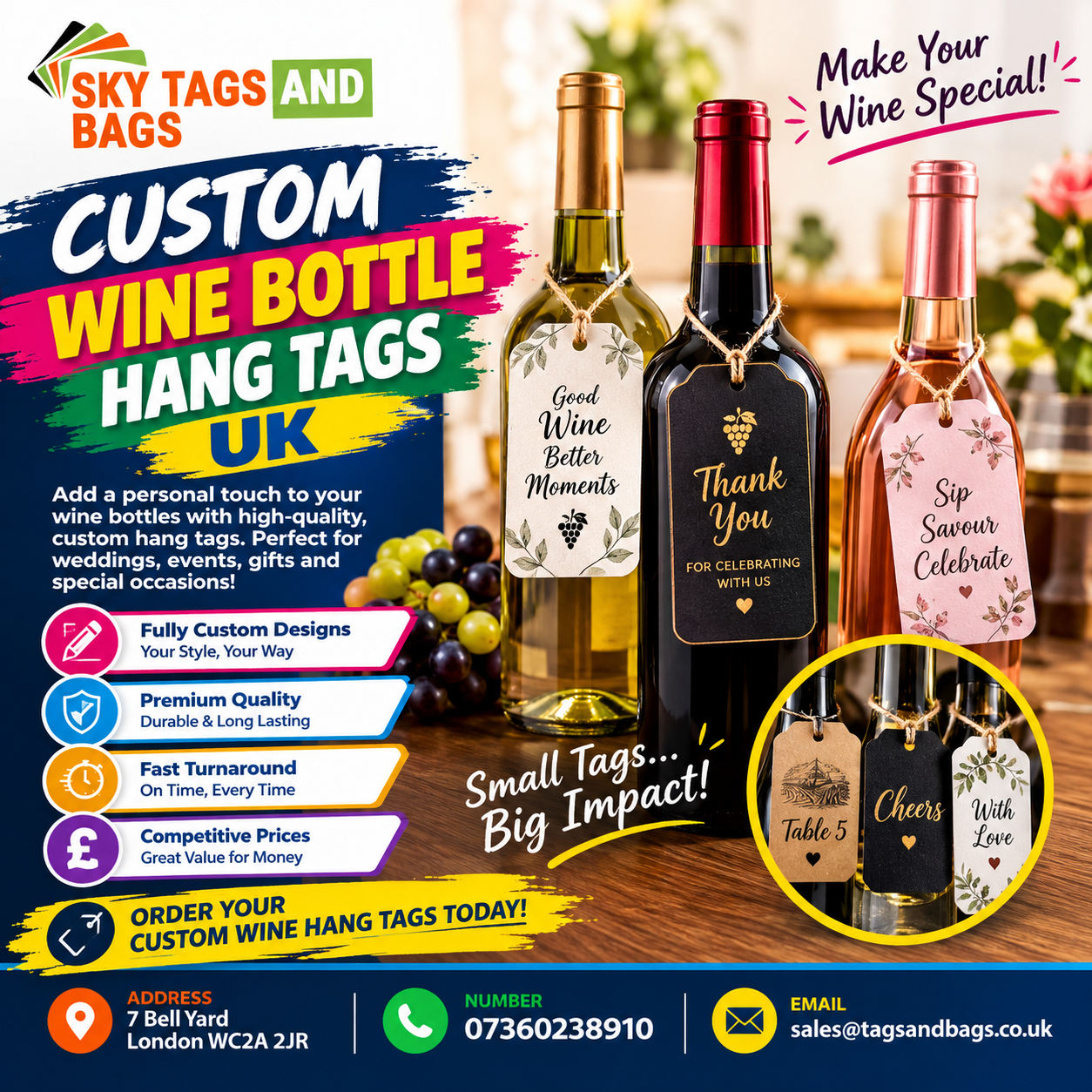
Wine packaging does more than protect a bottle. It can communicate the character of a producer, provide useful information, and create a memorable first impression before the bottle is opened. As retailers, wineries, gift businesses, and hospitality brands look for ways to make packaging more distinctive, small-format printed elements such as bottle neck tags have become increasingly useful.
Custom wine bottle hang tags are particularly effective because they occupy an otherwise unused area around the neck of a bottle. With thoughtful design, they can complement the main label while adding information or branding without making the packaging feel overcrowded.
From independent vineyards and wine merchants to corporate gifting and event suppliers, bottle neck tags can serve several practical purposes. Understanding their materials, design options, applications, and common challenges helps businesses make better packaging decisions.

Why Bottle Neck Tags Are Becoming More Useful
Packaging trends continue to move towards personalisation, storytelling, and more considered presentation. Consumers increasingly encounter products in environments where visual differentiation matters, including specialist shops, online gift collections, restaurants, tasting events, and seasonal promotions.
A bottle neck tag provides an additional communication area without requiring a complete redesign of the bottle label.
For example, a tag may communicate:
- A short product story
- Tasting or serving suggestions
- A gift message
- A promotional message
- A QR code linking to additional information
- A seasonal greeting
- Vineyard or producer details
- Event or occasion information
- Brand messaging
This makes custom wine bottle tags useful not only for wine producers but also for retailers, hospitality businesses and gift companies.
The format can also be adapted to different visual identities. A minimalist design may suit a premium wine, while textured stock, foil details or distinctive shapes can create a more traditional or luxury appearance.
Choosing the Right Style and Material
The physical construction of a bottle neck tag is just as important as its artwork. A tag needs to look appropriate while remaining practical during handling, transportation and display.

Paper and card are common choices because they provide a broad range of printing and finishing possibilities. The appropriate thickness depends on the desired appearance and how the finished product will be handled.
When selecting materials, consider:
Card thickness: Thicker card can create a more substantial feel, while lighter stocks can be suitable for simple informational tags.
Surface finish: Smooth, uncoated, textured or coated finishes can change both the appearance and tactile experience.
Shape: Standard rectangular tags are practical, but rounded, circular or custom-cut formats can create stronger visual differentiation.
Colour: The tag should complement the bottle, primary label and wider brand identity rather than compete with them.
Finishing: Foiling, embossing, special inks and other finishing techniques can be considered when the packaging requires a more distinctive appearance.
For businesses sourcing custom bottle neck hang tags, it is important to check that the selected format is compatible with the bottle shape and neck dimensions. A technically attractive design can become impractical if the opening is too small, too large or poorly positioned.
Practical Applications Across the UK Packaging Market
The flexibility of wine bottle hang tags means they can be used in many different situations.

Retail and Wine Shops
Retailers can use neck tags to highlight awards, tasting notes, special collections or staff recommendations. Because the tag sits directly on the bottle, the information can be noticed while shoppers are browsing shelves.
Corporate and Promotional Gifting
Wine is frequently included in business gifts and hospitality packages. A personalised neck tag can provide a simple way to acknowledge an occasion or reinforce a company’s visual identity without permanently altering the bottle.
Weddings and Events
Event planners can use personalised tags for weddings, anniversaries, dinners and celebrations. Names, dates, short messages and event themes can be incorporated into the design.
Wineries and Independent Producers
Smaller producers may use tags to explain the background of a particular wine, introduce a limited release or direct customers towards digital content. A QR code can connect the physical packaging with tasting information, videos or a producer’s website.
Hospitality
Hotels, restaurants and catering businesses can use bottle tags for special menus, private functions or promotional events. The additional printed area can provide context without interfering with the bottle’s primary label.

These applications demonstrate why custom bottle neck tags UK suppliers serve a range of industries beyond traditional wine production.
Designing Effective Custom Bottle Tags
Good packaging design is not simply about adding as much information as possible. A bottle neck tag has limited space, so hierarchy is essential.
The most important message should normally be identifiable within a few seconds. Supporting information can then be presented in smaller sections.
A useful design process includes:
- Define the purpose. Decide whether the tag is primarily informational, promotional, decorative or personalised.
- Identify the audience. A retail shopper may need different information from a wedding guest or corporate recipient.
- Prioritise content. Avoid filling the available space simply because it exists.
- Maintain brand consistency. Use typography, colours and imagery that relate to the wider packaging.
- Check readability. Small text can become difficult to read once printed.
- Consider the bottle itself. The tag should complement rather than obscure the bottle and its main label.
- Test the physical fit. Confirm the neck opening and dimensions before committing to a large production run.
Businesses researching custom wine tags UK options should also consider how the finished tags will be attached. The hole size, positioning and choice of string or ribbon can affect both presentation and usability.

Common Challenges and How to Avoid Them
One of the most common packaging problems is designing only for the screen. A digital proof may look excellent but behave differently when printed, cut and attached to a physical bottle.
Colour reproduction, small typography, finishing alignment and cutting tolerances should therefore be checked carefully.
Another issue is excessive information. A neck tag should support the main packaging rather than duplicate every detail already printed on the bottle.
For businesses ordering custom bottle tags UK, consistency is also important. If tags are being produced for multiple wines or product ranges, establishing a clear design system can make the collection feel more cohesive.
It is also worth considering transportation. Tags that look attractive in a showroom need to remain secure and presentable during storage, delivery and shelf handling.
A practical quality-control checklist can include:
- Correct dimensions and hole placement
- Accurate spelling and product information
- Readable typography
- Consistent branding
- Suitable card or paper stock
- Secure attachment method
- Correct finishing specifications
- Appropriate packaging for delivery
These simple checks can prevent avoidable production problems.
Combining Physical Packaging With Digital Information
One emerging approach is to use packaging as a bridge between physical and digital experiences. A small QR code on a bottle neck tag can provide access to information that would otherwise be difficult to fit onto a compact printed format.

Depending on the business, this could lead to:
- Tasting notes
- Food pairing suggestions
- Producer stories
- Product videos
- Event information
- Sustainability information
- Online catalogues
- Brand websites
The key is to ensure that the QR code remains large and clear enough to scan easily. It should also lead to a mobile-friendly destination.
This approach allows a relatively small printed component to provide significantly more information without creating a cluttered design.
A More Considered Approach to Bottle Packaging
Bottle packaging continues to evolve as businesses look for ways to combine visual appeal with practical communication. Wine bottle neck tags UK businesses use can be simple or highly detailed, depending on the application, but their effectiveness ultimately depends on how well the format supports the overall packaging strategy.
For businesses exploring specialised bottle-neck formats, providers such as Tags and Bags offer examples of how custom tags can be developed for wine and water bottles while accommodating different branding and presentation requirements.

The most successful approach is usually not the most complicated one. A well-sized tag, clear message, suitable material and thoughtful finishing can create a stronger result than excessive decoration or information.
Conclusion
Bottle neck tags are a small packaging component with considerable versatility. They can add information, personality and context while making better use of the space around a bottle neck.
Whether used for retail presentation, corporate gifting, weddings, hospitality, seasonal campaigns or independent wine production, custom wine bottle hang tags can complement the primary label and create another point of communication with the customer.
The most important considerations are purpose, readability, material, fit, attachment and consistency with the wider packaging design. By treating these details as part of the overall customer experience rather than as an afterthought, businesses can create bottle packaging that feels more useful, distinctive and professionally considered.
- Read More :
Custom Wine Bottle Tags: Packaging Trends UK Businesses Should Know
10 Essential Ways Swing Tags Can Improve UK Retail Product Presentation
Best 10 Ways Custom Tags for Bags Can Improve Your Packagin
QR Code Swing Tags: Merging Print with Digital Experiences
Should Shops Charge for Paper Bags? 7 Key Reasons UK Shops Should

 English
 Arabic
 French
 Spanish
 Portuguese
 Turkish
 Dutch
Dutch
 Italiano
 Russian
 Romaian
 Portuguese (Brazil)
 Greek
Greek