


Heat Transfer Fluids for Efficient Thermal Systems
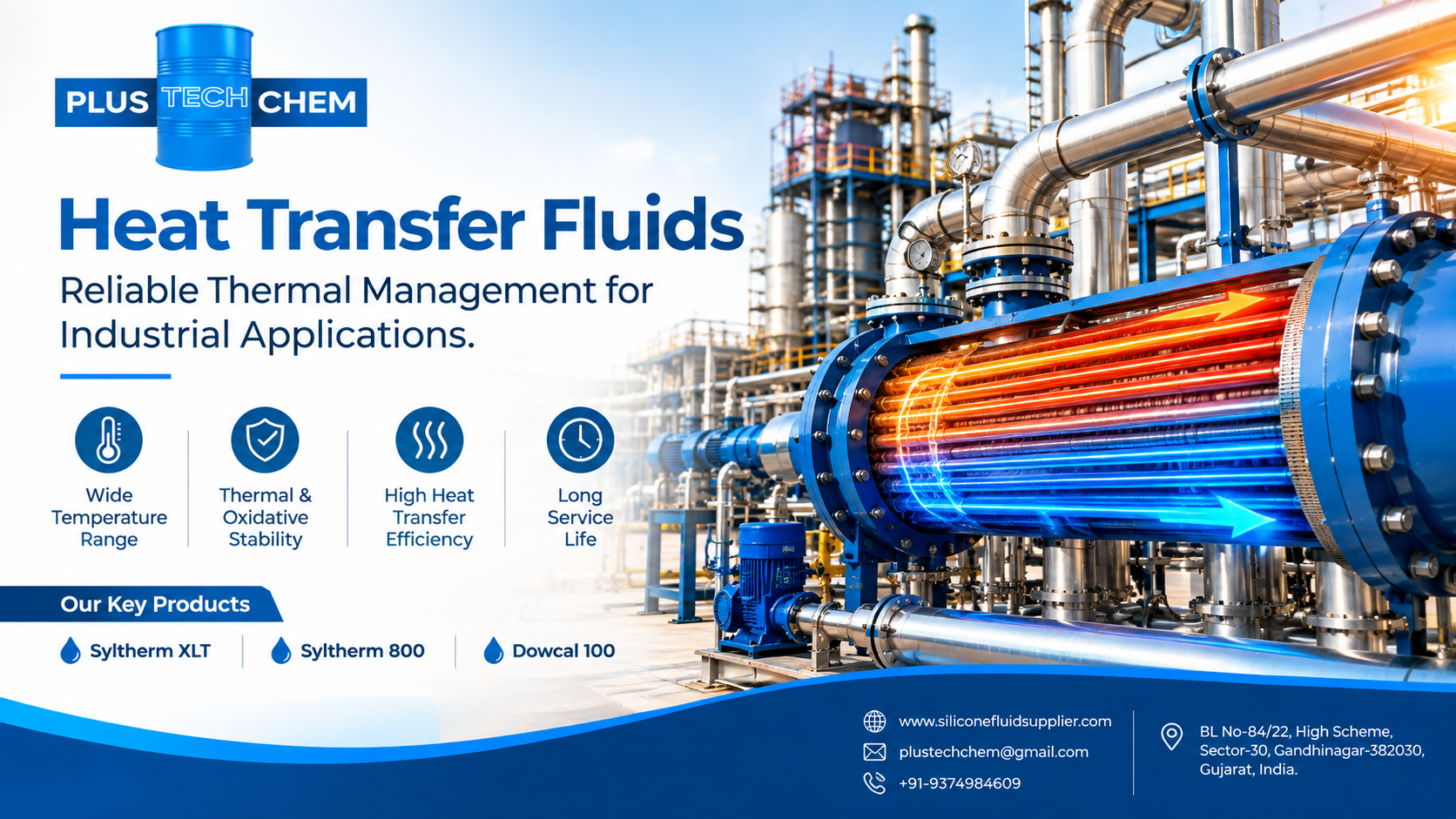
The receiver takes longer to climb to set temperature, the pump load increases and production blames the heater.
Many times the real problem doesn‘t lie within the heater. If heat transfer fluids are underestimated or degraded they could diminish the pumping power, deposit, produce hot spots within a thermal system. Industry has different working boundary conditions: DOWCAL 100 is used from -50ºC to 175ºC; and SYLTHERM 800 - up to 400ºC. Mixing up both just for saving some bucks would be a gross negligence. The correct fluid should be related to the recommended working temperature, start-up operation, equipment metallurgy, pump capacity, and safety requirements.
Specifications That Decide Whether the Fluid Will Work
Match Fluid Chemistry to the Temperature Window
Glycol-based fluids are commonly considered for cooling, freeze protection and moderate-temperature heating. Silicone fluids serve wider or more demanding temperature ranges where thermal stability matters.
Plustech Chem lists three relevant products:
-
SYLTHERM XLT: A silicone fluid with a published maximum operating temperature of 260°C and low-temperature capability down to -100°C.
-
SYLTHERM 800: A stabilized silicone fluid recommended between -40°C and 400°C.
-
DOWCAL 100: An ethylene glycol-based fluid recommended between -50°C and 175°C.
These figures are product-specific operating recommendations, not permission to run every system at the published limit.
The Film Temperature Buyers Commonly Ignore
Bulk temperature is not to be confused with film temperature.
Fluid in contact with the heater surface can be much hotter then the indicated process temperature at the system outlet. Surpassing the film-temperature limit can speed up cracking formation, produce low-boiling fractions and raise the pressure in the system. Buyers usually provide suppliers with only the process temperature they are targeting. This is incomplete engineering data.
Ensure also to check the viscosity at cold start, density, specific heat, vapour pressure, flash point, material compatibility and corrosion protection. One fluid that is efficient at 180°C may still load heavily during a cold January start.
Five Questions That Expose a Weak Supplier
1. Can the Supplier Document the Operating Range?
A credible answer identifies the minimum temperature, maximum bulk temperature and film-temperature limit. A bad answer is, “It works for high temperatures,” with no technical data sheet.
2. Will the Supplier Review the Existing System?
Share heater capacity, total fluid volume, pump specifications, metallurgy and expansion-tank arrangement. A bad supplier recommends a grade after hearing only the required temperature.
3. Is Batch and Safety Documentation Available?
Ask for the technical data sheet, safety data sheet, batch identification and manufacturer documentation. “We will send the papers after dispatch” is a bad answer because verification then happens after your money and material have moved.
4. What Packaging and Quantity Can Be Supplied?
Confirm pack size, MOQ, lead time and whether repeat lots are available. A vague promise of “any quantity anytime” usually means the stock position has not been checked.
5. What Happens If the Fluid Arrives Damaged?
Demand a written process covering leaking drums, seal damage, transit shortages and incorrect material. A supplier who says defects will be handled “case by case” does not have a policy. That negotiation becomes much harder after the consignment reaches your factory.
Benefits Measured in Avoided Risk
More Stable Process Temperatures
Correct viscosity and heat-transfer properties reduce temperature variation, protecting batch consistency in textile processing, reactors, cosmetics, pharmaceuticals and food production.
Lower Pumping and Start-Up Risk
SYLTHERM XLT remains usable down to -100°C, which matters in low-temperature pharmaceutical and environmental systems where poor cold-start pumpability can delay production.
Less Fouling at Heater Surfaces
A thermally stable fluid is less likely to leave high-molecular-weight deposits when operated correctly. Cleaner surfaces preserve heat exchange and reduce unplanned shutdown work.
Better Corrosion Control
Inhibited glycol fluids can protect mixed-metal systems when concentration and inhibitor condition are maintained. Plain glycol is not an acceptable substitute; it can degrade into acidic compounds and increase corrosion risk.
Longer Replacement Intervals
Proper selection, controlled oxidation and periodic fluid analysis can delay a full charge replacement. That protects both maintenance budgets and production schedules.
Safer System Planning
Known flash point, toxicity, vapour pressure and expansion behaviour allow engineering teams to size ventilation, seals and expansion capacity using actual data rather than assumptions.
Availability from Heat Transfer Fluids Suppliers in India
India’s industrial clusters create a practical logistics problem: a drum moving from Gujarat to Noida, Pune, Chennai or Hyderabad may face long road transit, high ambient temperatures and several handling points.
Plustech Chem has operated in this product category from Gandhinagar since 2022 and lists SYLTHERM XLT, SYLTHERM 800 and DOWCAL 100 among its available products. Buyers comparing Heat Transfer Fluids Manufacturers in India should still confirm current stock, sealed packaging, dispatch location and batch documents before issuing a purchase order.
Good heat transfer fluids suppliers in India should also identify whether a requested grade is locally stocked or ordered against demand. That distinction directly affects lead time.
About Plustech Chem: What We Actually Supply
We are a multi-brand silicone chemical supplier operating under a single roof and so have three of the following named thermal-fluid lines; SYLTHERM XLT, SYLTHERM 800 and DOWCAL 100 having been in this category in 2022, we have found that the hardest part is not quoting what drum size it should be, it is collating the system data beforehand to enable us to feel confident that we know what to recommend should be fitted into it! We inquire about operating temp, type of gear and the fluid already present, the volume needed and delivery address, etc. Before we approve.
Please provide us six specifics: required temperature range, application, existing fluid, system capacity, delivery postcode, and time of purchase anticipated. We will then respond with: recommending product, pack size availability, shipping turnround, purchasing proposal. Turnround: [confirm before publication]MOQ: [confirm before publication] Buyers can speak to us directly or submit an Enquire via the Plustech Chem contact page.
Conclusion
Selecting Heat Transfer Fluids by price alone is a weak purchasing decision because one product may stop at 175°C while another is rated to 400°C. Compare chemistry, operating limits, cold-start viscosity and documentation before approving a supplier. The right decision now will support more predictable thermal performance as production demands increase.
FAQs
1. Which heat transfer fluids are suitable for industrial heating?
The answer varies; it is simply a matter of the temperature window and the system. DOWCAL 100 is suitable for moderate-temperature applications of up to 175°C and SYLTHERM 800 is rated for use up to 400°C.
2. How should I compare heat transfer fluids manufacturers?
Compare technical documentation, brand authorisation, batch traceability, stock status and knowledge of application. Comparison is pointless if a cheap quote isn‘t supported with a verifiable product identity
3. Are heat transfer fluids manufacturers in India suitable for bulk requirements?
A few are, but it depends; make sure you specify which stocks are available, minimum order quantity, pack quantities, and the capability for repeat-supplies prior to issuing a bulk order - one website claim is not evidence.
4. What information do heat transfer fluids suppliers require?
Input minimum and maximum temps, equipment type, current fluid, system capacity, metallurgy and delivery location. Without those considerations, anything over a broad general guideline is guess work.
5. Can heat transfer fluids suppliers in India recommend a replacement fluid?
Yes, if they review the current conditions of the product and system. The direct mixing may not be safe, however, it may be necessary to do the complete draining or flushing.

 Arabic
 French
 Spanish
 Portuguese
 Deutsch
 Turkish
 Dutch
Dutch
 Italiano
 Russian
 Romaian
 Portuguese (Brazil)
 Greek
Greek