


Structural Repair Contractors for Concrete Restoration
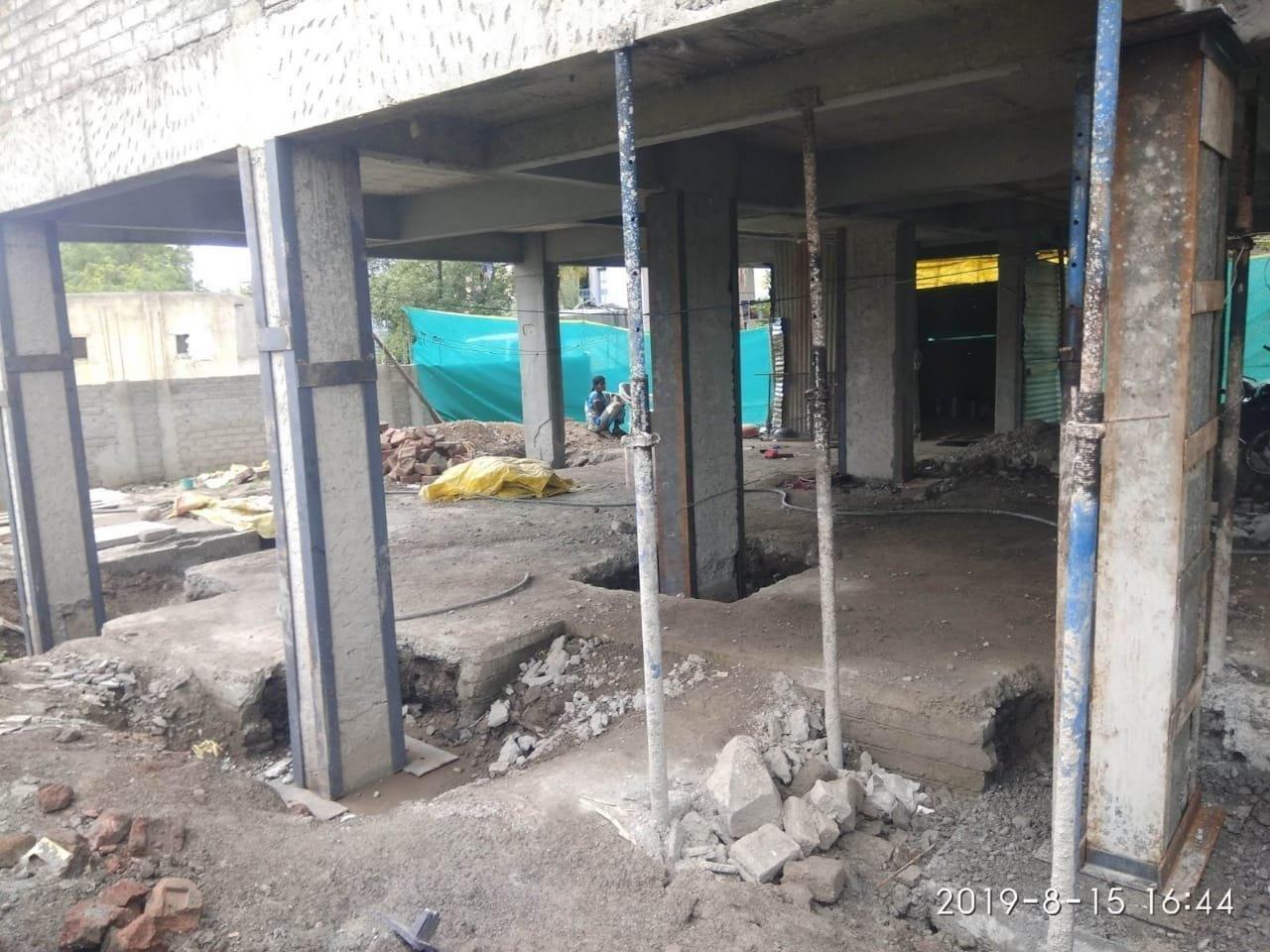
Structural repair services are essential when buildings, industrial structures, bridges, and other concrete assets begin showing signs of deterioration, damage, or reduced performance. Cracks, exposed reinforcement, concrete spalling, water leakage, corrosion, and weakened structural members should not be treated only as surface-level problems. Proper structural repair focuses on identifying the reason behind the damage, assessing the existing condition, and applying an appropriate engineering solution to restore the structure.
Why Existing Structures Require Structural Repairs
Concrete structures are designed to perform for many years, but their condition can change because of environmental exposure, moisture, corrosion, excessive loading, construction deficiencies, chemical exposure, poor maintenance, and natural ageing. Over time, these factors can affect concrete and reinforcement. Structural repair contractors therefore need to understand both the visible damage and the conditions responsible for its development before deciding which repair technique should be implemented.
Common Signs That a Structure Needs Repair
Some structural problems develop gradually and may initially appear minor. Cracks in beams, columns, slabs, or other important members can indicate deterioration that requires investigation. Other warning signs include concrete spalling, exposed reinforcement, rust marks, dampness, unusual deflection, damaged joints, and recurring leakage. Identifying these signs early allows property owners and facility managers to arrange suitable structural inspection and repair before deterioration becomes more extensive.
Understanding the Cause Before Starting Repairs
A successful repair cannot depend only on covering visible damage. The underlying cause must first be understood because the same type of surface defect can develop from different mechanisms. For example, cracking may be related to shrinkage, movement, corrosion, overloading, settlement, or other conditions. Similarly, concrete deterioration may result from moisture ingress or aggressive exposure. Understanding the cause helps structural repair contractors develop a repair strategy suited to the actual condition.
Structural Inspection and Condition Assessment
Structural inspection is an important stage before selecting a repair method. Engineers examine visible defects and may evaluate concrete quality, reinforcement condition, crack patterns, member dimensions, previous repairs, and environmental exposure. Depending on project requirements, non-destructive testing and other investigation techniques can help provide additional information about the existing structure. The assessment creates a technical basis for determining the nature, extent, and priority of required repair work.
Repairing Cracks in Concrete Structures
Concrete cracks can vary significantly in width, depth, location, movement, and cause. Therefore, the same repair treatment cannot be applied to every crack. Depending on the assessment, repair may involve crack sealing, injection, routing and sealing, epoxy-based treatment, polyurethane injection, or another suitable technique. The objective is to address the specific condition while preventing water entry, restoring continuity where required, and reducing the possibility of recurring deterioration.
Concrete Spalling and Damaged Concrete Repair
Concrete spalling occurs when portions of concrete become detached from the structural member, sometimes exposing the reinforcement underneath. Before restoration, loose and unsound concrete needs to be removed carefully so that the affected area can be properly examined. Reinforcement may require cleaning and protection before the damaged section is rebuilt using an appropriate repair material. Proper surface preparation and compatibility between old and new materials are important considerations during concrete repair.
Reinforcement Corrosion and RCC Repair
Reinforcement corrosion is a common concern in reinforced concrete structures exposed to moisture and aggressive environments. Corrosion can cause cracking, delamination, spalling, and loss of reinforcement section when deterioration continues. RCC repair therefore needs to address both the damaged concrete and the condition of the reinforcement. Depending on the assessment, repair work may include concrete removal, reinforcement treatment, section restoration, and protective measures designed for the specific exposure environment.
Water Leakage and Structural Deterioration
Water can contribute significantly to the deterioration of concrete structures when it repeatedly enters through cracks, joints, damaged waterproofing systems, or other vulnerable locations. Persistent moisture can promote reinforcement corrosion and damage concrete over time. Structural repair services may therefore need to address both the structural damage and the water-entry pathway. Treating only the visible internal damage without controlling the source of moisture can result in recurring problems.
Structural Repair Methods for RCC Structures
Different structural conditions require different repair approaches. Depending on the assessment, repair methods can include polymer-modified mortar repair, micro-concrete restoration, epoxy injection, PU injection, guniting, shotcreting, reinforcement treatment, protective coatings, and other engineered solutions. More extensive conditions may require strengthening through jacketing, steel systems, or fibre-reinforced materials. The appropriate method should be selected according to structural requirements rather than simply choosing the most commonly used repair material.
Role of Micro-Concrete in Structural Repairs
Micro-concrete can be used for restoring damaged structural sections where conventional concrete placement may be difficult or where a flowable repair material is required. It can be particularly useful in situations involving column or beam repair and other locations with restricted access. Proper formwork, surface preparation, reinforcement treatment, mixing, placement, and curing are important to achieve the intended repair performance and ensure proper integration with the existing structural member.
Guniting and Shotcreting for Structural Restoration
Guniting and shotcreting involve applying cementitious material to surfaces using a spraying process. These techniques can be useful for restoring deteriorated concrete surfaces, repairing difficult-to-access areas, and improving sections where conventional placement may be challenging. Their application depends on the geometry, substrate condition, reinforcement arrangement, thickness requirements, and project specifications. Proper surface preparation and application control are important to achieve adequate adhesion and consistent repair quality.
When Structural Strengthening Is Also Required
Repair and strengthening are related but different activities. Repair primarily addresses damage or deterioration, while strengthening is intended to improve the structural capacity or performance of an existing member. Some projects require both because deterioration may have affected the original capacity, or the structure may need to accommodate increased loads. Strengthening solutions can include RCC jacketing, steel jacketing, carbon fibre systems, or other methods selected through structural assessment and design.
RCC Jacketing and Steel Jacketing
Jacketing is one approach used when existing structural members require additional capacity or restoration. RCC jacketing adds reinforced concrete around an existing member, while steel jacketing uses steel plates or sections to improve the member's performance. The selection depends on factors such as required capacity, available space, existing condition, construction access, project duration, and design requirements. Jacketing should be carried out based on an engineered strengthening scheme rather than as a general repair treatment.
Carbon Fibre Strengthening for Existing Structures
Carbon Fibre Reinforced Polymer systems can be considered where structural strengthening is required with relatively limited additional weight and space requirements. Carbon fibre strengthening may be used for selected beams, columns, slabs, and other structural members depending on the engineering assessment. The application requires suitable substrate preparation, correct fibre orientation, appropriate bonding materials, and controlled installation. It should be viewed as a strengthening solution rather than a universal replacement for conventional structural repair techniques.
Structural Repairs for Industrial Buildings
Industrial buildings can experience structural deterioration under demanding operating conditions. Continuous vibration, chemical exposure, machinery loads, moisture, temperature variations, and operational changes can influence the condition of concrete and steel components. Structural repair contractors working on industrial facilities need to consider production requirements alongside engineering requirements. Repair planning may therefore involve phased execution, restricted work zones, protection of operating areas, and carefully planned methods that reduce unnecessary disruption to facility operations.
Structural Repairs for Commercial and Residential Buildings
Commercial and residential buildings can also develop structural problems due to ageing, water ingress, reinforcement corrosion, construction defects, modifications, or inadequate maintenance. Commonly affected elements may include beams, columns, slabs, balconies, parking areas, and other reinforced concrete components. Early assessment can help determine whether a defect requires routine maintenance, concrete repair, waterproofing, structural repair, or strengthening. The correct classification prevents minor defects from being ignored and major repairs from being approached superficially.
Choosing Suitable Structural Repair Contractors
Selecting structural repair contractors requires more than comparing the quoted repair cost. Property owners should consider the contractor's understanding of structural deterioration, inspection approach, repair methodology, material selection, site execution, safety practices, and quality control. The contractor should be able to explain why a particular method is appropriate for the observed condition. For projects requiring professional planning and execution, Gubbi Civil Engineers Limited can be considered for structural repair and rehabilitation requirements based on the project's specific technical needs.
Why Repair Planning Matters
A properly planned repair helps coordinate inspection, material selection, manpower, access, safety, execution, and quality checks. Without adequate planning, repair work may focus heavily on visible areas while hidden deterioration remains untreated. Planning also helps determine the sequence of activities, especially when reinforcement treatment, concrete restoration, waterproofing, or strengthening are connected. A clear repair methodology can reduce unnecessary rework and help the project progress in a controlled manner.
Preventive Maintenance After Structural Repair
Completing a structural repair does not mean that future maintenance can be ignored. Structures continue to experience environmental exposure, operational loads, moisture, and other conditions after repair. Regular inspection can help identify new cracks, leakage, coating deterioration, corrosion signs, or other changes at an early stage. Preventive maintenance is especially important for industrial and infrastructure assets where deterioration can affect operations. Timely attention can help maintain the performance achieved through the original repair work.
Structural Repair Versus Reconstruction
When a structure is damaged, complete reconstruction is not always the only possible approach. The appropriate decision depends on the severity of deterioration, structural capacity, remaining service condition, repair feasibility, functional requirements, and overall project considerations. Professional assessment can help determine whether repair, rehabilitation, strengthening, partial replacement, or reconstruction is technically appropriate. Structural repair can sometimes allow an existing asset to remain functional while targeted engineering work addresses identified deficiencies.
The Importance of Long-Term Structural Performance
Structural repair should not be viewed simply as making damaged concrete look new again. The objective is to restore the required condition of the affected element and address the mechanism responsible for deterioration wherever possible. Material compatibility, workmanship, environmental exposure, drainage, waterproofing, reinforcement protection, and future maintenance can all influence the performance of repaired areas. A technically planned approach provides a stronger foundation for maintaining the structure over its remaining service life.
Structural repair services play an important role in maintaining existing buildings, industrial facilities, and infrastructure. From concrete crack repair and spalling restoration to reinforcement corrosion treatment and structural strengthening, each project requires a solution based on actual site conditions. Early inspection, correct diagnosis, suitable materials, skilled execution, and continued maintenance all contribute to successful structural rehabilitation. Choosing experienced structural repair contractors can help property owners address deterioration systematically instead of relying on temporary surface-level solutions.

 English
 French
 Spanish
 Portuguese
 Deutsch
 Turkish
 Dutch
Dutch
 Italiano
 Russian
 Romaian
 Portuguese (Brazil)
 Greek
Greek