


Handheld Laser Rust Remover Transform Modern Metal Surface Cleaning
Rust is one of the most common problems affecting metal surfaces in manufacturing, maintenance, automotive work, construction, and restoration. When moisture and oxygen react with metal over time, corrosion develops and can gradually affect the appearance and condition of equipment, tools, machinery, and structural components. Traditional cleaning methods can require considerable preparation and may create additional waste. Modern laser technology provides another approach through precision surface treatment.
A handheld laser rust remover is designed to direct concentrated laser energy onto a corroded surface. The laser interacts with the rust layer and helps separate unwanted material from the underlying metal. Because the operator can guide the laser by hand, this type of equipment is suitable for different shapes, working positions, and maintenance environments.
What Is a Handheld Laser Rust Remover?
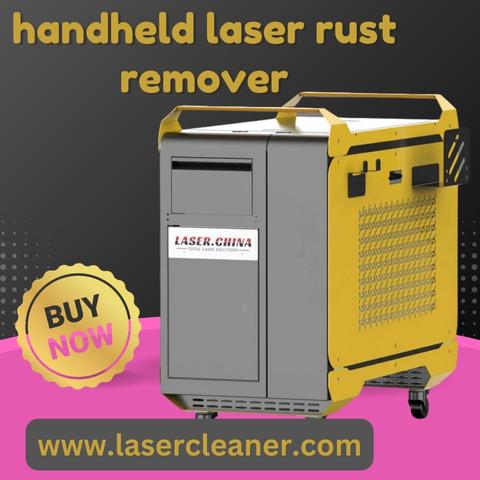
A handheld laser rust remover is a portable laser cleaning system developed for removing rust and other unwanted contaminants from metal surfaces. The system generally consists of a laser source, control unit, cooling system, optical components, and a handheld cleaning head.
Instead of relying on abrasive materials or chemical solutions, laser cleaning uses controlled laser pulses or continuous laser energy to interact with surface contamination. The operator moves the cleaning head across the affected area while adjusting suitable operating parameters according to the material and condition of the surface.
This technology can be used on steel, iron, stainless steel, aluminum, and other compatible materials when the correct laser settings are selected.
How Does Laser Rust Removal Work?
Laser rust removal works through the interaction between laser energy and the unwanted surface layer. Rust and other contaminants absorb the laser energy, causing them to heat rapidly and separate from the surface. Depending on the equipment and application, the unwanted material can be removed through vaporization, thermal expansion, or other controlled physical effects.
The underlying metal reflects or absorbs the laser differently from the rust layer. Properly configured equipment allows the operator to target the contamination while limiting unnecessary impact on the base material.
The cleaning head is moved gradually over the surface, creating a consistent treatment pattern. For larger areas, the operator can systematically move across the workpiece until the required surface condition is achieved.
Where Can a Handheld Laser Rust Remover Be Used?
The portability of a handheld system makes it suitable for many industrial and maintenance applications. Workshops can use it to treat rusty machine components, metal frames, tools, molds, and equipment.
In the automotive sector, laser cleaning can be used for selected restoration and maintenance tasks involving metal components. It can also be useful in shipbuilding and heavy equipment maintenance, where corrosion may develop on large metal structures.
Manufacturing facilities can use handheld laser cleaning equipment for preparing surfaces before welding, coating, painting, or other processing operations. Restoration professionals may also use controlled laser cleaning for suitable historical or valuable metal objects where careful surface treatment is required.
The exact application depends on the material, rust thickness, laser power, operating parameters, and required surface finish.
Handheld Operation for Flexible Cleaning
One of the defining aspects of a handheld laser rust remover is its manual cleaning format. Rather than requiring every workpiece to be positioned inside a dedicated automated machine, the operator can bring the cleaning head directly to the affected area.
This can be particularly useful when working with large components that are difficult to move. It also provides flexibility when cleaning corners, edges, irregular surfaces, and individual components.
Different work environments may require different levels of mobility. A portable laser cleaning system can be moved around a workshop or production area according to the task, making it suitable for maintenance teams that handle a variety of equipment.
Removing Rust Before Welding and Painting
Surface preparation is an important part of many industrial processes. Rust, oxidation, paint residue, oil, and other contaminants can interfere with subsequent operations if they are not properly removed.
Laser cleaning can be incorporated into preparation workflows before welding or coating. By treating the selected surface, operators can prepare an area for further processing without introducing abrasive media directly onto the workpiece.
For welding applications, removing oxidation and contaminants around the welding area can help create a cleaner working surface. Before painting or coating, appropriate surface preparation can also help establish the required condition for the next stage.
Suitable Materials for Laser Rust Removal
A handheld laser rust remover can be used with various metal materials when the equipment is properly configured. Common applications include carbon steel, stainless steel, iron, and selected aluminum components.
Different metals respond differently to laser energy. Surface reflectivity, thermal characteristics, contamination thickness, and the condition of the workpiece all influence the cleaning process.
For this reason, operators should test the selected settings on a suitable sample or less visible area before treating an important component. Manufacturer recommendations should also be followed to establish appropriate power, frequency, scanning speed, and other operating parameters.
Cleaning Rust From Complex Components
Rust does not always develop on flat, easily accessible surfaces. Machinery and industrial components can contain grooves, joints, edges, curved sections, and other difficult areas.
A handheld cleaning head allows the operator to change position and approach the workpiece from different directions. This flexibility can be useful when treating components with complicated geometries.
The operator can control the movement of the laser head according to the shape of the surface. For detailed work, careful movement and appropriate parameter selection are essential for achieving consistent results.
Choosing the Appropriate Laser Cleaning System
When selecting a handheld laser rust remover, buyers should consider the type and amount of work they expect to perform. Laser power is an important consideration because different applications require different levels of cleaning capability.
The type of laser source, cleaning width, control system, cooling arrangement, portability, and available operating settings should also be evaluated.
For occasional maintenance work, a different configuration may be appropriate than for continuous industrial production. Businesses should consider their materials, typical rust thickness, workpiece dimensions, cleaning speed requirements, and available workspace before selecting equipment.
Reliable technical support and clear operating instructions are also important when introducing laser cleaning technology into a professional environment.
Safe Operation and Workplace Preparation
Laser cleaning equipment should always be operated by trained personnel who understand the equipment and the hazards associated with laser radiation. Appropriate protective eyewear designed for the specific laser wavelength is essential.
The work area should be organized to prevent unauthorized personnel from entering the active laser zone. Suitable ventilation or fume extraction should also be considered because removing rust, coatings, oils, and other contaminants can produce airborne particles or fumes.
Maintenance of Laser Cleaning Equipment
Regular equipment maintenance helps keep a laser cleaning system operating consistently. Operators should inspect the cleaning head, optical components, cables, cooling system, and other relevant parts according to the manufacturer's maintenance schedule.
Dust and contamination should be prevented from accumulating around sensitive components. Cooling systems should also be maintained according to the equipment specifications.
Growing Applications of Portable Laser Cleaning
As manufacturers and maintenance teams look for more controlled methods of surface preparation, portable laser cleaning continues to attract attention across different industries. Its applications extend beyond rust removal to include oxidation, paint, coatings, oil residues, and other surface contaminants.
A handheld laser rust remover can therefore become part of a broader surface-treatment workflow rather than being limited to corrosion removal alone. With appropriate equipment and operating parameters, businesses can adapt laser cleaning to different maintenance and production requirements.
Final Thoughts
A handheld laser rust remover provides a modern method for treating corrosion and preparing metal surfaces. Its portable design allows operators to work directly on machinery, components, structures, and other metal objects without depending on a fixed cleaning station.

 Arabic
 French
 Spanish
 Portuguese
 Deutsch
 Turkish
 Dutch
Dutch
 Italiano
 Russian
 Romaian
 Portuguese (Brazil)
 Greek
Greek