


The Seven-Point Checklist for Comparing Tactical Kilts Online
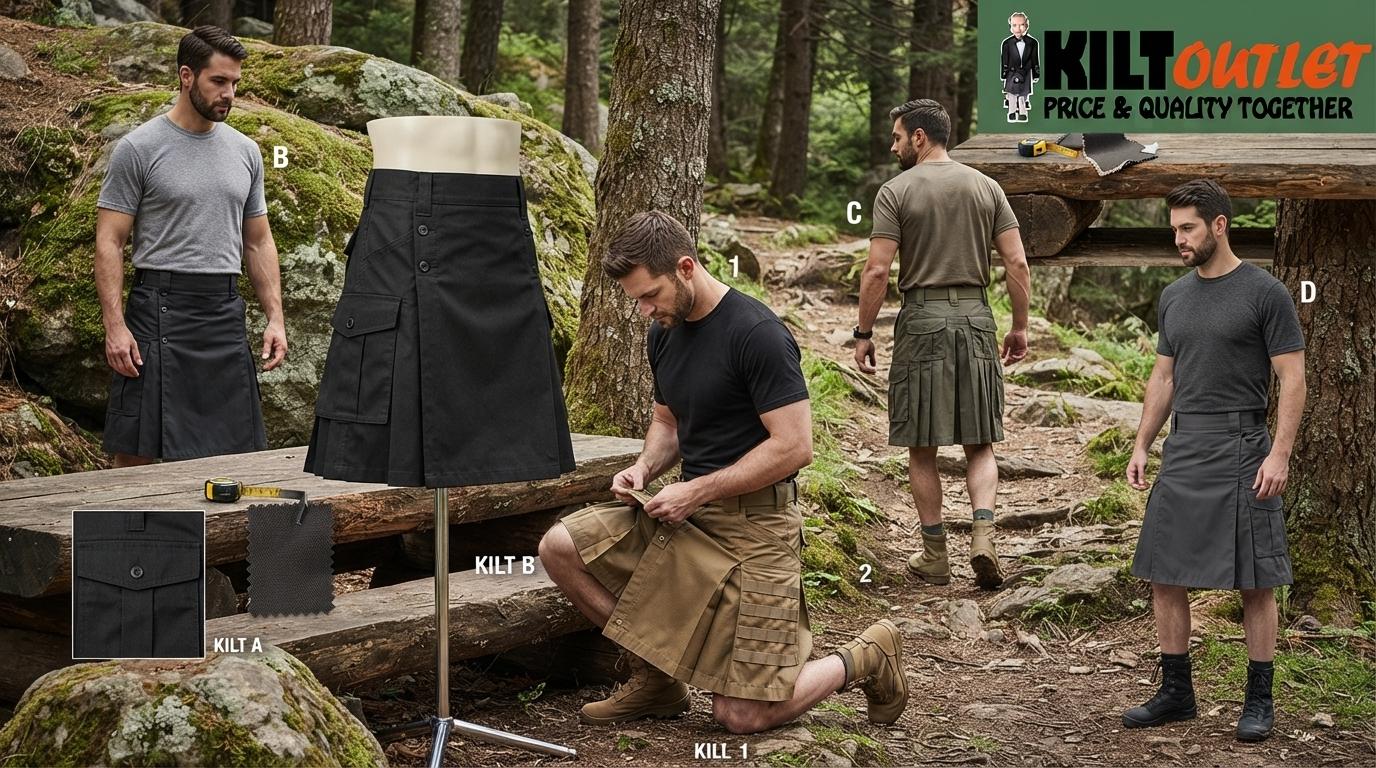
Every product page shows the same photo angle, the same vague "heavy duty cotton" line, and a price that swings by a hundred dollars between listings. You cannot touch the fabric, so you guess, and one in three guesses arrives stiff, thin, or two sizes off. A checklist beats guesswork. Here are the seven things that separate a good tactical kilt from a bad one.
1. Fabric Weight and Blend
Mid-weight cotton canvas holds structure and takes abuse. Lightweight printed cotton feels fine in the box and loses its shape within months of real use.
Poly-cotton blends dry faster and wrinkle less, which suits humid climates and gear that lives in a vehicle.
Listings that name the fiber and weight tell you the maker knows what they built. Listings that only say "durable fabric" usually have a reason for being vague.
2. Pleat Construction
Pleats are the part that fails first on cheap kilts. Stitched-down pleats through the hip hold their fold line through years of washing.
Unstitched pleats flatten out after a few cycles and never recover, which leaves you with a shapeless wrap.
Some sellers stitch flat panels to imitate pleats. Panels do not move the way folds do, and the difference shows the moment you walk.
When you shortlist the Best 5.11 tactical kilt options, check the back view photo specifically for real folded pleats rather than a printed or paneled imitation.
3. Stitching at the Stress Points
Three places carry the load: pocket corners, belt loops, and strap anchors.
Each one should show double stitching or a bar tack. Single-row stitching at a strap anchor pulls through under a loaded duty belt.
Zoom into the product photos. Good makers photograph the stitching because it sells the product. Poor makers crop it out.
4. Hardware Quality
Solid brass, stainless, or coated steel snaps and D-rings survive years of weather and use.
Painted zinc chips within a season, then rusts, then stains the fabric around it.
Buckle style matters for speed. Slide buckles adjust faster than pin buckles, which helps if you change layers under it.
5. Pocket Layout That Matches Your Work
Count the pockets and check their placement in the photos, not the description.
Flapped cargo pockets with snaps hold contents when you kneel or sit on a truck step. Open pockets do not.
Depth beats width for a phone and gloves. A shallow pocket lets a phone ride up and out during a shift.
Belt loops should clear a full-width duty belt. Narrow loops force you to run two belts, which defeats the purpose.
6. Sizing Method
Made-to-measure beats small, medium, and large every time. A kilt fits at one waist point, so a size range covering four inches fits nobody precisely.
The maker should ask for your natural waist, your hips, and your length from waist to knee.
Any listing that sells by pants size is a warning sign. Pants sizing runs small against true waist measurement, and a maker who knows kilts knows that.
If a size chart exists, check whether it lists actual waist inches or vague labels.
7. Returns, Lead Time, and Support
Custom work takes weeks. A listing promising two-day delivery on a custom kilt is selling stock sizing under a custom label.
Read the return policy before ordering. Made-to-measure garments often carry different terms than stock items, and that is reasonable, but you should know it going in.
Check whether the seller answers questions before purchase. A maker who responds clearly about fabric and sizing usually handles problems the same way.
Look for real customer photos rather than only studio shots. Photos taken in daylight on actual people tell you more about drape than any description.
Matching the Kilt to Your Use Case
For range days and hot-weather training, prioritize breathability and deep pockets over hardware weight.
For station work, yard work, and trades, prioritize fabric weight and stitching, since abrasion is the main threat.
For travel and off-duty wear, a lighter blend that resists wrinkling saves you ironing in a hotel room.
For parades and formal details, prioritize pleat quality and a clean apron, because that is what photographs.
One Note on Duty Wear
Uniform policy decides whether you can wear a kilt on shift, and most agencies do not list kilts as approved duty wear.
Ask your supervisor before you spend money with shift use in mind. The garment works just as well off duty either way.
Frequently Asked Questions
Is a tactical kilt worth the price over a cheap one?
The difference shows in pleat retention, stitching, and hardware. A cheap kilt often looks identical on arrival and loses its shape within a season.
How do I measure for a tactical kilt?
Measure your natural waist where a belt sits, your hips at the widest point, and the distance from your waist to the middle of your knee.
What color is most practical?
Black and khaki hide wear best and pair with most gear. Lighter colors show oil and dirt faster in working conditions.
Can I wash a tactical kilt in a machine?
Cold water on a gentle cycle is fine for cotton and blends. Close all snaps first and hang it to dry rather than using the dryer.

 English
 Arabic
 French
 Spanish
 Portuguese
 Deutsch
 Turkish
 Dutch
Dutch
 Italiano
 Russian
 Romaian
 Greek
Greek